
Articles | Volume 44, issue 2
https://doi.org/10.5194/jm-44-673-2025
© Author(s) 2025. This work is distributed under
the Creative Commons Attribution 4.0 License.
the Creative Commons Attribution 4.0 License.
https://doi.org/10.5194/jm-44-673-2025
© Author(s) 2025. This work is distributed under
the Creative Commons Attribution 4.0 License.
the Creative Commons Attribution 4.0 License.
Research article
| 
12 Dec 2025
Research article |
| 12 Dec 2025
| 12 Dec 2025
Quantification of dissolution and diagenetic overgrowth in early Eocene calcareous nannofossils through circular polarised light microscopy

Department of Earth and Planetary Sciences, ETH Zürich, Zurich, Switzerland
Alba Gonzalez-Lanchas
Department of Earth Sciences, University of Oxford, Oxford, UK
Kyra Bachmakova
Department of Earth and Planetary Sciences, ETH Zürich, Zurich, Switzerland
Madalina Jaggi
Department of Earth and Planetary Sciences, ETH Zürich, Zurich, Switzerland
Heather M. Stoll
Department of Earth and Planetary Sciences, ETH Zürich, Zurich, Switzerland
Related authors
Alexander J. Clark, Ismael Torres-Romero, Madalina Jaggi, Stefano M. Bernasconi, and Heather M. Stoll
Clim. Past, 20, 2081–2101, https://doi.org/10.5194/cp-20-2081-2024, https://doi.org/10.5194/cp-20-2081-2024, 2024
Short summary
Short summary
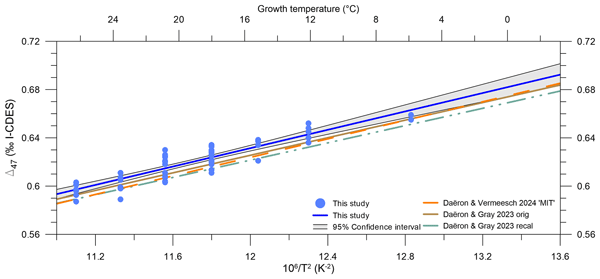
Coccoliths are abundant in sediments across the world’s oceans, yet it is difficult to apply traditional carbon or oxygen isotope methodologies for temperature reconstructions. We show that our coccolith clumped isotope temperature calibration with well-constrained temperatures systematically differs from inorganic carbonate calibrations. We suggest the use of our well-constrained calibration for future coccolith carbonate temperature reconstructions.
Sarah Rowan, Marc Luetscher, Negar Haghipour, Heather M. Stoll, Laura Endres, Sönke Szidat, and Franziska A. Lechleitner
EGUsphere, https://doi.org/10.5194/egusphere-2026-5813, https://doi.org/10.5194/egusphere-2026-5813, 2026
This preprint is open for discussion and under review for Biogeosciences (BG).
Short summary
Short summary
Soils and plants store three times as much carbon as the atmosphere but how carbon is lost to inland water bodies remains uncertain. We present two years of data from a cave system, revealing contrasting sources and ages of dissolved carbon pools, as well as strong seasonal dynamics. A speleothem (secondary cave carbonate deposit) allows us to trace these signatures back in time. Our findings highlight the complexity of belowground transport and transformation of carbon.
Celia Campa-Bousoño, Miguel Iglesias, Iñaki Vadillo, Lucía Ojeda, Jorge Pisonero, Hai Cheng, R. Lawrence Edwards, and Heather Stoll
EGUsphere, https://doi.org/10.5194/egusphere-2026-3717, https://doi.org/10.5194/egusphere-2026-3717, 2026
Short summary
Short summary
To understand how rainfall changed in southern Iberia during the shift from the Medieval Climate Anomaly to the Little Ice Age, we studied yearly layers preserved in a stalagmite from Ardales Cave, southern Spain. The record shows repeated shifts between wetter and drier periods, including major droughts around 1125, 1250, 1500, and 1560 CE. It also reveals intervals of more variable rainfall, suggesting changing influence from Atlantic and Mediterranean weather patterns.
Thomas Tanner, Ivan Hernandez-Almeida, Reto Wijker, Andrea K. Manirajan, Madeleine Santos, Peter Bijl, Tim van Peer, and Heather Stoll
EGUsphere, https://doi.org/10.5194/egusphere-2026-3415, https://doi.org/10.5194/egusphere-2026-3415, 2026
Short summary
Short summary
In this study, we examined the relationship between surface ocean temperature in the midlatitudes in both the Northern and Southern Hemispheres over a period of major Antarctic ice expansion 24 to 22 million years ago, a period when Antarctica was the only polar ice sheet. We find consistent cooling of the surface ocean in both hemispheres as ice was expanding, indicating a close coupling of global climate and polar ice caps.
Laura Endres, Carlos Pérez-Mejías, Ruza Ivanovic, Lauren Gregoire, Anna L. C. Hughes, Hai Cheng, and Heather Stoll
Clim. Past, 22, 797–824, https://doi.org/10.5194/cp-22-797-2026, https://doi.org/10.5194/cp-22-797-2026, 2026
Short summary
Short summary
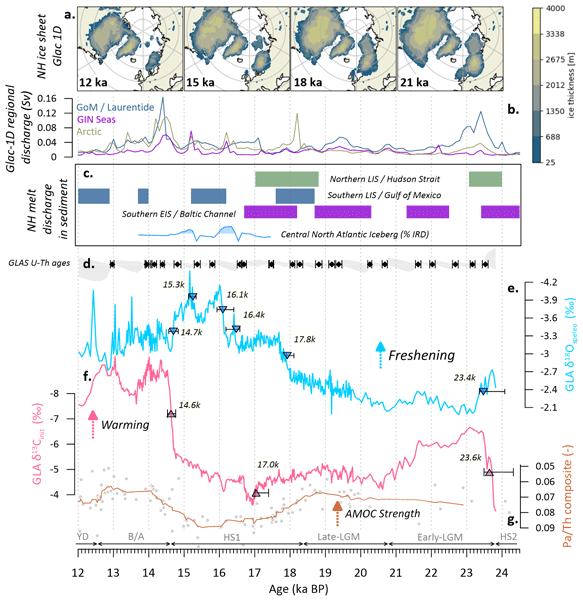
Stable isotope data of a precisely dated stalagmite from northwestern Iberia indicate gradual North Atlantic meltwater input during the last glacial maximum, followed by abrupt surges early in the last deglaciation. The first abrupt surge was decoupled from first cooling about 810 years later – unlike later events – which reveals that the Atlantic circulation’s sensitivity to meltwater is variable and related to the evolving background climate boundary conditions.
Reto S. Wijker, Pere Aguiló-Nicolau, Madalina Jaggi, Jeroni Galmés, and Heather M. Stoll
Biogeosciences, 23, 1591–1608, https://doi.org/10.5194/bg-23-1591-2026, https://doi.org/10.5194/bg-23-1591-2026, 2026
Short summary
Short summary
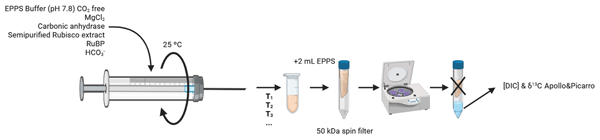
Photosynthetic organisms leave characteristic carbon isotope fingerprints that help scientists study Earth’s carbon cycle. We developed a simpler laboratory method to measure these isotope effects in Rubisco, the key enzyme fixing CO2. Applying this approach, we obtained the first measurement for Gephyrocapsa oceanica, a widespread marine alga that plays a major role in ocean carbon cycling.
Nicolas Tapia, Laura Endres, Madalina Jaggi, and Heather Stoll
Biogeosciences, 22, 6861–6875, https://doi.org/10.5194/bg-22-6861-2025, https://doi.org/10.5194/bg-22-6861-2025, 2025
Short summary
Short summary
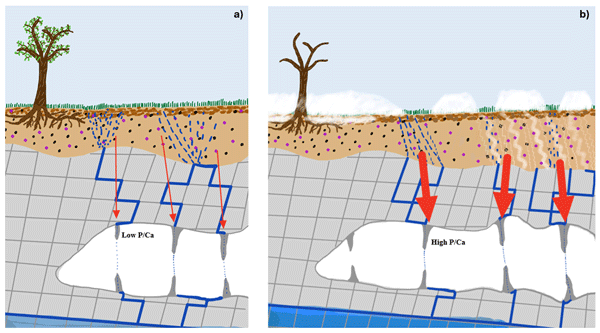
We use stalagmites to study past changes in the terrestrial P cycle. Our P records from multiple, coeval stalagmites from Northwest Spain show that the onsets of past abrupt cooling events are characterized by multi-century reproducible peaks in stalagmite P which reflect higher groundwater P/Ca concentrations and enhanced P export, potentially resulting from increased freeze-thaw frequency and more intense infiltration from snowmelt.
Heather M. Stoll, Clara Bolton, Madalina Jaggi, Alfredo Martinez-Garcia, and Stefano M. Bernasconi
Clim. Past, 21, 2189–2203, https://doi.org/10.5194/cp-21-2189-2025, https://doi.org/10.5194/cp-21-2189-2025, 2025
Short summary
Short summary
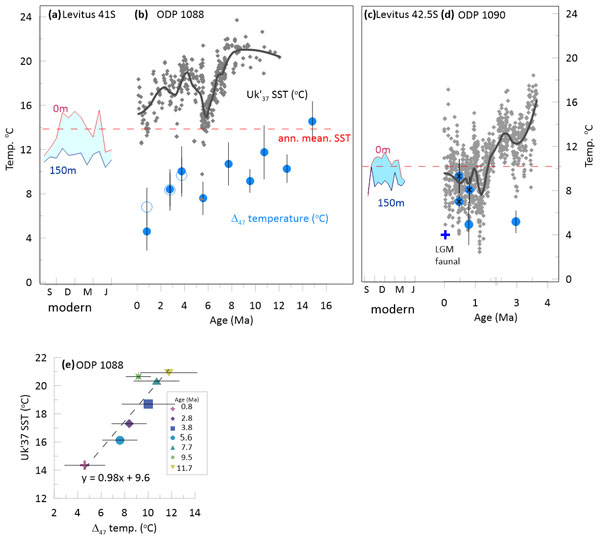
In periods of high atmospheric CO2 many proxies suggest more extreme past polar warming than is simulated by current coupled climate models. Providing new data on high latitude temperatures in the South Atlantic over the last 15 million years using clumped isotope thermometry, we show that absolute temperatures may not have been as warm as indicated by some biomarker based proxy climate records.
José Guitián, Samuel Phelps, Reto S. Wijker, Pratigya J. Polissar, Laura Arnold, and Heather M. Stoll
Clim. Past, 21, 2115–2132, https://doi.org/10.5194/cp-21-2115-2025, https://doi.org/10.5194/cp-21-2115-2025, 2025
Short summary
Short summary
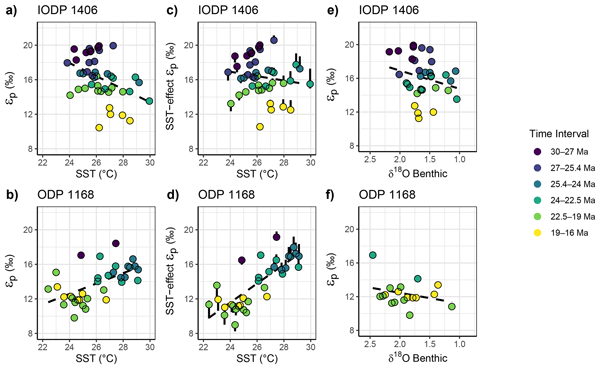
We reconstructed from sediments of different ocean sites phytoplankton carbon isotopic fractionation (εp), mainly linked to CO2 variations, during the Oligocene to early Miocene. Data confirm Cenozoic long-term CO2 record but show contrasting relationships with the sea surface temperatures evolution. We evaluate the role of non-CO2 environmental factors such as temperature and nutrients at each site εp, highlighting the complexity of interpreting climate dynamics and CO2 reconstructions.
Nikita Kaushal, Carlos Pérez-Mejías, and Heather M. Stoll
Clim. Past, 21, 1633–1660, https://doi.org/10.5194/cp-21-1633-2025, https://doi.org/10.5194/cp-21-1633-2025, 2025
Short summary
Short summary
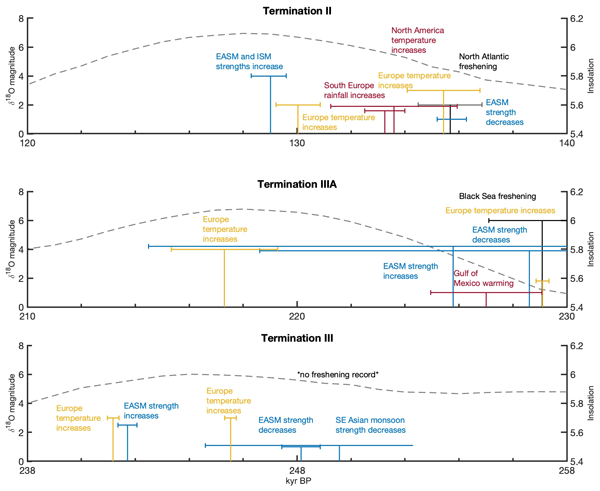
Terminations are large-magnitude rapid events triggered in the North Atlantic region that manifest across the global climate system. They provide key examples of climatic teleconnections and dynamics. In this study, we use the SISAL global speleothem database and find that there are sufficient climatic records from key locations to make speleothems a valuable archive for studying terminations and provide instances for more targeted work on speleothem research.
Judit Torner, Isabel Cacho, Heather Stoll, Ana Moreno, Joan O. Grimalt, Francisco J. Sierro, Joan J. Fornós, Hai Cheng, and R. Lawrence Edwards
Clim. Past, 21, 465–487, https://doi.org/10.5194/cp-21-465-2025, https://doi.org/10.5194/cp-21-465-2025, 2025
Short summary
Short summary
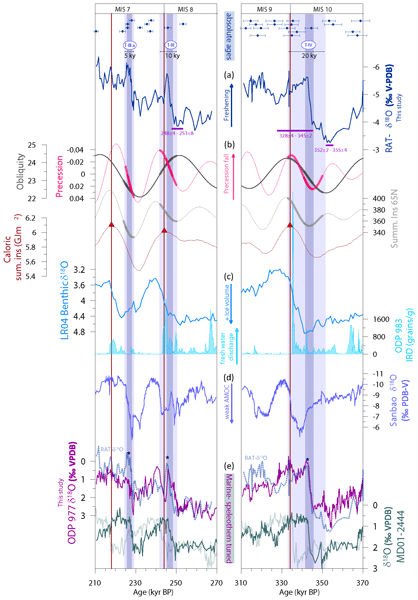
We offer a clearer view of the timing of three relevant past glacial terminations. By analyzing the climatic signal recorded in stalagmite and linking it with marine records, we revealed differences in the intensity and duration of the ice melting associated with these three key deglaciations. This study shows that some deglaciations began earlier than previously thought; this improves our understanding of natural climate processes, helping us to contextualize current climate change.
Alexander J. Clark, Ismael Torres-Romero, Madalina Jaggi, Stefano M. Bernasconi, and Heather M. Stoll
Clim. Past, 20, 2081–2101, https://doi.org/10.5194/cp-20-2081-2024, https://doi.org/10.5194/cp-20-2081-2024, 2024
Short summary
Short summary
Coccoliths are abundant in sediments across the world’s oceans, yet it is difficult to apply traditional carbon or oxygen isotope methodologies for temperature reconstructions. We show that our coccolith clumped isotope temperature calibration with well-constrained temperatures systematically differs from inorganic carbonate calibrations. We suggest the use of our well-constrained calibration for future coccolith carbonate temperature reconstructions.
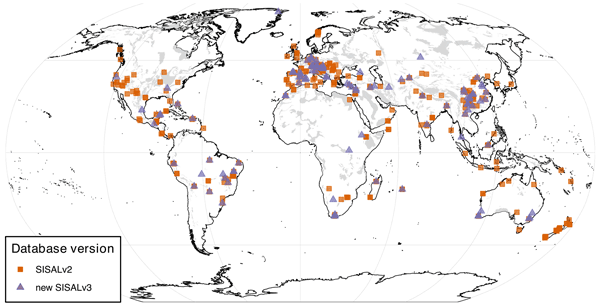
Nikita Kaushal, Franziska A. Lechleitner, Micah Wilhelm, Khalil Azennoud, Janica C. Bühler, Kerstin Braun, Yassine Ait Brahim, Andy Baker, Yuval Burstyn, Laia Comas-Bru, Jens Fohlmeister, Yonaton Goldsmith, Sandy P. Harrison, István G. Hatvani, Kira Rehfeld, Magdalena Ritzau, Vanessa Skiba, Heather M. Stoll, József G. Szűcs, Péter Tanos, Pauline C. Treble, Vitor Azevedo, Jonathan L. Baker, Andrea Borsato, Sakonvan Chawchai, Andrea Columbu, Laura Endres, Jun Hu, Zoltán Kern, Alena Kimbrough, Koray Koç, Monika Markowska, Belen Martrat, Syed Masood Ahmad, Carole Nehme, Valdir Felipe Novello, Carlos Pérez-Mejías, Jiaoyang Ruan, Natasha Sekhon, Nitesh Sinha, Carol V. Tadros, Benjamin H. Tiger, Sophie Warken, Annabel Wolf, Haiwei Zhang, and SISAL Working Group members
Earth Syst. Sci. Data, 16, 1933–1963, https://doi.org/10.5194/essd-16-1933-2024, https://doi.org/10.5194/essd-16-1933-2024, 2024
Short summary
Short summary
Speleothems are a popular, multi-proxy climate archive that provide regional to global insights into past hydroclimate trends with precise chronologies. We present an update to the SISAL (Speleothem Isotopes
Synthesis and AnaLysis) database, SISALv3, which, for the first time, contains speleothem trace element records, in addition to an update to the stable isotope records available in previous versions of the database, cumulatively providing data from 365 globally distributed sites.
Synthesis and AnaLysis) database, SISALv3, which, for the first time, contains speleothem trace element records, in addition to an update to the stable isotope records available in previous versions of the database, cumulatively providing data from 365 globally distributed sites.
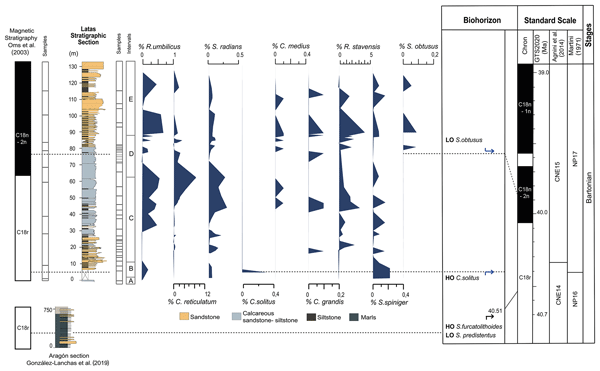
Elizabeth R. Lasluisa, Oriol Oms, Eduard Remacha, Alba González-Lanchas, Hug Blanchar-Roca, and José Abel Flores
J. Micropalaeontol., 43, 55–68, https://doi.org/10.5194/jm-43-55-2024, https://doi.org/10.5194/jm-43-55-2024, 2024
Short summary
Short summary
We studied sediment samples containing marine plankton under the polarized microscope from the Sabiñánigo sandstone formation, a geological formation located in the Jaca Basin in Spain. The main result of this work was a more precise age for the formation, the Bartonian age, in the Middle Eocene period. In addition, we obtained information on the temperature of the ocean water in which the plankton lived, resulting in the surface ocean waters in this area being warm and poor in nutrients.
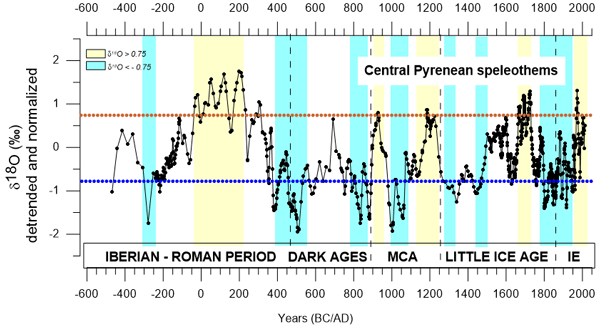
Miguel Bartolomé, Ana Moreno, Carlos Sancho, Isabel Cacho, Heather Stoll, Negar Haghipour, Ánchel Belmonte, Christoph Spötl, John Hellstrom, R. Lawrence Edwards, and Hai Cheng
Clim. Past, 20, 467–494, https://doi.org/10.5194/cp-20-467-2024, https://doi.org/10.5194/cp-20-467-2024, 2024
Short summary
Short summary
Reconstructing past temperatures at regional scales during the Common Era is necessary to place the current warming in the context of natural climate variability. We present a climate reconstruction based on eight stalagmites from four caves in the Pyrenees, NE Spain. These stalagmites were dated precisely and analysed for their oxygen isotopes, which appear dominated by temperature changes. Solar variability and major volcanic eruptions are the two main drivers of observed climate variability.
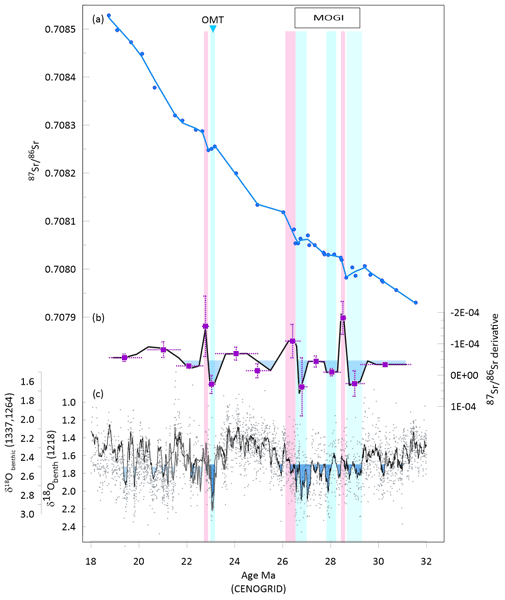
Heather M. Stoll, Leopoldo D. Pena, Ivan Hernandez-Almeida, José Guitián, Thomas Tanner, and Heiko Pälike
Clim. Past, 20, 25–36, https://doi.org/10.5194/cp-20-25-2024, https://doi.org/10.5194/cp-20-25-2024, 2024
Short summary
Short summary
The Oligocene and early Miocene periods featured dynamic glacial cycles on Antarctica. In this paper, we use Sr isotopes in marine carbonate sediments to document a change in the location and intensity of continental weathering during short periods of very intense Antarctic glaciation. Potentially, the weathering intensity of old continental rocks on Antarctica was reduced during glaciation. We also show improved age models for correlation of Southern Ocean and North Atlantic sediments.
Heather M. Stoll, Chris Day, Franziska Lechleitner, Oliver Kost, Laura Endres, Jakub Sliwinski, Carlos Pérez-Mejías, Hai Cheng, and Denis Scholz
Clim. Past, 19, 2423–2444, https://doi.org/10.5194/cp-19-2423-2023, https://doi.org/10.5194/cp-19-2423-2023, 2023
Short summary
Short summary
Stalagmites formed in caves provide valuable information about past changes in climate and vegetation conditions. In this contribution, we present a new method to better estimate past changes in soil and vegetation productivity using carbon isotopes and trace elements measured in stalagmites. Applying this method to other stalagmites should provide a better indication of past vegetation feedbacks to climate change.
Oliver Kost, Saúl González-Lemos, Laura Rodríguez-Rodríguez, Jakub Sliwinski, Laura Endres, Negar Haghipour, and Heather Stoll
Hydrol. Earth Syst. Sci., 27, 2227–2255, https://doi.org/10.5194/hess-27-2227-2023, https://doi.org/10.5194/hess-27-2227-2023, 2023
Short summary
Short summary
Cave monitoring studies including cave drip water are unique opportunities to sample water which has percolated through the soil and rock. The change in drip water chemistry is resolved over the course of 16 months, inferring seasonal and hydrological variations in soil and karst processes at the water–air and water–rock interface. Such data sets improve the understanding of hydrological and hydrochemical processes and ultimately advance the interpretation of geochemical stalagmite records.
Amanda Gerotto, Hongrui Zhang, Renata Hanae Nagai, Heather M. Stoll, Rubens César Lopes Figueira, Chuanlian Liu, and Iván Hernández-Almeida
Biogeosciences, 20, 1725–1739, https://doi.org/10.5194/bg-20-1725-2023, https://doi.org/10.5194/bg-20-1725-2023, 2023
Short summary
Short summary
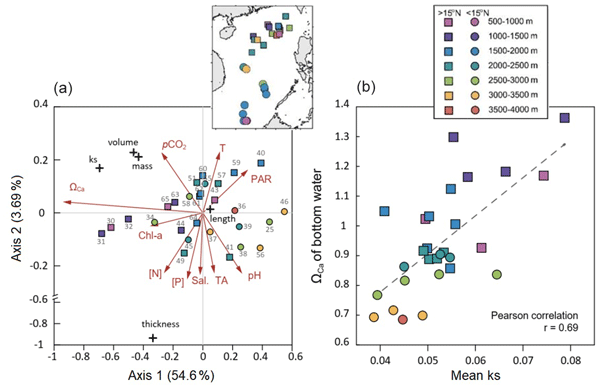
Based on the analysis of the response of coccolithophores’ morphological attributes in a laboratory dissolution experiment and surface sediment samples from the South China Sea, we proposed that the thickness shape (ks) factor of fossil coccoliths together with the normalized ks variation, which is the ratio of the standard deviation of ks (σ) over the mean ks (σ/ks), is a robust and novel proxy to reconstruct past changes in deep ocean carbon chemistry.
Jessica G. M. Crumpton-Banks, Thomas Tanner, Ivan Hernández Almeida, James W. B. Rae, and Heather Stoll
Biogeosciences, 19, 5633–5644, https://doi.org/10.5194/bg-19-5633-2022, https://doi.org/10.5194/bg-19-5633-2022, 2022
Short summary
Short summary
Past ocean carbon is reconstructed using proxies, but it is unknown whether preparing ocean sediment for one proxy might damage the data given by another. We have tested whether the extraction of an organic proxy archive from sediment samples impacts the geochemistry of tiny shells also within the sediment. We find no difference in shell geochemistry between samples which come from treated and untreated sediment. This will help us to maximize scientific return from valuable sediment samples.
José Guitián, Miguel Ángel Fuertes, José-Abel Flores, Iván Hernández-Almeida, and Heather Stoll
Biogeosciences, 19, 5007–5019, https://doi.org/10.5194/bg-19-5007-2022, https://doi.org/10.5194/bg-19-5007-2022, 2022
Short summary
Short summary
The effect of environmental conditions on the degree of calcification of marine phytoplankton remains unclear. This study implements a new microscopic approach to quantify the calcification of ancient coccolithophores, using North Atlantic sediments. Results show significant differences in the thickness and shape factor of coccoliths for samples with minimum dissolution, providing the first evaluation of phytoplankton physiology adaptation to million-year-scale variable environmental conditions.
Cited articles
Adelseck, C., Geehan, G., and Roth, P.: Experimental Evidence for the Selective Dissolution and Overgrowth of Calcareous Nannofossils During Diagenesis, Geol. Soc. Am. Bull., 84=, 2755–2762, https://doi.org/10.1130/0016-7606(1973)84<2755:EEFTSD>2.0.CO;2, 1973.
Arney, J. and Wise Jr., S.: Paleocene-Eocene Nannofossil Biostratigraphy of ODP Leg 183, Kerguelen Plateau, in: Proceedings of the Ocean Drilling Program, Scientific Results, 183, 1–59, https://www-odp.tamu.edu/publications/183_SR/VOLUME/CHAPTERS/014.PDF (last access: 12 December 2025), 2003.
Arreguín-Rodríguez, G., Thomas, E., D'haenens, S., Speijer, R., and Alegret, L.: Early Eocene deep-sea benthic foraminiferal faunas: Recovery from the Paleocene Eocene thermal maximum extinction in a greenhouse world, PLoS ONE, 13, https://doi.org/10.1371/journal.pone.0193167, 2018.
Aubry, M.-P.: Late Paleogene nannoplankton evolution: A tale of climatic detereoration, in: Eocene-Oligocene Climatic and Biotic Evolution, edited by: Prothero, D. R. and Berggren, W. A., Princeton Univ. Press, Princeton, NJ, USA, 272–309, ISBN 9781400862924, 1992.
Bain, G.: Papers – Geological, chemical and physical problems in the marble industry (T.P. 1261), AIME Technical Publication 1261, The American Institute of Mining, Metallurgical, and Petroleum Engineers, 1–16, https://www.onemine.org/documents/papers-geological-chemical-and-physical-problems-in-the-marble-industry-t-p-1261- (last access: 12 December 2025), 1941.
Beaufort, L., Probert, I., and Buchet, N.: Effects of acidification and primary production on coccolith weight: Implications for carbonate transfer from the surface to the deep ocean, Geochem. Geophy. Goesy., 8, 1–18, https://doi.org/10.1029/2006GC001493, 2007.
Beaufort, L., Gally, Y., Suchéras-Marx, B., Ferrand, P., and Duboisset, J.: Technical note: A universal method for measuring the thickness of microscopic calcite crystals, based on bidirectional circular polarization, Biogeosciences, 18, 775–785, https://doi.org/10.5194/bg-18-775-2021, 2021.
Bolton, C., Hernández-Sánchez, M., Fuertes, M., González-Lemos, S., Abrevaya, L., Mendez-Vicente, A., Flores, J., Probert, I., Giosan, L., Johnson, J., and Stoll, H.: Decrease in coccolithophore calcification and CO2 since the middle Miocene, Nat. Commun., 7, 10284, https://doi.org/10.1038/ncomms10284, 2016.
Bown, P. (Ed.): Calcareous nannofossil biostratigraphy, Kluwer Academic Publishers, Dordrecht, the Netherlands, 314 pp., ISBN 0412789701, 1999.
Bralower, T., Zachos, J., Thomas, E., Parrow, M., Paull, C., Kelly, D., Silva, I., Sliter, W., and Lohmann, K.: Late Paleocene to Eocene paleoceanography of the equatorial Pacific Ocean: Stable isotopes recorded at Ocean Drilling Program Site 865, Allison Guyot, Paleoceanography, 10, 841–865, https://doi.org/10.1029/95PA01143, 1995.
Brown, S. and Elderfield, H.: Variations in Mg
Bukry, D.: Discoaster evolutionary trends, Micropaleontology, 17, 43–52, https://doi.org/10.2307/1485036, 1971a.
Bukry, D.: Cenozoic calcareous nannofossils from the Pacific ocean, T. San Diego Soc. Nat. Hist., 16, 303–328, https://doi.org/10.5962/bhl.part.15464, 1971b.
Burns, D.: Distribution, abundance, and preservation of nannofossils in Eocene to Recent Antarctic sediments. New Zeal. J. Geol. Geophys., 18(, 583–595, https://doi.org/10.1080/00288306.1975.10421558, 1975.
Clark, A., Jaggi, M., Bernasconi, S., Fiebig, J., and Stoll, H.: Clumped Isotope Temperatures of Coccolithophores From Global Sediment Traps, Paleoceanogr. Paleoclimatol., 40, 2081–2101, https://doi.org/10.1029/2024PA005054, 2025a.
Clark, A., Gonzalez-Lanchas, A., Bachmakova, K., Jaggi, M., and Stoll, H.: Supplementary material to Quantification of diagenetic overgrowth in early Eocene calcareous nannofossils through circular polarised light microscopy, ETH Zürich Research Collection [data set], http://hdl.handle.net/20.500.11850/783016 (last access: 11 December 2025), 2025b.
Claxton, L., McClelland, H., Hermoso, M., and Rickaby, R.: Eocene emergence of highly calcifying coccolithophores despite declining atmospheric CO2, Nat. Geosci., 15, 826–831, https://doi.org/10.1038/s41561-022-01006-0, 2022.
Dean, C. L., Harvey, E. L., Johnson, M. D., and Subhas, A. V.: Microzooplankton grazing on the coccolithophore Emiliania huxleyi and its role in the global calcium carbonate cycle, Sci. Adv., 10, https://doi.org/10.1126/sciadv.adr5453, 2024.
Dedert, M., Stoll, H., Kars, S., Young, J., Shimizu, N., Kroon, D., Lourens, L., and Ziveri, P.: Temporally variable diagenetic overgrowth on deep-sea nannofossil carbonates across Palaeogene hyperthermals and implications for isotopic analyses, Mar. Micropaleontol., 107, 18–31, https://doi.org/10.1016/j.marmicro.2013.12.004, 2014.
D'haenens, S., Bornemann, A., Stassen, P., and Speijer, R.: Multiple early Eocene benthic foraminiferal assemblage and δ13C fluctuations at DSDP Site 401 (Bay of Biscay – NE Atlantic), Mar. Micropaleontol., 88–89, 15–35, https://doi.org/10.1016/j.marmicro.2012.02.006, 2012.
D'Onofrio, R., Luciani, V., Fornaciari, E., Giusberti, L., Boscolo Galazzo, F., Dallanave, E., Westerhold, T., Sprovieri, M., and Telch, S.: Environmental perturbations at the early Eocene ETM2, H2, and I1 events as inferred by Tethyan calcareous plankton (Terche section, northeastern Italy), Paleoceanography, 31, 1225–1247, https://doi.org/10.1002/2016PA002940, 2016.
Flores, J. and Sierro, F.: Revised Technique for Calculation of Calcareous Nannofossil Accumulation Rates, Micropaleontology, 43, 321–324, https://doi.org/10.2307/1485832, 1997.
Fuertes, M., Flores, J., and Sierro, F.: The use of circularly polarized light for biometry, identification and estimation of mass of coccoliths, Mar. Micropaleontol., 113, 44–55, https://doi.org/10.1016/j.marmicro.2014.08.007, 2014.
Gerotto, A., Zhang, H., Nagai, R., Stoll, H., Figueira, R., Liu, C., and Hernández-Almeida, I.: Fossil coccolith morphological attributes as a new proxy for deep ocean carbonate chemistry, Biogeosciences, 20, 1725–1739, https://doi.org/10.5194/bg-20-1725-2023, 2023.
Gibbs, S., Shackleton, N., and Young, J.: Identification of dissolution patterns in nannofossil assemblages: A high-resolution comparison of synchronous records from Ceara Rise, ODP Leg 154, Paleoceanography, 19, https://doi.org/10.1029/2003PA000958, 2004.
González-Lemos, S., Guitián, J., Fuertes, M.-Á., Flores, J.-A., and Stoll, H.: Technical note: An empirical method for absolute calibration of coccolith thickness, Biogeosciences, 15, 1079–1091, https://doi.org/10.5194/bg-15-1079-2018, 2018.
Greene, S., Ridgwell, A., Kirtland Turner, S., Schmidt, D., Pälike, H., Thomas, E., Greene, L., and Hoogakker, B.: Early Cenozoic decoupling of climate and carbonate compensation depth trends, Paleoceanogr. Paleoclimatol., 34, 930–945, https://doi.org/10.1029/2019PA003601, 2019.
Guitián, J., Dunkley Jones, T., Hernández-Almeida, I., Löffel, T., and Stoll, H.: Adaptations of Coccolithophore Size to Selective Pressures During the Oligocene to Early Miocene High CO2 World, Paleoceanogr. Paleoclimatol., 35, e2020PA003918, https://doi.org/10.1029/2020PA003918, 2020.
Guitián, J., Fuertes, M., Flores, J., Hernández-Almeida, I., and Stoll, H.: Variation in calcification of Reticulofenestra coccoliths over the Oligocene-Early Miocene, Biogeosciences, 19, 5007–5019, https://doi.org/10.5194/bg-19-5007-2022, 2022.
Hassenkam, T., Johnsson, A., Bechgaard, K., and Stipp, S.: Tracking single coccolith dissolution with picogram resolution and implications for CO2 sequestration and ocean acidification, P. Natl. Aca. Sci. USA, 108, 8571–8576, https://doi.org/10.1073/pnas.1009447108, 2011.
Henriksen, K., Young, J., Brown, P., and Stipp, S.: Coccolith biomineralisation studied with atomic force microscopy, Palaeontology, 47, 725–743, https://doi.org/10.1111/j.0031-0239.2004.00385.x, 2004.
Honjo, S.: Dissolution of suspended coccoliths in the deep-sea water column and sedimentation of coccolith ooze, in: Dissolution of Deep-sea Carbonates No. 13, edited by: Sliter, W., Bé, A., and Berger, W., Cushman Foundation for Foraminiferal Research, 87–113, ISBN 9781970168075, 1975.
Kennett, J. and Stott, L.: 49. Proteus and proto-oceanus: ancestral Paleogene oceans as revealed from Antarctic stable isotopic results; ODP leg 113, Proceedings of the Ocean Drilling Program, Scientific Results, 113, 865–880, 1990.
Kennett, J., Houtz, R., Andrews, P., Edwards, A., Gostin, V., Hajós, M., Hampton, M., Jenkins, D., Margolis, S., Thomas Ovenshine, A., and Perch-Nielsen, K.: 44. Cenozoic Paleoceanography in the southwest Pacific Ocean, Antarctic glaciation, and the development of the circum-Antarctic Current, Initial Rep. Deep Sea, 29, 1155–1169, 1975.
Kirtland Turner, S., Sexton, P., Charles, C., and Norris, R.: Persistence of carbon release events through the peak of early Eocene global warmth, Nat. Geosci., 7, 748–751, https://doi.org/10.1038/NGEO2240, 2014.
Langer, G., Nehrke, G., and Jansen, S.: Dissolution of Calcidiscus leptoporus coccoliths in copepod guts? A morphological study, Mar. Ecol.-Prog. Ser., 331, 139–146, https://doi.org/10.3354/meps331139, 2007.
Madras, G. and McCoy, B.: Ostwald ripening with size-dependent rates: Similarity and power-law solutions, J. Chem. Phys., 117, 8042–8049, https://doi.org/10.1063/1.1510769, 2002.
Mather, B., Müller, R., Zahirovic, S., Cannon, J., Chin, M., Ilano, L., Wright, N. M., Alfonso, C., Williams, S., Tetley, M., and Merdith, A.: Deep time spatio-temporal data analysis using pyGPlates with PlateTectonicTools and GPlately, Geosci. Data J., 11, 3–10, https://doi.org/10.1002/gdj3.185, 2023.
Mattioli, E.: Nannoplankton productivity and diagenesis in the rhythmically bedded Toarcian-Aalenian Fiuminata section (Umbria-Marche Apennine, central Italy), Palaeogeogr. Palaeoclimatol., 130, 113–133, https://doi.org/10.1016/S0031-0182(96)00127-7, 1997.
Milliman, J. D., Troy, P. J., Balch, W. M., Adams, A. K., Li, Y.-H., and Mackenzie, F. T.: Biologically mediated dissolution of calcium carbonate above the chemical lysocline?, Deep-Sea Res. Pt. I, 46, 1653–1669, https://doi.org/10.1016/S0967-0637(99)00034-5, 1999.
Nomura, R., Hiroyuki, T., and Tsujimoto, A.: Data report: early to middle Eocene benthic foraminifers at Sites U1331 and U1333, equatorial central Pacific Ocean, Expedition 320/321, in: Proceedings of the Integrated Ocean Drilling Program, 320–321, https://doi.org/10.2204/iodp.proc.320321.212.2013, 2013.
Pak, D. and Miller, K.: 8. Isotopic and faunal record of Paleogene deep-water transitions in the north Pacific, Proceedings of the Ocean Drilling Program, Scientific Results, 145, 265–281, 1995.
Pälike, H., Lyle, M., Nishi, H., Raffi, I., Ridgwell, A., Gamage, L., Klaus, A., Acton, G., Anderson, L., Backman, J., Baldauf, J., Beltran, C., Bohaty, S., Bown, P., Busch, W., Channell, J., Chun, C., Delaney, M., Dewangan, P., Dunkley Jones, T., Edgar, K., Evans, H., Fitch, P., Foster, G., Gussone, N., Hasegawa, H., Hathorne, E., Hayashi, H., Herrle, J., Holbourn, A., Hovan, S., Hyeong, K., Iijima, K., Ito, T., Kamikuri, S., Kimoto, K., Kuroda, J., Leon-Rodriguez, L., Malinverno, A., Moore Jr, T., Murphy, B., Murphy D., Nakamura, H., Ogane, K., Ohneiser, C., Richter, C., Robinson, R., Rohling, E., Romero, O., Sawada, K., Scher, H., Schneider, L., Sluijs, A., Takata, H., Tian, J., Tsujimoto, A., Wade, B., Westerhold, T., Wilkens, R., Williams, T., Wilson, P., Yamamoto, Y., Yamamoto, S., Yamazaki, T., and Zeebe, R.: A Cenozoic record of the equatorial Pacific carbonate compensation depth, Nature, 488, 609–614, https://doi.org/10.1038/nature11360, 2012.
Paul, H., Zachos, J., Flower, B., and Tripati, A.: Orbitally induced climate and geochemical variability across the Oligocene/Miocene boundary, Paleoceanography, 15, 471–485, https://doi.org/10.1029/1999PA000443, 2000.
Pearson, P. and Burgess, C.: Foraminifer test preservation and diagenesis: Comparison of high latitude Eocene sites, Geol. Soc. Spec. Publ., 303, 59–72, https://doi.org/10.1144/SP303.5, 2008.
Pige, N., Suan, G., Buiron, E., Langlois, V. J., Mehir, A., Vincon-Laugier, A., and Mattioli, E.: Microfossil fragmentation across the Paleocene-Eocene transition at ODP Site 1209 (North Pacific): Implication for reconstructing nannofossil fluxes, Mar. Micropaleontol., 179, 102213, https://doi.org/10.1016/j.marmicro.2023.102213, 2023.
Rickaby, R., Henderiks, J., and Young, J.: Perturbing phytoplankton: Response and isotopic fractionation with changing carbonate chemistry in two coccolithophore species, Clim. Past, 6, 771–785, https://doi.org/10.5194/cp-6-771-2010, 2010.
Roth, P. and Berger, W.: Distribution and dissolution of coccoliths in the south and central Pacific, in: Dissolution of Deep-sea Carbonates No. 13, edited by: Sliter, W., Bé, A., and Berger, W., Cushman Foundation for Foraminiferal Research, 87–113, ISBN 9781970168075, 1975.
Roth, P. and Thierstein, H.: 14. Calcareous nannoplankton: leg 14 of the deep sea drilling project, Initial Rep. Deep Sea Drilling Project, 14, 421–485, 1972.
Sand, K., Pedersen, C., Sjöberg, S., Nielsen, J., Makovicky, E., and Stipp, S.: Biomineralization: Long-term effectiveness of polysaccharides on the growth and dissolution of calcite, Cryst. Growth Des., 14, 5486–5494, https://doi.org/10.1021/cg5006743, 2014.
Schneider, L., Bralower, T., and Kump, L.: Response of nannoplankton to early Eocene ocean destratification, Palaeogeogr. Palaeoclimatol., 310, 152–162, https://doi.org/10.1016/j.palaeo.2011.06.018, 2011.
Scotese, C. R.: PALEOMAP PaleoAtlas for GPlates and the PaleoData Plotter Program, PALEOMAP Project, http://www.earthbyte.org/paleomap-paleoatlas-for-gplates/ (last access: 11 December 2025), 2016.
Shamrock, J., Watkins, D., and Johnston, K.: Eocene biogeochronology and magnetostratigraphic revision of ODP Hole 762C, Exmouth Plateau (Northwest Australian Shelf), Stratigraphy, 9, 55–75, 2012.
Siesser, W. and Bralower, T.: 36. Cenozoic calcareous nannofossil biostratigraphy on the Exmouth Plateau, eastern Indian Ocean, Proceedings of the Ocean Drilling Program, Scientific Results, 122, 601–631, 1992.
Slotnick, B., Lauretano, V., Backman, J., Dickens, G., Sluijs, A., and Lourens, L.: Early Paleogene variations in the calcite compensation depth: new constraints using old borehole sediments from across Ninetyeast Ridge, central Indian Ocean, Clim. Past, 11, 473–493, https://doi.org/10.5194/cp-11-473-2015, 2015.
Stassen, P., Thomas, E., and Speijer, R.: Paleocene-Eocene Thermal Maximum environmental change in the New Jersey Coastal Plain: Benthic foraminiferal biotic events, Mar. Micropaleontol., 115, 1–23, https://doi.org/10.1016/j.marmicro.2014.12.001, 2015.
Stewart, D., Pearson, P., Ditchfield, P., and Singano, J.: Miocene tropical Indian Ocean temperatures: Evidence from three exceptionally preserved foraminiferal assemblages from Tanzania, J. Afr. Earth Sci., 40, 173–189, https://doi.org/10.1016/j.jafrearsci.2004.09.001, 2004.
Su, X., Baumann, K.-H., and Thiede, J.: 4. Calcareous nannofossils from leg 168: Biochronology and diagenesis, Proceedings of the Ocean Drilling Program, Scientific Results, 168, 39–49, 2000.
Sulpis, O., Jeansson, E., Dinauer, A., Lauvset, S. K., and Middelburg, J. J.: Calcium carbonate dissolution patterns in the ocean, Nat. Geosci., 14, 423–428, https://doi.org/10.1038/s41561-021-00743-y, 2021.
Takeda, K. and Kaiho, K.: Faunal turnovers in central Pacific benthic foraminifera during the Paleocene-Eocene thermal maximum, Palaeogeogr. Palaeoclimatol., 251, 175–197, https://doi.org/10.1016/j.palaeo.2007.02.026, 2007.
Thierstein, H. and Roth, P.: Stable isotopic and carbonate cyclicity in Lower Cretaceous deep-sea sediments: Dominance of diagenetic effects, Mar. Geol., 97, 1–34, https://doi.org/10.1016/0025-3227(91)90017-X, 1991.
Tremolada, F., De Bernardi, B., and Erba, E.: Size variations of the calcareous nannofossil taxon Discoaster multiradiatus (Incertae sedis) across the Paleocene-Eocene thermal maximum in ocean drilling program holes 690B and 1209B, Mar. Micropaleontol., 67, 239–254, https://doi.org/10.1016/j.marmicro.2008.01.010, 2008.
Turchyn, A., Bradbury, H., Walker, K., and Sun, X.: Controls on the Precipitation of Carbonate Minerals Within Marine Sediments, Front. Earth Sci., 9, 618311, https://doi.org/10.3389/feart.2021.618311, 2021.
Viganò, A., Dallanave, E., Alegret, L., Westerhold, T., Sutherland, R., Dickens, G. R., Newsam, C., and Agnini, C.: Calcareous nannofossil biostratigraphy and biochronology across the Eocene-Oligocene transition: the record at IODP Site U1509 (Tasman Sea) and a global overview, Newsl. Stratigr., 57, 1–23, https://doi.org/10.1127/nos/2023/0751, 2023.
Westerhold, T., Röhl, U., Donner, B., and Zachos, J.: Global Extent of Early Eocene Hyperthermal Events: A New Pacific Benthic Foraminiferal Isotope Record From Shatsky Rise (ODP Site 1209), Paleoceanogr. Paleoclimatol., 33, 626–642, https://doi.org/10.1029/2017PA003306, 2018.
Widmark, J. and Malmgren, B.: Biogeography of terminal Cretaceous deep-sea benthic foraminifera from the Atlantic and Pacific Oceans, Palaeogeogr. Palaeoclimatol., 92, 375–405, 1992.
Young, J. and Ziveri, P.: Calculation of coccolith volume and its use in calibration of carbonate flux estimates, Deep-Sea Res. Pt. II, 47, 1679–1700, https://doi.org/10.1016/S0967-0645(00)00003-5, 2000.
Young, J., Davis, S., Bown, P., and Mann, S.: Coccolith ultrastructure and biomineralization, J. Struct. Biol., 126, 195–215, https://doi.org/10.1006/jsbi.1999.4132, 1999.
Young, J., Bown, P., and Lees, J.: Nannotax3 website, https://www.mikrotax.org/Nannotax3/ (last access: 31 July 2025), 2025.
Zachos, J. and Arthur, M.: Paleoceanography of the Cretaceous/Tertiary Boundary Event: Inferences from stable isotopic and other data, Paleoceanography, 1, 5–26, https://doi.org/10.1029/PA001i001p00005, 1986.
Zahirovic, S., Eleish, A., Doss, S., Pall, J., Cannon, J., Pistone, M., and Fox, P.: Subduction kinematics and carbonate platform interactions, Geosci. Data J., 9, 371–383, https://doi.org/10.1002/gdj3.146, 2022.
Zeebe, R. and Tyrrell, T.: History of carbonate ion concentration over the last 100 million years II: Revised calculations and new data, Geochim. Cosmochim. Ac., 257, 373–392, https://doi.org/10.1016/j.gca.2019.02.041, 2019.
Short summary
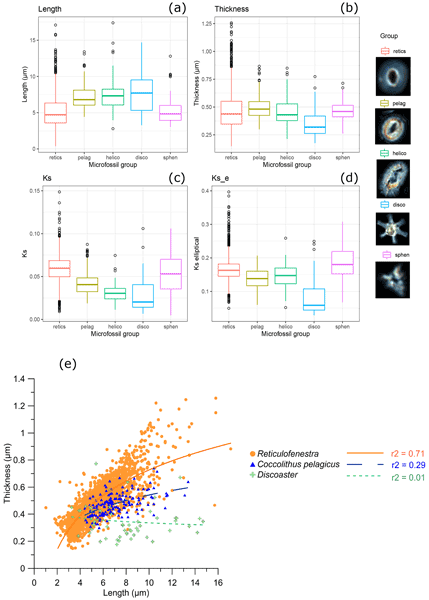
We quantified the thickness of early Eocene calcareous nannofossils and linked it to different depositional environment parameters. Discoasters and placoliths do not respond in the same manner. Carbonate content affects discoasters and induces overgrowth, but palaeowater depth affects placoliths and can induce dissolution. We also find that the ratio of non-overgrown to overgrown Discoaster multiradiatus is a potential quantitative placolith preservation indicator.
We quantified the thickness of early Eocene calcareous nannofossils and linked it to different...


