
Articles | Volume 45, issue 1
https://doi.org/10.5194/jm-45-117-2026
© Author(s) 2026. This work is distributed under
the Creative Commons Attribution 4.0 License.
the Creative Commons Attribution 4.0 License.
https://doi.org/10.5194/jm-45-117-2026
© Author(s) 2026. This work is distributed under
the Creative Commons Attribution 4.0 License.
the Creative Commons Attribution 4.0 License.
Research article
| 
30 Jan 2026
Research article |
| 30 Jan 2026
| 30 Jan 2026
Environmental changes at the seafloor of the Faro drift (Gulf of Cadiz) during the transition from the Early to the Middle Pleistocene
Giulia Silveira Molina
CORRESPONDING AUTHOR

Centro de Ciências do Mar (CCMAR/CIMAR LA), Campus de Gambelas, Universidade do Algarve, 8005-139 Faro, Portugal
Instituto Português do Mar e da Atmosfera (IPMA), Divisão de Geologia e Georecursos Marinhos, Avenida Doutor Alfredo Magalhães Ramalho 6, 1495-165 Algés, Portugal
Gerhard Schmiedl
Institute for Geology, University of Hamburg, Bundesstraße 55, 20146 Hamburg, Germany
Center for Earth System Research and Sustainability, University of Hamburg, Bundesstraße 55, 20146 Hamburg, Germany
Francisco Jiménez-Espejo
Andalusian Earth Sciences Institute, CSIC, Avenida de las Palmeras 4, 18100 Armilla, Spain
Henning Kuhnert
MARUM, University of Bremen, Leobener Straße 8, 28359 Bremen, Germany
Teresa Rodrigues
Centro de Ciências do Mar (CCMAR/CIMAR LA), Campus de Gambelas, Universidade do Algarve, 8005-139 Faro, Portugal
Instituto Português do Mar e da Atmosfera (IPMA), Divisão de Geologia e Georecursos Marinhos, Avenida Doutor Alfredo Magalhães Ramalho 6, 1495-165 Algés, Portugal
Antje Helga Luise Voelker
Centro de Ciências do Mar (CCMAR/CIMAR LA), Campus de Gambelas, Universidade do Algarve, 8005-139 Faro, Portugal
Instituto Português do Mar e da Atmosfera (IPMA), Divisão de Geologia e Georecursos Marinhos, Avenida Doutor Alfredo Magalhães Ramalho 6, 1495-165 Algés, Portugal
Related authors
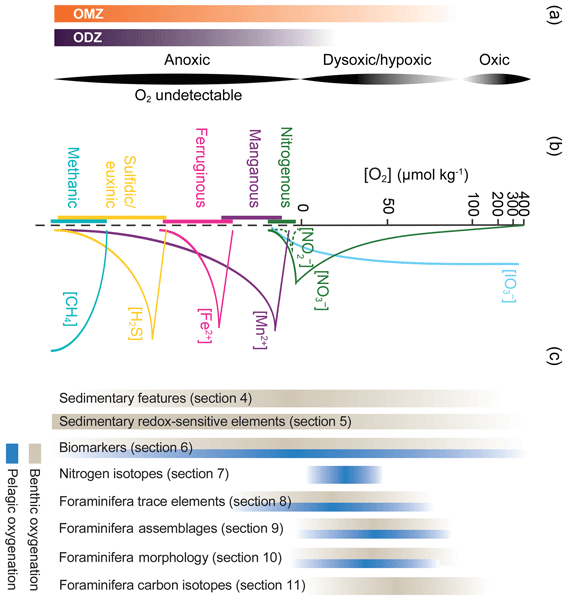
Babette A.A. Hoogakker, Catherine Davis, Yi Wang, Stephanie Kusch, Katrina Nilsson-Kerr, Dalton S. Hardisty, Allison Jacobel, Dharma Reyes Macaya, Nicolaas Glock, Sha Ni, Julio Sepúlveda, Abby Ren, Alexandra Auderset, Anya V. Hess, Katrin J. Meissner, Jorge Cardich, Robert Anderson, Christine Barras, Chandranath Basak, Harold J. Bradbury, Inda Brinkmann, Alexis Castillo, Madelyn Cook, Kassandra Costa, Constance Choquel, Paula Diz, Jonas Donnenfield, Felix J. Elling, Zeynep Erdem, Helena L. Filipsson, Sebastián Garrido, Julia Gottschalk, Anjaly Govindankutty Menon, Jeroen Groeneveld, Christian Hallmann, Ingrid Hendy, Rick Hennekam, Wanyi Lu, Jean Lynch-Stieglitz, Lélia Matos, Alfredo Martínez-García, Giulia Molina, Práxedes Muñoz, Simone Moretti, Jennifer Morford, Sophie Nuber, Svetlana Radionovskaya, Morgan Reed Raven, Christopher J. Somes, Anja S. Studer, Kazuyo Tachikawa, Raúl Tapia, Martin Tetard, Tyler Vollmer, Xingchen Wang, Shuzhuang Wu, Yan Zhang, Xin-Yuan Zheng, and Yuxin Zhou
Biogeosciences, 22, 863–957, https://doi.org/10.5194/bg-22-863-2025, https://doi.org/10.5194/bg-22-863-2025, 2025
Short summary
Short summary
Paleo-oxygen proxies can extend current records, constrain pre-anthropogenic baselines, provide datasets necessary to test climate models under different boundary conditions, and ultimately understand how ocean oxygenation responds on longer timescales. Here we summarize current proxies used for the reconstruction of Cenozoic seawater oxygen levels. This includes an overview of the proxy's history, how it works, resources required, limitations, and future recommendations.
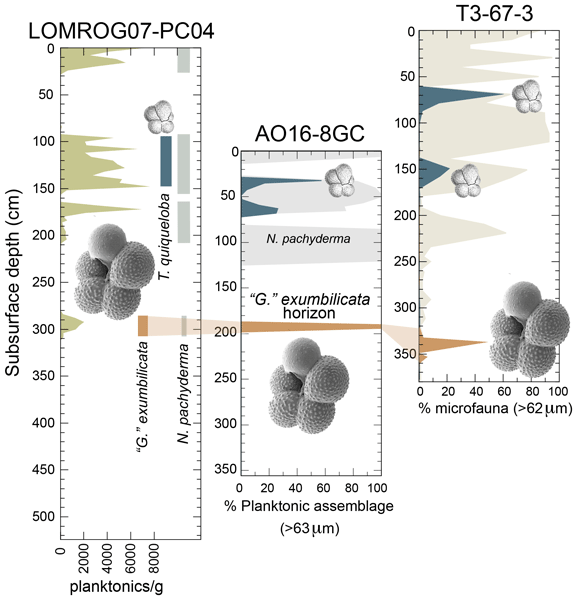
Helen K. Coxall, Thomas M. Cronin, Kate Darling, Katrine Husum, Tamara Handl, Brian T. Huber, Megh M. Kanvinde, Mohammad Razmjooei, Flor Vermassen, Antje H. L. Voelker, Tirza M. Weitkamp, and Matt O'Regan
J. Micropalaeontol., 45, 581–622, https://doi.org/10.5194/jm-45-581-2026, https://doi.org/10.5194/jm-45-581-2026, 2026
Short summary
Short summary
Today’s sea-ice-covered Arctic Ocean hosts only one species of calcifying planktonic foraminifera, unlike warmer oceans with diverse communities. Fossils show that other species once inhabited the Arctic, but their identities and environmental significance remain uncertain. Using detailed microscopy and hundreds of shell measurements, we resolve these fossil species and establish a new taxonomic framework providing the foundation for improved reconstructions of Quaternary Arctic climate history.
Catrina Gore, Peter Mueller, Mark Chapman, Franck Dal Molin, Gerhard Schmiedl, Yvonne Milker, Lisa Benson, and Stefanie Nolte
EGUsphere, https://doi.org/10.5194/egusphere-2026-1559, https://doi.org/10.5194/egusphere-2026-1559, 2026
Short summary
Short summary
Various chemical and physical analyses were performed with mud samples from four restored UK saltmarshes to determine the origin of the organic matter (OM) present. The plants growing on the marsh could have supplied the OM or it could have been washed in by the tides from other ecosystems. In the restored marshes much of the OM came from the latter source and by making comparisons with existing data from natural saltmarshes, it was determined that this was not true of these sites.
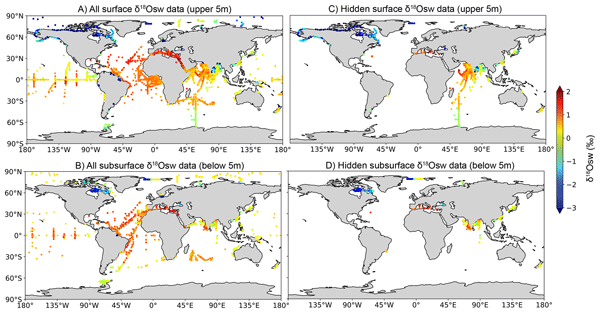
Alyssa R. Atwood, Andrea L. Moore, Kristine L. DeLong, Sylvia E. Long, Sara C. Sanchez, Jessica A. Hargreaves, Chandler A. Morris, Raquel E. Pauly, Émilie P. Dassié, Thomas Felis, Antje H. L. Voelker, Sujata A. Murty, and Kim M. Cobb
Earth Syst. Sci. Data, 18, 1921–1941, https://doi.org/10.5194/essd-18-1921-2026, https://doi.org/10.5194/essd-18-1921-2026, 2026
Short summary
Short summary
The stable isotopic composition of seawater is a valuable tool for studying the global water cycle in the past, present, and future. However, an active repository dedicated to archiving this type of data has been lacking, and many datasets remain hidden from public view. We have created a new database of observational seawater isotope data that is rich in metadata, publicly accessible, and machine readable to increase its availability and usability for a variety of Earth Science applications.
Gilles Reverdin, Claire Waelbroeck, Lola Goeme, Antje Voelker, and Hans-Christian Steen-Larsen
EGUsphere, https://doi.org/10.5194/egusphere-2026-851, https://doi.org/10.5194/egusphere-2026-851, 2026
Short summary
Short summary
The distributions of water isotopic properties (δ18O, δ2H, deuterium excess) as a function of salinity are studied in the surface Atlantic Ocean and southwest Indian Ocean using the CISE-LOCEAN data base. Large spatial gradients are found as well as a seasonal variability in the North Atlantic sub-polar gyre and in the equatorial Atlantic. Spatially-averaged seasonal cycles are established in these regions, as well as at the BATS site (31°50’ N, 64°10’ W), with weak interannual variability.
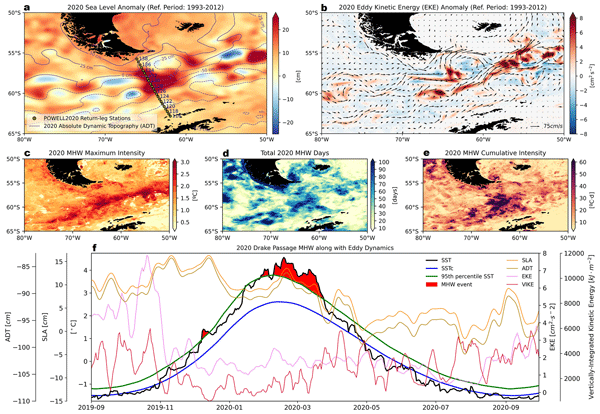
Andrés S. Rigual-Hernández, Amy Leventer, Manuel Fernández-Barba, José A. Flores, Gabriel Navarro, Johan Etourneau, Dimitris Evangelinos, Megan Duffy, Carlota Escutia, Fernando Bohoyo, José M. Sánchez-Santos, Manon Sabourdy, Francisco J. Jiménez-Espejo, and María A. Bárcena
Biogeosciences, 22, 7205–7232, https://doi.org/10.5194/bg-22-7205-2025, https://doi.org/10.5194/bg-22-7205-2025, 2025
Short summary
Short summary
We studied the abundance and composition of key phytoplankton groups in the Drake Passage and Antarctic Peninsula before and during a marine heatwave in summer 2020. An anticyclonic eddy transported warmer waters into the southern Drake Passage. This led to higher diatom abundance and an increase in the abundance of a small diatom species in the southern Drake Passage while reducing coccolithophore populations. The consequences on marine ecosystems and biogeochemical cycles remain uncertain.
Sandra Domingues Gomes, William Fletcher, Abi Stone, Teresa Rodrigues, Andreia Rebotim, Dulce Oliveira, Maria Sánchez Goñi, Fátima Abrantes, and Filipa Naughton
Biogeosciences, 22, 6631–6650, https://doi.org/10.5194/bg-22-6631-2025, https://doi.org/10.5194/bg-22-6631-2025, 2025
Short summary
Short summary
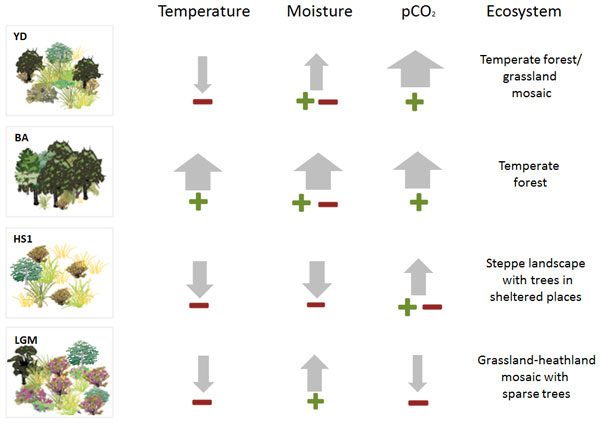
Our study explores how rising CO2 at the end of the last ice age impacted vegetation in the Iberian Peninsula. By analyzing pollen and ocean temperatures in marine sediments, we found that higher CO2 helped forests expand, even in cool or dry conditions. This shows that CO2 played a key role in shaping ecosystems during climate shifts. Understanding this past response helps us see how different factors interact and provides insights into how today’s ecosystems might adapt to rapidly rising CO2.
Anjaly Govindankutty Menon, Aaron L. Bieler, Hanna Firrincieli, Rachel Alcorn, Niko Lahajnar, Catherine V. Davis, Ralf Schiebel, Dirk Nürnberg, Gerhard Schmiedl, and Nicolaas Glock
Clim. Past, 21, 1853–1869, https://doi.org/10.5194/cp-21-1853-2025, https://doi.org/10.5194/cp-21-1853-2025, 2025
Short summary
Short summary
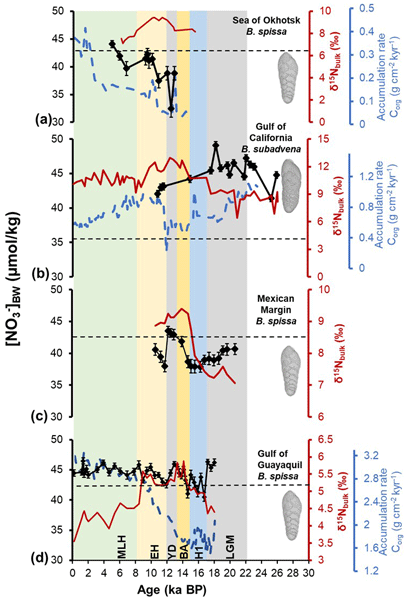
The pore density (number of pores per unit area) of unicellular eukaryotes is used to reconstruct past bottom-water nitrate at the Sea of Okhotsk, the Gulf of California, the Mexican Margin and the Gulf of Guayaquil. The reconstructed bottom-water nitrate at the Sea of Okhotsk, the Gulf of California and the Gulf of Guayaquil are influenced by the intermediate water masses, while the nitrate at the Mexican Margin is related to the deglacial NO3− variability in the Pacific Deep Water.
Hannah Krüger, Gerhard Schmiedl, Zvi Steiner, Zhouling Zhang, Eric P. Achterberg, and Nicolaas Glock
J. Micropalaeontol., 44, 193–211, https://doi.org/10.5194/jm-44-193-2025, https://doi.org/10.5194/jm-44-193-2025, 2025
Short summary
Short summary
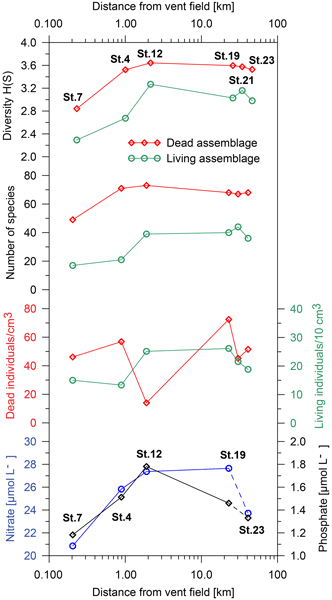
The biodiversity and abundance of benthic foraminifera tend to increase with distance within a transect from the Rainbow hydrothermal vent field. Miliolids dominate closer to the vents and may be better adapted to the potentially hydrothermal conditions than hyaline and agglutinated species. The reason for this remains unclear, but there are indications that elevated trace-metal concentrations in the porewater and intrusion of acidic hydrothermal fluids could have an influence on the foraminifera.
Werner Ehrmann, Paul A. Wilson, Helge W. Arz, and Gerhard Schmiedl
Clim. Past, 21, 1025–1041, https://doi.org/10.5194/cp-21-1025-2025, https://doi.org/10.5194/cp-21-1025-2025, 2025
Short summary
Short summary
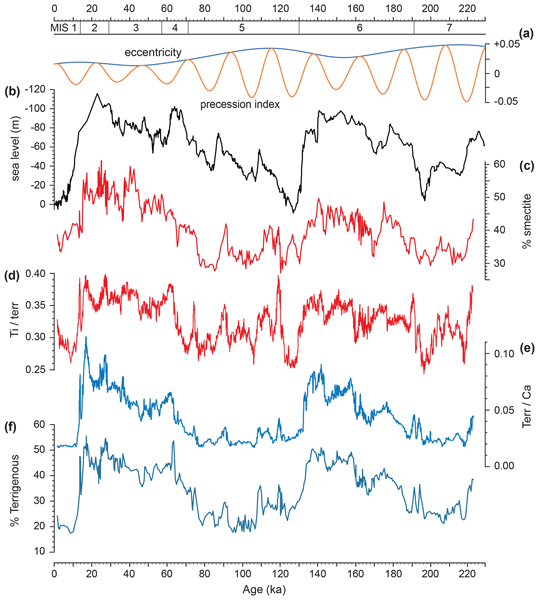
We report palaeoclimate and sediment provenance records for the last 220 kyr from a sediment core from the northern Red Sea. They comprise high-resolution grain size, clay mineral, and geochemical data, together with Nd and Sr isotope data. The data sets document a strong temporal variability in dust influx on glacial–interglacial timescales and several shorter-term strong fluvial episodes. A key finding is that the Nile delta became a major dust source during glacioeustatic sea-level lowstands.
Aline Mega, Teresa Rodrigues, Emília Salgueiro, Mária Padilha, Henning Kuhnert, and Antje H. L. Voelker
Clim. Past, 21, 919–939, https://doi.org/10.5194/cp-21-919-2025, https://doi.org/10.5194/cp-21-919-2025, 2025
Short summary
Short summary
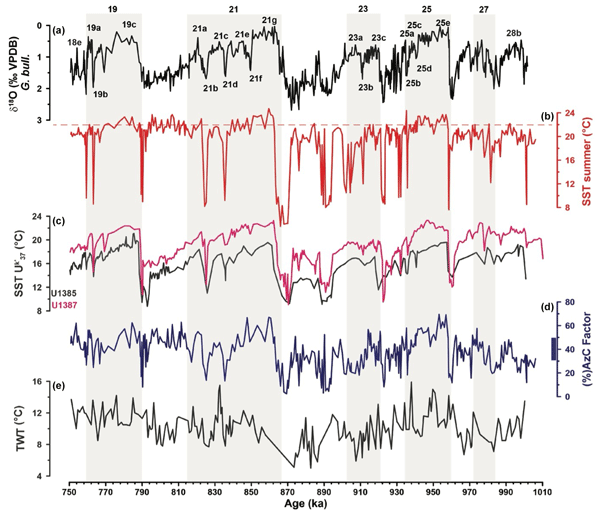
Our research explores climatic changes during the Early–Middle Pleistocene (1006–750 ka) on the southern Portuguese margin. We found that warm, subtropical-gyre-related conditions dominated. However, those conditions were occasionally interrupted by extreme cold events during the glacial periods. Our data show that these cold events, linked to changes in the North Atlantic's circulation, reached as far south as 36° N and significantly impacted marine ecosystems in the surface ocean.
Gilles Reverdin, Claire Waelbroeck, Antje H. L. Voelker, and Hanno Meyer
Ocean Sci., 21, 567–575, https://doi.org/10.5194/os-21-567-2025, https://doi.org/10.5194/os-21-567-2025, 2025
Short summary
Short summary
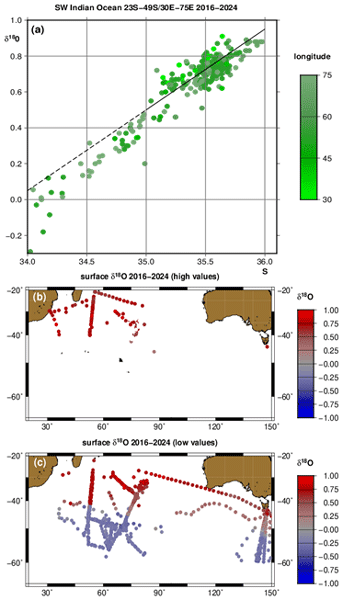
Water isotopes in the ocean trace the freshwater exchanges between the ocean, the atmosphere, and the cryosphere and are used to investigate processes of the hydrological cycle. We illustrate offsets in seawater isotopic composition between different datasets that are larger than the expected variability that one often wants to explore. This highlights the need to share seawater isotopic composition samples dedicated to specific intercomparison of data produced in different laboratories.
Babette A.A. Hoogakker, Catherine Davis, Yi Wang, Stephanie Kusch, Katrina Nilsson-Kerr, Dalton S. Hardisty, Allison Jacobel, Dharma Reyes Macaya, Nicolaas Glock, Sha Ni, Julio Sepúlveda, Abby Ren, Alexandra Auderset, Anya V. Hess, Katrin J. Meissner, Jorge Cardich, Robert Anderson, Christine Barras, Chandranath Basak, Harold J. Bradbury, Inda Brinkmann, Alexis Castillo, Madelyn Cook, Kassandra Costa, Constance Choquel, Paula Diz, Jonas Donnenfield, Felix J. Elling, Zeynep Erdem, Helena L. Filipsson, Sebastián Garrido, Julia Gottschalk, Anjaly Govindankutty Menon, Jeroen Groeneveld, Christian Hallmann, Ingrid Hendy, Rick Hennekam, Wanyi Lu, Jean Lynch-Stieglitz, Lélia Matos, Alfredo Martínez-García, Giulia Molina, Práxedes Muñoz, Simone Moretti, Jennifer Morford, Sophie Nuber, Svetlana Radionovskaya, Morgan Reed Raven, Christopher J. Somes, Anja S. Studer, Kazuyo Tachikawa, Raúl Tapia, Martin Tetard, Tyler Vollmer, Xingchen Wang, Shuzhuang Wu, Yan Zhang, Xin-Yuan Zheng, and Yuxin Zhou
Biogeosciences, 22, 863–957, https://doi.org/10.5194/bg-22-863-2025, https://doi.org/10.5194/bg-22-863-2025, 2025
Short summary
Short summary
Paleo-oxygen proxies can extend current records, constrain pre-anthropogenic baselines, provide datasets necessary to test climate models under different boundary conditions, and ultimately understand how ocean oxygenation responds on longer timescales. Here we summarize current proxies used for the reconstruction of Cenozoic seawater oxygen levels. This includes an overview of the proxy's history, how it works, resources required, limitations, and future recommendations.
Jan Maier, Nicole Burdanowitz, Gerhard Schmiedl, and Birgit Gaye
Clim. Past, 21, 279–297, https://doi.org/10.5194/cp-21-279-2025, https://doi.org/10.5194/cp-21-279-2025, 2025
Short summary
Short summary
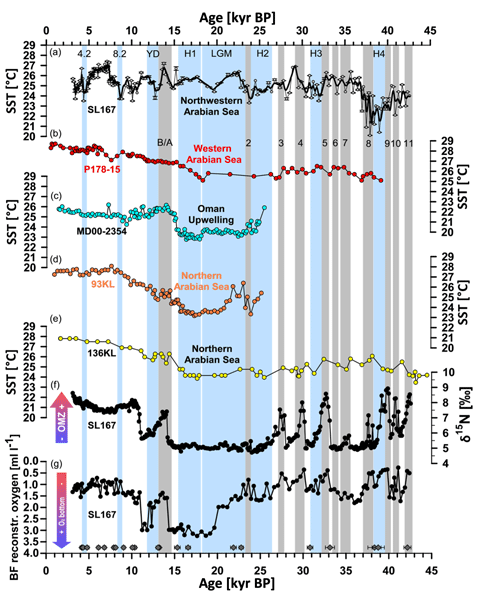
We reconstruct sea surface temperatures (SSTs) of the past 43 kyr in the Gulf of Oman. We find SST variations of up to 7 °C with lower SSTs during Heinrich events (HEs), especially HE4, and higher SSTs during Dansgaard–Oeschger events. Our record shows no profound cooling during the Last Glacial Maximum but abrupt variations during the Holocene. We surmise that SST variations are influenced by the southwest (northeast) monsoon during warmer (colder) periods.
Xiaolei Pang, Antje H. L. Voelker, Sihua Lu, and Xuan Ding
Clim. Past, 20, 2103–2116, https://doi.org/10.5194/cp-20-2103-2024, https://doi.org/10.5194/cp-20-2103-2024, 2024
Short summary
Short summary
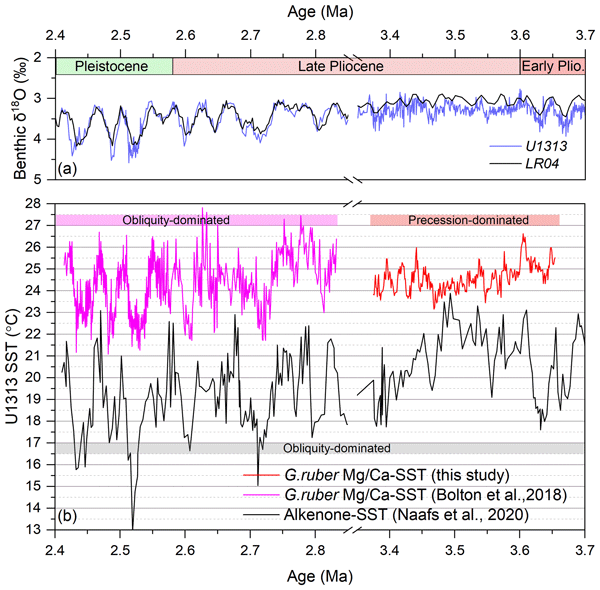
Our research discovered significant seasonal temperature variations in the North Atlantic's mid-latitudes during the early Late Pliocene. This highlights the necessity of using multiple methods to get a full picture of past climates, thus avoiding a biased understanding of the climate system. Moreover, our study reveals that the precession signal, which previously dominated surface temperature records, disappeared with the increased influence of the ice sheets in the Northern Hemisphere.
Katharina D. Six, Uwe Mikolajewicz, and Gerhard Schmiedl
Clim. Past, 20, 1785–1816, https://doi.org/10.5194/cp-20-1785-2024, https://doi.org/10.5194/cp-20-1785-2024, 2024
Short summary
Short summary
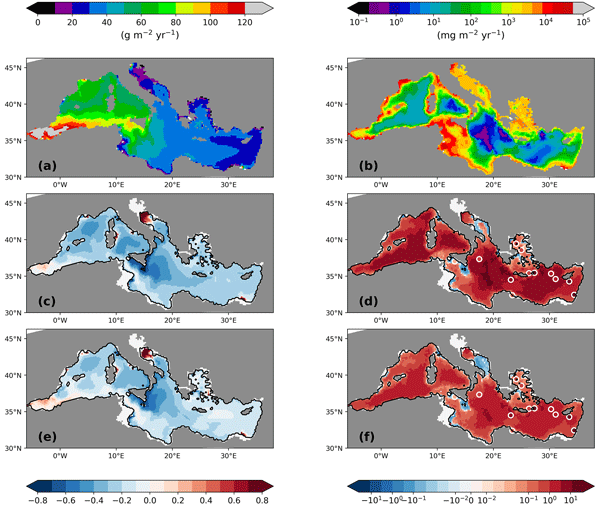
We use a physical and biogeochemical ocean model of the Mediterranean Sea to obtain a picture of the Last Glacial Maximum. The shallowing of the Strait of Gibraltar leads to a shallower pycnocline and more efficient nutrient export. Consistent with the sediment data, an increase in organic matter deposition is simulated, although this is based on lower biological production. This unexpected but plausible result resolves the apparent contradiction between planktonic and benthic proxy data.
Nicole Burdanowitz, Gerhard Schmiedl, Birgit Gaye, Philipp M. Munz, and Hartmut Schulz
Biogeosciences, 21, 1477–1499, https://doi.org/10.5194/bg-21-1477-2024, https://doi.org/10.5194/bg-21-1477-2024, 2024
Short summary
Short summary
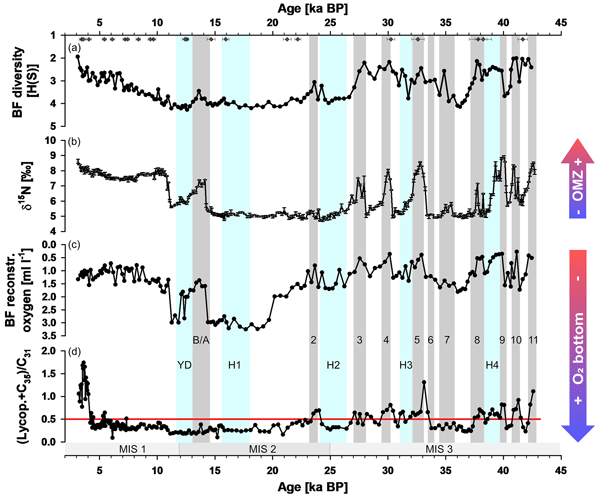
We analyse benthic foraminifera, nitrogen isotopes and lipids in a sediment core from the Gulf of Oman to investigate how the oxygen minimum zone (OMZ) and bottom water (BW) oxygenation have reacted to climatic changes since 43 ka. The OMZ and BW deoxygenation was strong during the Holocene, but the OMZ was well ventilated during the LGM period. We found an unstable mode of oscillating oxygenation states, from moderately oxygenated in cold stadials to deoxygenated in warm interstadials in MIS 3.
Montserrat Alonso-Garcia, Jesus Reolid, Francisco J. Jimenez-Espejo, Or M. Bialik, Carlos A. Alvarez Zarikian, Juan Carlos Laya, Igor Carrasquiera, Luigi Jovane, John J. G. Reijmer, Gregor P. Eberli, and Christian Betzler
Clim. Past, 20, 547–571, https://doi.org/10.5194/cp-20-547-2024, https://doi.org/10.5194/cp-20-547-2024, 2024
Short summary
Short summary
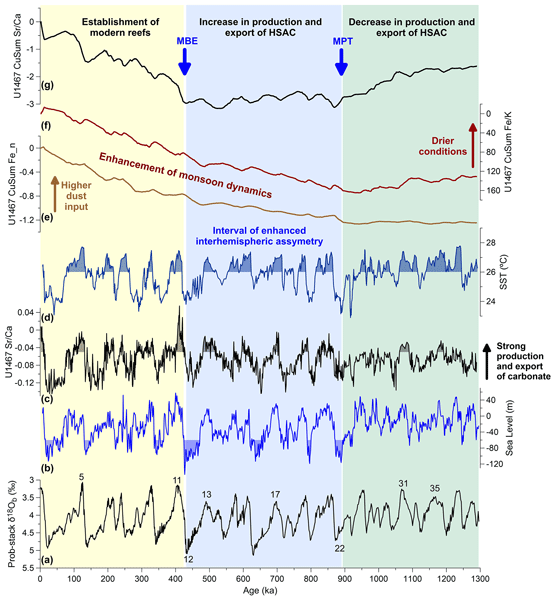
The Maldives Inner Sea (northern Indian Ocean) offers an excellent study site to explore the impact of climate and sea-level changes on carbonate platforms. The sediments from International Ocean Discovery Program (IODP) Site U1467 have been studied to determine the drivers of carbonate production in the atolls over the last 1.3 million years. Even though sea level is important, the intensity of the summer monsoon and the Indian Ocean dipole probably modulated the production at the atolls.
Raphaël Hubert-Huard, Nils Andersen, Helge W. Arz, Werner Ehrmann, and Gerhard Schmiedl
Clim. Past, 20, 267–280, https://doi.org/10.5194/cp-20-267-2024, https://doi.org/10.5194/cp-20-267-2024, 2024
Short summary
Short summary
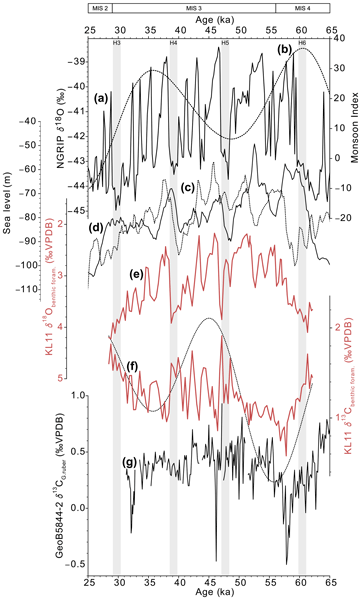
We have studied the geochemistry of benthic foraminifera (micro-fossils) from a sediment core from the Red Sea. Our data show that the circulation and carbon cycling of the Red Sea during the last glacial period responded to high-latitude millennial-scale climate variability and to the orbital influence of the African–Indian monsoon system. This implies a sensitive response of the Red Sea to climate changes.
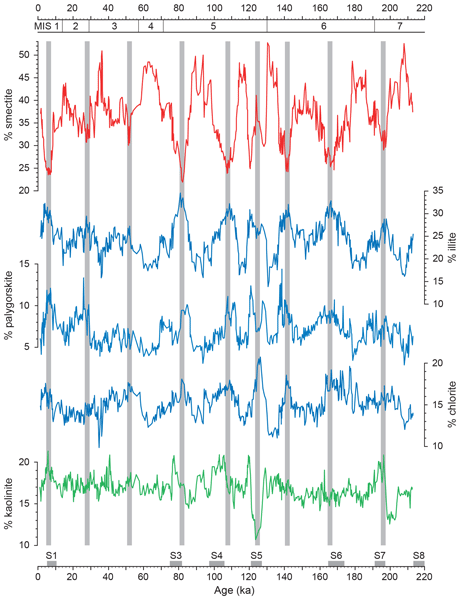
Werner Ehrmann, Paul A. Wilson, Helge W. Arz, Hartmut Schulz, and Gerhard Schmiedl
Clim. Past, 20, 37–52, https://doi.org/10.5194/cp-20-37-2024, https://doi.org/10.5194/cp-20-37-2024, 2024
Short summary
Short summary
Climatic and associated hydrological changes controlled the aeolian versus fluvial transport processes and the composition of the sediments in the central Red Sea through the last ca. 200 kyr. We identify source areas of the mineral dust and pulses of fluvial discharge based on high-resolution grain size, clay mineral, and geochemical data, together with Nd and Sr isotope data. We provide a detailed reconstruction of changes in aridity/humidity.
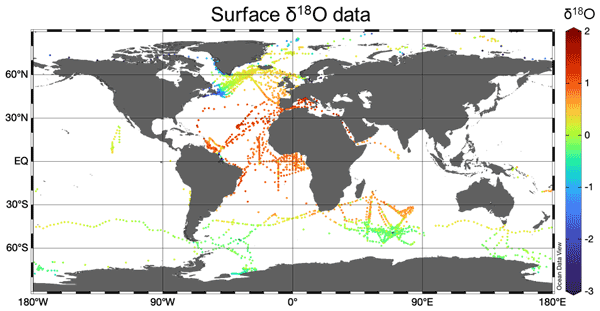
Gilles Reverdin, Claire Waelbroeck, Catherine Pierre, Camille Akhoudas, Giovanni Aloisi, Marion Benetti, Bernard Bourlès, Magnus Danielsen, Jérôme Demange, Denis Diverrès, Jean-Claude Gascard, Marie-Noëlle Houssais, Hervé Le Goff, Pascale Lherminier, Claire Lo Monaco, Herlé Mercier, Nicolas Metzl, Simon Morisset, Aïcha Naamar, Thierry Reynaud, Jean-Baptiste Sallée, Virginie Thierry, Susan E. Hartman, Edward W. Mawji, Solveig Olafsdottir, Torsten Kanzow, Anton Velo, Antje Voelker, Igor Yashayaev, F. Alexander Haumann, Melanie J. Leng, Carol Arrowsmith, and Michael Meredith
Earth Syst. Sci. Data, 14, 2721–2735, https://doi.org/10.5194/essd-14-2721-2022, https://doi.org/10.5194/essd-14-2721-2022, 2022
Short summary
Short summary
The CISE-LOCEAN seawater stable isotope dataset has close to 8000 data entries. The δ18O and δD isotopic data measured at LOCEAN have uncertainties of at most 0.05 ‰ and 0.25 ‰, respectively. Some data were adjusted to correct for evaporation. The internal consistency indicates that the data can be used to investigate time and space variability to within 0.03 ‰ and 0.15 ‰ in δ18O–δD17; comparisons with data analyzed in other institutions suggest larger differences with other datasets.
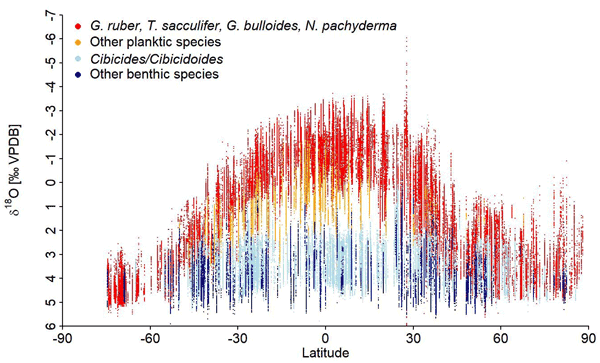
Stefan Mulitza, Torsten Bickert, Helen C. Bostock, Cristiano M. Chiessi, Barbara Donner, Aline Govin, Naomi Harada, Enqing Huang, Heather Johnstone, Henning Kuhnert, Michael Langner, Frank Lamy, Lester Lembke-Jene, Lorraine Lisiecki, Jean Lynch-Stieglitz, Lars Max, Mahyar Mohtadi, Gesine Mollenhauer, Juan Muglia, Dirk Nürnberg, André Paul, Carsten Rühlemann, Janne Repschläger, Rajeev Saraswat, Andreas Schmittner, Elisabeth L. Sikes, Robert F. Spielhagen, and Ralf Tiedemann
Earth Syst. Sci. Data, 14, 2553–2611, https://doi.org/10.5194/essd-14-2553-2022, https://doi.org/10.5194/essd-14-2553-2022, 2022
Short summary
Short summary
Stable isotope ratios of foraminiferal shells from deep-sea sediments preserve key information on the variability of ocean circulation and ice volume. We present the first global atlas of harmonized raw downcore oxygen and carbon isotope ratios of various planktonic and benthic foraminiferal species. The atlas is a foundation for the analyses of the history of Earth system components, for finding future coring sites, and for teaching marine stratigraphy and paleoceanography.

Inga Labuhn, Franziska Tell, Ulrich von Grafenstein, Dan Hammarlund, Henning Kuhnert, and Bénédicte Minster
Biogeosciences, 19, 2759–2777, https://doi.org/10.5194/bg-19-2759-2022, https://doi.org/10.5194/bg-19-2759-2022, 2022
Short summary
Short summary
This study presents the isotopic composition of recent biogenic carbonates from several lacustrine species which calcify during different times of the year. The authors demonstrate that when biological offsets are corrected, the dominant cause of differences between species is the seasonal variation in temperature-dependent fractionation of oxygen isotopes. Consequently, such carbonates from lake sediments can provide proxy records of seasonal water temperature changes in the past.
Cited articles
Abrantes, F.: Influence of the Guadalquivir River on Surface Sediments Diatom Assemblages: Gulf of Cadiz, Comunicações dos Serviços Geológicos de Portugal, 76, 23–31, 1990.
Ahn, S., Khider, D., Lisiecki, L. E., and Lawrence, C. E.: A probabilistic Pliocene–Pleistocene stack of benthic δ18O using a profile hidden Markov model, Dynamics and Statistics of the Climate System, 2, dzx002, https://doi.org/10.1093/climsys/dzx002, 2017.
Alonso, B., Ercilla, G., Casas, D., Stow, D. A. V., Rodríguez-Tovar, F. J., Dorador, J., and Hernández-Molina, F.-J.: Contourite vs gravity-flow deposits of the Pleistocene Faro Drift (Gulf of Cadiz): Sedimentological and mineralogical approaches, Marine Geology, 377, 77–94, https://doi.org/10.1016/j.margeo.2015.12.016, 2016.
Altenbach, A. V.: Short term processes and patterns in the foraminiferal response to organic flux rates, Marine Micropaleontology, 19, 119–129, https://doi.org/10.1016/0377-8398(92)90024-E, 1992.
Ambar, I. and Howe, M. R.: Observations of the Mediterranean outflow – I mixing in the Mediterranean outflow, Deep Sea Research Part A. Oceanographic Research Papers, 26, 535–554, https://doi.org/10.1016/0198-0149(79)90095-5, 1979a.
Ambar, I. and Howe, M. R.: Observations of the mediterranean outflow – II the deep circulation in the vicinity of the gulf of cadiz, Deep Sea Research Part A. Oceanographic Research Papers, 26, 555–568, https://doi.org/10.1016/0198-0149(79)90096-7, 1979b.
Ambar, I., Serra, N., Brogueira, M. J., Cabeçadas, G., Abrantes, F., Freitas, P., Gonçalves, C., and Gonzalez, N.: Physical, chemical and sedimentological aspects of the Mediterranean outflow off Iberia, Deep Sea Research Part II: Topical Studies in Oceanography, 49, 4163–4177, https://doi.org/10.1016/S0967-0645(02)00148-0, 2002.
Baas, J. H., Schönfeld, J., and Zahn, R.: Mid-depth oxygen drawdown during Heinrich events: evidence from benthic foraminiferal community structure, trace-fossil tiering, and benthic δ13C at the Portuguese Margin, Marine Geology, 152, 25–55, https://doi.org/10.1016/S0025-3227(98)00063-2, 1998.
Badawi, A., Schmiedl, G., and Hemleben, C.: Impact of late Quaternary environmental changes on deep-sea benthic foraminiferal faunas of the Red Sea, Marine Micropaleontology, 58, 13–30, https://doi.org/10.1016/j.marmicro.2005.08.002, 2005.
Bahr, A., Jiménez-Espejo, F. J., Kolasinac, N., Grunert, P., Hernández-Molina, F. J., Röhl, U., Voelker, A. H. L., Escutia, C., Stow, D. A. V., Hodell, D., and Alvarez-Zarikian, C. A.: Deciphering bottom current velocity and paleoclimate signals from contourite deposits in the Gulf of Cádiz during the last 140 kyr: An inorganic geochemical approach, Geochemistry, Geophysics, Geosystems, 15, 3145–3160, https://doi.org/10.1002/2014GC005356, 2014.
Bahr, A., Kaboth, S., Jiménez-Espejo, F. J., Sierro, F. J., Voelker, A. H. L., Lourens, L., Röhl, U., Reichart, G. J., Escutia, C., Hernández-Molina, F. J., Pross, J., and Friedrich, O.: Persistent monsoonal forcing of Mediterranean Outflow Water dynamics during the late Pleistocene, Geology, 43, 951–954, https://doi.org/10.1130/G37013.1, 2015.
Bajo, P., Drysdale, R. N., Woodhead, J. D., Hellstrom, J. C., Hodell, D. A., Ferretti, P., Voelker, A. H. L., Zanchetta, G., Rodrigues, T., Wolff, E. W., Tyler, J. J., Frisia, S., Spötl, C., and Fallick, A. E.: Oxygen isotope of planktic foraminifera Globigerina bulloides from IODP Site 339-U1387, PANGAEA [data set] https://doi.org/10.1594/PANGAEA.914401, 2020.
Baringer, M. O. and Price, J. F.: Mixing and Spreading of the Mediterranean Outflow, Journal of Physical Oceanography, 27, 1654–1677, https://doi.org/10.1175/1520-0485(1997)027<1654:MASOTM>2.0.CO;2, 1997.
Billups, K. and Scheinwald, A.: Origin of millennial-scale climate signals in the subtropical North Atlantic, Paleoceanography, 29, 612–627, https://doi.org/10.1002/2014PA002641, 2014.
Bosmans, J. H. C., Drijfhout, S. S., Tuenter, E., Hilgen, F. J., Lourens, L. J., and Rohling, E. J.: Precession and obliquity forcing of the freshwater budget over the Mediterranean, Quaternary Science Reviews, 123, 16–30, https://doi.org/10.1016/j.quascirev.2015.06.008, 2015.
Bosmans, J. H. C., van der Ent, R. J., Haarsma, R. J., Drijfhout, S. S., and Hilgen, F. J.: Precession- and Obliquity-Induced Changes in Moisture Sources for Enhanced Precipitation Over the Mediterranean Sea, Paleoceanography and Paleoclimatology, 35, e2019PA003655, https://doi.org/10.1029/2019PA003655, 2020.
Bout-Roumazeilles, V., Combourieu Nebout, N., Peyron, O., Cortijo, E., Landais, A., and Masson-Delmotte, V.: Connection between South Mediterranean climate and North African atmospheric circulation during the last 50,000 yr BP North Atlantic cold events, Quaternary Science Reviews, 26, 3197–3215, https://doi.org/10.1016/j.quascirev.2007.07.015, 2007.
Burdige, D. J.: The controls on organic carbon preservation in marine sediments, in: Geochemistry of Marine Sediments, Princeton University Press, Princeton, NJ, USA, 408–441, https://doi.org/10.2307/j.ctv131bw7s.19, 2006.
Cabeçadas, G., José Brogueira, M., and Gonçalves, C.: The chemistry of Mediterranean outflow and its interactions with surrounding waters, Deep Sea Research Part II: Topical Studies in Oceanography, 49, 4263–4270, https://doi.org/10.1016/S0967-0645(02)00154-6, 2002.
Cacho, I., Grimalt, J. O., Sierro, F. J., Shackleton, N., and Canals, M.: Evidence for enhanced Mediterranean thermohaline circulation during rapid climatic coolings, Earth and Planetary Science Letters, 183, 417–429, https://doi.org/10.1016/S0012-821X(00)00296-X, 2000.
Cacho, I., Shackleton, N., Elderfield, H., Sierro, F. J., and Grimalt, J. O.: Glacial rapid variability in deep-water temperature and δ18O from the Western Mediterranean Sea, Quaternary Science Reviews, 25, 3294–3311, https://doi.org/10.1016/j.quascirev.2006.10.004, 2006.
Calvert, S. E. and Pedersen, T. F.: Organic carbon accumulation and preservation in marine sediments: how important is anoxia?, in: Productivity, Accumulation and Preservation of Organic Matter in Recent and Ancient Sediments, edited by: Whelan, J. K. and Farrington, J. W., Columbia University Press, New York, NY, USA, 231–263, ISBN 978-0-231-07162-8, 1992.
Candela, J.: Chapter 5.7 Mediterranean water and global circulation, in: International Geophysics, vol. 77, edited by: Siedler, G., Church, J., and Gould, J., Academic Press, 419–XLVIII, https://doi.org/10.1016/S0074-6142(01)80132-7, 2001.
Caralp, M. H.: Quaternary calcareous benthic foraminifers, Leg 80, in: DSDP Volume LXXX, edited by: de Graciansky, P. C., Poag, C. W., Cunningham, R., Loubere Jr., P., Masson, D. G., Mazzullo, J. M., Montadert, L., Müller, C., Otsuka, K., Reynolds, L., Sigal, J., Snyder, S., Townsend, H. A., U.S. Government Printing Office, Washington, D.C., United States of America, 725–755, https://doi.org/10.2973/dsdp.proc.80.126.1985, 1984.
Caralp, M. H.: Size and morphology of the benthic foraminifer Melonis barleeanum; relationships with marine organic matter, Journal of Foraminiferal Research, 19, 235–245, https://doi.org/10.2113/gsjfr.19.3.235, 1989.
Caralp, M.-H.: Late glacial to recent deep-sea benthic foraminifera from the northeastern Atlantic (Cadiz Gulf) and western Mediterranean (Alboran Sea): Paleooceanographic results, Marine Micropaleontology, 13, 265–289, https://doi.org/10.1016/0377-8398(88)90006-0, 1988.
Carracedo, L. I., Pardo, P. C., Flecha, S., and Pérez, F. F.: On the Mediterranean Water Composition, https://doi.org/10.1175/JPO-D-15-0095.1, 2016.
Chen, X., Wu, J., Pang, X., Dang, H., Zhong, L., Yu, J., Colin, C., Liu, Z., de Lange, G. J., Kaboth-Bahr, S., Xuan, C., Ikeda, H., Herbert, T. D., May Huang, H.-H., Alvarez Zarikian, C. A., Abrantes, F. F. G., and Hodell, D. A.: Depth Fluctuations of Mediterranean Outflow Water Along Its Northward Propagation During the Late Pleistocene, Geophysical Research Letters, 52, e2025GL116967, https://doi.org/10.1029/2025GL116967, 2025.
Cita, M. and Zocchi, M.: Distribution patterns of benthic foraminifera on floor of mediterranean sea, edited by: Gauthier-Villars, Oceanologica Acta, 1, 445–462, 1978.
Clark, P. U., Archer, D., Pollard, D., Blum, J. D., Rial, J. A., Brovkin, V., Mix, A. C., Pisias, N. G., and Roy, M.: The middle Pleistocene transition: characteristics, mechanisms, and implications for long-term changes in atmospheric pCO2, Quaternary Science Reviews, 25, 3150–3184, https://doi.org/10.1016/j.quascirev.2006.07.008, 2006.
Colmenero-Hidalgo, E., Flores, J.-A., Sierro, F. J., Bárcena, M. Á., Löwemark, L., Schönfeld, J., and Grimalt, J. O.: Ocean surface water response to short-term climate changes revealed by coccolithophores from the Gulf of Cadiz (NE Atlantic) and Alboran Sea (W Mediterranean), Palaeogeography, Palaeoclimatology, Palaeoecology, 205, 317–336, https://doi.org/10.1016/j.palaeo.2003.12.014, 2004.
Corliss, B. H.: Microhabitats of benthic foraminifera within deep-sea sediments, Nature, 314, 435–438, https://doi.org/10.1038/314435a0, 1985.
Corliss, B. H. and Chen, C.: Morphotype patterns of Norwegian Sea deep-sea benthic foraminifera and ecological implications, Geology, 16, 716–719, https://doi.org/10.1130/0091-7613(1988)016<0716:MPONSD>2.3.CO;2, 1988.
Cravo, A., Relvas, P., Cardeira, S., and Rita, F.: Nutrient and chlorophyll a transports during an upwelling event in the NW margin of the Gulf of Cadiz, Journal of Marine Systems, 128, 208–221, https://doi.org/10.1016/j.jmarsys.2013.05.001, 2013.
De, S. and Gupta, A. K.: Deep-sea faunal provinces and their inferred environments in the Indian Ocean based on distribution of Recent benthic foraminifera, Palaeogeography, Palaeoclimatology, Palaeoecology, 291, 429–442, https://doi.org/10.1016/j.palaeo.2010.03.012, 2010.
den Dulk, M., Reichart, G. A case history from the northern Arabian Sea, Palaeogeography, Palaeoclimatology, Palaeoecology organic matter flux and bottom water oxygenation? A case history from the northern Arabian Sea, Palaeogeography, Palaeoclimatology, Palaeoecology, 161, 337–359, https://doi.org/10.1016/S0031-0182(00)00074-2, 2000.
de Stigter, H. C., Jorissen, F. J., and van der Zwaan, G. J.: Bathymetric distribution and microhabitat partitioning of live (Rose Bengal stained) benthic Foraminifera along a shelf to bathyal transect in the southern Adriatic Sea, Journal of Foraminiferal Research, 28, 40–65, 1998.
D'Haenens, S., Bornemann, A., Stassen, P., and Speijer, R. P.: Multiple early Eocene benthic foraminiferal assemblage and δ13C fluctuations at DSDP Site 401 (Bay of Biscay – NE Atlantic), Marine Micropaleontology, 88–89, 15–35, https://doi.org/10.1016/j.marmicro.2012.02.006, 2012.
Diz, P., Peñalver-Clavel, I., Hernández-Almeida, I., and Bernasconi, S. M.: Environmental changes in the East Equatorial Pacific during the Mid Pleistocene Transition and implications for the Last Global Extinction of benthic foraminifera, Palaeogeography, Palaeoclimatology, Palaeoecology, 539, 109487, https://doi.org/10.1016/j.palaeo.2019.109487, 2020.
Duchemin, G., Jorissen, F. J., Le Loc'h, F., Andrieux-Loyer, F., Hily, C., and Thouzeau, G.: Seasonal variability of living benthic foraminifera from the outer continental shelf of the Bay of Biscay, Journal of Sea Research, 59, 297–319, https://doi.org/10.1016/j.seares.2008.03.006, 2008.
Elderfield, H., Ferretti, P., Greaves, M., Crowhurst, S., McCave, I. N., Hodell, D., and Piotrowski, A. M.: Evolution of Ocean Temperature and Ice Volume Through the Mid-Pleistocene Climate Transition, Science, 337, 704–709, https://doi.org/10.1126/science.1221294, 2012.
Emeis, K.-C., Sakamoto, T., Wehausen, R., and Brumsack, H.-J.: The sapropel record of the eastern Mediterranean Sea – results of Ocean Drilling Program Leg 160, Palaeogeography, Palaeoclimatology, Palaeoecology, 158, 371–395, https://doi.org/10.1016/S0031-0182(00)00059-6, 2000.
Expedition 339 Scientists: Site U1387, in: Proceedings IODP Exp. 339 – Mediterranean Outflow, edited by: Stow, D. A. V., Hernández-Molina, F. J., Alvarez Zarikian, C. A., and the Expedition 339 Scientists, Integrated Ocean Drilling Program Management International, Inc., Tokyo, https://doi.org/10.2204/iodp.proc.339.105.2013, 2013.
Farmer, J. R., Hönisch, B., Haynes, L. L., Kroon, D., Jung, S., Ford, H. L., Raymo, M. E., Jaume-Seguí, M., Bell, D. B., Goldstein, S. L., Pena, L. D., Yehudai, M., and Kim, J.: Deep Atlantic Ocean carbon storage and the rise of 100,000-year glacial cycles, Nature Geoscience, 12, 355–360, https://doi.org/10.1038/s41561-019-0334-6, 2019.
Faugèers, J.-C., Gonthier, E., and Stow, D. A. V.: Contourite drift molded by deep Mediterranean outflow, Geology, 12, 296–300, https://doi.org/10.1130/0091-7613(1984)12<296:CDMBDM>2.0.CO;2, 1984.
Felden, J., Möller, L., Schindler, U., Huber, R., Schumacher, S., Koppe, R., Diepenbroek, M., and Glöckner, F. O.: PANGAEA – Data Publisher for Earth & Environmental Science, Science Data, 10, 347, https://doi.org/10.1038/s41597-023-02269-x, 2023.
Fiúza, A. F. G.: Upwelling Patterns off Portugal, in: Coastal Upwelling Its Sediment Record: Part A: Responses of the Sedimentary Regime to Present Coastal Upwelling, edited by: Suess, E. and Thiede, J., Springer US, Boston, MA, 85–98, https://doi.org/10.1007/978-1-4615-6651-9_5, 1983.
Fontanier, C., Jorissen, F. J., Licari, L., Alexandre, A., Anschutz, P., and Carbonel, P.: Live benthic foraminiferal faunas from the Bay of Biscay: faunal density, composition, and microhabitats, Deep Sea Research Part I: Oceanographic Research Papers, 49, 751–785, https://doi.org/10.1016/S0967-0637(01)00078-4, 2002.
Fontanier, C., Jorissen, F., Geslin, E., Zaragosi, S., Duchemin, G., Laversin, M., and Gaultier, M.: Live and dead foraminiferal faunas from Saint-Tropez Canyon (Bay of Fréjus): observations based on in situ and incubated cores, Journal of Foraminiferal Research, 38, 137–156, https://doi.org/10.2113/gsjfr.38.2.137, 2008a.
Fontanier, C., Jorissen, F. J., Lansard, B., Mouret, A., Buscail, R., Schmidt, S., Kerhervé, P., Buron, F., Zaragosi, S., Hunault, G., Ernoult, E., Artero, C., Anschutz, P., and Rabouille, C.: Live foraminifera from the open slope between Grand Rhône and Petit Rhône Canyons (Gulf of Lions, NW Mediterranean), Deep Sea Research Part I: Oceanographic Research Papers, 55, 1532–1553, https://doi.org/10.1016/j.dsr.2008.07.003, 2008b.
Fontanier, C., Metzger, E., Waelbroeck, C., Jouffreau, Mé., LeFloch, N., Jorissen, F., Etcheber, H., Bichon, S., Chabaud, G., Poirier, D., Grémare, A., and Deflandre, B.: Live (Stained) Benthic Foraminifera Off Walvis Bay, Namibia: A Deep-Sea Ecosystem under the Influence of Bottom Nepheloid Layers, Journal of Foraminiferal Research, 43, 55–71, https://doi.org/10.2113/gsjfr.43.1.55, 2013.
Frigola, J., Moreno, A., Cacho, I., Canals, M., Sierro, F. J., Flores, J. A., and Grimalt, J. O.: Evidence of abrupt changes in Western Mediterranean Deep Water circulation during the last 50 kyr: A high-resolution marine record from the Balearic Sea, Quaternary International, 181, 88–104, https://doi.org/10.1016/j.quaint.2007.06.016, 2008.
García, M., Hernández-Molina, F. J., Llave, E., Stow, D. A. V., León, R., Fernández-Puga, M. C., Diaz del Río, V., and Somoza, L.: Contourite erosive features caused by the Mediterranean Outflow Water in the Gulf of Cadiz: Quaternary tectonic and oceanographic implications, Marine Geology, 257, 24–40, https://doi.org/10.1016/j.margeo.2008.10.009, 2009.
García-Gallardo, Á., Grunert, P., Van der Schee, M., Sierro, F. J., Jiménez-Espejo, F. J., Alvarez Zarikian, C. A., and Piller, W. E.: Benthic foraminifera-based reconstruction of the first Mediterranean-Atlantic exchange in the early Pliocene Gulf of Cadiz, Palaeogeography, Palaeoclimatology, Palaeoecology, 472, 93–107, https://doi.org/10.1016/j.palaeo.2017.02.009, 2017a.
García-Gallardo, Á., Grunert, P., Voelker, A. H. L., Mendes, I., and Piller, W. E.: Re-evaluation of the “elevated epifauna” as indicator of Mediterranean Outflow Water in the Gulf of Cadiz using stable isotopes (δ13C, δ18O), Global and Planetary Change, 155, 78–97, https://doi.org/10.1016/j.gloplacha.2017.06.005, 2017b.
Gasser, M., Pelegrí, J. L., Emelianov, M., Bruno, M., Gràcia, E., Pastor, M., Peters, H., Rodríguez-Santana, Á., Salvador, J., and Sánchez-Leal, R. F.: Tracking the Mediterranean outflow in the Gulf of Cadiz, Progress in Oceanography, 157, 47–71, https://doi.org/10.1016/j.pocean.2017.05.015, 2017.
Gibbard, P. L.: Climatostratigraphy, in: Reference Module in Earth Systems and Environmental Sciences, Elsevier, https://doi.org/10.1016/B978-0-12-409548-9.10993-5, 2018.
Gooday, A. J.: Benthic foraminifera (protista) as tools in deep-water palaeoceanography: Environmental influences on faunal characteristics, in: Advances in Marine Biology, vol. 46, Academic Press, 1–90, https://doi.org/10.1016/S0065-2881(03)46002-1, 2003.
Gooday, A. J., Bernhard, J. M., Levin, L. A., and Suhr, S. B.: Foraminifera in the Arabian Sea oxygen minimum zone and other oxygen-deficient settings: taxonomic composition, diversity, and relation to metazoan faunas, Deep Sea Research Part II: Topical Studies in Oceanography, 47, 25–54, https://doi.org/10.1016/S0967-0645(99)00099-5, 2000.
Grant, K. M., Amarathunga, U., Amies, J. D., Hu, P., Qian, Y., Penny, T., Rodriguez-Sanz, L., Zhao, X., Heslop, D., Liebrand, D., Hennekam, R., Westerhold, T., Gilmore, S., Lourens, L. J., Roberts, A. P., and Rohling, E. J.: Organic carbon burial in Mediterranean sapropels intensified during Green Sahara Periods since 3.2 Myr ago, Communications Earth and Environment, 3, 1–9, https://doi.org/10.1038/s43247-021-00339-9, 2022.
Grunert, P., Skinner, L., Hodell, D. A., and Piller, W. E.: A micropalaeontological perspective on export productivity, oxygenation and temperature in NE Atlantic deep-waters across Terminations I and II, Global and Planetary Change, 131, 174–191, https://doi.org/10.1016/j.gloplacha.2015.06.002, 2015.
Guo, Q., Li, B., and Kim, J.-K.: Benthic foraminiferal assemblages and bottom water evolution off the Portuguese margin since the Middle Pleistocene, Global and Planetary Change, 150, 94–108, https://doi.org/10.1016/j.gloplacha.2016.11.004, 2017.
Guo, Q., Li, B., Voelker, A. H. L., and Kim, J.-K.: Mediterranean Outflow Water dynamics across the middle Pleistocene transition based on a 1.3 million-year benthic foraminiferal record off the Portuguese margin, Quaternary Science Reviews, 247, 106567, https://doi.org/10.1016/j.quascirev.2020.106567, 2020a.
Guo, Q., Li, B., Voelker, A. H. L., and Kim, J. K.: Relative abundance of the elevated epibenthos from IODP Site 339-U1391, PANGAEA [data set], https://doi.org/10.1594/PANGAEA.923304, 2020b.
Guo, Q., Kim, J.-K., Singh, A. D., Yu, J., and Li, B.: Benthic foraminiferal response to orbital-scale variability in primary productivity off the Portuguese margin over the last 1.3 Myr, Palaeogeography, Palaeoclimatology, Palaeoecology, 577, 110532, https://doi.org/10.1016/j.palaeo.2021.110532, 2021.
Gupta, A. K. and Satapathy, S. K.: Latest Miocene-Pleistocene abyssal benthic foraminifera from west-central Indian Ocean DSDP Site 236: palaeobiogeographic and palaeoclimatic inferences, Journal of the Palaeontological Society of India, 45, 33–46, https://doi.org/10.1177/0971102320000103, 2000.
Gussone, N. and Filipsson, H. L.: Calcium isotope ratios in calcitic tests of benthic foraminifers, Earth and Planetary Science Letters, 290, 108–117, https://doi.org/10.1016/j.epsl.2009.12.010, 2010.
Halicz, E. and Reiss, Z.: Paleoecological Relations of Foraminifera in a Desert-Enclosed Sea -The Gulf of Aqaba (Elat), Red Sea, Marine Ecology, 2, 15–34, https://doi.org/10.1111/j.1439-0485.1981.tb00088.x, 1981.
Hammer, Ø., Harper, D. A. T., and Ryan, P. D.: Past: Paleontological Statistics Software Package for Education and Data Analysis, Palaeontologia Electronica [software], vol. 4, 4, 9 pp., 178 kb, http://palaeo-electronica.org/2001_1/past/issue1_01.htm (last access: April 2025), 2001.
Harloff, J. and Mackensen, A.: Recent benthic foraminiferal associations and ecology of the Scotia Sea and Argentine Basin, Marine Micropaleontology, 31, 1–29, https://doi.org/10.1016/S0377-8398(96)00059-X, 1997.
Hartnett, H. E., Keil, R. G., Hedges, J. I., and Devol, A. H.: Influence of oxygen exposure time on organic carbon preservation in continental margin sediments, Nature, 391, 572–575, https://doi.org/10.1038/35351, 1998.
Hays, J. D., Imbrie, J., and Shackleton, N. J.: Variations in the Earth's Orbit: Pacemaker of the Ice Ages, Science, 194, 1121–1132, https://doi.org/10.1126/science.194.4270.1121, 1976.
Hayward, B. W. and Kawagata, S.: Extinct foraminifera figured in Brady's Challenger Report, Journal of Micropalaeontology, 24, 171–175, https://doi.org/10.1144/jm.24.2.171, 2005.
Hayward, B. W., Kawagata, S., Sabaa, A., Grenfell, H., Kerckhoven, L. V., Johnson, K., and Thomas, E.: The Last Global Extinction (Mid-Pleistocene) of Deep-Sea Benthic Foraminifera (Chrysalogoniidae, Ellipsoidinidae, Glandulonodosariidae, Plectofrondiculariidae, Pleurostomellidae, Stilostomellidae), their Late Cretaceous–Cenozoic History and Taxonomy, Cushman Foundation for Foraminiferal Research, ISSN 0070-2242, 2012.
Head, M. J. and Gibbard, P. L.: Early–Middle Pleistocene transitions: Linking terrestrial and marine realms, Quaternary International, 389, 7–46, https://doi.org/10.1016/j.quaint.2015.09.042, 2015.
Herbert, T. D.: The Mid-Pleistocene Climate Transition, Annual Review of Earth and Planetary Sciences, 51, 389–418, https://doi.org/10.1146/annurev-earth-032320-104209, 2023.
Hernández-Molina, F. J., Sierro, F. J., Llave, E., Roque, C., Stow, D. A. V., Williams, T., Lofi, J., Van der Schee, M., Arnáiz, A., Ledesma, S., Rosales, C., Rodríguez-Tovar, F. J., Pardo-Igúzquiza, E., and Brackenridge, R. E.: Evolution of the gulf of Cadiz margin and southwest Portugal contourite depositional system: Tectonic, sedimentary and paleoceanographic implications from IODP expedition 339, Marine Geology, 377, 7–39, https://doi.org/10.1016/j.margeo.2015.09.013, 2016.
Hess, S. and Jorissen, F. J.: Distribution patterns of living benthic foraminifera from Cap Breton canyon, Bay of Biscay: Faunal response to sediment instability, Deep Sea Research Part I: Oceanographic Research Papers, 56, 1555–1578, https://doi.org/10.1016/j.dsr.2009.04.003, 2009.
Hines, S. K. V., Charles, C. D., Starr, A., Goldstein, S. L., Hemming, S. R., Hall, I. R., Lathika, N., Passacantando, M., and Bolge, L.: Revisiting the mid-Pleistocene transition ocean circulation crisis, Science, 386, 681–686, https://doi.org/10.1126/science.adn4154, 2024.
Hodell, D., Lourens, L., Crowhurst, S., Konijnendijk, T., Tjallingii, R., Jiménez-Espejo, F., Skinner, L., Tzedakis, P. C., Abrantes, F., Acton, G. D., Alvarez Zarikian, C. A., Bahr, A., Balestra, B., Barranco, E. L., Carrara, G., Ducassou, E., Flood, R. D., Flores, J.-A., Furota, S., Grimalt, J., Grunert, P., Hernández-Molina, J., Kim, J. K., Krissek, L. A., Kuroda, J., Li, B., Lofi, J., Margari, V., Martrat, B., Miller, M. D., Nanayama, F., Nishida, N., Richter, C., Rodrigues, T., Rodríguez-Tovar, F. J., Roque, A. C. F., Sanchez Goñi, M. F., Sierro Sánchez, F. J., Singh, A. D., Sloss, C. R., Stow, D. A. V., Takashimizu, Y., Tzanova, A., Voelker, A., Xuan, C., and Williams, T.: A reference time scale for Site U1385 (Shackleton Site) on the SW Iberian Margin, Global and Planetary Change, 133, 49–64, https://doi.org/10.1016/j.gloplacha.2015.07.002, 2015.
Hodell, D. A. and Channell, J. E. T.: Mode transitions in Northern Hemisphere glaciation: co-evolution of millennial and orbital variability in Quaternary climate, Climate of the Past, 12, 1805–1828, https://doi.org/10.5194/cp-12-1805-2016, 2016.
Hodell, D. A., Crowhurst, S. J., Lourens, L., Margari, V., Nicolson, J., Rolfe, J. E., Skinner, L. C., Thomas, N. C., Tzedakis, P. C., Mleneck-Vautravers, M. J., and Wolff, E. W.: A 1.5-million-year record of orbital and millennial climate variability in the North Atlantic, Climate of the Past, 19, 607–636, https://doi.org/10.5194/cp-19-607-2023, 2023.
Imbrie, J., Boyle, E. A., Clemens, S. C., Duffy, A., Howard, W. R., Kukla, G., Kutzbach, J., Martinson, D. G., McIntyre, A., Mix, A. C., Molfino, B., Morley, J. J., Peterson, L. C., Pisias, N. G., Prell, W. L., Raymo, M. E., Shackleton, N. J., and Toggweiler, J. R.: On the Structure and Origin of Major Glaciation Cycles 1. Linear Responses to Milankovitch Forcing, Paleoceanography, 7, 701–738, https://doi.org/10.1029/92PA02253, 1992.
Jain, S., Collins, L. S., and Hayek, L.-A. C.: Relationship of benthic foraminifepaleoproductivity in the Neogene Caribbean, Palaeogeography, Palaeoclimatology, Palaeoecologygy, Palaeoecology, 255, 223–245, https://doi.org/10.1016/j.palaeo.2007.05.017, 2007.
Jannink, N. T., Zachariasse, W. J., and Van der Zwaan, G. J.: Living (Rose Bengal stained) benthic foraminifera from the Pakistan continental margin (northern Arabian Sea), Deep Sea Research Part I: Oceanographic Research Papers, 45, 1483–1513, https://doi.org/10.1016/S0967-0637(98)00027-2, 1998.
Jiménez-Espejo, F. J., Pardos-Gené, M., Martínez-Ruiz, F., García-Alix, A., van de Flierdt, T., Toyofuku, T., Bahr, A., and Kreissig, K.: Geochemical evidence for intermediate water circulation in the westernmost Mediterranean over the last 20 kyr BP and its impact on the Mediterranean Outflow, Global and Planetary Change, 135, 38–46, https://doi.org/10.1016/j.gloplacha.2015.10.001, 2015.
Joannin, S., Bassinot, F., Nebout, N. C., Peyron, O., and Beaudouin, C.: Vegetation response to obliquity and precession forcing during the Mid-Pleistocene Transition in Western Mediterranean region (ODP site 976), Quaternary Science Reviews, 30, 280–297, https://doi.org/10.1016/j.quascirev.2010.11.009, 2011.
Jones, R. W.: The Challenger Foraminifera, Oxford University Press, 308 pp., ISBN 0-19-854096-5, 1994.
Jorissen, F. J.: Benthic foraminiferal microhabitats below the sediment-water interface, in: Modern Foraminifera, edited by: Sen Gupta, B. K., Springer Netherlands, Dordrecht, 161–179, https://doi.org/10.1007/0-306-48104-9_10, 2003.
Jorissen, F. J., de Stigter, H. C., and Widmark, J. G. V.: A conceptual model explaining benthic foraminiferal microhabitats, Marine Micropaleontology, 26, 3–15, https://doi.org/10.1016/0377-8398(95)00047-X, 1995.
Jorissen, F. J., Fontanier, C., and Thomas, E.: Chapter Seven Paleoceanographical Proxies Based on Deep-Sea Benthic Foraminiferal Assemblage Characteristics, in: Developments in Marine Geology, vol. 1, edited by: Hillaire–Marcel, C. and De Vernal, A., Elsevier, 263–325, https://doi.org/10.1016/S1572-5480(07)01012-3, 2007.
Kaboth, S., Bahr, A., Reichart, G.-J., Jacobs, B., and Lourens, L. J.: New insights into upper MOW variability over the last 150 kyr from IODP 339 Site U1386 in the Gulf of Cadiz, Marine Geology, 377, 136–145, https://doi.org/10.1016/j.margeo.2015.08.014, 2016.
Kaiho, K.: Benthic foraminiferal dissolved-oxygen index and dissolved-oxygen levels in the modern ocean, Geology, 22, 719–722, https://doi.org/10.1130/0091-7613(1994)022<0719:BFDOIA>2.3.CO;2, 1994.
Kaiho, K.: Effect of organic carbon flux and dissolved oxygen on the benthic foraminiferal oxygen index (BFOI), Marine Micropaleontology, 37, 67–76, https://doi.org/10.1016/S0377-8398(99)00008-0, 1999.
Kawagata, S., Hayward, B. W., Grenfell, H. R., and Sabaa, A.: Mid-Pleistocene extinction of deep-sea foraminifera in the North Atlantic Gateway (ODP sites 980 and 982), Palaeogeography, Palaeoclimatology, Palaeoecology, 221, 267–291, https://doi.org/10.1016/j.palaeo.2005.03.001, 2005.
Kender, S., McClymont, E. L., Elmore, A. C., Emanuele, D., Leng, M. J., and Elderfield, H.: Mid Pleistocene foraminiferal mass extinction coupled with phytoplankton evolution, Nature Communications, 7, 11970, https://doi.org/10.1038/ncomms11970, 2016.
Kim, J., Goldstein, S. L., Pena, L. D., Jaume-Seguí, M., Knudson, K. P., Yehudai, M., and Bolge, L.: North Atlantic Deep Water during Pleistocene interglacials and glacials, Quaternary Science Reviews, 269, 107146, https://doi.org/10.1016/j.quascirev.2021.107146, 2021.
Koho, K. A., Kouwenhoven, T. J., de Stigter, H. C., and van der Zwaan, G. J.: Benthic foraminifera in the Nazaré Canyon, Portuguese continental margin: Sedimentary environments and disturbance, Marine Micropaleontology, 66, 27–51, https://doi.org/10.1016/j.marmicro.2007.07.005, 2007.
Koho, K. A., García, R., de Stigter, H. C., Epping, E., Koning, E., Kouwenhoven, T. J., and van der Zwaan, G. J.: Sedimentary labile organic carbon and pore water redox control on species distribution of benthic foraminifera: A case study from Lisbon–Setúbal Canyon (southern Portugal), Progress in Oceanography, 79, 55–82, https://doi.org/10.1016/j.pocean.2008.07.004, 2008.
Kranner, M., Harzhauser, M., Beer, C., Auer, G., and Piller, W. E.: Calculating dissolved marine oxygen values based on an enhanced Benthic Foraminifera Oxygen Index, Scientific Reports, 12, 1376, https://doi.org/10.1038/s41598-022-05295-8, 2022.
Kroopnick, P. M.: The distribution of 13C of ΣCO2 in the world oceans, Deep Sea Research Part A. Oceanographic Research Papers, 32, 57–84, https://doi.org/10.1016/0198-0149(85)90017-2, 1985.
Laskar, J., Robutel, P., Joutel, F., Gastineau, M., Correia, A. C. M., and Levrard, B.: A long-term numerical solution for the insolation quantities of the Earth, A&A, 428, 261–285, https://doi.org/10.1051/0004-6361:20041335, 2004.
Lebreiro, S. M., Antón, L., Reguera, M. I., and Marzocchi, A.: Paleoceanographic and climatic implications of a new Mediterranean Outflow branch in the southern Gulf of Cadiz, Quaternary Science Reviews, 197, 92–111, https://doi.org/10.1016/j.quascirev.2018.07.036, 2018.
Licari, L.: Ecological preferences of benthic foraminifera in the Eastern South Atlantic: distribution patterns, stable carbon isotopic composition, and paleoceanographic implications = Ökologische Ansprüche benthischer Foraminiferen im östlichen Südatlantik: Faunenverbreitung, Zusammensetzung stabiler Kohlenstoffisotope und paläozeanographische Bedeutung, Berichte zur Polar- und Meeresforschung (Reports on Polar and Marine Research), 523, ISSN 1618–3193, 2006.
Licari, L. N., Schumacher, S., Wenzhöfer, F., Zabel, M., and Mackensen, A.: Communities and microhabitats of living benthic foraminifera from the Tropical East Atlantic: impact of different productivity regimes, Journal of Foraminiferal Research, 33, 10–31, https://doi.org/10.2113/0330010, 2003.
Lisiecki, L. E. and Raymo, M. E.: A Pliocene-Pleistocene stack of 57 globally distributed benthic δ18O records, Paleoceanography, 20, https://doi.org/10.1029/2004PA001071, 2005.
Llave, E., Schönfeld, J., Hernández-Molina, F. J., Mulder, T., Somoza, L., Díaz del Río, V., and Sánchez-Almazo, I.: High-resolution stratigraphy of the Mediterranean outflow contourite system in the Gulf of Cadiz during the late Pleistocene: The impact of Heinrich events, Marine Geology, 227, 241–262, https://doi.org/10.1016/j.margeo.2005.11.015, 2006.
Locke, S. and Thunell, R. C.: Paleoceanographic record of the last glacial/interglacial cycle in the Red Sea and Gulf of Aden, Palaeogeography, Palaeoclimatology, Palaeoecology, 64, 163–187, https://doi.org/10.1016/0031-0182(88)90005-3, 1988.
Louarn, E.: Étude de la variabilité de la circulation des masses d'eau profondes en Atlantique Nord en relation avec le climat: utilisation des traceurs transitoires halocarbonés, Ph.D. thesis, Univ. de Bretagne Occidentale, Brest, France, 209 pp., 2008.
Louarn, E. and Morin, P.: Antarctic Intermediate Water influence on Mediterranean Sea Water outflow, Deep Sea Research Part I: Oceanographic Research Papers, 58, 932–942, https://doi.org/10.1016/j.dsr.2011.05.009, 2011.
Lutze, G. F. and Thiel, H.: Epibenthic foraminifera from elevated microhabitats; Cibicidoides wuellerstorfi and Planulina ariminensis, Journal of Foraminiferal Research, 19, 153–158, https://doi.org/10.2113/gsjfr.19.2.153, 1989.
Mackensen, A., Schmiedl, G., Harloff, J., and Giese, M.: Deep-Sea Foraminifera in the South Atlantic Ocean: Ecology and Assemblage Generation, Micropaleontology, 41, 342–358, https://doi.org/10.2307/1485808, 1995.
Marchitto, T. M., Curry, W. B., Lynch-Stieglitz, J., Bryan, S. P., Cobb, K. M., and Lund, D. C.: Improved oxygen isotope temperature calibrations for cosmopolitan benthic foraminifera, Geochimica et Cosmochimica Acta, 130, 1–11, https://doi.org/10.1016/j.gca.2013.12.034, 2014.
McCave, I. N.: One million years of Mediterranean outflow strength, Quaternary Science Reviews, 317, 108260, https://doi.org/10.1016/j.quascirev.2023.108260, 2023a.
McCave, I. N.: Grainsize data for IODP U1389A, Quaternary Science Reviews, Zenodo [data set], https://doi.org/10.5281/zenodo.8163513, 2023b.
McClymont, E. L., Sosdian, S. M., Rosell-Melé, A., and Rosenthal, Y.: Pleistocene sea-surface temperature evolution: Early cooling, delayed glacial intensification, and implications for the mid-Pleistocene climate transition, Earth-Science Reviews, 123, 173–193, https://doi.org/10.1016/j.earscirev.2013.04.006, 2013.
McManus, J. F., Oppo, D. W., and Cullen, J. L.: A 0.5-Million-Year Record of Millennial-Scale Climate Variability in the North Atlantic, Science, 283, 971–975, https://doi.org/10.1126/science.283.5404.971, 1999.
Mega, A., Rodrigues, T., Salgueiro, E., Padilha, M., Kuhnert, H., and Voelker, A. H. L.: The Early–Middle Pleistocene Transition in the Gulf of Cadiz (NE Atlantic) – an interplay between subtropical gyre and extremely cold surface waters, Climate of the Past, 21, 919–939, https://doi.org/10.5194/cp-21-919-2025, 2025.
Mesa-Fernández, J. M., Martínez-Ruiz, F., Rodrigo-Gámiz, M., Jiménez-Espejo, F. J., García, M., and Sierro, F. J.: Paleocirculation and paleoclimate conditions in the western Mediterranean basins over the last deglaciation: New insights from sediment composition variations, Global and Planetary Change, 209, 103732, https://doi.org/10.1016/j.gloplacha.2021.103732, 2022.
Milker, Y. and Schmiedl, G.: A taxonomic guide to modern benthic shelf foraminifera of the western Mediterranean Sea, Palaeontologia Electronica, 15, 1–134, 2012.
Millot, C.: Circulation in the Western Mediterranean Sea, Journal of Marine Systems, 20, 423–442, https://doi.org/10.1016/S0924-7963(98)00078-5, 1987.
Millot, C., Candela, J., Fuda, J.-L., and Tber, Y.: Large warming and salinification of the Mediterranean outflow due to changes in its composition, Deep Sea Research Part I: Oceanographic Research Papers, 53, 656–666, https://doi.org/10.1016/j.dsr.2005.12.017, 2006.
Minto'o, C. M. A., Bassetti, M.-A., Toucanne, S., and Jouet, G.: Distribution of ostracod and benthic foraminiferal assemblages during the last 550 kyr in the East-Corsica basin, western Mediterranean Sea: A paleo-environmental reconstruction, Revue de Micropaléontologie, 59, Pages 83, https://doi.org/10.1016/j.revmic.2016.01.002, 2016.
Moal-Darrigade, P., Ducassou, E., Giraudeau, J., Bahr, A., Kaboth-Bahr, S., Hanquiez, V., and Perello, M.-C.: MOW strengthening and contourite development over two analog climate cycles (MIS 12–11 and MIS 2–1) in the Gulf of Cadíz: An impact on North Atlantic climate during deglaciation V and MIS 11, Global and Planetary Change, 208, 103721, https://doi.org/10.1016/j.gloplacha.2021.103721, 2022.
Molina, G. S., Voelker, A. H. L., Rodrigues, T., and Jiménez-Espejo, F. J.: Benthic foraminifera faunal and stable isotope records and sediment geochemical data for the Marine Isotope Stage (MIS) 19 to MIS 28 interval of IODP Site U1387, Gulf of Cadiz, PANGAEA [dataset], https://doi.org/10.1594/PANGAEA.984104, 2026.
Moreno, T., Querol, X., Castillo, S., Alastuey, A., Cuevas, E., Herrmann, L., Mounkaila, M., Elvira, J., and Gibbons, W.: Geochemical variations in aeolian mineral particles from the Sahara–Sahel Dust Corridor, Chemosphere, 65, 261–270, https://doi.org/10.1016/j.chemosphere.2006.02.052, 2006.
Murray, J. W.: Ecology and Applications of Benthic Foraminifera, Cambridge University Press, Cambridge, https://doi.org/10.1017/CBO9780511535529, 2006.
Murray, J. W.: Ecology and Palaeoecology of Benthic Foraminifera, Routledge, https://doi.org/10.4324/9781315846101, 2014.
Navarro, G. and Ruiz, J.: Spatial and temporal variability of phytoplankton in the Gulf of Cádiz through remote sensing images, Deep Sea Research Part II: Topical Studies in Oceanography, 53, 1241–1260, https://doi.org/10.1016/j.dsr2.2006.04.014, 2006.
Nelson, C. H., Baraza, J., Maldonado, A., Rodero, J., Escutia, C., and Barber, J. H.: Influence of the Atlantic inflow and Mediterranean outflow currents on Late Quaternary sedimentary facies of the Gulf of Cadiz continental margin, Marine Geology, 155, 99–129, https://doi.org/10.1016/S0025-3227(98)00143-1, 1999.
Nichols, M. D., Xuan, C., Crowhurst, S., Hodell, D. A., Richter, C., Acton, G. D., and Wilson, P. A.: Climate-Induced Variability in Mediterranean Outflow to the North Atlantic Ocean During the Late Pleistocene, Paleoceanography and Paleoclimatology, 35, e2020PA003947, https://doi.org/10.1029/2020PA003947, 2020.
Nuber, S., Chalk, T., Ji, X., Scherrenberg, M., Heaton, T., Zhang, X., Stap, L., Trudgill, M., Block, H., Jian, Z., Xu, C., Kubota, K., Andersen, M., Barker, S., Yu, J., Foster, G., and Rae, J.: Mid Pleistocene Transition caused by decline in atmospheric CO2, Research Square [preprint], https://doi.org/10.21203/rs.3.rs-6480074/v1, 6 May 2025.
Past Interglacials Working Group of PAGES: Interglacials of the last 800,000 years, Reviews of Geophysics, 54, 162–219, https://doi.org/10.1002/2015RG000482, 2016.
Peliz, A., Marchesiello, P., Santos, A. M. P., Dubert, J., Teles-Machado, A., Marta-Almeida, M., and Le Cann, B.: Surface circulation in the Gulf of Cadiz: 2. Inflow-outflow coupling and the Gulf of Cadiz slope current, Journal of Geophysical Research: Oceans, 114, https://doi.org/10.1029/2008JC004771, 2009.
Penaud, A., Eynaud, F., Etourneau, J., Bonnin, J., de Vernal, A., Zaragosi, S., Kim, J.-H., Kang, S., Gal, J.-K., Oliveira, D., and Waelbroeck, C.: Ocean Productivity in the Gulf of Cadiz Over the Last 50 kyr, Paleoceanography and Paleoclimatology, 37, e2021PA004316, https://doi.org/10.1029/2021PA004316, 2022.
Poli, M. S., Meyers, P. A., and Thunell, R. C.: The western North Atlantic record of MIS 13 to 10: Changes in primary productivity, organic carbon accumulation and benthic foraminiferal assemblages in sediments from the Blake Outer Ridge (ODP Site 1058), Palaeogeography, Palaeoclimatology, Palaeoecology, 295, 89–101, https://doi.org/10.1016/j.palaeo.2010.05.018, 2010.
Price, J. F., Baringer, M. O., Lueck, R. G., Johnson, G. C., Ambar, I., Parrilla, G., Cantos, A., Kennelly, M. A., and Sanford, T. B.: Mediterranean Outflow Mixing and Dynamics, Science, 259, 1277–1282, 1993.
Prieto, L., Navarro, G., Rodríguez-Gálvez, S., Huertas, I. E., Naranjo, J. M., and Ruiz, J.: Oceanographic and meteorological forcing of the pelagic ecosystem on the Gulf of Cadiz shelf (SW Iberian Peninsula), Continental Shelf Research, 29, 2122–2137, https://doi.org/10.1016/j.csr.2009.08.007, 2009.
Railsback, L. B., Gibbard, P. L., Head, M. J., Voarintsoa, N. R. G., and Toucanne, S.: An optimized scheme of lettered marine isotope substages for the last 1.0 million years, and the climatostratigraphic nature of isotope stages and substages, Quaternary Science Reviews, 111, 94–106, https://doi.org/10.1016/j.quascirev.2015.01.012, 2015.
Raymo, M. E., Oppo, D. W., and Curry, W.: The Mid-Pleistocene climate transition: A deep sea carbon isotopic perspective, Paleoceanography, 12, 546–559, https://doi.org/10.1029/97PA01019, 1997.
Raymo, M. E., Ganley, K., Carter, S., Oppo, D. W., and McManus, J.: Millennial-scale climate instability during the early Pleistocene epoch, Nature, 392, 699–702, https://doi.org/10.1038/33658, 1998.
Reagan, J. R., Boyer, T. P., García, H. E., Locarnini, R. A., Baranova, O. K., Bouchard, C., Cross, S. L., Mishonov, A. V., Paver, C. R., Seidov, D., Wang, Z., and Dukhovskoy, D.: World Ocean Atlas 2023, NCEI Accession 0270533, NOAA National Centers for Environmental Information [data set], https://doi.org/10.25923/rb67-ns53, 2024.
Reid, J. L.: On the contribution of the Mediterranean Sea outflow to the Norwegian-Greenland Sea, Deep Sea Research Part A. Oceanographic Research Papers, 26, 1199–1223, https://doi.org/10.1016/0198-0149(79)90064-5, 1979.
Rodrigues, T., Alonso-García, M., Hodell, D. A., Rufino, M., Naughton, F., Grimalt, J. O., Voelker, A. H. L., and Abrantes, F.: A 1-Ma record of sea surface temperature and extreme cooling events in the North Atlantic: A perspective from the Iberian Margin, Quaternary Science Reviews, 172, 118–130, https://doi.org/10.1016/j.quascirev.2017.07.004, 2017.
Rogerson, M., Rohling, E. J., Weaver, P. P. E., and Murray, J. W.: Glacial to interglacial changes in the settling depth of the Mediterranean Outflow plume, Paleoceanography, 20, https://doi.org/10.1029/2004PA001106, 2005.
Rogerson, M., Schönfeld, J., and Leng, M. J.: Qualitative and quantitative approaches in palaeohydrography: A case study from core-top parameters in the Gulf of Cadiz, Marine Geology, 280, 150–167, https://doi.org/10.1016/j.margeo.2010.12.008, 2011.
Rogerson, M., Rohling, E. J., Bigg, G. R., and Ramirez, J.: Paleoceanography of the Atlantic-Mediterranean exchange: Overview and first quantitative assessment of climatic forcing, Reviews of Geophysics, 50, https://doi.org/10.1029/2011RG000376, 2012.
Rohling, E. J., Foster, G. L., Grant, K. M., Marino, G., Roberts, A. P., Tamisiea, M. E., and Williams, F.: Sea-level and deep-sea-temperature variability over the past 5.3 million years, Nature, 508, 477–482, https://doi.org/10.1038/nature13230, 2014.
Rohling, E. J., Yu, J., Heslop, D., Foster, G. L., Opdyke, B., and Roberts, A. P.: Sea level and deep-sea temperature reconstructions suggest quasi-stable states and critical transitions over the past 40 million years, Science Advances, 7, eabf5326, https://doi.org/10.1126/sciadv.abf5326, 2021.
Romahn, S., Mackensen, A., Kuhlmann, H., and Pätzold, J.: Benthic foraminiferal response to Late Glacial and Holocene sea level rise and rainfall variability off East Africa, Marine Micropaleontology, 119, 34–48, https://doi.org/10.1016/j.marmicro.2015.05.003, 2015.
Rosenthal, Y., Morley, A., Barras, C., Katz, M. E., Jorissen, F., Reichart, G.-J., Oppo, D. W., and Linsley, B. K.: Temperature calibration of Mg/Ca ratios in the intermediate water benthic foraminifer Hyalinea balthica, Geochemistry, Geophysics, Geosystems, 12, https://doi.org/10.1029/2010GC003333, 2011.
Ross, C. R.: Hyalinea balthica and its late Quaternary paleoclimatic implications; Strait of Sicily, Journal of Foraminiferal Research, 14, 134–139, https://doi.org/10.2113/gsjfr.14.2.134, 1984.
Sánchez, R. F. and Relvas, P.: Spring–summer climatological circulation in the upper layer in the region of Cape St. Vincent, Southwest Portugal, ICES Journal of Marine Science, 60, 1232–1250, https://doi.org/10.1016/S1054-3139(03)00137-1, 2003.
Saupe, A., Schmidt, J., Petersen, J., Bahr, A., and Grunert, P.: Benthic foraminifera in high latitude contourite drift systems (North Atlantic: Björn, Gardar and Eirik drifts), Palaeogeography, Palaeoclimatology, Palaeoecology, 609, 111312, https://doi.org/10.1016/j.palaeo.2022.111312, 2023.
Scherrenberg, M. D. W., Berends, C. J., and van de Wal, R. S. W.: CO2 and summer insolation as drivers for the Mid-Pleistocene Transition, Climate of the Past, 21, 1061–1077, https://doi.org/10.5194/cp-21-1061-2025, 2025.
Schlitzer, R.: Ocean Data View, ODV Forum [code], http://odv.awi.de (last access: 7 May 2025), 2025.
Schmiedl, G. and Mackensen, A.: Late Quaternary paleoproductivity and deep water circulation in the eastern South Atlantic Ocean: Evidence from benthic foraminifera, Palaeogeography, Palaeoclimatology, Palaeoecology, 130, 43–80, https://doi.org/10.1016/S0031-0182(96)00137-X, 1997.
Schmiedl, G., Mackensen, A., and Müller, P. J.: Recent benthic foraminifera from the eastern South Atlantic Ocean: Dependence on food supply and water masses, Marine Micropaleontology, 32, 249–287, https://doi.org/10.1016/S0377-8398(97)00023-6, 1997.
Schmiedl, G., Hemleben, C., Keller, J., and Segl, M.: Impact of climatic changes on the benthic foraminiferal fauna in the Ionian Sea during the last 330,0000 years, Paleoceanography, 13, 447–458, https://doi.org/10.1029/98PA01864, 1998.
Schmiedl, G., de Bovée, F., Buscail, R., Charrière, B., Hemleben, C., Medernach, L., and Picon, P.: Trophic control of benthic foraminiferal abundance and microhabitat in the bathyal Gulf of Lions, western Mediterranean Sea, Marine Micropaleontology, 40, 167–188, https://doi.org/10.1016/S0377-8398(00)00038-4, 2000.
Schmiedl, G., Mitschele, A., Beck, S., Emeis, K.-C., Hemleben, C., Schulz, H., Sperling, M., and Weldeab, S.: Benthic foraminiferal record of ecosystem variability in the eastern Mediterranean Sea during times of sapropel S5 and S6 deposition, Palaeogeography, Palaeoclimatology, Palaeoecology, 190, 139–164, https://doi.org/10.1016/S0031-0182(02)00603-X, 2003.
Schmiedl, G., Milker, Y., and Mackensen, A.: Climate forcing of regional deep-sea biodiversity documented by benthic foraminifera, Earth-Science Reviews, 244, 104540, https://doi.org/10.1016/j.earscirev.2023.104540, 2023.
Schönfeld, J.: The impact of the Mediterranean Outflow Water (MOW) on benthic foraminiferal assemblages and surface sediments at the southern Portuguese continental margin, Marine Micropaleontology, 29, 211–236, https://doi.org/10.1016/S0377-8398(96)00050-3, 1997.
Schönfeld, J.: Benthic foraminifera and pore-water oxygen profiles: a re-assessment of species boundary conditions at the Western Iberian margin, Journal of Foraminiferal Research, 31, 86–107, https://doi.org/10.2113/0310086, 2001.
Schönfeld, J.: A new benthic foraminiferal proxy for near-bottom current velocities in the Gulf of Cadiz, northeastern Atlantic Ocean, Deep Sea Research Part I: Oceanographic Research Papers, 49, 1853–1875, https://doi.org/10.1016/S0967-0637(02)00088-2, 2002a.
Schönfeld, J.: Recent benthic foraminiferal assemblages in deep high-energy environments from the Gulf of Cadiz (Spain), Marine Micropaleontology, 44, 141–162, https://doi.org/10.1016/S0377-8398(01)00039-1, 2002b.
Schönfeld, J.: Taxonomy and distribution of the uvigerina peregrina plexus in the tropical to Northeastern Atlantic, Journal of Foraminiferal Research, 36, 355–367, https://doi.org/10.2113/gsjfr.36.4.355, 2006.
Schönfeld, J.: History and development of methods in Recent benthic foraminiferal studies, Journal of Micropalaeontology, 31, 53–72, https://doi.org/10.1144/0262-821X11-008, 2012.
Schönfeld, J. and Zahn, R.: Late Glacial to Holocene history of the Mediterranean Outflow. Evidence from benthic foraminiferal assemblages and stable isotopes at the Portuguese margin, Palaeogeography, Palaeoclimatology, Palaeoecology, 159, 85–111, https://doi.org/10.1016/S0031-0182(00)00035-3, 2000.
Sierro, F. J., Hodell, D. A., Andersen, N., Azibeiro, L. A., Jimenez-Espejo, F. J., Bahr, A., Flores, J. A., Ausin, B., Rogerson, M., Lozano-Luz, R., Lebreiro, S. M., and Hernandez-Molina, F. J.: Mediterranean Overflow Over the Last 250 kyr: Freshwater Forcing From the Tropics to the Ice Sheets, Paleoceanography and Paleoclimatology, 35, e2020PA003931, https://doi.org/10.1029/2020PA003931, 2020.
Singh, A. D., Rai, A. K., Tiwari, M., Naidu, P. D., Verma, K., Chaturvedi, M., Niyogi, A., and Pandey, D.: Fluctuations of Mediterranean Outflow Water circulation in the Gulf of Cadiz during MIS 5 to 7: Evidence from benthic foraminiferal assemblage and stable isotope records, Global and Planetary Change, 133, 125–140, https://doi.org/10.1016/j.gloplacha.2015.08.005, 2015.
Spezzaferri, S. and Yanko-Hombach, V.: Hyalinea marmarica, a new species of benthic foraminifera from the Sea of Marmara (Turkey), Journal of Foraminiferal Research, 37, 309–317, https://doi.org/10.2113/gsjfr.37.4.309, 2007.
Stow, D. A. V., Hernández-Molina, F. J., Alvarez-Zarikian, C., and the Expedition 339 Scientists: Proceedings of the Integrated Ocean Drilling Program, Volume 339, Integrated Ocean Drilling Program Management International, Inc., Tokyo, https://doi.org/10.2204/iodp.proc.339.2013, 2013.
Thomas, N. C., Bradbury, H. J., and Hodell, D. A.: Changes in North Atlantic deep-water oxygenation across the Middle Pleistocene Transition, Science, 377, 654–659, https://doi.org/10.1126/science.abj7761, 2022.
Toucanne, S., Mulder, T., Schönfeld, J., Hanquiez, V., Gonthier, E., Duprat, J., Cremer, M., and Zaragosi, S.: Contourites of the Gulf of Cadiz: A high-resolution record of the paleocirculation of the Mediterranean outflow water during the last 50,000 years, Palaeogeography, Palaeoclimatology, Palaeoecology, 246, 354–366, https://doi.org/10.1016/j.palaeo.2006.10.007, 2007.
Toucanne, S., Jouet, G., Ducassou, E., Bassetti, M.-A., Dennielou, B., Angue Minto'o, C. M., Lahmi, M., Touyet, N., Charlier, K., Lericolais, G., and Mulder, T.: A 130,000-year record of Levantine Intermediate Water flow variability in the Corsica Trough, western Mediterranean Sea, Quaternary Science Reviews, 33, 55–73, https://doi.org/10.1016/j.quascirev.2011.11.020, 2012.
Toucanne, S., Angue Minto'o, C. M., Fontanier, C., Bassetti, M.-A., Jorry, S. J., and Jouet, G.: Tracking rainfall in the northern Mediterranean borderlands during sapropel deposition, Quaternary Science Reviews, 129, 178–195, https://doi.org/10.1016/j.quascirev.2015.10.016, 2015.
Trotta, S., Marino, M., Voelker, A. H. L., Rodrigues, T., Maiorano, P., Flores, J.-A., Girone, A., Addante, M., and Balestra, B.: Early Pleistocene calcareous nannofossil assemblages from the Gulf of Cadiz reveal glacial-interglacial and millennial-scale variability, Palaeogeography, Palaeoclimatology, Palaeoecology, 608, 111304, https://doi.org/10.1016/j.palaeo.2022.111304, 2022.
Trotta, S., Duque-Castaño, M., Rodrigues, T., Voelker, A. H. L., Maiorano, P., Balestra, B., Flores, J.-A., Siniscalchi, A., Addante, M., and Marino, M.: High-frequency glacial climate instability during the Early Pleistocene: Insights from IODP site U1387 (Gulf of Cadiz), Palaeogeography, Palaeoclimatology, Palaeoecology, 674, 113041, https://doi.org/10.1016/j.palaeo.2025.113041, 2025.
Ventura, C., Abrantes, F., Loureiro, I., and Voelker, A. H. L.: Data Report: Diatom and Silicoflagellate Records of Marine Isotope Stages 25–27 at IODP Site U1387, Faro Drift, in: Proceedings of the Integrated Ocean Drilling Program, Volume 339, edited by: Stow, D. A. V., Hernández-Molina, F. J., Alvarez Zarikian, C. A., and the Expedition 339 Scientists, Integrated Ocean Drilling Program Management International, Inc., Tokyo, 1–11, https://doi.org/10.2204/iodp.proc.339.202.2017, 2017.
Villanueva, J., Grimalt, J. O., Cortijo, E., Vidal, L., and Labeyriez, L.: A biomarker approach to the organic matter deposited in the North Atlantic during the last climatic cycle, Geochimica et Cosmochimica Acta, 61, 4633–4646, https://doi.org/10.1016/S0016-7037(97)83123-7, 1997.
Villanueva, J., Grimalt, J., Labeyrie, L., Cortijo, E., Vidal, L., and Louis-Turon, J.: Precessional forcing of productivity in the North Atlantic Ocean, Paleoceanography, 13, 561–571, https://doi.org/10.1029/98PA02318, 1998.
Voelker, A. H. L., Lebreiro, S. M., Schönfeld, J., Cacho, I., Erlenkeuser, H., and Abrantes, F.: Mediterranean outflow strengthening during northern hemisphere coolings: A salt source for the glacial Atlantic?, Earth and Planetary Science Letters, 245, 39–55, https://doi.org/10.1016/j.epsl.2006.03.014, 2006.
Voelker, A. H. L., Salgueiro, E., Rodrigues, T., Jimenez-Espejo, F. J., Bahr, A., Alberto, A., Loureiro, I., Padilha, M., Rebotim, A., and Röhl, U.: Mediterranean Outflow and surface water variability off southern Portugal during the early Pleistocene: A snapshot at Marine Isotope Stages 29 to 34 (1020–1135 ka), Global and Planetary Change, 133, 223–237, https://doi.org/10.1016/j.gloplacha.2015.08.015, 2015.
Voelker, A. H. L., Jimenez-Espejo, F. J., Bahr, A., Rebotim, A., Cavaleiro, C., Salgueiro, E., and Röhl, U.: Data report: IODP Site U1387: the revised splice between Sections U1387B-18X-3 and U1387C-8R-3 (> 171.6 mcd), in: Proceedings of the Integrated Ocean Drilling Program, Vol. 339, edited by: Stow, D. A. V., Hernández-Molina, F. J., Alvarez Zarikian, C. A., and the Expedition 339 Scientists, Integrated Ocean Drilling Program Management International, Inc., Tokyo, p. 1, https://doi.org/10.2204/iodp.proc.339.204.2018, 2018.
Voelker, A. H. L., Mega, A., and Rodrigues, T.: Planktonic foraminifera faunal data and derived sea-surface temperatures for the Marine Isotope Stage (MIS) 18 to MIS 28 interval of IODP Site 339-U1387, Gulf of Cadiz, PANGAEA [data set], https://doi.org/10.1594/PANGAEA.974452, 2025a.
Voelker, A. H. L., Mega, A., and Rodrigues, T.: Alkenone ratio and related sea-surface temperatures for the Marine Isotope Stage (MIS) 18 to MIS 28 interval of IODP Site 339-U1387, Gulf of Cadiz, PANGAEA [data set], https://doi.org/10.1594/PANGAEA.974468, 2025b.
Wollenburg, J. E., Zittier, Z. M. C., and Bijma, J.: Insight into deep-sea life – Cibicidoides pachyderma substrate and pH-dependent behaviour following disturbance, Deep Sea Research Part I: Oceanographic Research Papers, 138, 34–45, https://doi.org/10.1016/j.dsr.2018.07.006, 2018.
Zenk, W.: On the Mediterranean outflow west of Gibraltar, Meteor Forschungsergebnisse: Reihe A, Allgemeines, Physik und Chemie des Meeres, 16, 23–34, 1975.
Short summary
Benthic foraminifera from sediment cores collected in the Gulf of Cadiz were analysed to track ocean changes between 1014 and 761 kyr ago. Our results reveal shifts in species composition throughout the climate cycles. Oxygen loss occurred in the Mediterranean Outflow Water during warmer periods when solar insolation was intensified and productivity was higher. During cold periods, stronger bottom currents were identified by sand content and the abundance of the species Planulina ariminensis.
Benthic foraminifera from sediment cores collected in the Gulf of Cadiz were analysed to track...


