
the Creative Commons Attribution 4.0 License.
the Creative Commons Attribution 4.0 License.
 | 28 Oct 2026
The life and research interests of John W. Murray

Irina Polovodova Asteman
Andrew J. Gooday
Babette Hoogakker
Christopher W. Smart
John W. Murray (1936–2021) was a pioneering micropalaeontologist and became a globally celebrated foraminiferal ecologist and an authority on the smaller benthic foraminifera of the UK and neighbouring areas. This interest developed at an early stage in his career, when he was working on the benthic foraminifera of Christchurch Harbour (Dorset, UK). Despite several career moves (Marine Biological Association of the UK in Plymouth, Bristol University, Exeter University, Southampton University), benthic foraminifera remained his primary research focus, culminating in the authorship of a series of systematic and ecological textbooks that have proved to be invaluable to generations of students and the wider scientific community.
- Article
(6421 KB) - Full-text XML
- BibTeX
- EndNote


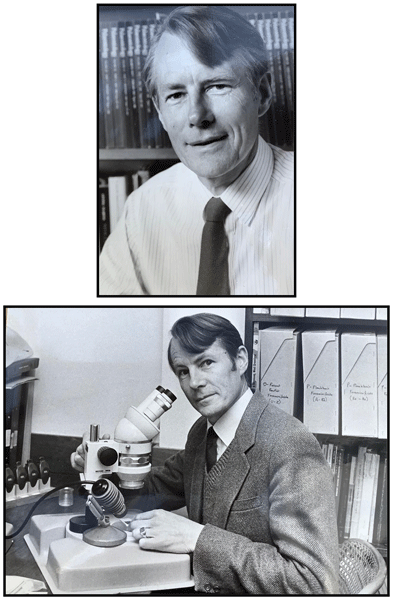
On 25 October 2021, John Murray PhD DSc FGS (Emeritus Professor of Geology, School of Ocean and Earth Sciences, University of Southampton) died at home near Southampton. John was one of the leading micropalaeontologists of the 20th century, and, with his passing, the United Kingdom lost not only an authority on foraminifera but also a true gentleman. John was a quietly efficient researcher who, despite his eminence, never tired of practical work at the microscope (Fig. 1). He often appeared to be very shy and reserved to those who did not know him, although he was unfailingly friendly and helpful to fellow researchers. He was blessed with a sharp, rather dry sense of humour.
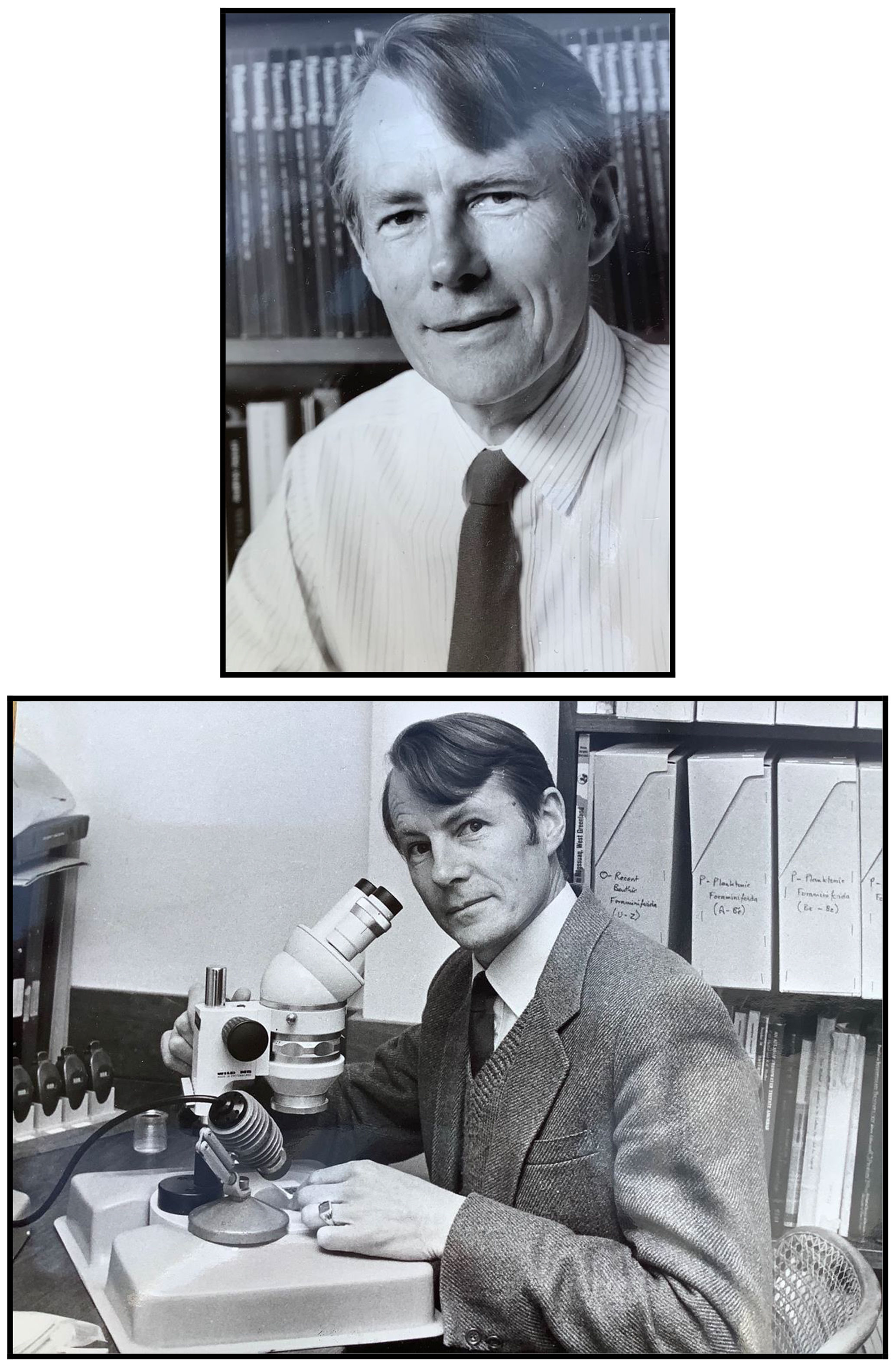
Figure 1Images of John Murray (ca. 1977): the scholar and at his beloved microscope (ca. 1974). Images courtesy of Richard Murray.
John William Murray (1937–2021) was born in London and, like many other children of that day, was evacuated to the north of England during the war. In the post-war interval, the family was living in Worthing (West Sussex), and the first sign of his future interests was when, for his 16th birthday, he asked his parents for a biological microscope, with which he developed his passion for biological (and geological) microscopy. He went on to read geology as an under-graduate at Imperial College (London University) and – in his first year – was introduced to the world of foraminifera by David Carter. In 1958–1959, he undertook a small research project on the planktic foraminifera from one of the new boreholes drilled for the Channel Tunnel Site Investigation (see Bruckshaw et al., 1961), the micropalaeontology for which was being led by David Carter (Hart and Bailey, 2013). His PhD research (1959–1961) was also supervised by Carter and involved a study of the benthic foraminifera of Christchurch Harbour (Dorset). This required regular sampling of the sediments, staining the foraminifera to separate the living assemblage from the dead assemblage, and taking suites of physico-chemical readings (temperature, salinity, pH, etc.). This research generated a life-long passion for the benthic foraminifera and, despite not having a university biological qualification, an understanding of their biology and ecology (Murray, 1968, 1991a).
These interests were further developed during a brief post-doctoral scholarship at the Laboratory of the Marine Biological Association of the UK (Plymouth) in 1961–1962, where a series of important papers on the foraminifera of Plymouth Sound (Murray, 1965) and the English Channel (Murray, 1963, 1970; Murray et al., 1982) were generated. This position was ended prematurely by his appointment to a lecturing position at the University of Bristol (1962–1975), from where he moved on to a professorship (and the position of head of the geology department) at the University of Exeter (1975–1989). In 1989, he moved to the School of Ocean and Earth Sciences at the University of Southampton (1989–2003). From 2003, he was an emeritus professor of geology in the University of Southampton, as well as a long-term visitor to the Natural History Museum in London.
In some ways, John was an old-style academic. He was, throughout his life, a remarkably nervous speaker and, despite a long career in university education, would approach giving a conference presentation with a degree of significant concern. Despite this, he was not shy when it came to taking on responsibilities, and, having joined a significant number of societies and associations early in his career, he served many of them in a series of often senior positions, including
-
editor of Palaeontology (1974–1979);
-
associate editor of Journal of Foraminiferal Research (1976–1984);
-
vice-president and then president (1990–1992) of the Palaeontological Association;
-
chairman (1978–1980) of The (British) Micropalaeontological Society, followed by a period as editor-in-chief of the Journal of Micropalaeontology (1993–1997); and
-
council member of the Geological Society of London, followed by a period as their honorary secretary (1989–1992).
It was, however, his PhD research on modern, benthic foraminifera that generated his enduring passion for estuarine and near-shore environments. At that time, few marine biologists studied foraminifera, and the investigation of these fascinating protists was often left to those from a geoscience background. It was in the late 1960s that scanning electron microscopes began to appear in British universities, and John used this new system of imaging to produce his Atlas of British Recent Foraminiferids in 1971 (Murray, 1971). This was followed (in 1973) with the first of his landmark books on the ecology of benthic foraminifera (Distribution and Ecology of Living Benthic Foraminiferids) (Murray, 1973). Then, in 2006, John published another landmark volume, Ecology and Applications of Benthic Foraminifera (Murray, 2006), which was a monumental undertaking summarizing all then-available knowledge on foraminifera on a global scale, from intertidal regions to the deep sea. This book was not just an update of the 1973 publication; it also included all of the available data on the distribution of living benthic foraminifera. John entered the data personally into Microsoft Excel® spreadsheets, all of which are available on the Cambridge University Press website. While working on the book, John approached many authors of recently published papers with the request that they send him their data files, upsetting some by asking why the sum of their percentages was not 100! He learned how to use the software and created all of his own figures. This global database approach was “leading-edge” research in the early 2000s, making this a significant undertaking for its time.
These much valued and highly cited books on benthic foraminifera established John as the leading authority on the foraminifera from modern estuarine and near-shore environments: a position recognized by the award of the Wollaston Fund of the Geological Society (1981), the T. N. George Medal of the Glasgow Geological Society (1991), the Joseph A. Cushman Award (2001), and the Coke Medal of the Geological Society (2007); in addition, John was also the first recipient of the Brady Medal of The Micropalaeontological Society (2007).
His research and his life in academia resulted in him holding considered views on the value of taxonomy to micropalaeontology students, who might otherwise be diverted into deep-time studies with looser taxonomic controls. These views did not always fit with those whose careers led them into the commercial biostratigraphical sector, but they certainly prevailed in the long term.
While John was based at Bristol University, W. F. Whittard involved him in the investigation into seafloor samples from the English Channel. This generated an interest in Cenozoic foraminifera and, together with PhD student Chris Wright, John studied the Paleogene foraminifera of the Isle of Wight and adjacent areas of Europe. Their Special Paper in Palaeontology (1974) provided much of the information that would appear in the 1981 and 1989 volumes of the Stratigraphical Atlas of Fossil Foraminifera, which John edited with D. Graham Jenkins (Jenkins and Murray, 1981, 1989). The 1989 edition of the Atlas remains a benchmark publication, although some would argue that it is in need of revision, with 30+ years of progress in stratigraphical micropalaeontology to be included.
In 1981, John was the shipboard micropalaeontologist on Glomar Challenger (Leg 81, North Atlantic Ocean), which was a cruise not blessed with the best of weather! A series of significant papers emerged from that research, including considered accounts of Bolboforma (Murray, 1984, 1987).
In the 1990s and early 2000s, John collaborated extensively with Elisabeth Alve (now professor emerita at University of Oslo). Together they explored the distribution, ecology, and taphonomy of modern benthic foraminifera in the Skagerrak (Alve and Murray, 1997, 1999; Murray and Alve, 1999) and wrote a series of papers on the origin and importance of modern agglutinated assemblages (Murray and Alve, 1994, 2000; Alve and Murray, 1995; Murray et al., 2011). Their later research on the benthic foraminiferal biogeography of northwestern European fjords was also fundamental in addressing changing coastal seas and presented a much-needed baseline for assessing future changes (Murray and Alve, 2016). John also declared that the monthly sampling of the Hamble Estuary (Murray and Alve, 2000) and the subsequent processing and microscope work brought him to his physical limits!
In the last 10 years of his life, however, John decided to give up his “picking brush” and concentrate on his other passion – painting. Like his PhD supervisor, David Carter DFC, John had been an artist for a great many years and, more and more, enjoyed going away to locations such as the Lake District, where he could paint alongside a group of like-minded individuals.
John also enjoyed adventuring around art galleries and made several visits to Scotland to visit Edinburgh's Royal Scottish Academy of Art, the National Gallery of Scotland, and the Kelvingrove Art Gallery in Glasgow. John was persuaded to overcome his seasickness fears to participate in several trips to visit two of the UK's greatest seabird spectacles in the Firth of Forth: Bass Rock gannet reserve, where he was surrounded by thousands of plunge-feeding gannets, and the Isle of May, where he walked through clouds of puffins delivering food to their young. On his return home, he immediately transformed his memories into another series of delightful paintings.
At a celebration of John's life on 20 November 2021, the room was regaled with more than a hundred of his paintings (Figs. 2, 3). It was a touching occasion, with members of his close family present, alongside a few micropalaeontologists and some of his Hampshire-based art group. Numbers were limited by the Covid-19 restrictions, although the science community marked his immense contribution to micropalaeontology at the FORAMS meeting in Perugia, where a special session on “Advances and challenges in modern and fossil benthic foraminifera research” was dedicated to John Murray. The papers in this special issue of the Journal of Micropalaeontology arose from that conference and cover some of the interests that John held dear during his life.
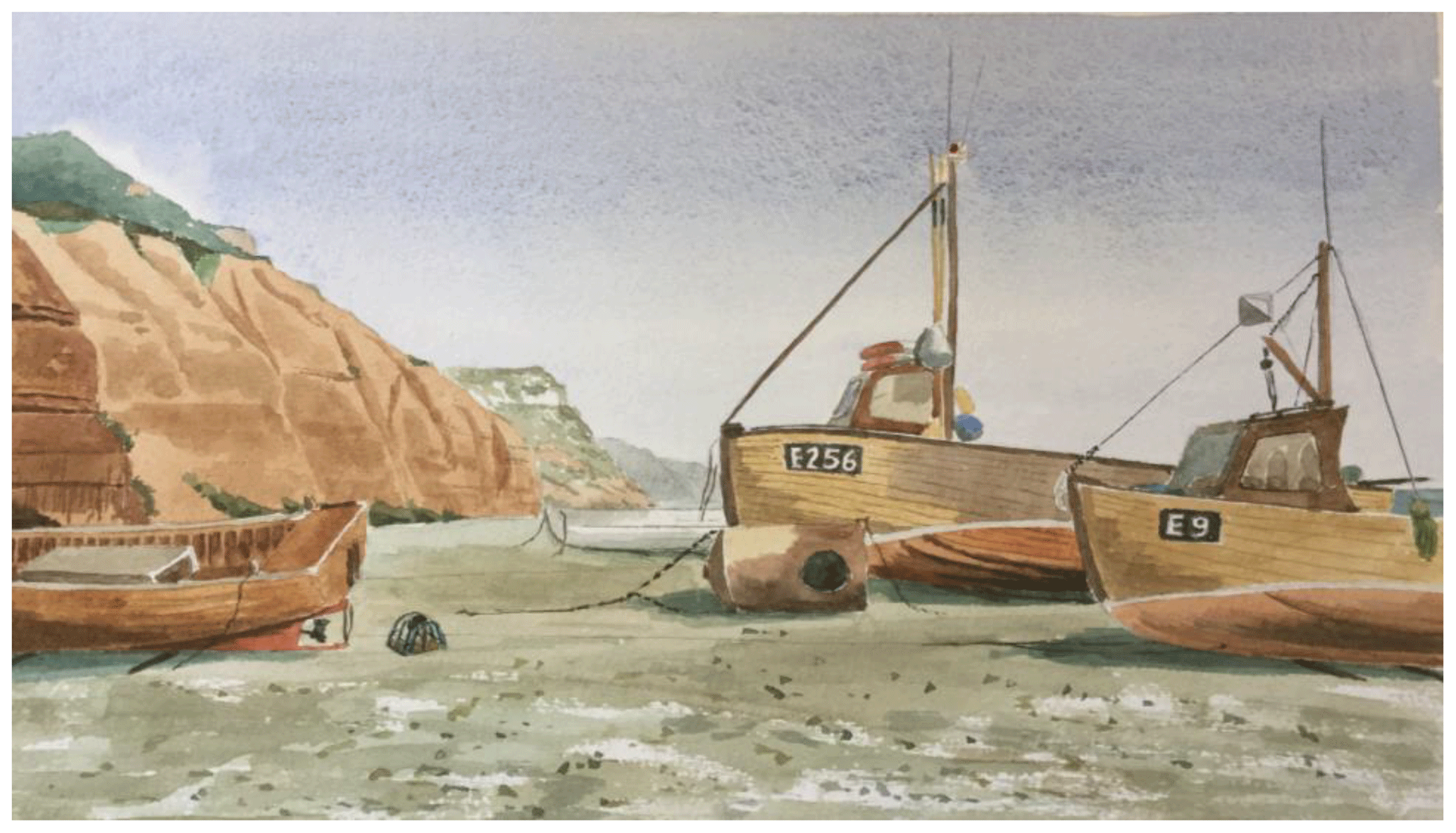
Figure 2Fishing boats on the beach at Pennington Point, Sidmouth, Devon. The cliff in the background is formed by Triassic Mercia Mudstones overlain by the Upper Greensand Formation and the Upper Cretaceous Chalk. This watercolour paining is simply entitled “Sidmouth” and is dated to have been painted during August 1988 while John was based at the University of Exeter.
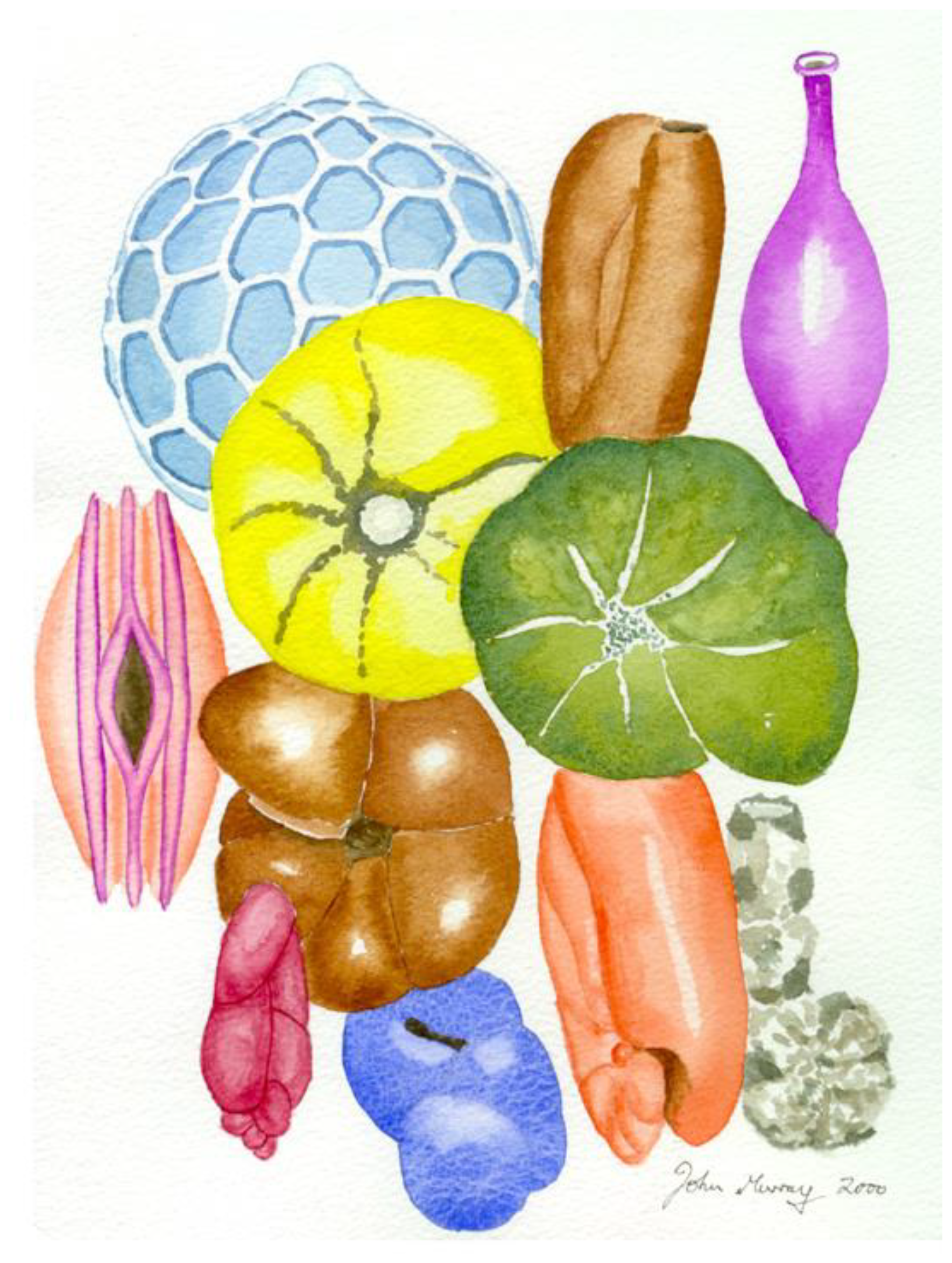
Figure 3“Foraminiferal fantasy”, which was painted in 2000 while John was based in the School of Ocean and Earth Sciences at the University of Southampton.
John is survived by his brother, his two sons, and their families. The images of John were kindly provided by his son, Richard Murray, who also gave MBH the painting of Sidmouth in Devon (Fig. 2).
John had a strong research interest in the ecology of recent benthic foraminifera, which is a very useful tool for understanding environmental changes in the past oceans. This special issue includes a series of papers addressing foraminiferal ecology. For example, Habura et al. (2024) used morphological and molecular surveys to determine the presence or absence of Notodendrodes antarctikos, an extremely endemic notodendroid species from McMurdo Sound, Antarctica, while papers by Francescangeli et al. (2025) and Choquel et al. (2026) have studied the seasonal variability in living benthic foraminifera across intertidal areas of the eastern English Channel and Bay of Bourgneuf (French Atlantic coast). In the study by Choquel et al. (2026), the authors applied a commendable approach by considering the seasonal dynamics of mudflat foraminifera linked to diatom species and traits. The spatial distribution of benthic foraminifera along environmental gradients is reported by BadrElDin and Hallock (2024) for the Ras Mohamed Nature Reserve, Red Sea, Egypt, and by Rodrigues et al. (2025) for the Brazilian continental shelf. John's research on benthic foraminiferal ecology was of tremendous value for applications of foraminifera in the biomonitoring and ecological status assessment of coastal waters, a fact that was emphasized in this issue by several papers. The study by Bouchet et al. (2025) represents the first attempt to determine the indicator values of benthic foraminiferal species in Brazilian transitional waters. It also uses a regionally adapted species list to explore the potential application of Foram-AMBI, a biotic index for ecological quality. Likewise, Plakolm et al. (2025) investigate the impact of metal pollution from the former ILVA steel plant in Bagnoli, Gulf of Naples, on recent benthic foraminifera and their shell chemistry. Several papers in this issue use experimental approaches to gain deeper insights in foraminiferal ecology: Lintner et al. (2025) investigate the impact of three commonly used antibiotics (ampicillin, chloramphenicol, and tetracycline) on a feeding-related metabolism in a putatively invasive species, Nonionella sp. T1, while Doutrelant et al. (2025) use a three-dimensional (3D) sensor and map sediment microtopography to quantify foraminiferal contribution to sediment reworking through bioturbation. Gfatter et al. (2025) investigate a proper choice of culturing setup and vessels housing foraminifera based on the adsorption of the trace metal molybdenum (Mo), with further implications for palaeoproxy calibration experiments. Finally, in relation to the growing number of reports on invasive and non-indigenous species among benthic foraminifera and their often unknown or less studied ecology, this special issue contributes two studies. First, McGann et al. (2025) provide an exhaustive synthesis, based on a 30-year study of literature data and surface and core samples combined with molecular data, of the spread of the non-indigenous species Trochammina hadai Uchio 1962, a native of Asia, along the western seaboard of North America. This synthesis of North American data is combined with a survey of T. hadai occurrences elsewhere outside Asia (Europe, Brazil, and Australia) and a detailed discussion of possible introduction vectors. Then, Polovodova Asteman et al. (2025) undertake a reconnaissance survey of the previously unstudied benthic foraminiferal communities in a small-boat leisure harbour in Gothenburg, Sweden, and report on the occurrences of two non-indigenous species, namely T. hadai and Ammonia confertitesta, together with high levels of metals in surface sediments.
John's research interests also covered the taxonomy of benthic foraminifera, and, given recent developments in artificial intelligence (AI) and machine learning, their application in image analysis and in the identification of living and fossil benthic foraminifera was explored in several papers of this special issue. Plavetic et al. (2025) explore how well the You Only Look Once (YOLO) v7 deep-learning model can recognize recent benthic foraminiferal species from the Skagerrak and Swedish fjords, while Walla et al. (2026) apply convolutional neural networks (CNNs) to automatically identify living (Rose Bengal stained) and dead benthic foraminifera from an intertidal mudflat on the French Atlantic coast (Bourgneuf Bay) and the French Mediterranean coast. Hayat et al. (2026) took this approach further and trained CNNs to identify fossil benthic foraminifera species in two sediment cores from offshore Peru, covering the last 18 000 years.
Finally, in a classic paper on the Paleogene of the Anglo-Paris Basin, John Murray, together with Christopher Wright (1974), described the Cenozoic foraminifera of the Isle of Wight. This comprehensive work has not been repeated since the 1970s, at least not until this special issue, in which the foraminifera of the lower and mid-Eocene are described by Hart et al. (2026). In this contribution, a zonation for the London Clay Formation, based on foraminifera, is presented for the first time, along with the assemblages used to determine the palaeoecological changes recorded in the succession.
John Murray (1936–2021) had a life-long interest in smaller benthic foraminifera, though he did publish on other aspects of micropalaeontology (e.g. bolboformids, Cotswold Jurassic stratigraphy, Murray and Hancock, 1977). His PhD research was based on the benthic foraminifera of Christchurch Harbour (Hampshire, UK), and, after time at the Marine Biological Association of the UK in Plymouth, Bristol University, and Exeter University, he finally retired from Southampton University, with the same interests as he had developed at Imperial College (London University) as a postgraduate student. He was a quiet and gentle man: a true academic in the old sense of the word. This special issue of the Journal of Micropalaeontology – a journal that he edited between 1993 and 1997 – provides just a tiny glimpse of the research John Murray inspired and is hopefully a fitting tribute to his career in which he is fondly remembered by those that knew or worked with him.
All of the authors contributed to the writing and editing of the papers gathered in this special issue of the Journal of Micropalaeontology.
The contact author has declared that none of the authors has any competing interests.
Publisher's note: Copernicus Publications remains neutral with regard to jurisdictional claims made in the text, published maps, institutional affiliations, or any other geographical representation in this paper. The authors bear the ultimate responsibility for providing appropriate place names. Views expressed in the text are those of the authors and do not necessarily reflect the views of the publisher.
This article is part of the special issue “Advances and challenges in modern and benthic foraminifera research: a special issue dedicated to Professor John Murray”. It is not associated with a conference.
The authors acknowledge the kind comments and helpful suggestions of the two reviewers of this paper: Kate Darling (Edinburgh University) and Joachim Schönfeld (GEOMAR, Kiel).
This paper was edited by Luke Mander and reviewed by Joachim Schönfeld and Kate Darling.
Alve, E. and Murray, J. W.: Experiments to determine the origin and palaeoenvironmental significance of agglutinated foraminiferal assemblages, in: Proceedings of the Fourth International Workshop on Agglutinated Foraminifera, Krakow, Poland, 12–19 September 1993, edited by: Kaminski, M. A., Geroch, S., and Gasinski, M. A., Grzybowski Foundation Special Publication IWAF 4, Krakow, Poland, 1–11, ISBN 83-901164-2-1, 1995.
Alve, E. and Murray, J. W.: High benthic fertility and taphonomy of foraminifera: a case study of the Skagerrak, North Sea, Mar. Micropaleontol., 31, 157–175, 1997.
Alve, E. and Murray, J. W.: Marginal marine environments of the Skagerrak and Kattegat: a baseline study of living (stained) benthic foraminiferal ecology, Palaeogeog. Palaeoclimatol. Palaeoecol., 146, 171–193, 1999.
BadrElDin, A. M. and Hallock, P.: Benthic foraminifers in coastal habitats of Ras Mohamed Nature Reserve, southern Sinai, Red Sea, Egypt, J. Micropalaeontol., 43, 239–267, https://doi.org/10.5194/jm-43-239-2024, 2024.
Bouchet, V. M. P., Sousa, S. H. D. M. E., Bonetti, C., Burone, L., Belart, P., Duleba, W., Francescangeli, F., Frontalini, F., Laut, L., Raposo, D. S., Rodrigues, A. R., Disaró, S. T., Pupo, D. V., Damasceno, F. L., Pavard, J.-C., and Martins, M. V. A.: Towards a more integrative approach for environmental decision-making in Brazilian transitional waters: improving biomonitoring surveys with a benthic foraminiferal biotic index, J. Micropalaeontol., 44, 237–261, https://doi.org/10.5194/jm-44-237-2025, 2025.
Bruckshaw, J. M., Goguel, J., Harding, H. J. B., and Malcor, R.: The work of the Channel Tunnel Study Group 1958–1960, P. I. Civil Eng., 18, 149–178, 1961.
Choquel, C., Geslin, E., Metzger, E., Jesus, B., Prins, A., Houliez, E., Schweizer, M., Jauffrais, T., Bénéteau, É., and Mouret, A.: Seasonal dynamics of mudflat foraminifera linked to diatom species and traits, J. Micropalaeontol., 45, 51–72, https://doi.org/10.5194/jm-45-51-2026, 2026.
Doutrelant, M., Romero-Ramirez, A., Ciutat, A., Bouchet, V. M. P., and Maire, O.: Quantitative measurement of benthic foraminifera sediment reworking using a three-dimensional sensor, J. Micropalaeontol., 44, 401–413, https://doi.org/10.5194/jm-44-401-2025, 2025.
Francescangeli, F., Bouchet, V. M. P., Milker, Y., Frontalini, F., Trentesaux, A., and Armynot du Châtelet, E.: Seasonal variability in living benthic foraminifera across intertidal areas of the eastern English Channel, J. Micropalaeontol., 44, 415–430, https://doi.org/10.5194/jm-44-415-2025, 2025.
Gfatter, C. H., Owens, J. D., and Martínez-Colón, M.: Trace metal adsorption in three serial flow-through systems: implications for foraminiferal culturing experiments, J. Micropalaeontol., 44, 381–399, https://doi.org/10.5194/jm-44-381-2025, 2025.
Habura, A., Alexander, S. P., Hanes, S. D., Gooday, A. J., Pawlowski, J., and Bowser, S. S.: Distribution of two notodendrodid foraminiferal congeners in McMurdo Sound, Antarctica: an example of extreme regional endemism?, J. Micropalaeontol., 43, 337–347, https://doi.org/10.5194/jm-43-337-2024, 2024.
Hart, M. B. and Bailey, H. W.: Key figures from the history of research on the foraminifera of the Chalk Group in the UK, in: Landmarks in Foraminiferal Micropalaeontology: History and Development, edited by: Bowden, A. J., Gregory, F. J. and Henderson, A. S., The Micropalaeontological Society, Special Publications, Geological Society, London, 85–102, https://doi.org/10.1144/TMS6.9, 2013.
Hart, M. B., Alex-Sanders, M. E. A., and Smart, C. W.: Can the distribution of foraminifera locate the Early Eocene Climatic Optimum (EECO) and Middle Eocene Climatic Optimum (MECO) events in the Eocene succession of the Isle of Wight (UK)?, J. Micropalaeontol., 45, 315–334, https://doi.org/10.5194/jm-45-315-2026, 2026.
Jenkins, D. G. and Murray, J. W. (Eds.): Stratigraphical Atlas of Fossil Foraminifera, Ellis Horwood Ltd, Chichester, 310 pp., ISBN 0-85312-210-5,1981
Jenkins, D. G. and Murray, J. W. (Eds.): Stratigraphical Atlas of Fossil Foraminifera, 2nd Edn., Ellis Horwood Ltd, Chichester, 592 pp., ISBN 0-7458-0153-6, 1989.
Lintner, M., Polovodova Asteman, I., Wanek, W., Heinz, P., Goleń, J., and Tyszka, J.: The influence of three common antibiotics on coastal benthic foraminifera: implications for culture experiments and biomonitoring, J. Micropalaeontol., 44, 263–273, https://doi.org/10.5194/jm-44-263-2025, 2025.
McGann, M., Holzmann, M., Bouchet, V. M. P., Disaró, S. T., Eichler, P. P. B., Haig, D. W., Himson, S. J., Kitazato, H., Pavard, J.-C., Polovodova Asteman, I., Rodrigues, A. R., Tremblin, C. M., Tsuchiya, M., Williams, M., O'Brien, P., Asplund, J., Axelsson, M., and Lorenson, T. D.: Analysis of a human-mediated microbioinvasion: the global spread of the benthic foraminifer Trochammina hadai Uchio, 1962, J. Micropalaeontol., 44, 275–317, https://doi.org/10.5194/jm-44-275-2025, 2025.
Murray, J. W.: Ecological experiments on Foraminiferida, J. Mar. Biol. Assoc. UK, 43, 621–642, https://doi.org/10.1017/S0025315400025571, 1963.
Murray, J. W.: On the Foraminiferida of the Plymouth region, J. Mar. Biol. Assoc. UK, 45, 481–505, 1965.
Murray, J. W.: The living Foraminiferida of Christchurch Harbour, England, Micropaleontology, 14, 83–96, 1968.
Murray, J. W.: Foraminifers of the western approaches to the English Channel, Micropaleontology, 16, 471–485, https://doi.org/10.2307/1485074, 1970.
Murray, J. W.: An Atlas of British Recent Foraminiferids, Heinemann Educational Books, London, 244 pp., ISBN 043562430X, 1971.
Murray, J. W.: Distribution and Ecology of Living Benthic Foraminiferids, Heinemann Educational Books, London, 288 pp., ISBN 0 435 62430X, 1973.
Murray, J. W.: Biostratigraphic value of Bolboforma, Leg 81, Rockall Plateau, in: Initial Reports of the Deep Sea Drilling Project, 81, edited by: Roberts, D. G., Schnitker, D., et al., U.S. Government Printing Office, Washington, 535–539, https://doi.org/10.2973/dsdp.proc.81.1984, 1984.
Murray, J. W.: Bolboforma from North Atlantic Sites, Deep Sea Drilling Project Leg 94, in: Initial Reports of the Deep Sea Drilling Project, 94, edited by: Ruddimann, W. F., Kidd, R. B., Thomas, E., et al., U.S. Government, 813–814, https://doi.org/10.2973/dsdp.proc.94.120.1987, 1987.
Murray, J. W.: Ecology and distribution of benthic foraminifera, in: Biology of foraminifera, edited by: Lee, J. J. and Anderson, O. R., 221–254, ISBN 0-12-440670-X, 1991a.
Murray, J. W.: Ecology and Palaeoecology of Benthic Foraminifera, Longman Group UK Limited, Harlow, 397 pp., ISBN 0-582-05122-3, 1991b.
Murray, J. W.: Ecology and Applications of Benthic Foraminifera, Cambridge University Press, Cambridge, 426 pp., ISBN 978-0-521-82839-0, 2006.
Murray, J. W. and Alve, E.: High diversity agglutinated foraminiferal assemblages from the NE Atlantic: dissolution experiments, Cushman Foundation Special Publication, 22, 33–51, 1994.
Murray, J. W. and Alve, E.: Natural dissolution of modern shallow water benthic foraminifera: taphonomic effects on the palaeoecological record, Palaeogeogr. Palaeoclim., 146, 195–209, 1999.
Murray, J. W. and Alve, E.: Major aspects of foraminiferal variability (Standing crop and biomass) on a monthly scale in an intertidal zone, J. Foramin. Res., 30, 177–191, https://doi.org/10.2113/0300177, 2000.
Murray, J. W. and Alve, E.: Benthic foraminiferal biogeography in NW European fjords: A baseline for assessing future change, Estuar., Coast. Shelf S., 181, 218–230, 2016.
Murray, J. W. and Hancock, P. L.: The south and mid Cotswolds, in: Geological excursions in the Bristol district, edited by: Savage, R. J. G., University of Bristol, 140–165, Bristol University Press, Bristol, ISBN 0901239224, 1977.
Murray, J. W. and Wright, C. A.: Palaeogene Foraminiferida and palaeoecology, Hampshire and Paris Basin and the English Channel, Spec. Pap. Palaeontol., 14, 1–129, 20 plates, 1974.
Murray, J. W., Sturrock, S., and Weston, J.: Suspended load trandsport of foraminiferal tests in a tide- and wave-swept sea, J. Foramin. Res., 12, 51–65, https://doi.org/10.2113/gsjfr.12.1.51, 1982.
Murray, J. W., Alve, E., and Jones, B. W.: A new look at modern agglutinated benthic foraminiferal morphogroups: their value in palaeoecological interpretation, Palaeogeogr. Palaeoclim., 309, 229–241, 2011.
Plakolm, L., Balzano, S., Nagy, M., Heinz, P., Gruber, D., Schmidt, K., Stockhausen, M., Hofmann, T., and Lintner, M.: Assessment of anthropogenic metal pollution in Bagnoli (Gulf of Naples) through changes in foraminiferal assemblages and shell chemistry, J. Micropalaeontol., 44, 345–363, https://doi.org/10.5194/jm-44-345-2025, 2025.
Plavetić, M., Hsiang, A. Y., Josefson, M., Hulthe, G., and Polovodova Asteman, I.: Deep learning accurately identifies fjord benthic foraminifera, J. Micropalaeontol., 44, 693–711, https://doi.org/10.5194/jm-44-693-2025, 2025.
Polovodova Asteman, I., Jaffré, E., Olejnik, A., Holzmann, M., McGann, M., Nordberg, K., Pavard, J.-C., Rösel, D., and Schweizer, M.: Leisure boat harbours, hidden alien species, and pollution: a case study of Hinsholmskilen harbour (Gothenburg, Sweden), J. Micropalaeontol., 44, 119–143, https://doi.org/10.5194/jm-44-119-2025, 2025.
Rodrigues, A. R., de Almeida, F. K., Quaresma, V. S., de Mello, R. M., Grilo, C. F., Jardim, K. A., Romualdo, P. P., and Bastos, A. C.: From river mouth to reef: benthic foraminifera assemblages reveal ecological dynamics in a mixed carbonate–siliciclastic Brazilian continental shelf, J. Micropalaeontol., 44, 633–652, https://doi.org/10.5194/jm-44-633-2025, 2025.
Walla, T., Barras, C., Geslin, E., Godbillot, C., Lanoy, L., Marchant, R., Dissard, D., and de Garidel-Thoron, T.: Identification of living (Rose Bengal)-stained benthic foraminifera using automated image recognition, J. Micropalaeontol., 45, 623–652, https://doi.org/10.5194/jm-45-623-2026, 2026.