
Articles | Volume 45, issue 2
https://doi.org/10.5194/jm-45-717-2026
© Author(s) 2026. This work is distributed under
the Creative Commons Attribution 4.0 License.
the Creative Commons Attribution 4.0 License.
https://doi.org/10.5194/jm-45-717-2026
© Author(s) 2026. This work is distributed under
the Creative Commons Attribution 4.0 License.
the Creative Commons Attribution 4.0 License.
Special issue editorial
| 
28 Oct 2026
Special issue editorial |
| 28 Oct 2026
| 28 Oct 2026
The life and research interests of John W. Murray

School of Geography, Earth & Environmental Sciences, University of Plymouth, Drake Circus, Plymouth PL4 8AA, United Kingdom
Irina Polovodova Asteman
Department of Marine Sciences, University of Gothenburg, Medicinaregatan 7B, 31490 Göteborg, Sweden
Andrew J. Gooday
Ocean BioGeosciences Group, National Oceanography Centre, European Way, Southampton SO14 3ZH, United Kingdom
Life Sciences Department, Natural History Museum, Cromwell Road, London SW7 5BD, United Kingdom
Babette Hoogakker
The Lyell Centre, Heriot-Watt University, Edinburgh EH14 4AS, United Kingdom
Christopher W. Smart
School of Geography, Earth & Environmental Sciences, University of Plymouth, Drake Circus, Plymouth PL4 8AA, United Kingdom
Related authors
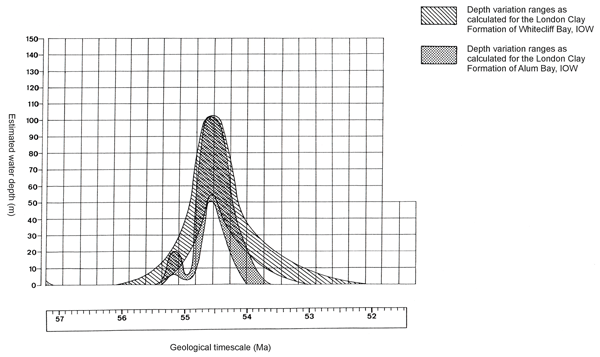
Malcolm B. Hart, Mark E. A. Alex-Sanders, and Christopher W. Smart
J. Micropalaeontol., 45, 315–334, https://doi.org/10.5194/jm-45-315-2026, https://doi.org/10.5194/jm-45-315-2026, 2026
Short summary
Short summary
The paper describes the foraminifera of the Eocene in the area of the Hampshire Basin and the English Channel. Hyperthermal events (Early Eocene Climatic Optimum (EECO)) Late Lutetian Thermal Event (LLTE), and Middle Eocene Climatic Optimum (MECO)) are discussed and set in the context of global climate change in the Paleogene.

Malcolm B. Hart, Holger Gebhardt, Eiichi Setoyama, Christopher W. Smart, and Jarosław Tyszka
J. Micropalaeontol., 42, 277–290, https://doi.org/10.5194/jm-42-277-2023, https://doi.org/10.5194/jm-42-277-2023, 2023
Short summary
Short summary
<p>In the 1960s-1970s some species of Triassic foraminifera were described as having a planktic mode of life. This was questioned and Malcolm Hart studied the material in Vienna, taking some to London for SEM imaging. Samples collected from Poland are compared to these images and the suggested planktic mode of life discussed. Foraminifera collected in Ogrodzieniec are glauconitic steinkerns with no test material present and none of the diagnostic features needed to determine "new" species.</p>
Malcolm B. Hart, Mark E. A. Alex-Sanders, and Christopher W. Smart
J. Micropalaeontol., 45, 315–334, https://doi.org/10.5194/jm-45-315-2026, https://doi.org/10.5194/jm-45-315-2026, 2026
Short summary
Short summary
The paper describes the foraminifera of the Eocene in the area of the Hampshire Basin and the English Channel. Hyperthermal events (Early Eocene Climatic Optimum (EECO)) Late Lutetian Thermal Event (LLTE), and Middle Eocene Climatic Optimum (MECO)) are discussed and set in the context of global climate change in the Paleogene.
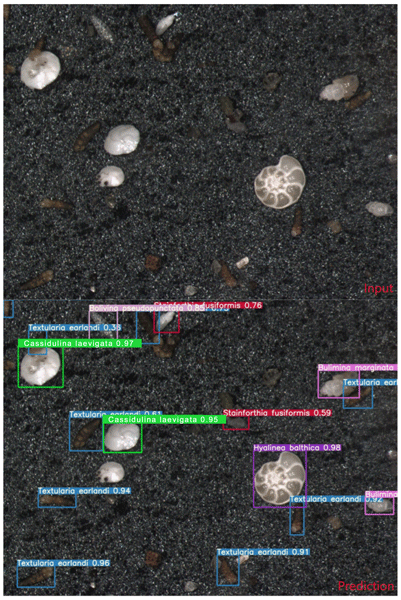
Marko Plavetić, Allison Yi Hsiang, Mats Josefson, Gustaf Hulthe, and Irina Polovodova Asteman
J. Micropalaeontol., 44, 693–711, https://doi.org/10.5194/jm-44-693-2025, https://doi.org/10.5194/jm-44-693-2025, 2025
Short summary
Short summary
Foraminifera are promising bioindicators in coastal environments, yet their manual identification is slow and relies on taxonomic expertise. Deep learning and neural networks can quickly recognize morphological differences. Here, fjord foraminifera were imaged, labeled, and classified in the Roboflow application programming interface, resulting in 22 138 labelled individuals. These were used to train a deep learning model, which successfully distinguished among 29 species with up to 90.3 % precision.
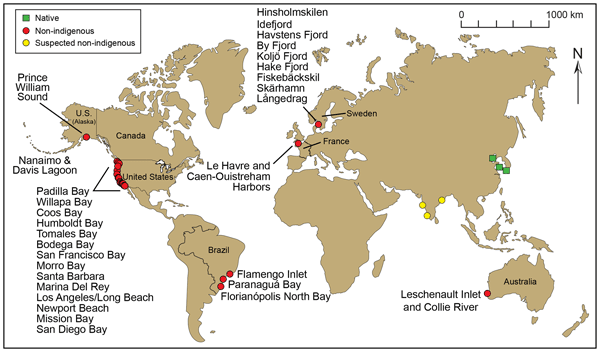
Mary McGann, Maria Holzmann, Vincent M. P. Bouchet, Sibelle Trevisan Disaró, Patrícia P. B. Eichler, David W. Haig, Stephen J. Himson, Hiroshi Kitazato, Jean-Charles Pavard, Irina Polovodova Asteman, André R. Rodrigues, Clément M. Tremblin, Masashi Tsuchiya, Mark Williams, Phoebe O'Brien, Josefin Asplund, Malou Axelsson, and Thomas D. Lorenson
J. Micropalaeontol., 44, 275–317, https://doi.org/10.5194/jm-44-275-2025, https://doi.org/10.5194/jm-44-275-2025, 2025
Short summary
Short summary
The foraminifer Trochammina hadai, native to Asia, has been found in the USA, Canada, Sweden, France, Brazil, and Australia coastal waters. The primary vectors of introduction include mariculture of oysters and the plant matter in which they were shipped, as well as the release of ballast water/sediment in receiving ports. Secondary introductions occur by mud attached to anchors of fishing and pleasure boats. Globally, the species has spread rapidly, impacting native species and local biodiversity.
Michael Lintner, Irina Polovodova Asteman, Wolfgang Wanek, Petra Heinz, Jan Goleń, and Jarosław Tyszka
J. Micropalaeontol., 44, 263–273, https://doi.org/10.5194/jm-44-263-2025, https://doi.org/10.5194/jm-44-263-2025, 2025
Short summary
Short summary
Foraminifera are microorganisms which, due to their abundance and diversity, are often used as proxies to describe climatic changes in marine environments. For this purpose, experiments containing antibiotics that are intended to reduce the activity of other microorganisms are carried out with foraminifera. In our study, we examined the influence of antibiotics on foraminifera and tested whether these chemicals are really harmless for foraminifera or not.
Bartholomé Duboc, Katrin J. Meissner, Laurie Menviel, Nicholas K. H. Yeung, Babette Hoogakker, Tilo Ziehn, and Matthew Chamberlain
Clim. Past, 21, 1093–1122, https://doi.org/10.5194/cp-21-1093-2025, https://doi.org/10.5194/cp-21-1093-2025, 2025
Short summary
Short summary
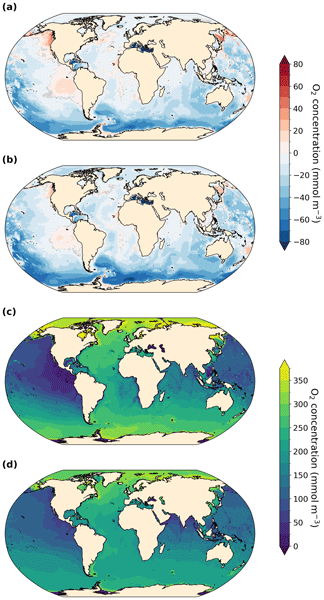
We use an earth system model to simulate ocean oxygen during two past warm periods, the Last Interglacial (∼ 129–115 ka) and Marine Isotope Stage (MIS) 9e (∼ 336–321 ka). The global ocean is overall less oxygenated compared to the preindustrial simulation. Large regions in the Mediterranean Sea are oxygen deprived in the Last Interglacial simulation, and to a lesser extent in the MIS 9e simulation, due to an intensification and expansion of the African monsoon and enhanced river runoff.
Irina Polovodova Asteman, Emilie Jaffré, Agata Olejnik, Maria Holzmann, Mary McGann, Kjell Nordberg, Jean-Charles Pavard, Delia Rösel, and Magali Schweizer
J. Micropalaeontol., 44, 119–143, https://doi.org/10.5194/jm-44-119-2025, https://doi.org/10.5194/jm-44-119-2025, 2025
Short summary
Short summary
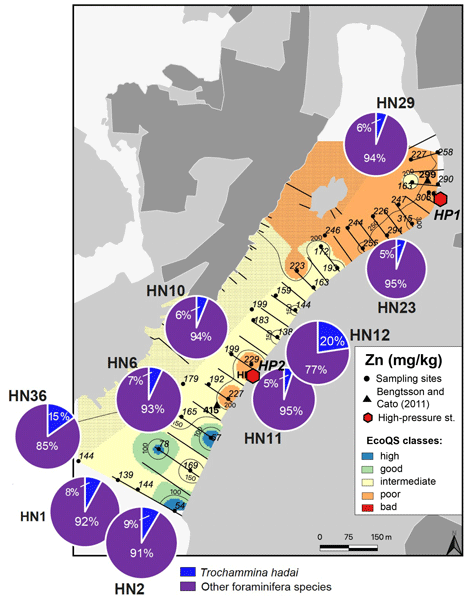
Small boat harbours are suggested to cause pollution and alien species introductions. Here we analysed surface sediments in Hinsholmskilen harbour (Sweden) for benthic foraminifera and potentially toxic elements. Molecular and morphological analyses of foraminifera show the presence of two alien species, Trochammina hadai and Ammonia confertitesta, whilst pollution is mostly low for Cd, Co, Ni, and Pb. In contrast, As, Zn, Cu, Hg, and Cr have high levels due to the use of these elements in boat paints.
Babette A.A. Hoogakker, Catherine Davis, Yi Wang, Stephanie Kusch, Katrina Nilsson-Kerr, Dalton S. Hardisty, Allison Jacobel, Dharma Reyes Macaya, Nicolaas Glock, Sha Ni, Julio Sepúlveda, Abby Ren, Alexandra Auderset, Anya V. Hess, Katrin J. Meissner, Jorge Cardich, Robert Anderson, Christine Barras, Chandranath Basak, Harold J. Bradbury, Inda Brinkmann, Alexis Castillo, Madelyn Cook, Kassandra Costa, Constance Choquel, Paula Diz, Jonas Donnenfield, Felix J. Elling, Zeynep Erdem, Helena L. Filipsson, Sebastián Garrido, Julia Gottschalk, Anjaly Govindankutty Menon, Jeroen Groeneveld, Christian Hallmann, Ingrid Hendy, Rick Hennekam, Wanyi Lu, Jean Lynch-Stieglitz, Lélia Matos, Alfredo Martínez-García, Giulia Molina, Práxedes Muñoz, Simone Moretti, Jennifer Morford, Sophie Nuber, Svetlana Radionovskaya, Morgan Reed Raven, Christopher J. Somes, Anja S. Studer, Kazuyo Tachikawa, Raúl Tapia, Martin Tetard, Tyler Vollmer, Xingchen Wang, Shuzhuang Wu, Yan Zhang, Xin-Yuan Zheng, and Yuxin Zhou
Biogeosciences, 22, 863–957, https://doi.org/10.5194/bg-22-863-2025, https://doi.org/10.5194/bg-22-863-2025, 2025
Short summary
Short summary
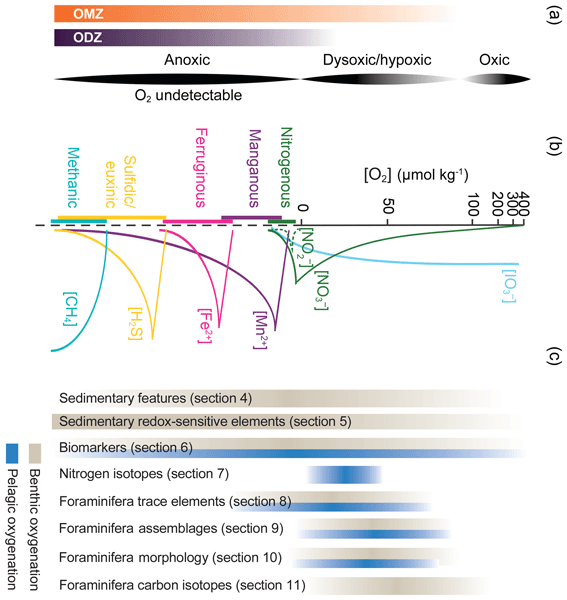
Paleo-oxygen proxies can extend current records, constrain pre-anthropogenic baselines, provide datasets necessary to test climate models under different boundary conditions, and ultimately understand how ocean oxygenation responds on longer timescales. Here we summarize current proxies used for the reconstruction of Cenozoic seawater oxygen levels. This includes an overview of the proxy's history, how it works, resources required, limitations, and future recommendations.
Andrea Habura, Stephen P. Alexander, Steven D. Hanes, Andrew J. Gooday, Jan Pawlowski, and Samuel S. Bowser
J. Micropalaeontol., 43, 337–347, https://doi.org/10.5194/jm-43-337-2024, https://doi.org/10.5194/jm-43-337-2024, 2024
Short summary
Short summary
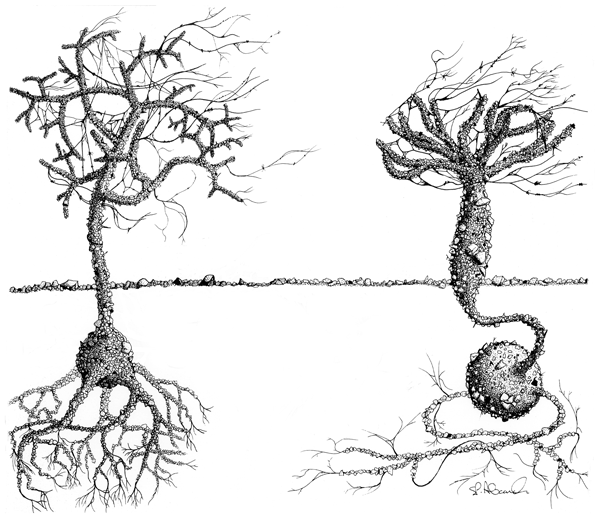
Two species of giant, single-celled "trees” inhabit the seafloor in McMurdo Sound, Antarctica. These unicellular creatures are large enough to be seen and counted by scuba divers. We found that one of the tree species is widely spread, whereas the other inhabits only a small region on the western side of the sound. These types of unicellular trees have not been found elsewhere in the world ocean and are particularly vulnerable to the effects of climate change.
Malcolm B. Hart, Holger Gebhardt, Eiichi Setoyama, Christopher W. Smart, and Jarosław Tyszka
J. Micropalaeontol., 42, 277–290, https://doi.org/10.5194/jm-42-277-2023, https://doi.org/10.5194/jm-42-277-2023, 2023
Short summary
Short summary
<p>In the 1960s-1970s some species of Triassic foraminifera were described as having a planktic mode of life. This was questioned and Malcolm Hart studied the material in Vienna, taking some to London for SEM imaging. Samples collected from Poland are compared to these images and the suggested planktic mode of life discussed. Foraminifera collected in Ogrodzieniec are glauconitic steinkerns with no test material present and none of the diagnostic features needed to determine "new" species.</p>
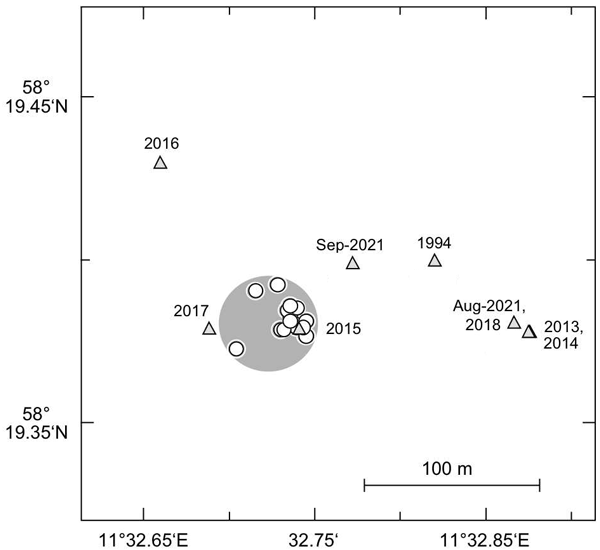
Joachim Schönfeld, Nicolaas Glock, Irina Polovodova Asteman, Alexandra-Sophie Roy, Marié Warren, Julia Weissenbach, and Julia Wukovits
J. Micropalaeontol., 42, 171–192, https://doi.org/10.5194/jm-42-171-2023, https://doi.org/10.5194/jm-42-171-2023, 2023
Short summary
Short summary
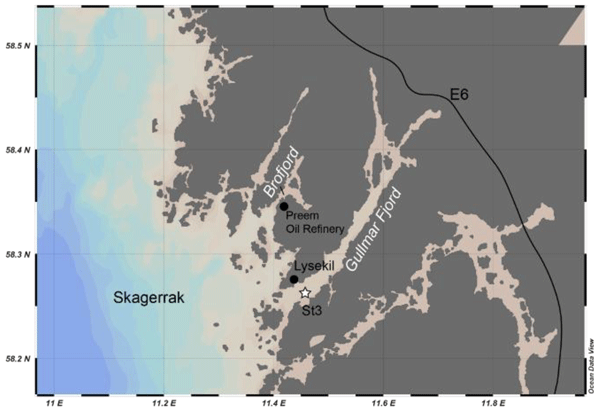
Benthic organisms show aggregated distributions due to the spatial heterogeneity of niches or food. We analysed the distribution of Globobulimina turgida in the Gullmar Fjord, Sweden, with a data–model approach. The population densities did not show any underlying spatial structure but a random log-normal distribution. A temporal data series from the same site depicted two cohorts of samples with high or low densities, which represent hypoxic or well-ventilated conditions in the fjord.

Wojciech Majewski, Witold Szczuciński, and Andrew J. Gooday
Biogeosciences, 20, 523–544, https://doi.org/10.5194/bg-20-523-2023, https://doi.org/10.5194/bg-20-523-2023, 2023
Short summary
Short summary
We studied foraminifera living in the fjords of South Georgia, a sub-Antarctic island sensitive to climate change. As conditions in water and on the seafloor vary, different associations of these microorganisms dominate far inside, in the middle, and near fjord openings. Assemblages in inner and middle parts of fjords are specific to South Georgia, but they may become widespread with anticipated warming. These results are important for interpretating fossil records and monitoring future change.
Cited articles
Alve, E. and Murray, J. W.: Experiments to determine the origin and palaeoenvironmental significance of agglutinated foraminiferal assemblages, in: Proceedings of the Fourth International Workshop on Agglutinated Foraminifera, Krakow, Poland, 12–19 September 1993, edited by: Kaminski, M. A., Geroch, S., and Gasinski, M. A., Grzybowski Foundation Special Publication IWAF 4, Krakow, Poland, 1–11, ISBN 83-901164-2-1, 1995.
Alve, E. and Murray, J. W.: High benthic fertility and taphonomy of foraminifera: a case study of the Skagerrak, North Sea, Mar. Micropaleontol., 31, 157–175, 1997.
Alve, E. and Murray, J. W.: Marginal marine environments of the Skagerrak and Kattegat: a baseline study of living (stained) benthic foraminiferal ecology, Palaeogeog. Palaeoclimatol. Palaeoecol., 146, 171–193, 1999.
BadrElDin, A. M. and Hallock, P.: Benthic foraminifers in coastal habitats of Ras Mohamed Nature Reserve, southern Sinai, Red Sea, Egypt, J. Micropalaeontol., 43, 239–267, https://doi.org/10.5194/jm-43-239-2024, 2024.
Bouchet, V. M. P., Sousa, S. H. D. M. E., Bonetti, C., Burone, L., Belart, P., Duleba, W., Francescangeli, F., Frontalini, F., Laut, L., Raposo, D. S., Rodrigues, A. R., Disaró, S. T., Pupo, D. V., Damasceno, F. L., Pavard, J.-C., and Martins, M. V. A.: Towards a more integrative approach for environmental decision-making in Brazilian transitional waters: improving biomonitoring surveys with a benthic foraminiferal biotic index, J. Micropalaeontol., 44, 237–261, https://doi.org/10.5194/jm-44-237-2025, 2025.
Bruckshaw, J. M., Goguel, J., Harding, H. J. B., and Malcor, R.: The work of the Channel Tunnel Study Group 1958–1960, P. I. Civil Eng., 18, 149–178, 1961.
Choquel, C., Geslin, E., Metzger, E., Jesus, B., Prins, A., Houliez, E., Schweizer, M., Jauffrais, T., Bénéteau, É., and Mouret, A.: Seasonal dynamics of mudflat foraminifera linked to diatom species and traits, J. Micropalaeontol., 45, 51–72, https://doi.org/10.5194/jm-45-51-2026, 2026.
Doutrelant, M., Romero-Ramirez, A., Ciutat, A., Bouchet, V. M. P., and Maire, O.: Quantitative measurement of benthic foraminifera sediment reworking using a three-dimensional sensor, J. Micropalaeontol., 44, 401–413, https://doi.org/10.5194/jm-44-401-2025, 2025.
Francescangeli, F., Bouchet, V. M. P., Milker, Y., Frontalini, F., Trentesaux, A., and Armynot du Châtelet, E.: Seasonal variability in living benthic foraminifera across intertidal areas of the eastern English Channel, J. Micropalaeontol., 44, 415–430, https://doi.org/10.5194/jm-44-415-2025, 2025.
Gfatter, C. H., Owens, J. D., and Martínez-Colón, M.: Trace metal adsorption in three serial flow-through systems: implications for foraminiferal culturing experiments, J. Micropalaeontol., 44, 381–399, https://doi.org/10.5194/jm-44-381-2025, 2025.
Habura, A., Alexander, S. P., Hanes, S. D., Gooday, A. J., Pawlowski, J., and Bowser, S. S.: Distribution of two notodendrodid foraminiferal congeners in McMurdo Sound, Antarctica: an example of extreme regional endemism?, J. Micropalaeontol., 43, 337–347, https://doi.org/10.5194/jm-43-337-2024, 2024.
Hart, M. B. and Bailey, H. W.: Key figures from the history of research on the foraminifera of the Chalk Group in the UK, in: Landmarks in Foraminiferal Micropalaeontology: History and Development, edited by: Bowden, A. J., Gregory, F. J. and Henderson, A. S., The Micropalaeontological Society, Special Publications, Geological Society, London, 85–102, https://doi.org/10.1144/TMS6.9, 2013.
Hart, M. B., Alex-Sanders, M. E. A., and Smart, C. W.: Can the distribution of foraminifera locate the Early Eocene Climatic Optimum (EECO) and Middle Eocene Climatic Optimum (MECO) events in the Eocene succession of the Isle of Wight (UK)?, J. Micropalaeontol., 45, 315–334, https://doi.org/10.5194/jm-45-315-2026, 2026.
Jenkins, D. G. and Murray, J. W. (Eds.): Stratigraphical Atlas of Fossil Foraminifera, Ellis Horwood Ltd, Chichester, 310 pp., ISBN 0-85312-210-5,1981
Jenkins, D. G. and Murray, J. W. (Eds.): Stratigraphical Atlas of Fossil Foraminifera, 2nd Edn., Ellis Horwood Ltd, Chichester, 592 pp., ISBN 0-7458-0153-6, 1989.
Lintner, M., Polovodova Asteman, I., Wanek, W., Heinz, P., Goleń, J., and Tyszka, J.: The influence of three common antibiotics on coastal benthic foraminifera: implications for culture experiments and biomonitoring, J. Micropalaeontol., 44, 263–273, https://doi.org/10.5194/jm-44-263-2025, 2025.
McGann, M., Holzmann, M., Bouchet, V. M. P., Disaró, S. T., Eichler, P. P. B., Haig, D. W., Himson, S. J., Kitazato, H., Pavard, J.-C., Polovodova Asteman, I., Rodrigues, A. R., Tremblin, C. M., Tsuchiya, M., Williams, M., O'Brien, P., Asplund, J., Axelsson, M., and Lorenson, T. D.: Analysis of a human-mediated microbioinvasion: the global spread of the benthic foraminifer Trochammina hadai Uchio, 1962, J. Micropalaeontol., 44, 275–317, https://doi.org/10.5194/jm-44-275-2025, 2025.
Murray, J. W.: Ecological experiments on Foraminiferida, J. Mar. Biol. Assoc. UK, 43, 621–642, https://doi.org/10.1017/S0025315400025571, 1963.
Murray, J. W.: On the Foraminiferida of the Plymouth region, J. Mar. Biol. Assoc. UK, 45, 481–505, 1965.
Murray, J. W.: The living Foraminiferida of Christchurch Harbour, England, Micropaleontology, 14, 83–96, 1968.
Murray, J. W.: Foraminifers of the western approaches to the English Channel, Micropaleontology, 16, 471–485, https://doi.org/10.2307/1485074, 1970.
Murray, J. W.: An Atlas of British Recent Foraminiferids, Heinemann Educational Books, London, 244 pp., ISBN 043562430X, 1971.
Murray, J. W.: Distribution and Ecology of Living Benthic Foraminiferids, Heinemann Educational Books, London, 288 pp., ISBN 0 435 62430X, 1973.
Murray, J. W.: Biostratigraphic value of Bolboforma, Leg 81, Rockall Plateau, in: Initial Reports of the Deep Sea Drilling Project, 81, edited by: Roberts, D. G., Schnitker, D., et al., U.S. Government Printing Office, Washington, 535–539, https://doi.org/10.2973/dsdp.proc.81.1984, 1984.
Murray, J. W.: Bolboforma from North Atlantic Sites, Deep Sea Drilling Project Leg 94, in: Initial Reports of the Deep Sea Drilling Project, 94, edited by: Ruddimann, W. F., Kidd, R. B., Thomas, E., et al., U.S. Government, 813–814, https://doi.org/10.2973/dsdp.proc.94.120.1987, 1987.
Murray, J. W.: Ecology and distribution of benthic foraminifera, in: Biology of foraminifera, edited by: Lee, J. J. and Anderson, O. R., 221–254, ISBN 0-12-440670-X, 1991a.
Murray, J. W.: Ecology and Palaeoecology of Benthic Foraminifera, Longman Group UK Limited, Harlow, 397 pp., ISBN 0-582-05122-3, 1991b.
Murray, J. W.: Ecology and Applications of Benthic Foraminifera, Cambridge University Press, Cambridge, 426 pp., ISBN 978-0-521-82839-0, 2006.
Murray, J. W. and Alve, E.: High diversity agglutinated foraminiferal assemblages from the NE Atlantic: dissolution experiments, Cushman Foundation Special Publication, 22, 33–51, 1994.
Murray, J. W. and Alve, E.: Natural dissolution of modern shallow water benthic foraminifera: taphonomic effects on the palaeoecological record, Palaeogeogr. Palaeoclim., 146, 195–209, 1999.
Murray, J. W. and Alve, E.: Major aspects of foraminiferal variability (Standing crop and biomass) on a monthly scale in an intertidal zone, J. Foramin. Res., 30, 177–191, https://doi.org/10.2113/0300177, 2000.
Murray, J. W. and Alve, E.: Benthic foraminiferal biogeography in NW European fjords: A baseline for assessing future change, Estuar., Coast. Shelf S., 181, 218–230, 2016.
Murray, J. W. and Hancock, P. L.: The south and mid Cotswolds, in: Geological excursions in the Bristol district, edited by: Savage, R. J. G., University of Bristol, 140–165, Bristol University Press, Bristol, ISBN 0901239224, 1977.
Murray, J. W. and Wright, C. A.: Palaeogene Foraminiferida and palaeoecology, Hampshire and Paris Basin and the English Channel, Spec. Pap. Palaeontol., 14, 1–129, 20 plates, 1974.
Murray, J. W., Sturrock, S., and Weston, J.: Suspended load trandsport of foraminiferal tests in a tide- and wave-swept sea, J. Foramin. Res., 12, 51–65, https://doi.org/10.2113/gsjfr.12.1.51, 1982.
Murray, J. W., Alve, E., and Jones, B. W.: A new look at modern agglutinated benthic foraminiferal morphogroups: their value in palaeoecological interpretation, Palaeogeogr. Palaeoclim., 309, 229–241, 2011.
Plakolm, L., Balzano, S., Nagy, M., Heinz, P., Gruber, D., Schmidt, K., Stockhausen, M., Hofmann, T., and Lintner, M.: Assessment of anthropogenic metal pollution in Bagnoli (Gulf of Naples) through changes in foraminiferal assemblages and shell chemistry, J. Micropalaeontol., 44, 345–363, https://doi.org/10.5194/jm-44-345-2025, 2025.
Plavetić, M., Hsiang, A. Y., Josefson, M., Hulthe, G., and Polovodova Asteman, I.: Deep learning accurately identifies fjord benthic foraminifera, J. Micropalaeontol., 44, 693–711, https://doi.org/10.5194/jm-44-693-2025, 2025.
Polovodova Asteman, I., Jaffré, E., Olejnik, A., Holzmann, M., McGann, M., Nordberg, K., Pavard, J.-C., Rösel, D., and Schweizer, M.: Leisure boat harbours, hidden alien species, and pollution: a case study of Hinsholmskilen harbour (Gothenburg, Sweden), J. Micropalaeontol., 44, 119–143, https://doi.org/10.5194/jm-44-119-2025, 2025.
Rodrigues, A. R., de Almeida, F. K., Quaresma, V. S., de Mello, R. M., Grilo, C. F., Jardim, K. A., Romualdo, P. P., and Bastos, A. C.: From river mouth to reef: benthic foraminifera assemblages reveal ecological dynamics in a mixed carbonate–siliciclastic Brazilian continental shelf, J. Micropalaeontol., 44, 633–652, https://doi.org/10.5194/jm-44-633-2025, 2025.
Walla, T., Barras, C., Geslin, E., Godbillot, C., Lanoy, L., Marchant, R., Dissard, D., and de Garidel-Thoron, T.: Identification of living (Rose Bengal)-stained benthic foraminifera using automated image recognition, J. Micropalaeontol., 45, 623–652, https://doi.org/10.5194/jm-45-623-2026, 2026.
Short summary
In this "Introduction", we present a brief summary of the life of John Murray and his research interests. It is an introduction to the papers that have been approved for inclusion in this Special Issue of the JoM.
In this "Introduction", we present a brief summary of the life of John Murray and his research...


