
Articles | Volume 45, issue 1
https://doi.org/10.5194/jm-45-177-2026
© Author(s) 2026. This work is distributed under
the Creative Commons Attribution 4.0 License.
the Creative Commons Attribution 4.0 License.
https://doi.org/10.5194/jm-45-177-2026
© Author(s) 2026. This work is distributed under
the Creative Commons Attribution 4.0 License.
the Creative Commons Attribution 4.0 License.
Research article
| 
16 Mar 2026
Research article |
| 16 Mar 2026
| 16 Mar 2026
Unraveling Southern Ocean diatom diversity across the Eocene–Oligocene transition
Volkan Özen
CORRESPONDING AUTHOR
Freie Universität Berlin, Institute for Geological Sciences, Malteserstraße 74–100, 12249 Berlin, Germany
Museum für Naturkunde, Leibniz Institute for Evolution and Biodiversity Science, Invalidenstraße 43, 10115 Berlin, Germany
Johan Renaudie
Museum für Naturkunde, Leibniz Institute for Evolution and Biodiversity Science, Invalidenstraße 43, 10115 Berlin, Germany
David Lazarus
Museum für Naturkunde, Leibniz Institute for Evolution and Biodiversity Science, Invalidenstraße 43, 10115 Berlin, Germany
Related authors
Volkan Özen, Johan Renaudie, and David Lazarus
EGUsphere, https://doi.org/10.5194/egusphere-2026-1009, https://doi.org/10.5194/egusphere-2026-1009, 2026
This preprint is open for discussion and under review for Climate of the Past (CP).
Short summary
Short summary
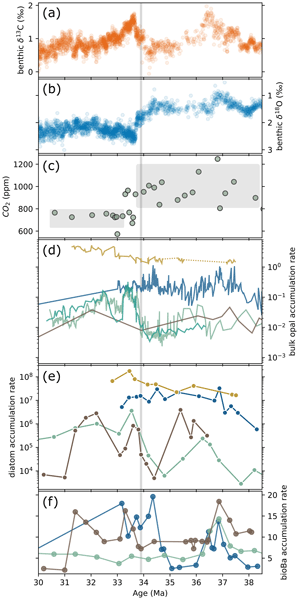
We studied how diatoms (photosynthetic algae with silica shells) responded to major climatic and ocean changes between 38 and 32 million years ago, when the climate shifted into a colder state and Antarctic ice sheets expanded. Equatorial Atlantic sediment records show a sharp reorganization of diatom communities and an extinction pulse around 33.5 million years ago, coinciding with the largest cooling step of this transition.
Volkan Özen, Johan Renaudie, David Lazarus, and Gabrielle Rodrigues de Faria
Clim. Past, 21, 2283–2297, https://doi.org/10.5194/cp-21-2283-2025, https://doi.org/10.5194/cp-21-2283-2025, 2025
Short summary
Short summary
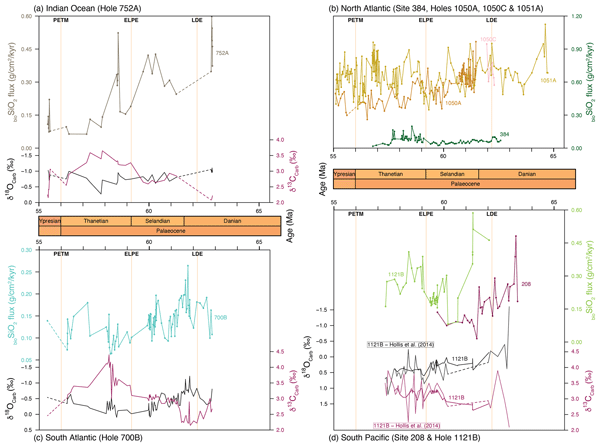
We studied diatom fossils from the Southern Ocean to understand how ocean productivity changed ~40–30 million years ago during a major climate shift marked by the onset of permanent Antarctic glaciation and global cooling. We found striking shifts in diatom productivity, revealing critical changes in ocean circulation and nutrient supply. Our results show how these microscopic organisms may have influenced climate, acting as a geological force that shaped global climate over time.
Volkan Özen, Johan Renaudie, and David Lazarus
EGUsphere, https://doi.org/10.5194/egusphere-2026-1009, https://doi.org/10.5194/egusphere-2026-1009, 2026
This preprint is open for discussion and under review for Climate of the Past (CP).
Short summary
Short summary
We studied how diatoms (photosynthetic algae with silica shells) responded to major climatic and ocean changes between 38 and 32 million years ago, when the climate shifted into a colder state and Antarctic ice sheets expanded. Equatorial Atlantic sediment records show a sharp reorganization of diatom communities and an extinction pulse around 33.5 million years ago, coinciding with the largest cooling step of this transition.
Volkan Özen, Johan Renaudie, David Lazarus, and Gabrielle Rodrigues de Faria
Clim. Past, 21, 2283–2297, https://doi.org/10.5194/cp-21-2283-2025, https://doi.org/10.5194/cp-21-2283-2025, 2025
Short summary
Short summary
We studied diatom fossils from the Southern Ocean to understand how ocean productivity changed ~40–30 million years ago during a major climate shift marked by the onset of permanent Antarctic glaciation and global cooling. We found striking shifts in diatom productivity, revealing critical changes in ocean circulation and nutrient supply. Our results show how these microscopic organisms may have influenced climate, acting as a geological force that shaped global climate over time.
Cécile Figus, Steve Bohaty, Johan Renaudie, and Jakub Witkowski
Clim. Past, 21, 1431–1441, https://doi.org/10.5194/cp-21-1431-2025, https://doi.org/10.5194/cp-21-1431-2025, 2025
Short summary
Short summary
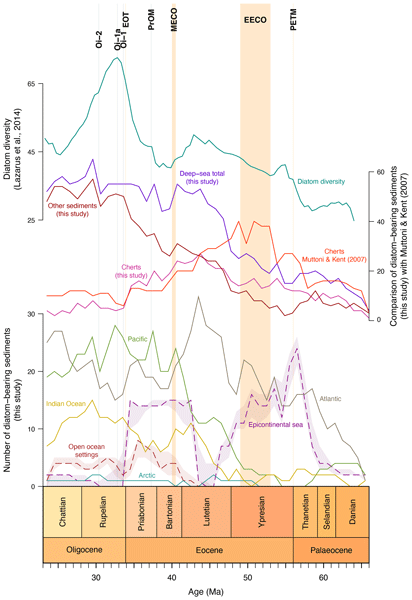
We examine trends in biosiliceous fluxes and isotopic records in the North and South Atlantic, South Pacific, and Indian oceans during two climatic and biotic events: the Latest Danian Event (LDE; ~62.2 Ma) and the Early Late Palaeocene Event (ELPE; ~59.2 Ma). Our results show a peak during the LDE and following the ELPE.
Cécile Figus, Johan Renaudie, Or M. Bialik, and Jakub Witkowski
Biogeosciences, 22, 3029–3046, https://doi.org/10.5194/bg-22-3029-2025, https://doi.org/10.5194/bg-22-3029-2025, 2025
Short summary
Short summary
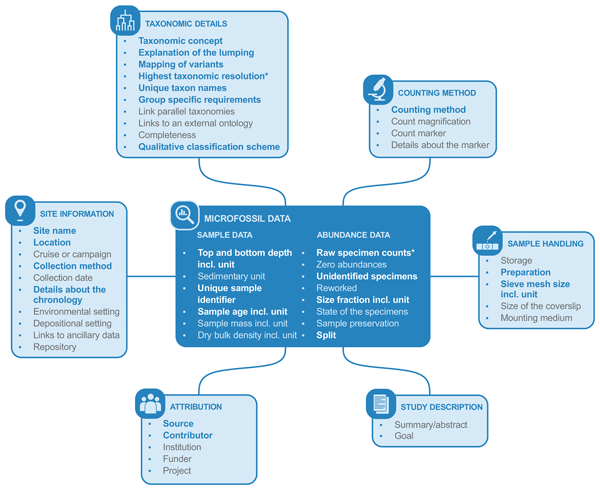
The synthesis of Palaeogene deep-sea diatom-bearing sediment occurrences indicates that the deposition of diatom-bearing sediments is mainly controlled by nutrient availability and ocean circulation in the Atlantic, Pacific, and Indian oceans. Comparison with shallow marine diatomites suggests that the peak in the number of diatom-bearing sites in the Atlantic is indirectly related to tectonic reorganizations that caused the cessation of shallow marine diatomite deposition between ~46 and ~44 Ma.
Lukas Jonkers, Tonke Strack, Montserrat Alonso-Garcia, Simon D'haenens, Robert Huber, Michal Kucera, Iván Hernández-Almeida, Chloe L. C. Jones, Brett Metcalfe, Rajeev Saraswat, Lóránd Silye, Sanjay K. Verma, Muhamad Naim Abd Malek, Gerald Auer, Cátia F. Barbosa, Maria A. Barcena, Karl-Heinz Baumann, Flavia Boscolo-Galazzo, Joeven Austine S. Calvelo, Lucilla Capotondi, Martina Caratelli, Jorge Cardich, Humberto Carvajal-Chitty, Markéta Chroustová, Helen K. Coxall, Renata M. de Mello, Anne de Vernal, Paula Diz, Kirsty M. Edgar, Helena L. Filipsson, Ángela Fraguas, Heather L. Furlong, Giacomo Galli, Natalia L. García Chapori, Robyn Granger, Jeroen Groeneveld, Adil Imam, Rebecca Jackson, David Lazarus, Julie Meilland, Marína Molčan Matejová, Raphael Morard, Caterina Morigi, Sven N. Nielsen, Diana Ochoa, Maria Rose Petrizzo, Andrés S. Rigual-Hernández, Marina C. Rillo, Matthew L. Staitis, Gamze Tanık, Raúl Tapia, Nishant Vats, Bridget S. Wade, and Anna E. Weinmann
J. Micropalaeontol., 44, 145–168, https://doi.org/10.5194/jm-44-145-2025, https://doi.org/10.5194/jm-44-145-2025, 2025
Short summary
Short summary
Our study provides guidelines improving the reuse of marine microfossil assemblage data, which are valuable for understanding past ecosystems and environmental change. Based on a survey of 113 researchers, we identified key data attributes required for effective reuse. Analysis of a selection of datasets available online reveals a gap between the attributes scientists consider essential and the data currently available, highlighting the need for clearer data documentation and sharing practices.

Johan Renaudie and David B. Lazarus
Biogeosciences, 22, 1929–1946, https://doi.org/10.5194/bg-22-1929-2025, https://doi.org/10.5194/bg-22-1929-2025, 2025
Short summary
Short summary
We provide a new compilation of rates at which sediments deposited in the deep sea over the last 70 million years. We highlight a bias, linked to the drilling process, that makes it more likely for high rates to be recovered for younger sediments than for older ones. Correcting for this bias, the record shows, contrary to prior estimates, a more stable history, thus providing some insights on the past mismatch between physico-chemical model estimates and observations.
Cécile Figus, Or M. Bialik, Andrey Y. Gladenkov, Tatyana V. Oreshkina, Johan Renaudie, Pavel Smirnov, and Jakub Witkowski
Clim. Past, 20, 2629–2644, https://doi.org/10.5194/cp-20-2629-2024, https://doi.org/10.5194/cp-20-2629-2024, 2024
Short summary
Short summary
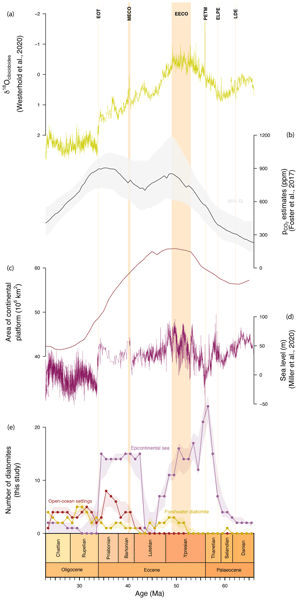
A global-scale compilation of Palaeogene diatomite occurrences shows how palaeogeographic and palaeoceanographic changes impacted diatom accumulation, especially in the middle Eocene. Diatomite deposition dropped in epicontinental seas between ~ 46 and ~ 44 Ma, while diatom accumulation began around 43.5 Ma in open-ocean settings. The compilation also shows an indirect correlation between Palaeogene climate fluctuations and diatomite deposition in shallow-marine and freshwater environments.
Gabrielle Rodrigues de Faria, David Lazarus, Johan Renaudie, Jessica Stammeier, Volkan Özen, and Ulrich Struck
Clim. Past, 20, 1327–1348, https://doi.org/10.5194/cp-20-1327-2024, https://doi.org/10.5194/cp-20-1327-2024, 2024
Short summary
Short summary
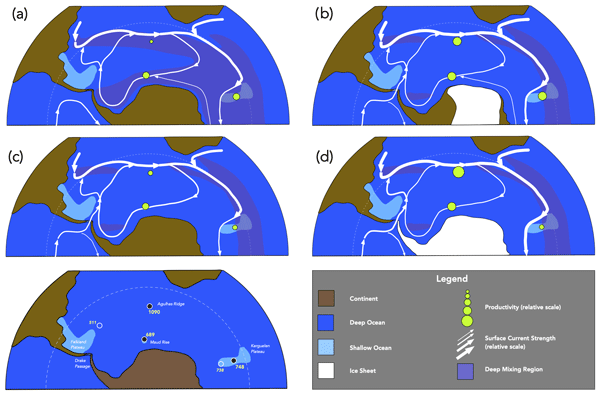
Export productivity is part of the global carbon cycle, influencing the climate system via biological pump. About 34 million years ago, the Earth's climate experienced a climate transition from a greenhouse state to an icehouse state with the onset of ice sheets in Antarctica. Our study shows important productivity events in the Southern Ocean preceding this climatic shift. Our findings strongly indicate that the biological pump potentially played an important role in that past climate change.
Clément Coiffard, Haytham El Atfy, Johan Renaudie, Robert Bussert, and Dieter Uhl
Biogeosciences, 20, 1145–1154, https://doi.org/10.5194/bg-20-1145-2023, https://doi.org/10.5194/bg-20-1145-2023, 2023
Short summary
Short summary
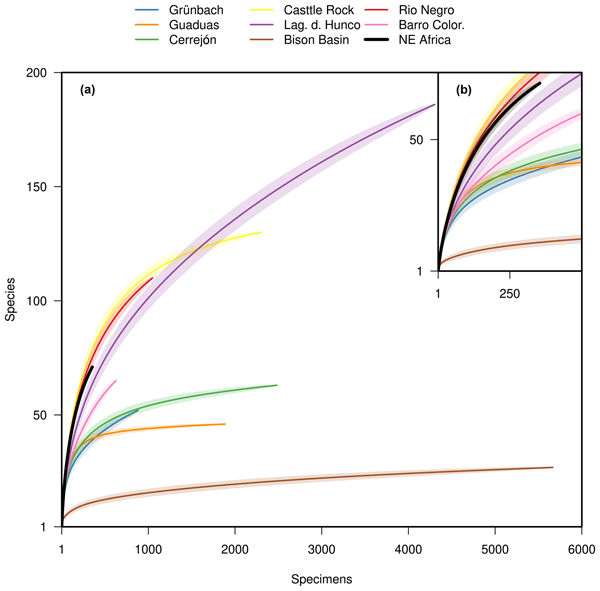
Eighty-million-year-old fossil leaf assemblages suggest a widespread distribution of tropical rainforest in northeastern Africa.
Veronica Carlsson, Taniel Danelian, Pierre Boulet, Philippe Devienne, Aurelien Laforge, and Johan Renaudie
J. Micropalaeontol., 41, 165–182, https://doi.org/10.5194/jm-41-165-2022, https://doi.org/10.5194/jm-41-165-2022, 2022
Short summary
Short summary
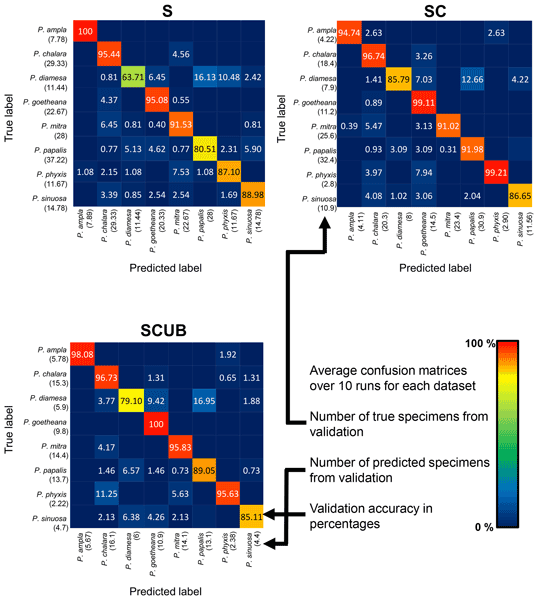
This study evaluates the use of automatic classification using AI on eight closely related radiolarian species of the genus Podocyrtis based on MobileNet CNN. Species belonging to Podocyrtis are useful for middle Eocene biostratigraphy. Numerous images of Podocyrtis species from the tropical Atlantic Ocean were used to train and validate the CNN. An overall accuracy of about 91 % was obtained. Additional Podocyrtis specimens from other ocean realms were used to test the predictive model.
Cited articles
Allen, A. P., Gillooly, J. F., Savage, V. M., and Brown, J. H.: Kinetic effects of temperature on rates of genetic divergence and speciation, P. Natl. Acad. Sci. USA, 103, 9130–9135, https://doi.org/10.1073/pnas.0603587103, 2006.
Alroy, J.: Geographical, environmental and intrinsic biotic controls on Phanerozoic marine diversification: Controls on phanerozoic marine diversification, Palaeontology, 53, 1211–1235, https://doi.org/10.1111/j.1475-4983.2010.01011.x, 2010.
Anderson, L. D. and Delaney, M. L.: Middle Eocene to early Oligocene paleoceanography from Agulhas Ridge, Southern Ocean (Ocean Drilling Program Leg 177, Site 1090), Paleoceanography, 20, 2004PA001043, https://doi.org/10.1029/2004PA001043, 2005.
Auderset, A., Moretti, S., Taphorn, B., Ebner, P.-R., Kast, E., Wang, X. T., Schiebel, R., Sigman, D. M., Haug, G. H., and Martínez-García, A.: Enhanced ocean oxygenation during Cenozoic warm periods, Nature, 609, 77–82, https://doi.org/10.1038/s41586-022-05017-0, 2022.
Bach, L. T. and Taucher, J.: CO2 effects on diatoms: a synthesis of more than a decade of ocean acidification experiments with natural communities, Ocean Sci., 15, 1159–1175, https://doi.org/10.5194/os-15-1159-2019, 2019.
Barron, J., Bukry, D., and Gersonde, R.: Diatom and silicoflagellate biostratigraphy for the late Eocene: ODP 1090 (sub-Antarctic Atlantic), in: Diatom research over time and space Morphology, taxonomy, ecology and distribution of diatoms – from fossil to recent, marine to freshwater, established species and genera to new ones, Nova Hedwigia, Beihefte, ISSN 0078-2238; 143, editecd by: Kociolek, J., Kulikovskiy, M., Witkowski, J., and Harwood, D., Cramer in der Gebr. Borntraeger Verlagsbuchhandlung, Stuttgart, Germany, p. 518, ISBN 978-3-443-51065-7, 2014.
Barron, J., Stickley, C. E., and Bukry, D.: Paleoceanographic, and paleoclimatic constraints on the global Eocene diatom and silicoflagellate record, Palaeogeogr. Palaeoclim. Palaeoecol., 422, 85–100, https://doi.org/10.1016/j.palaeo.2015.01.015, 2015.
Basov, I. A. and Krasheninikov, V. A.: Benthic foraminifers in Mesozoic and Cenozoic sediments of the Southwestern Atlantic as an indicator of paleoenvironment, Deep Sea Drilling Project Leg 71., in: Init. Repts. DSDP, vol. 71, edited by: Ludwig, W. J., Krasheninnikov, V. A., Basov, I. A., Bayer, U., Bloemendal, J., Bronhold, B., Cieselski, P. F., Goldstein, E. H., Robert, C., Sallowy, J., Usher, J. L., von der Dick, H., Wever, F. M., and Wise Jr., S. W., US Govt. Printing Office, Washington, 739–787, https://doi.org/10.2973/dsdp.proc.71.128.1983, 1983.
Behrenfeld, M. J., Halsey, K. H., Boss, E., Karp Boss, L., Milligan, A. J., and Peers, G.: Thoughts on the evolution and ecological niche of diatoms, Ecol. Monogr., 91, e01457, https://doi.org/10.1002/ecm.1457, 2021.
Bezanson, J., Karpinski, S., Shah, V. B., and Edelman, A.: Julia: A fast dynamic language for technical computing, arXiv [preprint], arXiv:1209.5145, https://doi.org/10.48550/arXiv.1209.5145, 2012.
Bohaty, S. M., Zachos, J. C., and Delaney, M. L.: Foraminiferal Mg/Ca evidence for Southern Ocean cooling across the Eocene–Oligocene transition, Earth Planet. Sc. Lett., 317, 251–261, https://doi.org/10.1016/j.epsl.2011.11.037, 2012.
Bohrmann, G. and Stein, R.: Biogenic Silica at ODP Site 647 in the Southern Labrador Sea: Occurrence, Diagenesis, and Paleoceanographic Implications, Proceedings of the Ocean Drilling Program, 105 Scientific Results, edited by: Srivasava, S. P., Arthur, M. A., Clement, B., Aksu, A., Baldauf, J., Bohrmann, G., Busch, W., Cederberg, T., Cremer, M., Dadey, K., de Vermal, A., Firth, J., Hal, F., Head, M., Hiscott, R., Jarrard, R., Kaminski, M., Lazarus, D., Monjanel, A.-L., Nielsen, O. B., Stein, R., Thiebaut, F., Zachos, J., and Zimmerman, H., Ocean Drilling Program, https://doi.org/10.2973/odp.proc.sr.105.1989, 1989.
Bryłka, K., Witkowski, J., and Bohaty, S. M.: Biogenic silica accumulation and diatom assemblage variations through the Eocene–Oligocene Transition: A Southern Indian Ocean versus South Atlantic perspective, Palaeogeogr. Palaeoclim. Palaeoecol., 636, 111971, https://doi.org/10.1016/j.palaeo.2023.111971, 2024.
Cermeño, P. and Falkowski, P. G.: Controls on Diatom Biogeography in the Ocean, Science, 325, 1539–1541, https://doi.org/10.1126/science.1174159, 2009.
Chao, A.: Nonparametric estimation of the number of classes in a population, Scand. J. Stat., 11, 265–270, 1984.
Crampton, J. S., Cody, R. D., Levy, R., Harwood, D., McKay, R., and Naish, T. R.: Southern Ocean phytoplankton turnover in response to stepwise Antarctic cooling over the past 15 million years, P. Natl. Acad. Sci. USA, 113, 6868–6873, https://doi.org/10.1073/pnas.1600318113, 2016.
Cramwinckel, M. J., Huber, M., Kocken, I. J., Agnini, C., Bijl, P. K., Bohaty, S. M., Frieling, J., Goldner, A., Hilgen, F. J., Kip, E. L., Peterse, F., Van Der Ploeg, R., Röhl, U., Schouten, S., and Sluijs, A.: Synchronous tropical and polar temperature evolution in the Eocene, Nature, 559, 382–386, https://doi.org/10.1038/s41586-018-0272-2, 2018.
DeConto, R. M. and Pollard, D.: Rapid Cenozoic glaciation of Antarctica induced by declining atmospheric CO2, Nature, 421, 245–249, https://doi.org/10.1038/nature01290, 2003.
Diekmann, B., Kuhn, G., Gersonde, R., and Mackensen, A.: Middle Eocene to early Miocene environmental changes in the sub-Antarctic Southern Ocean: evidence from biogenic and terrigenous depositional patterns at ODP Site 1090, Global Planet. Change, 40, 295–313, https://doi.org/10.1016/j.gloplacha.2003.09.001, 2004.
Diester-Haass, L. and Zahn, R.: Eocene–Oligocene transition in the Southern Ocean: History of water mass circulation and biological productivity, Geology, 24, 163, https://doi.org/10.1130/0091-7613(1996)024<0163:EOTITS>2.3.CO;2, 1996.
Douglas, P. M., Affek, H. P., Ivany, L. C., Houben, A. J., Sijp, W. P., Sluijs, A., Schouten, S., and Pagani, M.: Pronounced zonal heterogeneity in Eocene southern high-latitude sea surface temperatures, P. Natl. Acad. Sci. USA, 111, 6582–6587, https://doi.org/10.1073/pnas.1321441111, 2014.
Egan, K. E., Rickaby, R. E. M., Hendry, K. R., and Halliday, A. N.: Opening the gateways for diatoms primes Earth for Antarctic glaciation, Earth Planet. Sc. Lett., 375, 34–43, https://doi.org/10.1016/j.epsl.2013.04.030, 2013.
Ehrmann, W. U. and Mackensen, A.: Sedimentological evidence for the formation of an East Antarctic ice sheet in Eocene/Oligocene time, Palaeogeogr. Palaeoclim. Palaeoecol., 93, 85–112, https://doi.org/10.1016/0031-0182(92)90185-8, 1992.
Evangelinos, D., Escutia, C., Van De Flierdt, T., Valero, L., Flores, J.-A., Harwood, D. M., Hoem, F. S., Bijl, P., Etourneau, J., Kreissig, K., Nilsson-Kerr, K., Holder, L., López-Quirós, A., and Salabarnada, A.: Absence of a strong, deep-reaching Antarctic Circumpolar Current zonal flow across the Tasmanian gateway during the Oligocene to early Miocene, Global Planet. Change, 208, 103718, https://doi.org/10.1016/j.gloplacha.2021.103718, 2022.
Evangelinos, D., Etourneau, J., Van De Flierdt, T., Crosta, X., Jeandel, C., Flores, J.-A., Harwood, D. M., Valero, L., Ducassou, E., Sauermilch, I., Klocker, A., Cacho, I., Pena, L. D., Kreissig, K., Benoit, M., Belhadj, M., Paredes, E., Garcia-Solsona, E., López-Quirós, A., Salabarnada, A., and Escutia, C.: Late Miocene onset of the modern Antarctic Circumpolar Current, Nat. Geosci., 17, 165–170, https://doi.org/10.1038/s41561-023-01356-3, 2024.
Falkowski, P. G., Barber, R. T., and Smetacek, V.: Biogeochemical Controls and Feedbacks on Ocean Primary Production, Science, 281, 200–206, https://doi.org/10.1126/science.281.5374.200, 1998.
Fenner, J.: Diatoms in the Eocene and Oligocene sediments off NW-Africa: their stratigraphic and paleogeographic occurrences, Diss., Christian-Albrechts-Universität zu Kiel, Kiel, 1981.
Fenner, J.: Information from Diatom Analysis Concerning the Eocene–Oligocene Boundary, in: Developments in Palaeontology and Stratigraphy, Elsevier, 283–287, https://doi.org/10.1016/s0920-5446(08)70131-6, 1986.
Foote, M.: Origination and extinction components of taxonomic diversity: General problems, Paleobiology, 26, 74–102, https://doi.org/10.1017/S0094837300026890, 2000.
Freeman, N. M., Munro, D. R., Sprintall, J., Mazloff, M. R., Purkey, S., Rosso, I., DeRanek, C. A., and Sweeney, C.: The Observed Seasonal Cycle of Macronutrients in Drake Passage: Relationship to Fronts and Utility as a Model Metric, J. Geophys. Res.-Oceans, 124, 4763–4783, https://doi.org/10.1029/2019JC015052, 2019.
Goldenberg, S. U., Taucher, J., Fernández-Méndez, M., Ludwig, A., Arístegui, J., Baumann, M., Ortiz, J., Stuhr, A., and Riebesell, U.: Nutrient composition (Si:N) as driver of plankton communities during artificial upwelling, Front. Mar. Sci., 9, https://doi.org/10.3389/fmars.2022.1015188, 2022.
Gombos Jr. A. M. and Ciesielski, P. F.: Late Eocene to early Miocene diatoms from the Southwest Atlantic, in: Initial Reports of the Deep Sea Drilling Project, US Government Printing Office, Washington, D.C., 583–634, https://doi.org/10.2973/dsdp.proc.71.124.1983, 1983.
Gradstein, F. M., Ogg, J. G., Schmitz, M. D., and Ogg, G. M.: The geologic time scale 2012, in: 1st Edn., Elsevier, Amsterdam, ISBN 978-0-444-59425-9, 2012.
Hatton, I. A., Mazzarisi, O., Altieri, A., and Smerlak, M.: Diversity begets stability: Sublinear growth and competitive coexistence across ecosystems, Science, 383, eadg8488, https://doi.org/10.1126/science.adg8488, 2024.
Hendry, K. R., Marron, A. O., Vincent, F., Conley, D. J., Gehlen, M., Ibarbalz, F. M., Quéguiner, B., and Bowler, C.: Competition between silicifiers and non-silicifiers in the past and present ocean and its evolutionary impacts, Front. Mar. Sci., 5, 22, https://doi.org/10.3389/fmars.2018.00022, 2018.
Henson, S. A., Cael, B. B., Allen, S. R., and Dutkiewicz, S.: Future phytoplankton diversity in a changing climate, Nat. Commun., 12, https://doi.org/10.1038/s41467-021-25699-w, 2021.
Hinder, S. L., Hays, G. C., Edwards, M., Roberts, E. C., Walne, A. W., and Gravenor, M. B.: Changes in marine dinoflagellate and diatom abundance under climate change, Nat. Clim. Change, 2, 271–275, https://doi.org/10.1038/nclimate1388, 2012.
Hodel, F., Grespan, R., De Rafélis, M., Dera, G., Lezin, C., Nardin, E., Rouby, D., Aretz, M., Steinnman, M., Buatier, M., Lacan, F., Jeandel, C., and Chavagnac, V.: Drake Passage gateway opening and Antarctic Circumpolar Current onset 31 Ma ago: The message of foraminifera and reconsideration of the Neodymium isotope record, Chem. Geol., 570, 120171, https://doi.org/10.1016/j.chemgeo.2021.120171, 2021.
Hoem, F. S., Sauermilch, I., Aleksinski, A. K., Huber, M., Peterse, F., Sangiorgi, F., and Bijl, P. K.: Strength and variability of the Oligocene Southern Ocean surface temperature gradient, Commun. Earth Environ., 3, 322, https://doi.org/10.1038/s43247-022-00666-5, 2022.
Houben, A. J. P., Bijl, P. K., Pross, J., Bohaty, S. M., Passchier, S., Stickley, C. E., Röhl, U., Sugisaki, S., Tauxe, L., Van De Flierdt, T., Olney, M., Sangiorgi, F., Sluijs, A., Escutia, C., Brinkhuis, H., and the Expedition 318 Scientists: Reorganization of Southern Ocean Plankton Ecosystem at the Onset of Antarctic Glaciation, Science, 340, 341–344, https://doi.org/10.1126/science.1223646, 2013.
Houben, A. J. P., Bijl, P. K., Sluijs, A., Schouten, S., and Brinkhuis, H.: Late Eocene Southern Ocean Cooling and Invigoration of Circulation Preconditioned Antarctica for Full-Scale Glaciation, Geochem. Geophy. Geosy., 20, 2214–2234, https://doi.org/10.1029/2019GC008182, 2019.
Jackson, G. A.: Effect of coagulation on a model planktonic food web, Deep-Sea Res. Pt. I, 48, 95–123, https://doi.org/10.1016/S0967-0637(00)00040-6, 2001.
Kennett, J. P.: Cenozoic evolution of Antarctic glaciation, the circum-Antarctic Ocean, and their impact on global paleoceanography, J. Geophys. Res., 82, 3843–3860, https://doi.org/10.1029/JC082i027p03843, 1977.
Kiørboe, T.: Turbulence, Phytoplankton Cell Size, and the Structure of Pelagic Food Webs, in: Advances in Marine Biology, vol. 29, Elsevier, 1–72, https://doi.org/10.1016/S0065-2881(08)60129-7, 1993.
Langton, S. J., Rabideaux, N. M., Borrelli, C., and Katz, M. E.: Southeastern Atlantic deep-water evolution during the late-middle Eocene to earliest Oligocene (Ocean Drilling program site 1263 and Deep Sea Drilling project site 366), Geosphere, 12, 1032–1047, https://doi.org/10.1130/GES01268.1, 2016.
Lazarus, D.: An improved cover-slip holder for preparing microslides of randomly distributed particles, J. Sediment. Res., 64, 686–0, https://doi.org/10.2110/jsr.64.686, 1994.
Lazarus, D., Barron, J., Renaudie, J., Diver, P., and Türke, A.: Cenozoic Planktonic Marine Diatom Diversity and Correlation to Climate Change, PLoS ONE, 9, e84857, https://doi.org/10.1371/journal.pone.0084857, 2014.
Liow, L. H. and Stenseth, N. C.: The rise and fall of species: implications for macroevolutionary and macroecological studies, P. Roy. Soc. B, 274, 2745–2752, https://doi.org/10.1098/rspb.2007.1006, 2007.
Liu, Z., Pagani, M., Zinniker, D., DeConto, R., Huber, M., Brinkhuis, H., Shah, S. R., Leckie, R. M., and Pearson, A.: Global Cooling During the Eocene–Oligocene Climate Transition, Science, 323, 1187–1190, https://doi.org/10.1126/science.1166368, 2009.
Magurran, A. E.: Measuring Biological Diversity, Wiley, ISBN 978-1-118-68792-5, 2004.
Marinov, I., Doney, S. C., and Lima, I. D.: Response of ocean phytoplankton community structure to climate change over the 21st century: partitioning the effects of nutrients, temperature and light, Biogeosciences, 7, 3941–3959, https://doi.org/10.5194/bg-7-3941-2010, 2010.
Marshall, C. R.: Confidence intervals on stratigraphic ranges with nonrandom distributions of fossil horizons, Paleobiology, 23, 165–173, https://doi.org/10.1017/s0094837300016766, 1997.
Maurer, B. A. and Nott, M. P.: Geographic Range Fragmentation and the Evolution of Biological Diversity, in: Biodiversity Dynamics: Turnover of Populations, Taxa, and Communities, edited by: McKinney, M. L. and Drake, J. A., Columbia University Press, 31–50, ISBN 978-0-231-50580-2, 1998.
McKinney, M. L.: How do rare species avoid extinction? A paleontological view, in: The Biology of Rarity, edited by: Kunin, W. E. and Gaston, K. J., Springer Netherlands, Dordrecht, 110–129, https://doi.org/10.1007/978-94-011-5874-9_7, 1997.
Moore Jr., T. C.: Method Of Randomly Distributing Grains For Microscopic Examination, in: Vol. 43, SEPM JSR, https://doi.org/10.1306/74D728BA-2B21-11D7-8648000102C1865D, 1973.
Özen, V.: oezenvolkan/Oezenetal2025: Summitted Release (0.1.0), Zenodo [data set], https://doi.org/10.5281/zenodo.14605790, 2025 (code available at: https://github.com/oezenvolkan/Oezenetal2025, last access: 11 March 2026).
Özen, V., Renaudie, J., and Lazarus, D.: Özen et al Unraveling Southern Ocean Diatom Diversity Across the Eocene/Oligocene Transition, Zenodo [data set], https://doi.org/10.5281/zenodo.14608178, 2025.
Pagani, M., Zachos, J. C., Freeman, K. H., Tipple, B., and Bohaty, S.: Marked Decline in Atmospheric Carbon Dioxide Concentrations During the Paleogene, Science, 309, 600–603, https://doi.org/10.1126/science.1110063, 2005.
Pascher, K. M., Hollis, C. J., Bohaty, S. M., Cortese, G., McKay, R. M., Seebeck, H., Suzuki, N., and Chiba, K.: Expansion and diversification of high-latitude radiolarian assemblages in the late Eocene linked to a cooling event in the southwest Pacific, Clim. Past, 11, 1599–1620, https://doi.org/10.5194/cp-11-1599-2015, 2015.
Pearson, P. N., Van Dongen, B. E., Nicholas, C. J., Pancost, R. D., Schouten, S., Singano, J. M., and Wade, B. S.: Stable warm tropical climate through the Eocene Epoch, Geology, 35, 211, https://doi.org/10.1130/g23175a.1, 2007.
Persico, D. and Villa, G.: Eocene–Oligocene calcareous nannofossils from Maud Rise and Kerguelen Plateau (Antarctica): paleoecological and paleoceanographic implications, Mar. Micropaleontol., 52, 153–179, https://doi.org/10.1016/j.marmicro.2004.05.002, 2004.
Plancq, J., Mattioli, E., Pittet, B., Simon, L., and Grossi, V.: Productivity and sea-surface temperature changes recorded during the late Eocene–early Oligocene at DSDP Site 511 (South Atlantic), Palaeogeogr. Palaeoclima. Palaeoecol., 407, 34–44, https://doi.org/10.1016/j.palaeo.2014.04.016, 2014.
Pusz, A. E., Thunell, R. C., and Miller, K. G.: Deep water temperature, carbonate ion, and ice volume changes across the Eocene–Oligocene climate transition, Paleoceanography, 26, 2010PA001950, https://doi.org/10.1029/2010PA001950, 2011.
Rabosky, D. L. and Sorhannus, U.: Diversity dynamics of marine planktonic diatoms across the Cenozoic, Nature, 457, 183–186, https://doi.org/10.1038/nature07435, 2009.
Ragueneau, O., Tréguer, P., Leynaert, A., Anderson, R. F., Brzezinski, M. A., DeMaster, D. J., Dugdale, R. C., Dymond, J., Fischer, G., François, R., Heinze, C., Maier-Reimer, E., Martin-Jézéquel, V., Nelson, D. M., and Quéguiner, B.: A review of the Si cycle in the modern ocean: recent progress and missing gaps in the application of biogenic opal as a paleoproductivity proxy, Global Planet. Change, 26, 317–365, https://doi.org/10.1016/S0921-8181(00)00052-7, 2000.
Renaudie, J.: Quantifying the Cenozoic marine diatom deposition history: links to the C and Si cycles, Biogeosciences, 13, 6003–6014, https://doi.org/10.5194/bg-13-6003-2016, 2016.
Renaudie, J. and Lazarus, D. B.: On the accuracy of paleodiversity reconstructions: a case study in Antarctic Neogene radiolarians, Paleobiology, 39, 491–509, https://doi.org/10.1666/12016, 2013.
Renaudie, J., Drews, E.-L., and Böhne, S.: The Paleocene record of marine diatoms in deep-sea sediments, Foss. Rec., 21, 183–205, https://doi.org/10.5194/fr-21-183-2018, 2018.
Renaudie, J., Lazarus, D., and Diver, P.: NSB (Neptune Sandbox Berlin): An expanded and improved database of marine planktonic microfossil data and deep-sea stratigraphy, Palaeontol. Electron., https://doi.org/10.26879/1032, 2020.
Renaudie, J., Lazarus, D., and Diver, P.: Archive of Neptune (NSB) database backups (2023-06-05), Zenodo [data set], https://doi.org/10.5281/ZENODO.10063218, 2023.
Rineau, V., Smyčka, J., and Storch, D.: Diversity dependence is a ubiquitous phenomenon across Phanerozoic oceans, Sci. Adv., 8, eadd9620, https://doi.org/10.1126/sciadv.add9620, 2022.
Rodrigues De Faria, G., Lazarus, D., Renaudie, J., Stammeier, J., Özen, V., and Struck, U.: Late Eocene to early Oligocene productivity events in the proto-Southern Ocean and correlation to climate change, Clim. Past, 20, 1327–1348, https://doi.org/10.5194/cp-20-1327-2024, 2024.
Salamy, K. A. and Zachos, J. C.: Latest Eocene–Early Oligocene climate change and Southern Ocean fertility: inferences from sediment accumulation and stable isotope data, Palaeogeogr. Palaeoclim. Palaeoecol. 145, 61–77, https://doi.org/10.1016/S0031-0182(98)00093-5, 1999.
Sarkar, S., Basak, C., Frank, M., Berndt, C., Huuse, M., Badhani, S., and Bialas, J.: Late Eocene onset of the Proto-Antarctic Circumpolar Current, Sci. Rep., 9, 10125, https://doi.org/10.1038/s41598-019-46253-1, 2019.
Sauermilch, I., Whittaker, J. M., Klocker, A., Munday, D. R., Hochmuth, K., Bijl, P. K., and LaCasce, J. H.: Gateway-driven weakening of ocean gyres leads to Southern Ocean cooling, Nat. Commun., 12, https://doi.org/10.1038/s41467-021-26658-1, 2021.
Scher, H. D. and Martin, E. E.: Timing and Climatic Consequences of the Opening of Drake Passage, Science, 312, 428–430, https://doi.org/10.1126/science.1120044, 2006.
Scher, H. D., Bohaty, S. M., Zachos, J. C., and Delaney, M. L.: Two-stepping into the icehouse: East Antarctic weathering during progressive ice-sheet expansion at the Eocene–Oligocene transition, Geology, 39, 383–386, https://doi.org/10.1130/G31726.1, 2011.
Scher, H. D., Bohaty, S. M., Smith, B. W., and Munn, G. H.: Isotopic interrogation of a suspected late Eocene glaciation: Hidden glaciation revealed in the Eocene, Paleoceanography, 29, 628–644, https://doi.org/10.1002/2014PA002648, 2014.
Seabold, S. and Perktold, J.: statsmodels: Econometric and statistical modeling with python, in: Proceedings of the 9th Python in Science Conference, https://doi.org/0.25080/Majora-92bf1922-011, 2010.
Shackleton, N. J. and Kennett, J. P.: Paleotemperature History of the Cenozoic and the Initiation of Antarctic Glaciation: Oxygen and Carbon Isotope Analyses in DSDP Sites 277, 279 and 281, in: Initial Reports of the Deep Sea Drilling Project 29, US Government Printing Office, https://doi.org/10.2973/dsdp.proc.29.117.1975, 1975.
Straume, E. O., Nummelin, A., Gaina, C., and Nisancioglu, K. H.: Climate transition at the Eocene–Oligocene influenced by bathymetric changes to the Atlantic-Arctic oceanic gateways, P. Natl. Acad. Sci. USA, 119, e2115346119, https://doi.org/10.1073/pnas.2115346119, 2022.
Strelnikova, N. I. and Vasilyev, C. V.: Statistical analysis applied to evaluate taxonomic divisions in the genus Pyxilla Greville, Beihefte zur Nova Hedwigia, 106, 275–289, 1993.
Sutton, J. N., Varela, D. E., Brzezinski, M. A., and Beucher, C. P.: Species-dependent silicon isotope fractionation by marine diatoms, Geochim. Cosmochim. Ac., 104, 300–309, https://doi.org/10.1016/j.gca.2012.10.057, 2013.
Tibbett, E. J., Burls, N. J., Hutchinson, D. K., and Feakins, S. J.: Proxy-Model Comparison for the Eocene–Oligocene Transition in Southern High Latitudes, Paleoceanogr. Paleoclimatol., 38, e2022PA004496, https://doi.org/10.1029/2022PA004496, 2023.
Toumoulin, A., Donnadieu, Y., Ladant, J. B., Batenburg, S. J., Poblete, F., and Dupont-Nivet, G.: Quantifying the Effect of the Drake Passage Opening on the Eocene Ocean, Paleoceanogr. Paleoclimatol., 35, e2020PA003889, https://doi.org/10.1029/2020PA003889, 2020.
Tréguer, P., Bowler, C., Moriceau, B., Dutkiewicz, S., Gehlen, M., Aumont, O., Bittner, L., Dugdale, R., Finkel, Z., Iudicone, D., Jahn, O., Guidi, L., Lasbleiz, M., Leblanc, K., Levy, M., and Pondaven, P.: Influence of diatom diversity on the ocean biological carbon pump, Nat. Geosci., 11, 27–37, https://doi.org/10.1038/s41561-017-0028-x, 2018.
Trubovitz, S., Lazarus, D., Renaudie, J., and Noble, P. J.: Marine plankton show threshold extinction response to Neogene climate change, Nat. Commun., 11, 5069, https://doi.org/10.1038/s41467-020-18879-7, 2020.
Villa, G., Fioroni, C., Persico, D., Roberts, A. P., and Florindo, F.: Middle Eocene to Late Oligocene Antarctic glaciation/deglaciation and Southern Ocean productivity, Paleoceanography, 29, 223–237, https://doi.org/10.1002/2013PA002518, 2014.
Warnock, J. P. and Scherer, R. P.: Increased diatom dissolution in Prydz Bay, East Antarctica linked to inception of the Prydz Bay gyre, Diatom Res., 31, 161–168, https://doi.org/10.1080/0269249X.2016.1182075, 2016.
Westerhold, T., Marwan, N., Drury, A. J., Liebrand, D., Agnini, C., Anagnostou, E., Barnet, J. S. K., Bohaty, S. M., De Vleeschouwer, D., Florindo, F., Frederichs, T., Hodell, D. A., Holbourn, A. E., Kroon, D., Lauretano, V., Littler, K., Lourens, L. J., Lyle, M., Pälike, H., Röhl, U., Tian, J., Wilkens, R. H., Wilson, P. A., and Zachos, J. C.: An astronomically dated record of Earth's climate and its predictability over the last 66 million years, Science, 369, 1383–1387, https://doi.org/10.1126/science.aba6853, 2020.
Wolda, H.: Similarity indices, sample size and diversity, Oecologia, 50, 296–302, https://doi.org/10.1007/BF00344966, 1981.
Wright, N. M., Scher, H. D., Seton, M., Huck, C. E., and Duggan, B. D.: No Change in Southern Ocean Circulation in the Indian Ocean From the Eocene Through Late Oligocene, Paleoceanogr. Paleoclimatol., 33, 152–167, https://doi.org/10.1002/2017PA003238, 2018.
Short summary
The Eocene–Oligocene transition was a pivotal interval in Earth's geological history, marked by cooling and Antarctic glaciation. Our research explores how Southern Ocean diatoms responded to these changes. By analyzing records from multiple sites, we revealed previously unrecognized diatom diversity, and identified distinct patterns in diversity and extinction. These findings deepen our understanding of the interplay between climatic perturbations and the biosphere.
The Eocene–Oligocene transition was a pivotal interval in Earth's geological history, marked by...


