
Articles | Volume 45, issue 1
https://doi.org/10.5194/jm-45-33-2026
© Author(s) 2026. This work is distributed under
the Creative Commons Attribution 4.0 License.
the Creative Commons Attribution 4.0 License.
https://doi.org/10.5194/jm-45-33-2026
© Author(s) 2026. This work is distributed under
the Creative Commons Attribution 4.0 License.
the Creative Commons Attribution 4.0 License.
Research article
| 
09 Jan 2026
Research article |
| 09 Jan 2026
| 09 Jan 2026
Morphometric divergence in Cyprideis (Ostracoda) during the Middle and Late Miocene of the Central Paratethys realm
Earth Science Institute, Slovak Academy of Sciences, Ďumbierska 1, 974 01, Banská Bystrica, Slovakia
Martin Gross
Department for Geology and Palaeontology, Universalmuseum Joanneum, Weinzöttlstrasse 16, 8045 Graz, Austria
Dušan Starek
Earth Science Institute, Slovak Academy of Sciences, Dúbravská cesta 9, 840 05 Bratislava, Slovakia
Related authors
No articles found.
Sherilyn C. Fritz, André O. Sawakuchi, Anders Noren, Paul A. Baker, Cleverson Silva, Carlos Jaramillo, Renato Paes de Almeida, Liliane Janikian, Isaac Salém Bezerra, Marcos Barbosa, Dailson Bertassoli, Rain Blankenship, Cristiano M. Chiessi, Sarah J. Feakins, Maria da Glória Garcia, Cécile Gautheron, Brian Grivna, Gelvam Hartmann, Cindy Kunkel, André Marconato, Angela Martinez, Sebastian G. Marulanda, Carlos Eduardo M. Mazoca, Francisco R. Negri, Mauricio Parra, Werner E. Piller, Fabiano N. Pupim, Victor Salgado, Rachel T. So, Priscila Emerich Souza, Elena Stiles, Caroline A. E. Strömberg, Siu Mui Tsai, Ingo Wahnfried, Josh West, Marc-Élie Adaimé, Jhon Afonso, Thomas Kenji Akabane, Camila Eliza Althaus, Carlos D'Apolito, Kleiton R. Araújo, Roney da Silva de Azevedo Júnior, Jessica Barcellos, Tacio Bicudo, Giovanni Bogota, Bodo Bookhagen, Caio Breda, Alderlene Pimentel de Brito, Francy Carvajal, Daniel Antunes Coppi, Carolina Barbosa Leite da Cruz, Felipe Torres Figueiredo, Kate Freeman, Pedro Victor Oliveira Gomes, Martin Gross, Emma Hartke, Katja Heeschen, William Mozart Henrichs, Leonardo Henrique, Carina Hoorn, Brian K. Horton, Andrés Díaz-Jamamillo, Said Kamrani-Mehni, Fatima Leite, Lin Li, Rodrigo Ferreira de Lucena, Alastair Milne, Thomás Miranda, Marcelo Mota, Diana Ochoa, Vinicius de Lima Passos, Rafaela Maciel Lopes de Paula, Elisa Piispa, Angelo Plata Torres, Surangi W. Punyasena, Adriano Domingos dos Reis, Catherine Rigsby, Andrés F. Salazar Rios, Fernanda Costa Gonçalves Rodrigues, Raquel M. M. Romão, Ingrid C. Romero, Henrique O. Sawakuchi, Doug Schnurrenberger, Kristina Brady Shannon, Silane A. F. da Silva-Caminha, Clauses Sousa, Larissa Natsumi Tamura, Thomas Wiersberg, Helanlin Xiang, and Belén Zamudio
Sci. Dril., 35, 127–157, https://doi.org/10.5194/sd-35-127-2026, https://doi.org/10.5194/sd-35-127-2026, 2026
Short summary
Short summary
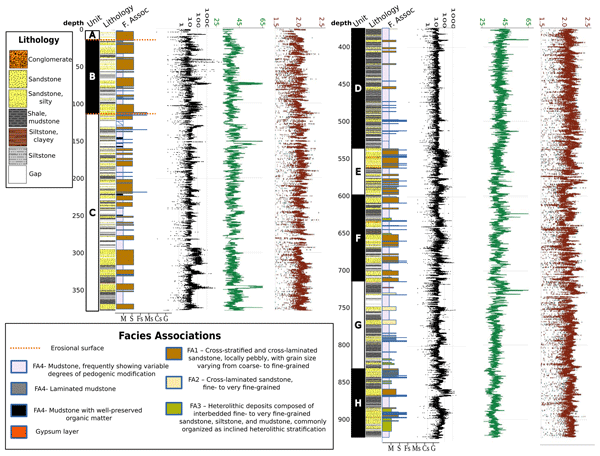
The Trans-Amazon Drilling Project seeks to reconstruct the origins of biodiversity in the world's largest and most diverse rain forest, and the roles of landscape changes driven by Andean uplift and global climate change in diversification. We provide a project overview and preliminary results from a drill core from the Acre Basin of western Brazil, which recovered an 860 m sequence that was deposited in a large river system and which will yield critical insights on evolutionary history.
Cited articles
Akgün, F., Kayseri, M. S., and Akkiraz, M. S.: Palaeoclimatic evolution and vegetational changes during the Late Oligocene–Miocene period in Western and Central Anatolia (Turkey), Palaeogeogr. Palaeoclimatol. Palaeoecol., 253, 56–90, https://doi.org/10.1016/j.palaeo.2007.03.034, 2007.
Aladin, N. V. and Potts, W. T. W.: The osmoregulatory capacity of the Ostracoda, J. Comp. Physiol. B, 166, 215–222, 1996.
Altizer, S., Harvell, D., and Friedle, E.: Rapid evolutionary dynamics and disease threats to biodiversity, Trends Ecol. Evol., 18, 589–596, https://doi.org/10.1016/j.tree.2003.08.013, 2003.
Angilletta, M. J. Steury, T. D., and Sears, M. W.: Temperature, growth rate, and body size in ectotherms: fitting pieces of a life-history puzzle, Integr. Comp. Biol., 44, 498–509, https://doi.org/10.1093/icb/44.6.498, 2004.
Atkinson, D. and Sibly, R. M.: Why are organisms usually bigger in colder environments? Making sense of a life history puzzle, Trends Ecol. Evol., 12, 235–239, https://doi.org/10.1016/S0169-5347(97)01058-6, 1997.
Balázs, A., Magyar, I., Matenco, L., Sztanó, O., Tőkés, L., and Horváth, F.: Morphology of a large paleo-lake: Analysis of compaction in the Miocene-Quaternary Pannonian Basin, Glob. Planet. Change, 171, 134–147, https://doi.org/10.1016/j.gloplacha.2017.10.012, 2018.
Bassiouni, M. E. A. A.: Brackische und marine Ostrakoden (Cytherideinae, Hemicytherinae, Trachyleberidinae) aus dem Oligozän und Neogen der Türkei (Känozoikum und Braunkohlen der Türkei), Geol. Jahrb., Reihe B (Reg. Geol. Ausl.), 31, 3–195, 1979.
Bodergat, A.-M.: Les ostracodes, témoins de leurs environnement: approche chimique et écologie en milieu lagunaire et océanique, Doc. lab. géol. Lyon, 88, 1–246, 1983.
Bodergat, A.-M.: Composition chimique des carapaces d'Ostracodes, Paramètres du milieu de vie, in: Atlas des ostracodes de France (Paléozoique-Actuel), edited by: Oertli, H. J., B. Cent. Rech. Expl., 9, 379–386, 1985.
Boomer, I.: Ostracoda as indicator of climatic and human-influenced changes in the late Quaternary of the Ponto-Caspian Region (Aral, Caspian and Black Seas). Dev. Quat. Sci., 17, 205–215, https://doi.org/10.1016/B978-0-444-53636-5.00012-3, 2012.
Boomer, I., Frenzel, P., and Feike, M.: Salinity-driven size variability in Cyprideis torosa (Ostracoda, Crustacea), J. Micropaleontol., 36, 63–69, https://doi.org/10.1144/jmpaleo2015-043, 2017.
Brauneis, W., Linhart, J., Stracke, A., Danielopol, D. L., Neubauer, W., and Baltanás. A.: Morphomatica (Version 1.6) User Manual/Tutorial, Mondsee, 2006a.
Brauneis, W., Neubauer, W., Linhart, J., and Danielopol, D. L.: Morphomatica approximation of Ostracoda, Computer Programme version 1.6, 2006b.
Cernajsek, T.: Die Ostracodenfaunen der Sarmatischen Schichten in Österreich, in: Chronostratigraphie und Neostratotypen, Miozän der Zentralen Paratethys, Bd. IV, M5, Sarmatien, edited by: Brestenská, E., VEDA, Bratislava, 458–491, 1974.
Clarke, K. R. and Gorley, R. N.: Primer v5: User manual/tutorial, PRIMER-E Ltd, Plymouth, 2001.
Clarke, K. R. and Gorley, R. N.: Primer v6. Computer programme and user manual/tutorial, PRIMER-E Ltd, Plymouth, 2006.
Cohen, A.S.: Extinction in ancient lakes: Biodiversity crises and conservation 40 years after J.L. Brooks, in: Speciation in ancient lakes, edited by: Martens, K., Goddeeris, B., and Coulter, G., Arch. Hydrobiol., Beih. Advan. Limnol., 44, 451–179, 1994.
Cohen, A. S. and Johnston, M. R.: Speciation in brooding and poorly dispersing lacustrine organisms. Palaios, 2, 426–435, https://doi.org/10.2307/3514614, 1987.
Colin, J. P. and Danielopol, D. L.: Why most of the Timiriaseviinae (Ostracoda, Crustacea) became extinct, Geobios, 12, 745–749, https://doi.org/10.1016/S0016-6995(79)80102-3, 1979.
Cronin, T. M.: Speciation and stasis in marine Ostracoda: climatic modulation of evolution, Science, 277, 60–63, https://doi.org/10.1126/science.227.4682.60, 1985.
Cziczer, I., Magyar, I., Pipík, R., Böhme, M., Ćorić, S., Bakrač, K., Sütő-Szentai, M., Lantos, M., Babinszki, E., and Müller, P.: Life in the sublittoral zone of Lake Pannon: paleontological analysis of the Upper Miocene Szák Formation, Hungary, Int. J. Earth Sci., 98, 1741–1766, https://doi.org/10.1007/s00531-008-0322-3, 2009.
De Deckker, P. and Lord, A.: Cyprideis torosa: a model organism for the Ostracoda?, J. Micropalaeontol., 36, 3–6, https://doi.org/10.1144/jmpaleo2016-100, 2017.
Duveillera, G., Caporaso, L., Abad-Viñas, R., Perugini, L., Grassi, G., Arneth, A., and Cescatti, A.: Local biophysical effects of land use and land cover change: towards an assessment tool for policy makers, Land Use Policy, 91, 104382, https://doi.org/10.1016/j.landusepol.2019.104382, 2020.
Feniova, I. Y., Palash, A. L., Razlutskij, V. I., and Dzialowski, A. R.: Effects of temperature and resource abundance on small- and large-bodied cladocerans: Community stability and species replacement, Open J. Ecol., 3, 164–171, https://doi.org/10.4236/oje.2013.32020, 2013.
Fordinál, K. and Zlínska, A.: Fauna vrchnej časti holíčskeho súvrstvia (sarmat) v Skalici (viedenská panva) (Fauna of the upper part of the Holíč Formation (Sarmatian) in Skalica (Vienna Basin)), Min. Slovaca, 30, 137–146, 1998.
Frenzel, P.: Die Ostracodenfauna der tiefen Teile der Ostsee-Boddengewässer Vorpommerns. Meyniana, 43, 151–175, 1991.
Gamenick, I., Jahn, A., Vopel, K., and Giere, O.: Hypoxia and sulphide as structuring factors in a macrozoobenthic community on the Baltic Sea shore: colonization studies and tolerance experiments, Mar. Ecol. Prog. Ser., 144, 73–85, https://doi.org/10.3354/meps144073, 1996.
Geary, D. H.: Patterns of evolutionary tempo and mode in the radiation of Melanopsis (Gastropoda; Melanopsidae), Paleobiology, 16, 492–511, https://doi.org/10.1017/S0094837300010216, 1990.
Geary, D. H., Rich, J. A., Valey, J. W., and Baker, K.: Stable isotopic evidence of salinity change: Influence on the evolution of melanopsid gastropods in the late Miocene Pannonian basin. Geology, 17, 981–985, https://doi.org/10.1130/0091-7613(1989)017<0981:SIEOSC>2.3.CO;2, 1989.
Geary, D. H., Staley, A. W., Müller, P., and Magyar, I.: Iterative changes in Lake Pannon Melanopsis reflect a recurrent theme in gastropod morphological evolution, Paleobiology, 28, 208–221, https://doi.org/10.1666/0094-8373(2002)028<0208:ICILPM>2.0.CO;2, 2002.
Geary, D. H., Hunt, G., Magyar, I., and Schreiber, H.: The paradox of gradualism: phyletic evolution in two lineages of lymnocardiid bivalves (Lake Pannon, central Europe), Paleobiology, 36, 592–614, https://doi.org/10.1666/08065.1, 2010.
Gitter, F., Gross, M., and Piller, W. E.: Sub-Decadal resolution in sediments of Late Miocene Lake Pannon reveals speciation of Cyprideis (Crustacea, Ostracoda), PLoS One, 10, e0109360, https://doi.org/10.1371/journal.pone.0109360, 2015.
Gliozzi, E., Rodriguez-Lazaro, J., and Pipík, R.: The Neogene Mediterranean origin of Cyprideis torosa (Jones, 1850), J. Micropalaeontol., 36, 80–93, https://doi.org/10.1144/jmpaleo2016-029, 2017.
Gross, M. and Piller, W. E.: Saline waters in Miocene Western Amazonia – an alternative view, Front. Sci., 8, 116, https://doi.org/10.3389/feart.2020.00116, 2020.
Gross, M., Minati, K., Danielopol, D. L., and Piller, W. E.: Environmental changes and diversification of Cyprideis in the Late Miocene of the Styrian Basin (Lake Pannon, Austria), Senckenb Lethaea, 88, 161–181, https://doi.org/10.1007/BF03043987, 2008.
Gross, M., Piller, W. E., Schalger, R., and Gitter, F.: Biotic and abiotic response to palaeoenvironmental changes at Lake Pannons' western margin (Central Europe, Late Miocene), Palaeogeogr. Palaeoclimatol. Palaeoecol., 312, 181–193, https://doi.org/10.1016/j.palaeo.2011.10.010, 2011.
Gross, M., Ramos, M. I., Caporaletti, M., and Piller, W. E.: Ostracods (Crustacea) and their palaeoenvironmental implication for the Solimões Formation (Late Miocene; Western Amazonia/Brazil), J. South Am. Earth Sci., 42, 216–241, https://doi.org/10.1016/j.jsames.2012.10.002, 2013.
Gross, M., Ramos, M. I. F., and Piller, W. E.: On the Miocene Cyprideis species flock (Ostracoda; Crustacea) of Western Amazonia (Solimões Formation): refining taxonomy on species level, Zootaxa, 3899, 1–69, https://doi.org/10.11646/zootaxa.3899.1.1, 2014.
Harzhauser, M. and Piller, W. E.: The Early Sarmatian – hidden seesaw changes, Cour. Forsch. Senck., 246, 89–112, 2004a.
Harzhauser, M. and Piller, W. E.: Integrated Stratigraphy of the Sarmatian (Upper Middle Miocene) in the western Central Paratethys, Stratigraphy, 1, 65–86, 2004b.
Harzhauser, M. and Piller, W. E.: Benchmark data of a changing sea – Palaeogeography, Palaeobiogeography and events in the Central Paratethys during the Miocene, Palaeogeogr. Palaeoclimatol. Palaeoecol., 253, 8–31, https://doi.org/10.1016/j.palaeo.2007.03.031, 2007.
Harzhauser, M. and Tempfer, P. M.: Late Pannonian Wetland Ecology of the Vienna Basin based on Molluscs and Lower Vertebrate Assemblages (Late Miocene, MN 9, Austria), Cour. Forsch. Senck., 246, 55–68, 2004.
Harzhauser, M., Kowalke, T., and Mandic, O.: Late Miocene (Pannonian) Gastropods of Lake Pannon with Special Emphasis on Early Ontogenetic Development, Ann. Naturhist. Mus. Wien, 103A, 75–141, 2002.
Harzhauser, M., Kovar-Eder, J., Nehyba, S., Ströbitzer-Hermann, M., Schwarz, J., Wójcicki, J., and Zorn, I.: An Early Pannonian (Late Miocene) Transgression in the Northern Vienna Basin – The Paleoecological Feedback, Geol. Carpath., 54, 41–52, 2003.
Harzhauser, M., Daxner-Höck, G., and Piller, W. E.: An integrated stratigraphy of the Pannonian (Late Miocene) in the Vienna Basin, Aust. J. Earth Sci., 95/96, 6–19, 2004.
Harzhauser, M., Kern, A., Soliman, A., Minati, K., Piller, W. E., Danielopol, D. L., and Zuschin. M.: Centennialto decadal scale environmental shifts in and around Lake Pannon (Vienna Basin) related to a major Late Miocene lake level rise, Palaeogeogr. Palaeoclimatol. Palaeoecol., 270, 102–115, https://doi.org/10.1016/j.palaeo.2008.09.003, 2009.
Harzhauser, M., Latal, C., and Piller, W. E.: The stable isotope archive of Lake Pannon as a mirror of Late Miocene climate change, Palaeogeogr. Palaeoclimatol. Palaeoecol., 249, 335–350, https://doi.org/10.1016/j.palaeo.2007.02.006, 2007.
Harzhauser, M., Peresson, M., Benold, C., Mandic, O., Coric, S., and De Lange G. J.: Environmental shifts in and around Lake Pannon during the Tortonian Thermal Maximum based on a multi-proxy record from the Vienna Basin (Austria, Late Miocene, Tortonian), Palaeogeogr. Palaeoclimatol. Palaeoecol., 610, 111332, https://doi.org/10.1016/j.palaeo.2022.111332, 2023.
Heip, C.: The Life-Cycle of Cyprideis torosa (Crustacea, Ostracoda), Oecologia, 24, 229–245, https://doi.org/10.1007/BF00345475, 1976.
Jamshidi, S.: Assessment of thermal stratification, stability and characteristics of deep water zone of the southern Caspian Sea, J. Ocean Eng. Sci., 2, 203–216, https://doi.org/10.1016/j.joes.2017.08.005, 2017.
Jiménez-Moreno, G.: Progressive substitution of a subtropical forest for a temperate one during the middle Miocene climate cooling in Central Europe according to palynological data from cores Tengelic-2 and Hidas-53 (Pannonian Basin, Hungary), Rev. Palaeobot. Palynol., 142, 1–14, https://doi.org/10.1016/j.revpalbo.2006.05.004, 2006.
Jones, T. R.: Description of the Entomostraca of the Pleistocene beds of Newbury, Copford, Clacton, and Grays, Ann. Mag. Nat. Hist., London, series 2, 25–28, 1850.
Jiříček, R.: Die Ostracoden des Pannonien, in: Chronostratigraphie und Neostratotypen, Miozän der Zentral Paratethys, Bd. VII, M6 Pannonien (Slavonien und Serbien), edited by: Papp, A., Akadémiai Kiadó, Budapest, 378–425, ISBN 963053942X, 1985.
Kadolsky, D.: Mollusks from the Oligocene of Oberleichtersbach (Rhön Mountains, Germany). Part 1: Overview and preliminary biostratigraphical, palaeoecological and palaeogeographical conclusions, Cour. Forsch. Senck., 260, 89–101, 2008.
Kilenyi, T. I.: Transient and balanced genetic polymorphism as an explanation of variable nodding in the ostracode Cyprideis torosa, Micropaleontol., 18, 47–63, 1972.
Kollmann, K.: Cytherideinae und Schulerideinae n. subffam. (Ostracoda) aus dem Neogen des östl. Oesterreich, Mitt. Geol. Ges. Wien, 51, 89–195, 1960.
Kováč, M., Baráth, I., Kováčová-Slamková, M., Pipík, R., Hlavatý, I., and Hudáčková, N.: Late Miocene paleoenvironments and sequence stratigraphy: northern Vienna Basin, Geol. Carpath., 49, 445–458, 1998.
Krstić, N.: Ostracoden im Pannonien der Umgebung von Belgrad, in: Chronostratigraphie und Neostratotypen, Miozän der Zentral Paratethys, Bd. VII, M6 Pannonien (Slavonien und Serbien), edited by: Papp, A., Akadémiai Kiadó, Budapest, 103–143, ISBN 963053942X, 1985.
Ligios, S. and Gliozzi, E.: The genus Cyprideis Jones, 1857 (Crustacea, Ostracoda) in the Neogene of Italy: a geometric morphometric approach, Rev. Micropaleontol., 55, 171–207, https://doi.org/10.1016/j.revmic.2012.09.002, 2012.
Lin, Z., Strauss, H., Peckmann, J., Roberts, A.P., Lu, Y., Sun, X., Chen, T., and Harzhauser, M.: Seawater sulphate heritage governed early Late Miocene methane consumption in the long-lived Lake Pannon, Commun. Earth Environ., 4, 207, https://doi.org/10.1038/s43247-023-00879-2, 2023.
Magyar, I., Geary, D. H., and Müller, P.: Paleogeographic evolution of the Late Miocene Lake Pannon in Central Europe, Palaeogeogr. Palaeoclimatol. Palaeoecol., 147, 151–167, https://doi.org/10.1016/S0031-0182(98)00155-2, 1999.
Magyar, I., Lantos, M., Ujszaszi, K., and Kordos, L.: Magnetostratigraphic, seismic and biostratigraphic correlations of the Upper Miocene sediments in the northwestern Pannonian Basin System, Geol. Carpath., 58, 277–290, https://doi.org/10.2478/v10096-011-0021-z, 2007.
Magyar, I., Botka, D., Katona, L., Harangi, S., Lukács, R., and Šujan, M.: The Pannonian Stage: stratigraphy and geoenergy source, in: The Miocene Extensional Pannonian Superbasin, Vol. 1: Regional Geology, edited by: Tari, G. C., Kitchka, A., Krézsek, C., Markič, M., Radivojevič, D., Sachsenhofer, R. F., and Šujan, M., Geol. Soc. Spec. Publ., 554, https://doi.org/10.1144/SP554-2024-60, 2025.
Malz, H. and Triebel, E.: Ostracoden aus dem Sannois und jüngeren Schichten des Mainzer Beckens. 2: Hemicyprideis n. g. Senckenb. Lethaea, 51, 1–47, 1970.
Martens, K.: Ostracod speciation in ancient lakes: a review, in: Speciation in ancient lakes, edited by: Martens, K., Goddeeris, B., and Coulter, G., Arch. Hydrobiol., Beih. Advan. Limnol., 44, 203–222, 1994.
Martens, K., Coulter, G., and Goddeeris, B.: Speciation in Ancient lakes – 40 years after Brooks, in: Speciation in ancient lakes, edited by: Martens, K., Goddeeris, B., and Coulter, G., Arch. Hydrobiol., Beih. Advan. Limnol., 44, 75–96, 1994.
Mátyás, J., Burns, S. J, Müller, P., and Magyar, I.: What can stable isotopes say about salinity? An example from the Late Miocene Pannonian Lake, Palaios, 11, 31–39, https://doi.org/10.2307/3515114, 1996.
Meisch, C.: Freshwater Ostracoda of Western and Central Europe, Heidelberg – Berlin: Spektrum Akademischer Verlag, 522 pp., ISBN 3-8274-1001-0, 2000.
Minati, K., Cabral, M. C., R. Pipík, D. L. Danielopol, Linhart, J., and Neubauer, W.: Morphological variability among European populations of Vestalenula cylindrica (Straub) (Crustacea, Ostracoda), Palaeogeogr. Palaeoclimatol. Palaeoecol., 264, 296–305, https://doi.org/10.1016/j.palaeo.2007.05.027, 2008.
Müller, P., Geary, D. H., and Magyar, I.: The endemic mollusks of the Late Miocene Lake Pannon: their origin, evolution, and family-level taxonomy. Lethaia, 32, 47–60, https://doi.org/10.1111/j.1502-3931.1999.tb00580.x, 1999.
Neubauer, T. A., Harzhauser, M., Mandic, O., Kroh, A., and Georgopoulou, E.: Evolution, turnovers and spatial variation of the gastropod fauna of the late Miocene biodiversity hotspot Lake Pannon, Palaeogeogr. Palaeoclimatol. Palaeoecol., 442, 84–95, https://doi.org/10.1016/j.palaeo.2015.11.016, 2016.
Papp, A.: Das Pannon des Wiener Beckens, Mitt. Geol. Ges. Wien 1946, 39–41 and 1948, 99–193, 1951.
Park, L. E. and Martens, K.: Four new species of Gomphocythere (Crustacea, Ostracoda) from Lake Tanganyika, East Africa, Hydrobiologia, 450, 129–147, 2001.
Plisnier, P.-D., Chitamwebwa, D., Mwape, L., Tshibangu, K., Langenberg, V., and Coenen, E.: Limnological annual cycle inferred from physical-chemical fluctuations at three stations of Lake Tanganyika, Hydrobiologia, 407, 45–58, https://doi.org/10.1023/A:1017528407191, 1999.
Pint, A. and Frenzel, P.: Ostracod fauna associated with Cyprideis torosa – an overview, J. Micropalaeontol., 36, 113–119, https://doi.org/10.1144/jmpaleo2016-010, 2017.
Pipík, R.: Salinity changes recorded by ostracoda assemblages found in Pannonian sediments in the western margin of the Danube Basin, B. Cent. Rech. Expl., 20, 167–177, 1998.
Pipík, R.: Phylogeny, palaeoecology, and invasion of non-marine waters by the late Miocene hemicytherid ostracod Tyrrhenocythere from Lake Pannon, Acta Palaeontol. Pol., 52, 351–368, 2007.
Pipik, R. and Gross, M.: TPS files for calculating shape outline differences in Lake Pannon Cyprideis (Ostracoda), V2, Mendeley Data [data set], https://doi.org/10.17632/nvs5xhcr63.2, 2025.
Pipík, R., Fordinál, K., Slamková, M., Starek, D., and Chalupová, B.: Annotated checklist of the Pannonian microflora, evertebrate and vertebrate community from Studienka, Vienna Basin. Scripta Fac. Sci. Nat. Univ. Masaryk. Brunensis, Geology, 31–32, 47–54, 2004.
Pipík, R., Fordinál, K., and Starek, D.: Late Miocene freshwater ostracoda in the Lake Pannon, in: 3rd International Workshop Neogene of Central and South-Eastern Europe, edited by: Filipescu, S., Cluj-Napoca, Romania, 81–82, ISBN 978-973-610-873-0, 2009.
Pokorný, V.: The ostracods of the so-called Basal Horizon of the Subglobosa Beds at Hodonín (Pliocene, Inner Alpine Basin, Czechoslovakia), Sbor. Ústř. Ústavu geol., 19, 229–396 pp., 1952.
Rausch, L., Stoica, M., and Lazarev, S.: A Late Miocene – Early Piocene Paratethyan type ostracod fauna from the Denizli Basin (SW Anatolia) and its palaeogeographic implications, Acta Palaeontol. Roman., 16, 2, 3–56, https://doi.org/10.35463/j.apr.2020.02.01, 2020.
Regan, J. L., Meffert, L. M., and Bryant, E. H.: A direct experimental test of founder-flush effect on the evolutionary potential for assortative mating, J. Evol. Biol., 16, 302–312, https://doi.org/10.1046/j.1420-9101.2003.00521.x, 2003.
Rohlf, F. J.: TPS-dig, Computer Programme version 1.4. Department of Ecology and Evolution, State University of New York at Stony Brook, 2004.
Schluter, D.: Ecological causes of adaptive radiation, Am. Nat., 148 (Supplement), S40–S64, https://www.jstor.org/stable/2463047 (last access: 25 November 2025), 1996.
Schön, I. and Martens, K.: Adaptive, pre-adaptive and non-adaptive components of radiations in ancient lakes: a review, Org. Divers. Evol., 4, 137–156, https://doi.org/10.1016/j.ode.2004.03.001, 2004
Schön, I. and Martens, K.: Molecular analyses of ostracod flocks from Lake Baikal and Lake Tanganyika, Hydrobiologia, 682, 91–110, https://doi.org/10.1007/s10750-011-0935-6, 2012.
Sheldon, P. R.: Plus ça change – a model for stasis and evolution in different environments, Palaeogeogr. Palaeoclimatol. Palaeoecol., 127, 209–227, https://doi.org/10.1016/S0031-0182(96)00096-X, 1996.
Smith, A. J. and Horne, D. J.: Ecology of marine, marginal marine and nonmarine ostracodes, in: The Ostracoda: Application in Quaternary Research, edited by: Holmes, J. A. and Chivas, A. R., Geophys. Monogr. Ser., American Geophysical Union, Washington D.C., 37–64, https://doi.org/10.1029/131GM03, 2002.
Sokać, A.: Pannonian and Pontian ostracode fauna of Mt. Medvednica, Palaeontologia Jugoslavica, 11, 9–140, 1972.
Starek, D., Pipík, R., and Hagarová, I.: Meiofauna, trace metals, TOC, sedimentology and oxygen availability in the Upper Miocene sublittoral deposits of the Lake Pannon, Facies, 56, 369–384, https://doi.org/10.1007/s10347-009-0208-2, 2010.
Šujan, M., Braucher, R., Mandič, O., Fordinál, K., Brixová, B., Pipík, R., Šimo, V., Jamrich, M., Rybár, S., Klučiar, T., Aster Team, Ruman, A., Zvara, I., and Kováč, M.: Lake Pannon transgression on the westernmost tip of the Carpathians constrained by biostratigraphy and authigenic
Tkach, A.A.: Recent near-shore ostracod fauna of the Caspian Sea, Limnol. Freshw. Biol., 3, 142–156, https://doi.org/10.31951/2658-3518-2024-A-3-142, 2024.
Tuzhilkin, V. S. and Kosarev, A. N.: Thermohaline structure and general circulation of the Caspian Sea waters, Environ. Chem., 5P, 35–57, https://doi.org/10.1007/698_5_003, 2005.
Van Harten, D.: Size and environmental salinity in the modern euryhaline ostracod Cyprideis torosa (Jones, 1850), a biometrical study, Palaeogeogr. Palaeoclimatol. Palaeoecol., 17, 35–48, https://doi.org/10.1016/0031-0182(75)90028-0, 1975.
Van Harten, D.: The Neogene evolutionary radiation in Cyprideis Jones (Ostracoda: Cytheracea) in the Mediterranean Area and the Paratethys, Cour. Forsch. Senck., 123, 191–198, 1990.
Van Harten, D.: Variable nodding in Cyprideis torosa (Ostracoda, Crustacea): an overview, experimental results and a model from Catastrophe Theory, in: Evolutionary Biology and Ecology of Ostracoda, edited by: Horne, D. J. and Martens, K., Hydrobiologia, 419, 131–139, https://doi.org/10.1023/A:1003935419364, 2000.
Van Morkhoven, F. P. C. M.: Post-paleozoic Ostracoda, Their Morphology, Taxonomy, and Economic Use, Volume I. Elsevier Publishing Company, Amsterdam-London-New York, 224 pp., 1962.
Von Rintelen, T., Wilson, A. B., Meyer, A., and Glaubrecht, M.: Escalation and trophic specialization of freshwater gastropods in ancient lakes on Sulawesi, Indonesia, Proc. Roy. Soc. Lond. B, 271, 2541–2549, https://doi.org/10.1098/rspb.2004.2842, 2004.
Whatley, R. C., Muñoz-Torres, F., and Van Harten, D.: The Ostracoda of an isolated Neogene saline lake in the Western Amazon basin, B. Cent. Rech. Expl., 20, 231–245, 1998.
Wouters, K.: On the distribution of Cyprideis torosa (Jones) (Crustacea, Ostracoda) in Africa, with the discussion of a new record from the Seychelles, Bull. Inst. R. Sci. Nat. Belg., 72, 31–140, 2002.
Wouters, K.: On the modern distribution of the euryhaline species Cyprideis torosa (Jones, 1850) (Crustacea, Ostracoda), J. Micropalaeontol., 36, 21–30, https://doi.org/10.1144/jmpaleo2015-021, 2017, 2017.
Wouters, K. and Martens, K.: On the Cyprideis species flock (Crustacea, Ostracoda) in Lake Tanganyika, with the description of four new species, Hydrobiologia, 450, 111–127, https://doi.org/10.1023/A:1017547523121, 2001.
Short summary
The story of Cyprideis pannonica offers a fascinating insight into how environmental change shapes biodiversity. Over 2 million years, this tiny ostracod adapted to habitats that transformed from a sea into a lake. Originally varied in shape and size, Cyprideis diversified into many species during periods of ecological complexity. These findings demonstrate that even small organisms can reveal big evolutionary patterns – linking habitat changes, speciation, and adaptation within a dynamic landscape.
The story of Cyprideis pannonica offers a fascinating insight into how environmental change...


