Articles | Volume 45, issue 1
https://doi.org/10.5194/jm-45-405-2026
© Author(s) 2026. This work is distributed under
the Creative Commons Attribution 4.0 License.
https://doi.org/10.5194/jm-45-405-2026
© Author(s) 2026. This work is distributed under
the Creative Commons Attribution 4.0 License.
Artificial intelligence applied to the automated detection and identification of Devonian miospores

Vitalina Lokteva
Institute of Geological Sciences of the National Academy of Sciences of the Republic of Armenia, 24A, Marshal Baghramyan Avenue, Yerevan 0019, Republic of Armenia
Martin Tetard
ESNZ, Lower Hutt, New Zealand
Pierre Breuer
Laboratoire de Paléobotanique, Paléopalynologie et Micropaléontologie, Université de Liège, Allée du 6 août, B18, Sart-Tilman, 4000 Liège, Belgium
Taniel Danelian
Univ. Lille, CNRS, UMR 8198, Evo-Eco-Paleo, 59000 Lille, France
Related authors
No articles found.
Lei Zhang, Fan Zhai, Ying Wu, Shan Chang, Yan Ye, Xianguo Lang, Yanchun Pang, Liang Hu, Qinglai Feng, Marie-Béatrice Forel, Taniel Danelian, Yuanyuan Yong, and Jean Vannier
J. Micropalaeontol., 45, 455–474, https://doi.org/10.5194/jm-45-455-2026, https://doi.org/10.5194/jm-45-455-2026, 2026
Short summary
Short summary
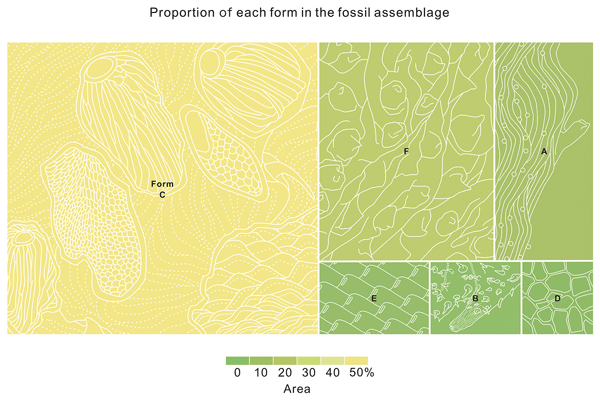
New 535-million-year-old fossils from China reveal early animal diversity. Preserved in fine detail, these fossils showcase Ecdysozoa – ancestors of insects and crabs. Twelve forms with spines, plates, and possible limbs were identified, showing rapid body plan evolution after life's first complexity boom. Analysis of fossilized skins reveal complex ecosystems emerging at this time. The findings provide clues about how Earth's most successful animal groups began their evolutionary journey.
Martin Tetard and Ross Marchant
EGUsphere, https://doi.org/10.5194/egusphere-2026-2075, https://doi.org/10.5194/egusphere-2026-2075, 2026
This preprint is open for discussion and under review for Biogeosciences (BG).
Short summary
Short summary
We designed an AI-assisted, and affordable camera, that can be screwed on top of most of microscopes (or used as a regular camera) and allow for an automated workflow including image capture, processing and identification of detected objects using artificial neural network to be performed. As this camera runs using a micro-computer and can be powered on a regular power bank, it is ideal to perform microscopy and computer tasks directly on field without the need for an expert to be deployed.
Babette A.A. Hoogakker, Catherine Davis, Yi Wang, Stephanie Kusch, Katrina Nilsson-Kerr, Dalton S. Hardisty, Allison Jacobel, Dharma Reyes Macaya, Nicolaas Glock, Sha Ni, Julio Sepúlveda, Abby Ren, Alexandra Auderset, Anya V. Hess, Katrin J. Meissner, Jorge Cardich, Robert Anderson, Christine Barras, Chandranath Basak, Harold J. Bradbury, Inda Brinkmann, Alexis Castillo, Madelyn Cook, Kassandra Costa, Constance Choquel, Paula Diz, Jonas Donnenfield, Felix J. Elling, Zeynep Erdem, Helena L. Filipsson, Sebastián Garrido, Julia Gottschalk, Anjaly Govindankutty Menon, Jeroen Groeneveld, Christian Hallmann, Ingrid Hendy, Rick Hennekam, Wanyi Lu, Jean Lynch-Stieglitz, Lélia Matos, Alfredo Martínez-García, Giulia Molina, Práxedes Muñoz, Simone Moretti, Jennifer Morford, Sophie Nuber, Svetlana Radionovskaya, Morgan Reed Raven, Christopher J. Somes, Anja S. Studer, Kazuyo Tachikawa, Raúl Tapia, Martin Tetard, Tyler Vollmer, Xingchen Wang, Shuzhuang Wu, Yan Zhang, Xin-Yuan Zheng, and Yuxin Zhou
Biogeosciences, 22, 863–957, https://doi.org/10.5194/bg-22-863-2025, https://doi.org/10.5194/bg-22-863-2025, 2025
Short summary
Short summary
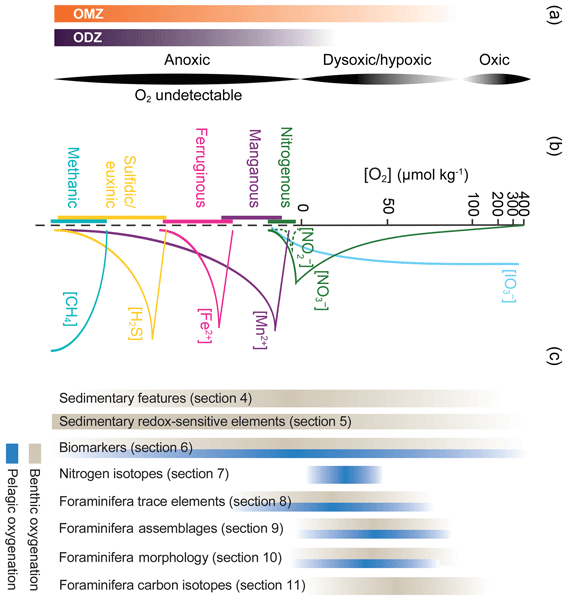
Paleo-oxygen proxies can extend current records, constrain pre-anthropogenic baselines, provide datasets necessary to test climate models under different boundary conditions, and ultimately understand how ocean oxygenation responds on longer timescales. Here we summarize current proxies used for the reconstruction of Cenozoic seawater oxygen levels. This includes an overview of the proxy's history, how it works, resources required, limitations, and future recommendations.
Veronica Carlsson, Taniel Danelian, Pierre Boulet, Philippe Devienne, Aurelien Laforge, and Johan Renaudie
J. Micropalaeontol., 41, 165–182, https://doi.org/10.5194/jm-41-165-2022, https://doi.org/10.5194/jm-41-165-2022, 2022
Short summary
Short summary
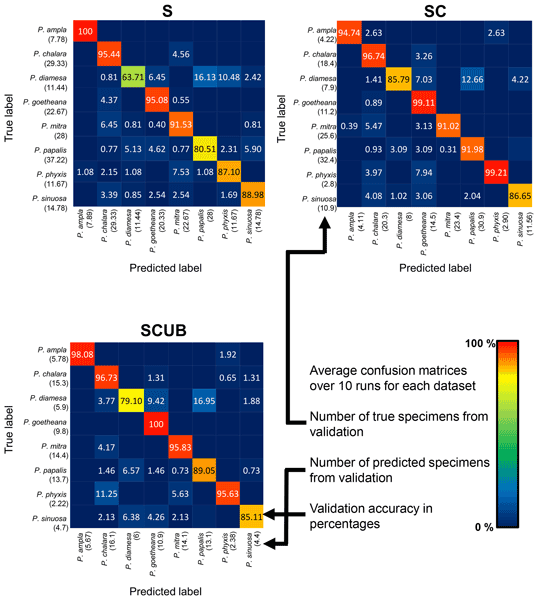
This study evaluates the use of automatic classification using AI on eight closely related radiolarian species of the genus Podocyrtis based on MobileNet CNN. Species belonging to Podocyrtis are useful for middle Eocene biostratigraphy. Numerous images of Podocyrtis species from the tropical Atlantic Ocean were used to train and validate the CNN. An overall accuracy of about 91 % was obtained. Additional Podocyrtis specimens from other ocean realms were used to test the predictive model.
Mathias Meunier and Taniel Danelian
J. Micropalaeontol., 41, 1–27, https://doi.org/10.5194/jm-41-1-2022, https://doi.org/10.5194/jm-41-1-2022, 2022
Short summary
Short summary
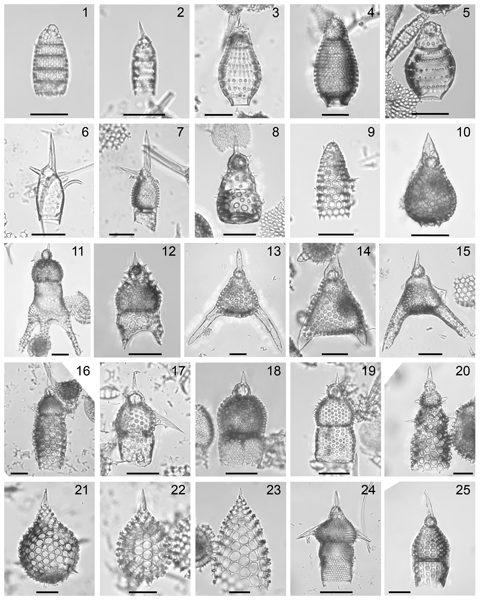
This study presents the biostratigraphic analysis of radiolaria (siliceous zooplankton) from a section of middle Eocene age located in the equatorial Atlantic. Our study allows the refinement of the age of 71 radiolarian bioevents. Based on a comparison with previously reported ages in the equatorial Pacific and northwestern Atlantic, we establish the synchronicity of several bioevents between the two oceans. Some of these synchronous bioevents were used to define seven new subzones.
Cited articles
Al-Hajri, S. A., Filatoff, J., Wender, L. E., and Norton, A. K.: Stratigraphy and operational palynology, GeoArabia, 4, 53–68, https://doi.org/10.2113/geoarabia040153, 1999.
Allen, K. C.: Lower and Middle Devonian spores of north and central Vestspitsbergen, Palaeontology, 8, 687–748, 1965.
Balme, B.: Upper Devonian (Frasnian) spores from the Carnarvon Basin, Western Australia, PaIaeobotanist, 9, 1–10, https://doi.org/10.54991/jop.1960.590, 1962.
Beaufort, L. and Dollfus, D.: Automatic recognition of coccoliths by dynamical neural networks, Mar. Micropaleontol., 51, 57–73, https://doi.org/10.1016/j.marmicro.2003.09.003, 2004.
Beightol, D. S. and Conrad, M. A.: Expert systems identify fossils and manage large paleontological databases, Geobyte, 3, 42–46, 1988.
Bourel, B., Marchant, R., de Garidel-Thoron, T., Tetard, M., Barboni, D., Gally, Y., and Beaufort, L.: Automated recognition by multiple convolutional neural networks of modern, fossil, intact and damaged pollen grains, Comput. Geosci., 140, 104498, https://doi.org/10.1016/j.cageo.2020.104498, 2020.
Breuer, P.: Devonian miospore palynology in Western Gondwana: an application to oil exploration, Ph.D. thesis, Université de Liège, Belgium, 115 pp., Volume I: Explanatory notes, 2007.
Brough, D. R. and Alexander, I. F.: The fossil expert system, Expert Syst., 3, 76–83, https://doi.org/10.1111/j.1468-0394.1986.tb00197.x, 1986.
Carlsson, V., Danelian, T., Boulet, P., Devienne, P., Laforge, A., and Renaudie, J.: Artificial intelligence applied to the classification of eight middle Eocene species of the genus Podocyrtis (polycystine radiolaria), J. Micropalaeontol., 41, 165–182, https://doi.org/10.5194/jm-41-165-2022, 2022.
Carlsson, V., Danelian, T., Tetard, M., Meunier, M., Boulet, P. Devienne, P., and Ventalon, S.: Convolutional neural network application on a new middle Eocene radiolarian dataset, Mar. Micropaleontol., 183, 102268, https://doi.org/10.1016/j.marmicro.2023.102268, 2023.
Durand, M., Paillard, J., Ménard, M-P., Suranyi, T., Grondin, P., and Blarquez, O.: Pollen identification through convolutional neural networks: First application on a full fossil pollen sequence, PLoS ONE, 19, e0302424, https://doi.org/10.1371/journal.pone.0302424, 2024.
Dwyer, B., Nelson, J., and Hansen, T.: Roboflow (Version 1.0), https://roboflow.com (last access: 7 January 2026), 2025.
Feng, J. T., Puthanveetil, S., Kong, S., Donders, T. H., and Punyasena, S. W.: Addressing the “open world”: detecting and segmenting pollen on palynological slides with deep learning, Paleobiology, 51, 394–407, https://doi.org/10.1017/pab.2025.10059, 2025.
Fukushima, K.: Neocognitron: A self-organizing neural network model for a mechanism of pattern recognition unaffected by shift in position, Biol. Cybern., 36, 193–202, https://doi.org/10.1007/BF00344251, 1980.
García, N. M., Chaves, V. A. E., Briceno, J. C., and Travieso, C. M.: Pollen grains contour analysis on verification approach, in: Proceedings of the 7th international conference, Hybrid Artificial Intelligent Systems, Salamanca, Spain, 28–30 March 2012, 521–532, https://doi.org/10.1007/978-3-642-28942-2_47, 2012.
Gonçalves, A. B., Souza, J. S., Silva, G. Gd., Cereda, M. P., Pott, A., Naka, M. H., and Pistori, H.: Feature Extraction and Machine Learning for the Classification of Brazilian Savannah Pollen Grains, PLoS ONE, 11, e0157044, https://doi.org/10.1371/journal.pone.0157044, 2016.
He, K., Zhang, X., Ren, S., and Sun, J.: Deep residual learning for image recognition, in: Conference Proceedings, IEEE Conference on Computer Vision and Pattern Recognition, Las Vegas, NV, USA, 27–30 June 2016, 770–778, https://doi.org/10.48550/arXiv.1512.03385, 2016.
Higgs, K.: Upper Devonian and Lower Carboniferous miospore assemblages from Hook Head, County Wexford, Ireland, Micropaleontol., 21, 393–419, https://doi.org/10.2307/1485291, 1975.
Hsiang, A. Y., Brombacher, A., Rillo, M. C., Mleneck-Vautravers, M. J., Conn, S., Lordsmith, S., Jentzen, A., J. Henehan, M., Metcalfe, B., Fenton, I. S., Wade, B. S., Fox, L., Meilland, J., Davis, C. V., Baranowski, U., Groeneveld, J., Edgar, K. M., Movellan, A., Aze, T., Dowsett, H. J., Miller, C. G., Rios, N., and Hull, P. M.: Endless Forams: > 34,000 modern planktonic foraminiferal images for taxonomic training and automated species recognition using convolutional neural networks,Paleoceanogr. Paleoclimatol., 34, 1157–1177, https://doi.org/10.1029/2019PA003612, 2019.
Khachatryan, S., Cascales-Minana, B., Danelian T., Breuer, P., Steemans, P., Grigoryan, A., Gabrielyan, I., Hairapetian, V., Regnier, S., Kroeck D. M., and Serobyan, V.: First palynological evidence from the Upper Devonian of Armenia (northern Gondwanan margin): biostratigraphic implications, Palaeoworld, 34, 100879, https://doi.org/10.1016/j.palwor.2024.09.003, 2025.
Khanzhina, N., Putin, E., Filchenkov, A., and Zamyatina, E.: Pollen grain recognition using convolutional neural network, in: ESANN 2018 Proceedings, European Symposium on Artificial Neural Networks, Computational Intelligence and Machine Learning, Bruges, Belgium, 25–27 April 2018, 409–414, ISBN 978-287587047-6, 2018.
Lokteva, V., Kirakosyan, G., Camina, S. C., De Backer, T., Grigoryan, A., Danelian, T., and Serobyan, V.: Chitinozoans from the upper Frasnian (Upper Devonian) of Armenia: biostratigraphical and palaeobiogeographical implications, Palynology, 2537704, https://doi.org/10.1080/01916122.2025.2537704, 2025a.
Lokteva, V., Serobyan, V., Tetard, M., Breuer, P., and Danelian, T.: Artificial Intelligence applied to the automatic detection and identification of three Devonian miospores, Zenodo [code and data set], https://doi.org/10.5281/zenodo.18032045, 2025b.
López-García, F., Valiente-González, J. M., Escriche-Roberto, M. I., Juan-Borras, M. D. S., Viaquert-Fas, M., Atienza, V., and Agustí-Melchor, M.: Classification of Honey Pollens with ImageNet Neural Networks, in: Proceedings of the 20th International Conference, Computer Analysis of Images and Patterns, Limassol, Cyprus, 25–28 September 2023, 192–200, https://doi.org/10.1007/978-3-031-44240-7_19, 2023.
McGregor, D. C. and Playford, G.: Morphology and distribution of the miospore Teichertospora torquata comb. nov. in the Upper Devonian of Euramerica and Australia, Palynology, 14, 7–18, https://doi.org/10.1080/01916122.1990.9989368, 1990.
Olsson, O., Karlsson, M., Persson, A. S., Smith, H. G., Varadarajan, V., Yourstone, J., and Stjernman, M.: Efficient, automated and robust pollen analysis using deep learning, Methods Ecol. Evol., 12, 850–862, https://doi.org/10.1111/2041-210X.13575, 2021.
Paszke, A., Gross, S., Massa, F., Lerer, A., Bradbury, J., Chanan, G., Killeen, T., Lin, Z., Gimelshein, N., Antiga, L., Desmaison, A., Köpf, A., Yang, E., DeVito, Z., Raison, M., Tejani, A., Chilamkurthy, S., Steiner, B., Fang, L., Bai, J., and Chintala, S.: PyTorch: An Imperative Style, High-Performance Deep Learning Library, in: Proceedings of the 33rd International Conference, Neural Information Processing System, Vancouver, Canada, 8–14 December 2019, 8026–8037, https://doi.org/10.48550/arXiv.1912.01703, 2019.
Playford, G.: The Devonian miospore genus Geminospora Balme 1962: a reappraisal based upon topotypic G. lemurata (type species), Mem. Assoc. Australas. Palaeontol., 1, 311–325, 1983.
Polling, M., Li, C., Cao, L., Verbeek, F., de Weger, L. A., Belmonte, J., De Linares, C., Willemse, J., de Boer, H., and Gravendeel, B.: Neural networks for increased accuracy of allergenic pollen monitoring, Sci. Rep., 11, 11357, https://doi.org/10.1038/s41598-021-90433-x, 2021.
Punyasena, S. W., Haselhoest, D. S., Kong, S., Fowlkes, C. C., and Moreno, J. E.: Automated identification of diverse Neotropical pollen samples using convolutional neural networks, Methods Ecol. Evol., 13, 2049–2064, https://doi.org/10.1111/2041-210X.13917, 2022.
Redmon, J., Divvala, S., Girshick, R., and Farhadi, A.: You only look once: Unified, real-time object detection, in: Conference Proceedings, IEEE Conference on Computer Vision and Pattern Recognition, Las Vegas, NV, USA, 27–30 June 2016, 779–788, https://doi.org/10.48550/arXiv.1506.02640, 2016.
Riedel, W. R.: Identify: a Prolog program to help identify fossils, Comput. Geosci., 15, 809–823, https://doi.org/10.1016/0098-3004(89)90083-6, 1989.
Rostami, M. A., Kydd, L., Balmaki, B., Dyer, L. A., and Allen, J. M.: Deep learning for accurate classification of conifer pollen grains: enhancing species identification in palynology, Front. Big Data, 14, 1507036, https://doi.org/10.3389/fdata.2025.1507036, 2025.
Serobyan, V., Danelian, T., Hairapetian, V., Crônier, C., Grigoryan, A., Randon, C., and Mottequin, B.: Frasnian (Upper Devonian) brachiopods from Armenia: biostratigraphic and palaeobiogeographic implications, Riv. Ital. Paleontol. S., 129, 373–409, https://doi.org/10.54103/2039-4942/19826, 2023.
Sevillano, V. and Aznarte, J. L.: Improving classification of pollen grain images of the POLEN23E dataset through three different applications of deep learning convolutional neural networks, PloS ONE, 13, e0201807, https://doi.org/10.1371/journal.pone.0201807, 2018.
Simonyan, K. and Zisserman, A.: Very Deep Convolutional Networks for Large-Scale Image Recognition, SSRN Electron. J., 12, 301–307, https://doi.org/10.48550/arXiv.1409.1556, 2015.
Stillman, E. C. and Flenley, J. R.: The needs and prospects for automation in palynology, Quaternary Sci. Rev., 15, 1–5, https://doi.org/10.1016/0277-3791(95)00076-3, 1996.
Tan, M. and Le, Q.: Efficientnet: Rethinking model scaling for convolutional neural networks, in: ICML, 36th International Conference on Machine Learning, Long Beach, CA, USA, 10–15 June 2019, 6105–6114, https://doi.org/10.48550/arXiv.1905.11946, 2019.
Tetard, M., Carlsson, V., Meunier, M., and Danelian, T.: Merging databases for CNN image recognition, increasing bias or improving results?, Mar. Micropaleontol., 185, 102296, https://doi.org/10.1016/j.marmicro.2023.102296, 2023.
Tsatryan, M., Serobyan, V., Grigoryan, A., Avagyan, N., Danelian, T., and Hairapetian, V.: Upper Frasnian conodont biostratigraphy of the Noravank section (Central Armenia), Rev. Micropaléontol., 88, 100845, https://doi.org/10.1016/j.revmic.2025.100845, 2025.
Yeghiazaryan, M., Kroeck, D. M., Danelian, T., Grigoryan, A., Regnier, S., and Serobyan, V.: Acritarchs and prasinophytes from the Upper Devonian of Armenia: biostratigraphical and palaeobiogeographical implications, Palynology, 49, 2445040, https://doi.org/10.1080/01916122.2024.2445040, 2025.
Short summary
This study develops a semi-automated workflow using artificial intelligence to detect and classify Devonian miospores in microscopic slides. Focusing on three biostratigraphically important species used for dating rocks and correlating distant localities, the method achieved high accuracy, reduced observer bias, and accelerated analysis. This workflow offers a scalable tool for research and potential industrial applications in fossil-based stratigraphy.
This study develops a semi-automated workflow using artificial intelligence to detect and...