
Articles | Volume 45, issue 1
https://doi.org/10.5194/jm-45-429-2026
© Author(s) 2026. This work is distributed under
the Creative Commons Attribution 4.0 License.
the Creative Commons Attribution 4.0 License.
https://doi.org/10.5194/jm-45-429-2026
© Author(s) 2026. This work is distributed under
the Creative Commons Attribution 4.0 License.
the Creative Commons Attribution 4.0 License.
Research article
| 
03 Jun 2026
Research article |
| 03 Jun 2026
| 03 Jun 2026
Ontogenetic growth of three cultured species of Heterocypris Claus, 1892 (Crustacea: Ostracoda): eggs and valve morphology
Mauricio Bonilla-Flores
CORRESPONDING AUTHOR
Institute of Geosystems and Bioindication, Technische Universität Braunschweig, 38106 Braunschweig, Germany
Liseth Pérez
Institute of Geosciences, Kiel University, 24118 Kiel, Germany
Peter Frenzel
Institute of Geosciences, University of Jena, 07749 Jena, Germany
Paula Echeverría-Galindo
Institute of Organic Biogeochemistry in Geo-Systems (OBG), RWTH Aachen University, 52056 Aachen, Germany
Junbo Wang
State Key Laboratory of Tibetan Plateau Earth System, Environment and Resources (TPESER), Nam Co Observation and Research Station (NAMORS), Institute of Tibetan Plateau Research, Chinese Academy of Sciences, Beijing 100101, China
Antje Schwalb
Institute of Geosystems and Bioindication, Technische Universität Braunschweig, 38106 Braunschweig, Germany
Related authors
No articles found.
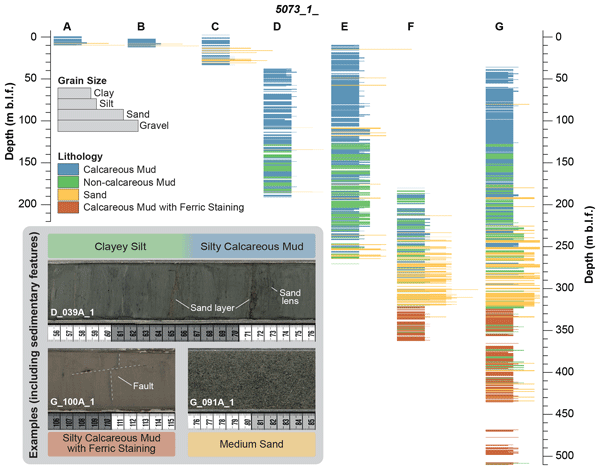
Marie-Luise Adolph, Junbo Wang, Liping Zhu, Leon J. Clarke, Andrew C. G. Henderson, Hendrik Vogel, Gerhard Daut, Peter Frenzel, Jianting Ju, Qiangqiang Kou, Dierk Michaelis, Olga Schmitz, Anja Schwarz, Volkhard Spiess, Arne Ulfers, Cidan Zhaxi, Daniel Ariztegui, Natasha Barbolini, Thorsten Bauersachs, Erwin Braun, Giulia Ceriotti, Brian Grivna, Marlene Hoehle, Rolf Kipfer, Wilhelmine Klamt, Cindy Kunkel, Aliisa Laakkonen, Minghui Li, Qingfeng Ma, Paul Moser Röggla, Kaja Müller, Anders Noren, Ryan O'Grady, Santiago Otero, Maïlys Picard, Anna Pint, Camille Thomas, Jerome Van der Woerd, Mathias Vinnepand, Claudia Wrozyna, Christian Zeeden, Xinghuan Zhu, and Torsten Haberzettl
Sci. Dril., 35, 99–117, https://doi.org/10.5194/sd-35-99-2026, https://doi.org/10.5194/sd-35-99-2026, 2026
Short summary
Short summary
We drilled deep into sediments beneath a large lake on the Tibetan Plateau, Nam Co, to learn how climate and environments have changed over multiple ice age cycles. The recovered sediments show repeated shifts between major changes in lake conditions, water chemistry, and ecosystems. These findings help clarify how wind systems responded to natural climate cycles and improve understanding of how high mountain regions may react to future climate change and environmental stress.
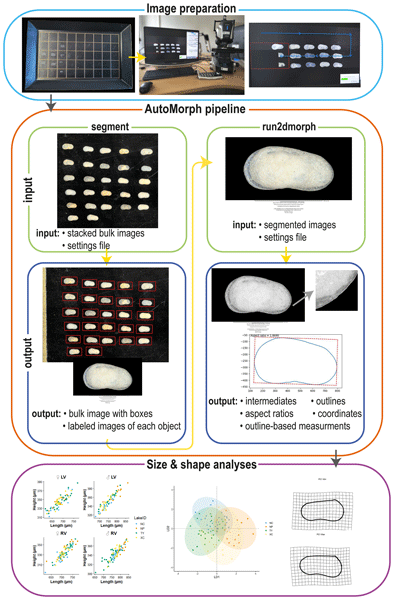
Marlene Hoehle, Torsten Haberzettl, Peter Frenzel, Antje Schwalb, Junbo Wang, Liping Zhu, and Claudia Wrozyna
J. Micropalaeontol., 45, 359–375, https://doi.org/10.5194/jm-45-359-2026, https://doi.org/10.5194/jm-45-359-2026, 2026
Short summary
Short summary
Evolutionary developmental biology aims to uncover mechanisms behind how species change over time, with shape analysis being a key tool. To address slow, manual data collection, we tested AutoMorph, a high-throughput imaging pipeline, on two ostracod species from six Tibetan Plateau lakes. The pipeline successfully extracted size and shape data automatically, reducing processing time and minimizing bias, enabling large-scale datasets for investigating evolutionary and ecological processes.
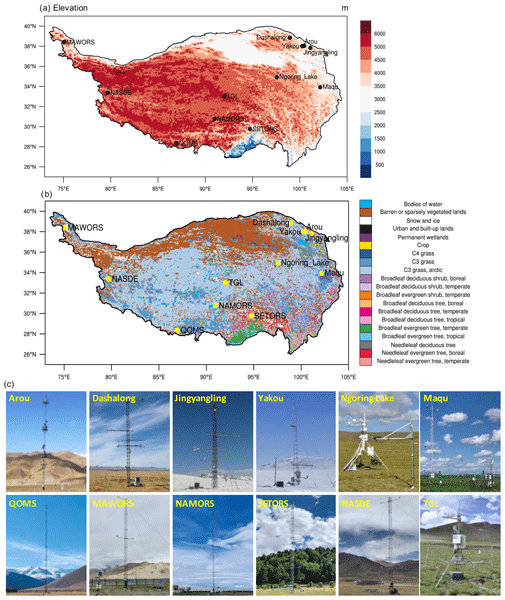
Yaoming Ma, Zhipeng Xie, Yingying Chen, Shaomin Liu, Tao Che, Ziwei Xu, Lunyu Shang, Xiaobo He, Xianhong Meng, Weiqiang Ma, Baiqing Xu, Huabiao Zhao, Junbo Wang, Guangjian Wu, and Xin Li
Earth Syst. Sci. Data, 16, 3017–3043, https://doi.org/10.5194/essd-16-3017-2024, https://doi.org/10.5194/essd-16-3017-2024, 2024
Short summary
Short summary
Current models and satellites struggle to accurately represent the land–atmosphere (L–A) interactions over the Tibetan Plateau. We present the most extensive compilation of in situ observations to date, comprising 17 years of data on L–A interactions across 12 sites. This quality-assured benchmark dataset provides independent validation to improve models and remote sensing for the region, and it enables new investigations of fine-scale L–A processes and their mechanistic drivers.
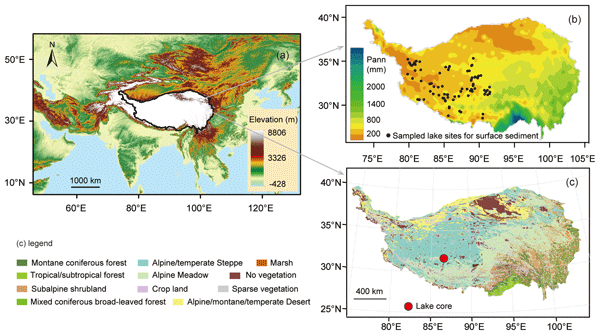
Qingfeng Ma, Liping Zhu, Jianting Ju, Junbo Wang, Yong Wang, Lei Huang, and Torsten Haberzettl
Earth Syst. Sci. Data, 16, 311–320, https://doi.org/10.5194/essd-16-311-2024, https://doi.org/10.5194/essd-16-311-2024, 2024
Short summary
Short summary
Modern pollen datasets are essential for pollen-based quantitative paleoclimate reconstructions. Here we present a modern pollen dataset from lake surface sediments on the central and western Tibetan Plateau. This dataset can be used not only for quantitative precipitation reconstructions on the central and western Tibetan Plateau, but can also be combined with other pollen datasets to improve the reliability of quantitative climate reconstructions across the entire Tibetan Plateau.
Sudip Acharya, Maximilian Prochnow, Thomas Kasper, Linda Langhans, Peter Frenzel, Paul Strobel, Marcel Bliedtner, Gerhard Daut, Christopher Berndt, Sönke Szidat, Gary Salazar, Antje Schwalb, and Roland Zech
E&G Quaternary Sci. J., 72, 219–234, https://doi.org/10.5194/egqsj-72-219-2023, https://doi.org/10.5194/egqsj-72-219-2023, 2023
Short summary
Short summary
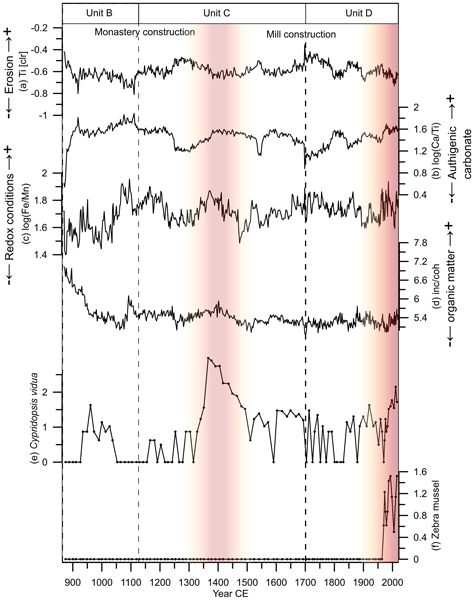
This study presents a palaeoenvironmental record from Lake Höglwörth, Bavaria, Germany. Before 870 CE peat deposits existed. Erosion increased from 1240 to 1380 CE, followed by aquatic productivity and anoxia from 1310 to 1470 CE. Increased allochthonous input and a substantial shift in the aquatic community in 1701 were caused by construction of a mill. Recent anoxia has been observed since the 1960s.
Steffen Kutterolf, Mark Brenner, Robert A. Dull, Armin Freundt, Jens Kallmeyer, Sebastian Krastel, Sergei Katsev, Elodie Lebas, Axel Meyer, Liseth Pérez, Juanita Rausch, Armando Saballos, Antje Schwalb, and Wilfried Strauch
Sci. Dril., 32, 73–84, https://doi.org/10.5194/sd-32-73-2023, https://doi.org/10.5194/sd-32-73-2023, 2023
Short summary
Short summary
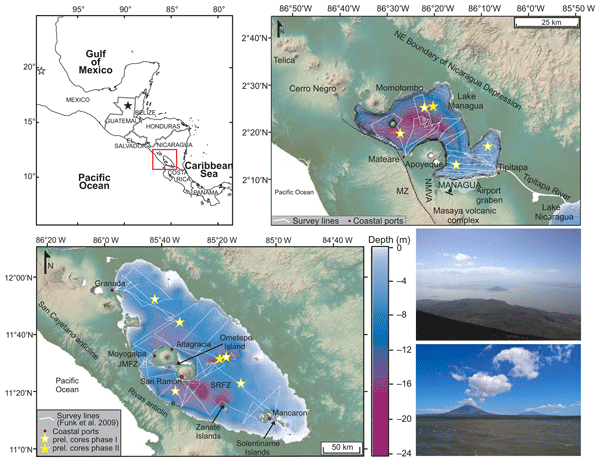
The NICA-BRIDGE workshop proposes a milestone-driven three-phase project to ICDP and later ICDP/IODP involving short- and long-core drilling in the Nicaraguan lakes and in the Pacific Sandino Basin to (1) reconstruct tropical climate and environmental changes and their external controlling mechanisms over several million years, (2) assess magnitudes and recurrence times of multiple natural hazards, and (3) provide
baselineenvironmental data for monitoring lake conditions.
Jonathan Obrist-Farner, Andreas Eckert, Peter M. J. Douglas, Liseth Perez, Alex Correa-Metrio, Bronwen L. Konecky, Thorsten Bauersachs, Susan Zimmerman, Stephanie Scheidt, Mark Brenner, Steffen Kutterolf, Jeremy Maurer, Omar Flores, Caroline M. Burberry, Anders Noren, Amy Myrbo, Matthew Lachniet, Nigel Wattrus, Derek Gibson, and the LIBRE scientific team
Sci. Dril., 32, 85–100, https://doi.org/10.5194/sd-32-85-2023, https://doi.org/10.5194/sd-32-85-2023, 2023
Short summary
Short summary
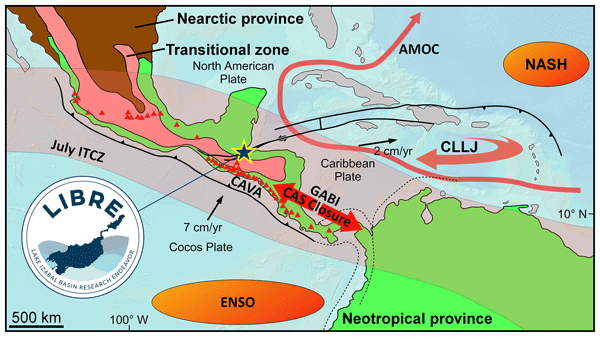
In August 2022, 65 scientists from 13 countries gathered in Antigua, Guatemala, for a workshop, co-funded by the US National Science Foundation and the International Continental Scientific Drilling Program. This workshop considered the potential of establishing a continental scientific drilling program in the Lake Izabal Basin, eastern Guatemala, with the goals of establishing a borehole observatory and investigating one of the longest continental records from the northern Neotropics.
Rodrigo Martínez-Abarca, Michelle Abstein, Frederik Schenk, David Hodell, Philipp Hoelzmann, Mark Brenner, Steffen Kutterolf, Sergio Cohuo, Laura Macario-González, Mona Stockhecke, Jason Curtis, Flavio S. Anselmetti, Daniel Ariztegui, Thomas Guilderson, Alexander Correa-Metrio, Thorsten Bauersachs, Liseth Pérez, and Antje Schwalb
Clim. Past, 19, 1409–1434, https://doi.org/10.5194/cp-19-1409-2023, https://doi.org/10.5194/cp-19-1409-2023, 2023
Short summary
Short summary
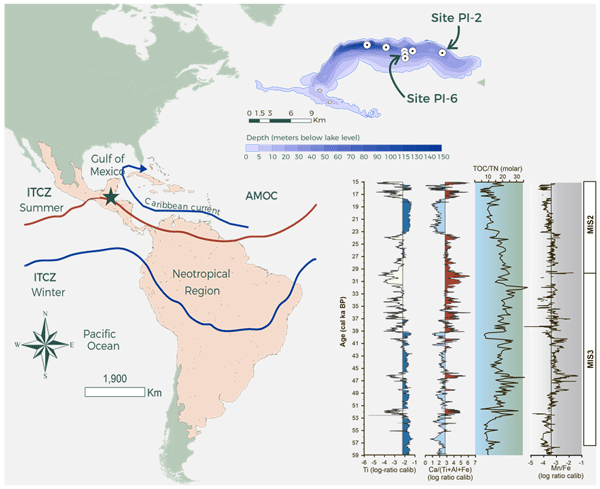
Lake Petén Itzá, northern Guatemala, is one of the oldest lakes in the northern Neotropics. In this study, we analyzed geochemical and mineralogical data to decipher the hydrological response of the lake to climate and environmental changes between 59 and 15 cal ka BP. We also compare the response of Petén Itzá with other regional records to discern the possible climate forcings that influenced them. Short-term climate oscillations such as Greenland interstadials and stadials are also detected.
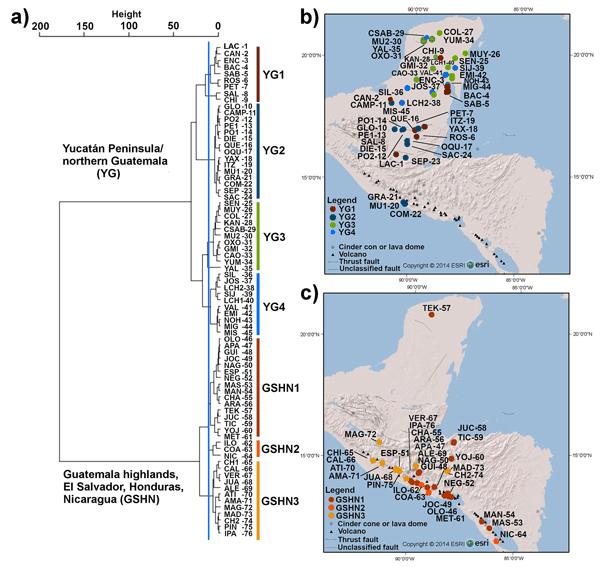
Laura Macario-González, Sergio Cohuo, Philipp Hoelzmann, Liseth Pérez, Manuel Elías-Gutiérrez, Margarita Caballero, Alexis Oliva, Margarita Palmieri, María Renée Álvarez, and Antje Schwalb
Biogeosciences, 19, 5167–5185, https://doi.org/10.5194/bg-19-5167-2022, https://doi.org/10.5194/bg-19-5167-2022, 2022
Short summary
Short summary
We evaluate the relationships between geodiversity, limnological conditions, and freshwater ostracodes from southern Mexico to Nicaragua. Geological, limnological, geochemical, and mineralogical characteristics of 76 systems reveal two main limnological regions and seven subregions. Water ionic and sediment composition are the most influential. Geodiversity strongly influences limnological conditions, which in turn influence ostracode composition and distribution.

Paul Strobel, Marcel Bliedtner, Andrew S. Carr, Peter Frenzel, Björn Klaes, Gary Salazar, Julian Struck, Sönke Szidat, Roland Zech, and Torsten Haberzettl
Clim. Past, 17, 1567–1586, https://doi.org/10.5194/cp-17-1567-2021, https://doi.org/10.5194/cp-17-1567-2021, 2021
Short summary
Short summary
This study presents a multi-proxy record from Lake Voёlvlei and provides new insights into the sea level and paleoclimate history of the past 8.5 ka at South Africa’s southern Cape coast. Our results show that sea level changes at the southern coast are in good agreement with the western coast of South Africa. In terms of climate our record provides valuable insights into changing sources of precipitation at the southern Cape coast, i.e. westerly- and easterly-derived precipitation contribution.
Cited articles
Aguilar-Alberola, J. A. and Mesquita-Joanes, F.: Ontogeny of Heterocypris bosniaca (Ostracoda: Cyprididae): description of postembryonic instars and rediscovery of the neglected A-9 stage, J. Crustacean Biol., 33, 348–371, 2013.
Aguilar-Alberola, J. A. and Mesquita-Joanes, F.: Breaking the temperature–size rule: thermal effects on growth, development and fecundity of a crustacean from temporary waters, J. Therm. Biol., 42, 15–24, https://doi.org/10.1016/j.jtherbio.2014.02.016, 2014.
Aguilar-Alberola, J. A. and Mezquita, F.: On the presence of parthenogenetic populations of Heterocypris bosniaca Petkovski et al. 2000 (Crustacea: Ostracoda) in temporary rock pools of the eastern Iberian Peninsula, with insights into the ecology and life history of the species, Bull. Soc. Nat. Luxemb., 109, 149–158, 2008.
Akita, L. G., Frenzel, P., Wang, J., Börner, N., and Peng, P.: Spatial distribution and ecology of recent Ostracoda from Tangra Yumco and adjacent waters on the southern Tibetan Plateau: a key to palaeoenvironmental reconstruction, Limnologica, 59, 21–43, https://doi.org/10.1016/j.limno.2016.03.005, 2016.
Anderson, F. W.: The law of ostracod growth, Palaeontology, 7, 85–104, 1964.
Angell, R. W. and Hancock, J. W.: Response of eggs of Heterocypris incongruens (Ostracoda) to experimental stress, J. Crustac. Biol., 9, 381–386, https://doi.org/10.1163/193724089X00340, 1989.
Anslan, S., Azizi Rad, M., Buckel, J., Echeverria Galindo, P., Kai, J., Kang, W., Keys, L., Maurischat, P., Nieberding, F., Reinosch, E., Tang, H., Tran, T. V., Wang, Y., and Schwalb, A.: Reviews and syntheses: How do abiotic and biotic processes respond to climatic variations in the Nam Co catchment (Tibetan Plateau)?, Biogeosciences, 17, 1261–1279, https://doi.org/10.5194/bg-17-1261-2020, 2020.
Baird, W.: Arrangement of the British Entomostraca, with a list of species, particularly noticing those which have as yet been discovered within the bounds of the Club, Trans. Berwickshire Nat. Club., 2, 145–158, 1845.
Baltanás, A., Otero, M., Arqueros, L., Rossetti, G., and Rossi, V.: Ontogenetic changes in the carapace shape of the non-marine ostracod Eucypris virens (Jurine), Hydrobiologia, 419, 65–72, 2000.
Bellin, N., Groppi, M., and Rossi, V.: A model of egg bank dynamics in ephemeral ponds, Ecol. Model., 430, 109126, https://doi.org/10.1016/j.ecolmodel.2020.109126, 2020.
Bonilla Flores, M.: Integrative study of ostracods in high-altitude aquatic ecosystems, Nam Co, Tibetan Plateau: Taxonomic revisions, discovery of a new species, and ontogenetic features, Braunschweig, https://doi.org/10.24355/dbbs.084-202409201141-0, 2025.
Bonilla-Flores, M., Echeverría-Galindo, P., Frenzel, P., Pérez, L., Börner, N., Dulias, K., Wang, J., and Schwalb, A.: Taxonomy, ontogeny and ecology of Tonnacypris stewarti (Daday, 1908) comb. nov. (Ostracoda: Cyprididae) from Nam Co, Tibetan Plateau, Zootaxa, 5446, 331–365, https://doi.org/10.11646/zootaxa.5446.3.2, 2024.
Bonilla-Flores, M., Karanovic, I., Echeverría-Galindo, P., Frenzel, P., Pérez, L., Börner, N., Dulias, K., Wang, J., and Schwalb, A.: Heterocypris exodonta sp. nov. (Ostracoda: Cyprididae): morphological and molecular description of a high-altitude asexual microcrustacean from the Nam Co region, southern Tibetan Plateau, ZooKeys, 1264, 207–248, https://doi.org/10.3897/zookeys.1264.140174, 2025.
Boomer, I., Horne, D. J., and Slipper, I. J.: The use of ostracods in palaeoenvironmental studies, or what can you do with an ostracod shell?, Palaeontol. Soc. Pap., 9, 153–180, https://doi.org/10.1017/S1089332600002199, 2003.
Bouvier, C., Didon, E., Niedzielski, H. and Huizar, R.: Hidrología e hidrogeología en la cuenca de Chalco, descripción y perspectivas. ContactoS, 10, 19–29, 1993.
Brady, G. S.: A monograph of the recent British Ostracoda, Trans. Linn. Soc. Lond., 26, 353–495, https://doi.org/10.1080/00222936808695855, 1868.
Bronstein, Z. S.: Ostracoda presnykh vod. Fauna SSSR, Rakoobraznye, 2(1). Zoologicheskii Institut, Akademiya Nauk SSSR, Moscow. English translation: 1988. Fresh-water Ostracoda, Fauna of the USSR, Crustaceans, Amerind Publishing Co. Pvt. Ltd., New Delhi, xv + 470 pp., 1947.
Brooks, W. K.: Report on the Stomatopoda dredged by HMS Challenger during the years 1873–1876, Rep. Sci. Results Voy. HMS Challenger, Zoology 16, 1–116, https://doi.org/10.5962/bhl.title.9891, 1886.
Claus, C.: Beiträge zur Kenntnis der Süßwasser-Ostracoden: 1. Über den Körper- und Gliedmaßenbau der Cypriden nebst Bemerkungen über einzelne innere Organe derselben, Arbeiten aus dem Zoologischen Instituten der Universität Wien und der Zoologischen Station in Triest, 10, 147–216, 1892.
Danielopol, D. L., Baltanás, A., Namiotko, T., Geiger, W., Pichler, M., Reina, M., and Roidmayr, G.: Developmental trajectories in geographically separated populations of non-marine ostracods: morphometric applications for palaeoecological studies, Senckenberg. Lethaea, 88, 183–193, https://doi.org/10.1007/BF03043988, 2008.
De Deckker, P. and Martens, K.: Extraordinary morphological changes in valve morphology during the ontogeny of several species of the Australian ostracod genus Bennelongia (Crustacea, Ostracoda), Eur. J. Taxon., 36, 1–37, https://doi.org/10.5852/ejt.2013.36, 2013.
Delorme, D.: 20 Ostracoda. Ecology and classifications of North American Freshwater Invertebrates, 2nd Edn., https://doi.org/10.1016/B978-012690647-9/50021-1, 2011.
de Stasio, B. T.: Egg bank formation by aquatic invertebrates: a bridge across disciplinary boundaries, in: Diapause in aquatic invertebrates: theory and human use, edited by: Alekseev, V. R., de Stasio, B. T., and Gilbert, J. J., Springer, Dordrecht, 121–133, https://doi.org/10.1007/978-1-4020-5680-2_7, 2007.
Díaz, A. R. and Lopretto, E. C.: Postembryonic development of the non-marine ostracod Chlamydotheca arcuata (Sars, 1901) reared in the laboratory, Turk. J. Zool., 41, 209–226, https://doi.org/10.3906/zoo-1512-13, 2017.
Dumont, H. J., Nandini, S., and Sarma, S. S. S.: Cyst ornamentation in aquatic invertebrates: a defence against egg predation, Hydrobiologia, 486, 161–167, https://doi.org/10.1023/A:1021346601235, 2002.
Fontana, S. L. and Ballent, S.: A new giant cypridid ostracod (Crustacea) from southern Buenos Aires Province, Argentina, Hydrobiologia, 533, 187–197, https://doi.org/10.1007/s10750-004-2415-8, 2005.
Fryer, G.: The horse-trough ostracod Heterocypris incongruens, Naturalist, 122, 121–135, 1997.
Hairston Jr., N. G. and Fox, J. A.: Egg banks, in: Encyclopedia of Inland Waters, edited by: Likens, G. E., Academic Press, Oxford, 659–666, https://doi.org/10.1016/B978-012370626-3.00152-6, 2009.
Hartmann, G.: Ostracoda, in: Klassen und Ordnungen des Tierreichs, Vol. 5: Arthropoda, Teil Crustacea, edited by: Gruner, H.-E., Akademische Verlagsgesellschaft Geest & Portig K.-G., Leipzig, 409–568, 1968.
Herman, P. M. J. and Heip, C.: Growth and respiration of Cyprideis torosa (Jones, 1850) (Crustacea, Ostracoda), Oecologia, 54, 300–303, https://doi.org/10.1007/BF00379996, 1982.
Holmes, J. A.: Ostracoda, in: Tracking environmental change using lake sediments, Vol. 4, edited by: Smol, J. P., Birks, H. J. B., and Last, W. M., Kluwer Academic Publishers, Dordrecht, 125–151, https://doi.org/10.1007/0-306-47671-1_7, 2001.
Horne, D. J. and Martens, K.: An assessment of the importance of resting eggs for the evolutionary success of Mesozoic non-marine cypridoidean Ostracoda (Crustacea), Arch. Hydrobiol. Spec. Issues Advanc. Limnol, 52, 549–561, 1998.
Horne, D. J., Smith, R. J., Whittaker, J. E., and Murray, J. W.: The first British record and a new species of the superfamily Terrestricytheroidea (Crustacea, Ostracoda): morphology, ontogeny, lifestyle and phylogeny, Zool. J. Linn. Soc., 142, 253–288, https://doi.org/10.1111/j.1096-3642.2004.00134.x, 2004.
Karanovic, I. and Lee, W.: A review of candonid ostracods (Crustacea: Ostracoda: Podocopida) from East Asia, with descriptions of five new species from South Korea, Zootaxa, 3368, 7–49, 2012.
Kesling, R. V.: The morphology of ostracod molt stages, Ill. Biol. Monogr., 21, 1–126, 1951.
Kesling, R. V.: Doubling in size of ostracod carapaces in each molt stage, J. Paleontol., 26, 772–780, 1952.
Kesling, R. V. and Crafts, F. C.: Ontogenetic increase in Archimedean weight of the ostracod Chlamydotheca unispinosa (Baird), Am. Midl. Nat., 68, 149–153, https://doi.org/10.2307/2422641, 1962.
Kilikowska, A., Schön, I., Wysocka, A., Pieri, V., Kaczmarczyk-Ziemba, A., Prais, K., Martens, M., and Namiotko, T.: Multiple genetic species in a halophilic non-marine ostracod (Crustacea), Hydrobiologia, 851, 2447–2467, https://doi.org/10.1007/s10750-023-05469-z, 2024.
Kong, Q., Karanovic, I. and Yu, N.: Phylogeny of the genus Chrissia (Ostracoda: Cyprididae) with description of a new species from China, J. Crustac. Biol., 34, 782–794, https://doi.org/10.1163/1937240X-00002276, 2014.
Kubanç, N., Özuluğ, O., and Kubanç, C.: Ontogeny of appendages of Heterocypris salina (Brady, 1868) (Crustacea, Ostracoda), Hydrobiologia, 585, 255–272, https://doi.org/10.1007/s10750-007-0642-5, 2007.
Lajblová, K., Kraft, P., and Meidla, T.: Ontogeny of the ostracod Conchoprimitia osekensis (Přibyl, 1979) from the Darriwilian of the Prague Basin (Czech Republic), Est. J. Earth Sci., 63, 144–155, https://doi.org/10.3176/earth.2014.13, 2014.
Latreille, P. A.: Histoire naturelle, générale et particulière des Crustacés et des Insectes. Ouvrage faissant suite à l'histoire naturelle générale et particulière, composée par Leclerc de Buffon, et rédigée par C.S. Sonnini, membre de plusieurs sociétés savantes, Dufart, Paris, 467 pp., 1802.
Liberto, R., César, I. I., and Mesquita-Joanes, F.: Postembryonic growth in two species of freshwater Ostracoda (Crustacea) shows a size–age sigmoid model fit and temperature effects on development time, but no clear temperature–size rule (TSR) pattern, Limnology, 15, 57–67, https://doi.org/10.1007/s10201-013-0413-0, 2014.
Mao, X., Liu, X., Li, J., Feng, S., Jiang, G., and Liu, L.: Population age structure of ostracods in lake sediment and its implication for within-lake transport of microfossils, Ecol. Indic., 131, 108182, https://doi.org/10.1016/j.ecolind.2021.108182, 2021.
Marín, J. A.: Estudio del desarrollo de los ostrácodos Eucypris aragonica y Heterocypris salina en cultivo de barro, Limnetica, 1, 345–354, 1984.
Martens, K.: Effects of temperature and salinity on postembryonic growth in Mytilocypris henricae (Chapman) (Crustacea, Ostracoda), J. Crustac. Biol., 5, 258–272, 1985.
Matzke-Karasz, R., Smith, R. J., and Heß, M.: Removal of extracellular coat from giant sperm in female receptacle induces sperm motility in Mytilocypris mytiloides (Cyprididae, Ostracoda, Crustacea), Cell Tissue Res., 368, 171–186, https://doi.org/10.1007/s00441-016-2507-6, 2017.
McCormack, J., Viehberg, F., Akdemir, D., Immenhauser, A., and Kwiecien, O.: Ostracods as ecological and isotopic indicators of lake water salinity changes: the Lake Van example, Biogeosciences, 16, 2095–2114, https://doi.org/10.5194/bg-16-2095-2019, 2019.
Meisch, C.: Freshwater Ostracoda of Western and Central Europe, Süßwasserfauna von Mitteleuropa 8/3, Spektrum Akademischer Verlag, Heidelberg, 522 pp., ISBN 3-8274-1001-0, 2000.
Meisch, C., Smith, R. J., and Martens, K.: An updated subjective global checklist of the extant non-marine Ostracoda (Crustacea), Eur. J. Taxon., 974, 1–144, https://doi.org/10.5852/ejt.2024.974.2767, 2024.
Mesquita-Joanes, F., Aguilar-Alberola, J. A., Palero, F., and Rueda, J.: A new species of Cypris (Crustacea: Ostracoda) from the Iberian Peninsula and the Balearic Islands, with comments on the first ostracod named using the Linnean system, Zootaxa, 4759, 113–131, https://doi.org/10.11646/zootaxa.4759.1.8, 2020.
Mezquita, F., Griffiths, H. I., Sanz, S., Soria, J. M., and Piñón, A.: Ecology and distribution of ostracods associated with flowing waters in the eastern Iberian Peninsula, J. Crustac. Biol., 19, 344–354, 1999.
Mezquita, F., Olmos, V., and Oltra, R.: Population ecology of Cyprideis torosa (Jones, 1850) in a hypersaline environment of the Western Mediterranean (Santa Pola, Alacant) (Crustacea: Ostracoda), Ophelia, 53, 119–130, https://doi.org/10.1080/00785236.2000.10409442, 2000.
Mezquita, F., Boronat, M. D., and Miracle, M. R.: The life history of Cyclocypris ovum (Ostracoda) in a permanent karstic lake, Arch. Hydrobiol., 155, 687–704, 2002.
Müller-Calé, C.: Über die Entwicklung von Cypris incongruens, Zool. Jahrb., Abt. Anat. Ont. Tiere, 36, 113–170, 1913.
Oakley, T. H., Wolfe, J. M., Lindgren, A. R., and Zaharoff, A. K.: Phylotranscriptomics to bring the understudied into the fold: monophyletic Ostracoda, fossil placement and pancrustacean phylogeny, Mol. Biol. Evol., 30, 215–233, https://doi.org/10.1093/molbev/mss216, 2012.
Özuluğ, O. and Suludere, Z.: Morphology of dry-resistant eggs in parthenogenetic Heterocypris incongruens (Ramdohr, 1808) (Crustacea, Ostracoda), Acta Biol. Hung., 63, 333–341, https://doi.org/10.1556/ABiol.63.2012.3.3, 2012.
Pereira, J. S., Schneider, D. I. D., da Rocha, C. E. F., and Pinto, R. L.: Carapace ontogeny of the bromeliad-dwelling ostracod Elpidium bromeliarum Müller, 1880 (Crustacea, Ostracoda), J. Nat. Hist., 51, 1–12, https://doi.org/10.1080/00222933.2017.1360529, 2017.
Petkowski, T., Scharf, B., and Keyser, D.: New and little known ostracods of the genus Heterocypris (Crustacea, Ostracoda) from the Balkan Peninsula, Limnologica, 30, 45–57, https://doi.org/10.1016/S0075-9511(00)80042-0, 2000.
Ramdohr, A. F.: Über die Gattung Cypris Müller und drei zu derselben gehörige neue Arten, Mag. Ges. Naturf. Fr. Berlin Neusten Entdeck Ges. Naturkd., 2, 85–93, 1808.
Ranta, E.: Population biology of Darwinula stevensoni (Crustacea, Ostracoda) in an oligotrophic lake, Ann. Zool. Fenn., 16, 28–35, 1979.
R Core Team: R: a language and environment for statistical computing, R Foundation for Statistical Computing, Vienna, https://www.R-project.org/ (last access: 15 January 2026), 2022.
Retrum, J. B. and Kaesler, R. L.: Early Permian Carbonitidae (Ostracoda): ontogeny, affinity, environment and systematics, J. Micropalaeontol., 24, 179–190, https://doi.org/10.1144/jm.24.2.179, 2005.
Roessler, E. W.: Estudios taxonómicos, ontogenéticos, ecológicos y etológicos sobre los ostrácodos de agua dulce en Colombia – II. Contribución al conocimiento del desarrollo embrionario tardío y de los procesos de la eclosión del huevo de Heterocypris bogotensis Roessler (Ostracoda, Podocopa, Cyprididae), Caldasia, 13, 453–466, http://www.jstor.org/stable/23641185 (last access: 25 April 2026), 1982.
Roessler, E. W.: Estudios taxonómicos, ontogenéticos, ecológicos y etológicos sobre los ostrácodos de agua dulce en Colombia – IV. Desarrollo postembrionario de Heterocypris bogotensis Roessler (Ostracoda, Podocopa, Cyprididae), Caldasia, 13, 755–776, https://www.jstor.org/stable/23641092 (last access: 25 April 2026), 1983.
Rosa, J., Campos, R., Martens, K., and Higuti, J.: Spatial variation of ostracod (Crustacea, Ostracoda) egg banks in temporary lakes of a tropical floodplain, Mar. Freshw. Res., 72, 26–34, https://doi.org/10.1071/MF19081, 2020.
Rosa, J., Petsch, D. K., Martens, K., and Higuti, J.: Species' traits and taxonomic distance can predict the hatching phenology of ostracod (Crustacea) resting eggs from tropical floodplain lakes, Int. Rev. Hydrobiol., 106, 226–238, https://doi.org/10.1002/iroh.202102105, 2021.
Rosa, J., Martens, K., and Higuti, J.: Dried aquatic macrophytes are floating egg banks and potential dispersal vectors of ostracods (Crustacea) from pleuston communities, Hydrobiologia, 850, 1319–1329, https://doi.org/10.1007/s10750-022-04818-8, 2023.
Rossi, V. and Menozzi, P.: Inbreeding and outbreeding depression in geographical parthenogens Heterocypris incongruens and Eucypris virens (Crustacea, Ostracoda), Ital. J. Zool., 79, 559–567, https://doi.org/10.1080/11250003.2012.718375, 2012.
Rossi, V., Gandolfi, A., and Menozzi, P.: Egg diapause and clonal structure in parthenogenetic populations of Heterocypris incongruens (Ostracoda), Hydrobiologia, 320, 45–54, 1996.
Rossi, V., Tondelli, B., Gandolfi, A., Bellavere, C., McKenzie, K. G., and Menozzi, P.: Heterocypris (Crustacea, Ostracoda) from the Isole Pelagie (Sicily, Italy): population genetics, Ital. J. Zool., 70, 101–108, https://doi.org/10.1080/11250000309356502, 2003.
Rossi, V., Benassi, G., Leonardi, S., Piotti, A., and Menozzi, P.: Clonal diversity of Heterocypris incongruens (Crustacea: Ostracoda) in Northern Italian ricefields, Arch. Hydrobiol., 166, 225–240, https://doi.org/10.1127/0003-9136/2006/0166-0225, 2006.
Rossi, V., Gandolfi, A., Baraldi, F., Bellavere, C., and Menozzi, P.: Phylogenetic relationships of coexisting Heterocypris (Crustacea, Ostracoda) lineages with different reproductive modes from Lampedusa Island (Italy), Mol. Phylogenet. Evol., 44, 1273–1283, https://doi.org/10.1016/j.ympev.2007.04.013, 2007.
Rossi, V., Albini, D., Benassi, G., and Menozzi, P.: To rest in hydration: hatching phenology of resting eggs of Heterocypris incongruens (Crustacea, Ostracoda), Fundam. Appl. Limnol., 181, 49–58, https://doi.org/10.1127/1863-9135/2012/0251, 2012.
Rossi, V., Zattori, M., Perotti, A., and Menozzi, P.: What does egg size tell us about hatching phenology in Heterocypris incongruens?, Fundam. Appl. Limnol., 182, 253–270, 2013.
Rossi, V., Albini, D., Pellegri, V., and Menozzi, P.: Early and late maternal effects on hatching phenology of Heterocypris incongruens (Crustacea: Ostracoda), J. Exp. Zool. A, 323, 382–391, https://doi.org/10.1002/jez.1931, 2015.
Sars, G. O.: Oversigt af Norges marine ostracoder. [Overview of Norway's marine ostracods], Forhandlinger i Videnskabs-Selskabet i Christiania, 1865, 1–130, 1866.
Sars, G. O.: Contribution to the knowledge of the freshwater Entomostraca of South America as shown by artificial hatching from dried material. Arch. Math. Naturvidensk, 24, 3–52, 1901.
Schmit, O., Rossetti, G., Vandekerkhove, J., and Mezquita, F.: Food selection in Eucypris virens (Crustacea: Ostracoda) under experimental conditions, Hydrobiologia, 585, 135–140, https://doi.org/10.1007/s10750-007-0634-5, 2007.
Schreiber, E.: Beiträge zur Kenntnis der Morphologie, Entwicklung und Lebensweise der Süsswasser-Ostracoden, Zool. Jahrb., 43, 485–538, 1922.
Shaver, R. H.: Ontogeny and sexual dimorphism in Cytherella bullata, J. Paleontol., 27, 471–480, 1953.
Smith, A. J., Horne, D. J., Martens, K., and Schön, I.: Class Ostracoda, in: Thorp and Covich's Freshwater Invertebrates, 4th Edn., edited by: Thorp, J. H. and Rogers, D. C., Academic Press, 757–780, https://doi.org/10.1016/B978-0-12-385026-3.00030-9, 2015.
Smith, R. J. and Kamiya, T.: Ontogeny of Neonesidea oligodentata (Ostracoda), Hydrobiologia, 489, 245–275, https://doi.org/10.1023/A:1023221303564, 2002.
Smith, R. J. and Kamiya, T.: Copulatory behaviour and sexual morphology of three Fabaeformiscandona Krstić, 1972 (Candoninae, Ostracoda, Crustacea) species from Japan, including descriptions of two new species, Hydrobiologia, 585, 225–248, https://doi.org/10.1007/s10750-007-0640-7, 2007.
Smith, R. J. and Martens, K.: The ontogeny of the cypridid ostracod Eucypris virens (Jurine, 1820) (Crustacea, Ostracoda), Hydrobiologia, 419, 31–63, https://doi.org/10.1023/A:1003985908460, 2000.
Song, J. J., Huang, B., and Qie, W. K.: Allometry in Late Devonian podocopid ostracods and its implications for ostracod ontogeny, Papers Palaeontol., e1480, https://doi.org/10.1002/spp2.1480, 2023.
Tinn, O. and Meidla, T.: Ontogeny and thanatocoenoses of early Middle Ordovician palaeocope ostracods, J. Paleontol., 77, 64–72, https://doi.org/10.1666/0022-3360(2003)077<0064:OATOEM>2.0.CO;2, 2003.
Vandekerkhove, J., Namiotko, T., Hallmann, E., and Martens, K.: Predation by macroinvertebrates on Heterocypris incongruens (Ostracoda) in temporary ponds: impacts and responses, Fundam. Appl. Limnol., 181, 39–47, https://doi.org/10.1127/1863-9135/2012/0310, 2012.
Van Doninck, K., Schön, I., Martens, K., and Goddeeris, B.: The life cycle of the asexual ostracod Darwinula stevensoni (Brady and Robertson, 1870), Hydrobiologia, 500, 331–340, https://doi.org/10.1023/A:1024656920904, 2003.
Vences, M., Anslan, S., Sabino-Pinto, J., Bonilla-Flores, M., Echeverría-Galindo, P., John, U., Nass, B., Pérez, L., Preick, M., Zhu, L., and Schwalb, A.: Dataset from RNA-seq analysis of differential gene expression among developmental stages of two non-marine ostracods, Data Brief, 53, 110070, https://doi.org/10.1016/j.dib.2024.110070, 2024.
Wang, C., Wang, H., Kuang, X., and Guo, G.: Life stages and morphological variations of Limnocythere inopinata (Crustacea, Ostracoda) from Lake Jiang-Co (northern Tibet), ZooKeys, 1011, 25–40, https://doi.org/10.3897/zookeys.1011.56065, 2021.
Wang, Q., Zhai, D., Peng, A., Schmitz, O., Jiang, P., Fang, X., Wang, M., and Frenzel, P.: Adapted to the dry: ostracod communities in agricultural landscapes of eastern Yunnan, China, Aquat. Ecol., 59, 541–559, https://doi.org/10.1007/s10452-025-10179-w, 2025.
Watabe, K. and Kaesler, R. L.: Ontogeny of a new species of Paraparchites (Ostracoda) from the Lower Permian of Kansas, J. Paleontol., 78, 603–611, https://doi.org/10.1666/0022-3360(2004)078<0603:OOANSO>2.0.CO;2, 2004.
Weygoldt, P.: Embryologische Untersuchungen an Ostrakoden: die Entwicklung von Cyprideis litoralis (G. S. Brady) (Ostracoda, Podocopa, Cytheridae), Zool. Jahrb. Abt. Anat. Ontog. Tiere, 78, 367–426, 1960.
Whatley, R. C.: Population structure of ostracods: some general principles for the recognition of palaeoenvironments, in: Ostracoda in the Earth Sciences, edited by: De Deckker, P., Colin, J. P., and Peypouquet, J. P., Elsevier, Amsterdam, 245–256, , 1988.
Wohlgemuth, R.: Beobachtungen und Untersuchungen über die Biologie der Süsswasserostracoden: ihr Vorkommen in Sachsen und Böhmen, ihre Lebensweise und ihre Fortpflanzung, J. Klinkhardt, Leipzig, 1914.
Woltereck, R.: Zur Bildung und Entwicklung des Ostrakoden-Eies: kerngeschichtliche und biologische Studien an parthenogenetischen Cypriden, Z. Wiss. Zool., 64, 595–623, 1898.
Yavuzatmaca, M. and Külköylüoğlu, O.: Sexual populations of Heterocypris incongruens (Ramdohr, 1808) from Turkey, Acta Aquat. Turc., 15, 139–150, https://doi.org/10.22392/actaquatr.577460, 2019.
Yoo, H., Cohuo, S., Macario-González, L., and Karanovic, I.: A new freshwater ostracod genus from the northern Neotropical region and its phylogenetic position within Cyprididae, Zool. Anz., 266, 196–215, https://doi.org/10.1016/j.jcz.2016.09.003, 2017.
Yousef, E. A. and Alahmadi, B. A.: Fecundity, egg volume, and reproductive output of Xestoleberis rotunda (Podocopida: Ostracoda) from the Red Sea, Egypt, Egypt. J. Aquat. Res., 51, 189–197, https://doi.org/10.1016/j.ejar.2025.01.007, 2025.
Yousef, E. A., Seleem, A. A., and Alansari, R. M.: Ontogeny changes in carapace and appendages of ostracod Cypris pubera Müller, 1776, Egypt. J. Aquat. Res., 50, 472–489, https://doi.org/10.1016/j.ejar.2024.09.005, 2024.
Zhai, D., Xiao, J., Zhou, L., Wen, R., Chang, Z., and Pang, Q.: Similar distribution patterns of different phenotypes of Limnocythere inopinata in a brackish-water lake, Hydrobiologia, 651, 185–197, https://doi.org/10.1007/s10750-010-0295-7, 2010.
Zhai, D., Xiao, J., Fan, J., Zhou, L., Wen, R., and Pang, Q.: Spatial heterogeneity of the population age structure of Limnocythere inopinata in Hulun Lake, Hydrobiologia, 716, 29–46, https://doi.org/10.1007/s10750-013-1541-6, 2013.
Zhai, D., Xiao, J., Fan, J., Wen, R., and Pang, Q.: Differential transport and preservation of instars of Limnocythere inopinata, Hydrobiologia, 747, 1–18, https://doi.org/10.1007/s10750-014-2118-8, 2015.
Zhu, L., Wu, Y., Wang, J., Lin, X., Ju, J., Xie, M., Li, M., Mäusbacher, R., Schwalb, A., and Daut, G.: Environmental changes since 8.4 ka reflected in lacustrine sediments from Nam Co, central Tibetan Plateau, Holocene, 18, 831–839, 2008.
Short summary
We grew three species of freshwater ostracods in the laboratory to document their development from eggs to adults. By comparing each stage of growth, we found significant differences in body shape, egg size, and growth patterns that help distinguish closely related species. Since their shells are often preserved in lake and pond sediments, our results provide useful reference data for studies of modern aquatic ecosystems and past environmental changes.
We grew three species of freshwater ostracods in the laboratory to document their development...


