
Articles | Volume 45, issue 1
https://doi.org/10.5194/jm-45-455-2026
© Author(s) 2026. This work is distributed under
the Creative Commons Attribution 4.0 License.
the Creative Commons Attribution 4.0 License.
https://doi.org/10.5194/jm-45-455-2026
© Author(s) 2026. This work is distributed under
the Creative Commons Attribution 4.0 License.
the Creative Commons Attribution 4.0 License.
Research article
| 
05 Jun 2026
Research article |
| 05 Jun 2026
| 05 Jun 2026
Cuticular microfragments from the lower Cambrian Yanjiahe Formation, China: insights into ecdysozoan biodiversity at the dawn of animal radiation
Lei Zhang
Institute of Sedimentary Geology and State Key Laboratory of Oil and Gas Reservoir Geology and Exploitation & Institute of Sedimentary Geology, Chengdu University of Technology, Chengdu 610059, PR China
Key Laboratory of Deep-time Geography and Environment Reconstruction and Applications of Ministry of Natural Resources, Chengdu University of Technology, Chengdu 610059, PR China
Fan Zhai
Institute of Sedimentary Geology and State Key Laboratory of Oil and Gas Reservoir Geology and Exploitation & Institute of Sedimentary Geology, Chengdu University of Technology, Chengdu 610059, PR China
Key Laboratory of Deep-time Geography and Environment Reconstruction and Applications of Ministry of Natural Resources, Chengdu University of Technology, Chengdu 610059, PR China
Ying Wu
Institute of Sedimentary Geology and State Key Laboratory of Oil and Gas Reservoir Geology and Exploitation & Institute of Sedimentary Geology, Chengdu University of Technology, Chengdu 610059, PR China
Key Laboratory of Deep-time Geography and Environment Reconstruction and Applications of Ministry of Natural Resources, Chengdu University of Technology, Chengdu 610059, PR China
Shan Chang
College of Urban and Environmental Sciences, Hubei Normal University, Huangshi 435002, PR China
Yan Ye
School of Geosciences, Yangtze University, Wuhan 430100, PR China
Department of Geology, Lund University, Solvegatan 12, 22362 Lund, Sweden
Xianguo Lang
CORRESPONDING AUTHOR
Institute of Sedimentary Geology and State Key Laboratory of Oil and Gas Reservoir Geology and Exploitation & Institute of Sedimentary Geology, Chengdu University of Technology, Chengdu 610059, PR China
Key Laboratory of Deep-time Geography and Environment Reconstruction and Applications of Ministry of Natural Resources, Chengdu University of Technology, Chengdu 610059, PR China
Yanchun Pang
Institute of Sedimentary Geology and State Key Laboratory of Oil and Gas Reservoir Geology and Exploitation & Institute of Sedimentary Geology, Chengdu University of Technology, Chengdu 610059, PR China
Key Laboratory of Deep-time Geography and Environment Reconstruction and Applications of Ministry of Natural Resources, Chengdu University of Technology, Chengdu 610059, PR China
Institute of Sedimentary Geology and State Key Laboratory of Oil and Gas Reservoir Geology and Exploitation & Institute of Sedimentary Geology, Chengdu University of Technology, Chengdu 610059, PR China
Key Laboratory of Deep-time Geography and Environment Reconstruction and Applications of Ministry of Natural Resources, Chengdu University of Technology, Chengdu 610059, PR China
Qinglai Feng
School of Earth Sciences, China University of Geosciences (Wuhan), Wuhan 430074, PR China
State Key Laboratory of Geological Processes and Mineral Resources, China University of Geosciences (Wuhan), Wuhan 430074, PR China
Marie-Béatrice Forel
Centre de Recherche en Paléontologie – Paris, UMR7207, MNHN-CNRS-Sorbonne Université, Muséum national d'Histoire naturelle, 8 rue Buffon (CP38), 75005 Paris, France
Taniel Danelian
Univ. Lille, CNRS, UMR 8198 – Evo-Eco-Paleo, 59000 Lille, France
Yuanyuan Yong
Shaanxi Key Laboratory of Early Life and Environments and State Key Laboratory of Continental Dynamics (SKLCD), Department of Geology, Northwest University, Xi'an 710069, PR China
Université de Lyon, Université Claude Bernard Lyon 1, ENS de Lyon, CNRS, Laboratoire de Géologie de Lyon: Terre, Planètes, Environnement (CNRS-UMR 5276), 69622 Villeurbanne, France
Jean Vannier
Université de Lyon, Université Claude Bernard Lyon 1, ENS de Lyon, CNRS, Laboratoire de Géologie de Lyon: Terre, Planètes, Environnement (CNRS-UMR 5276), 69622 Villeurbanne, France
Related authors
No articles found.
Vitalina Lokteva, Vahram Serobyan, Martin Tetard, Pierre Breuer, and Taniel Danelian
J. Micropalaeontol., 45, 405–413, https://doi.org/10.5194/jm-45-405-2026, https://doi.org/10.5194/jm-45-405-2026, 2026
Short summary
Short summary
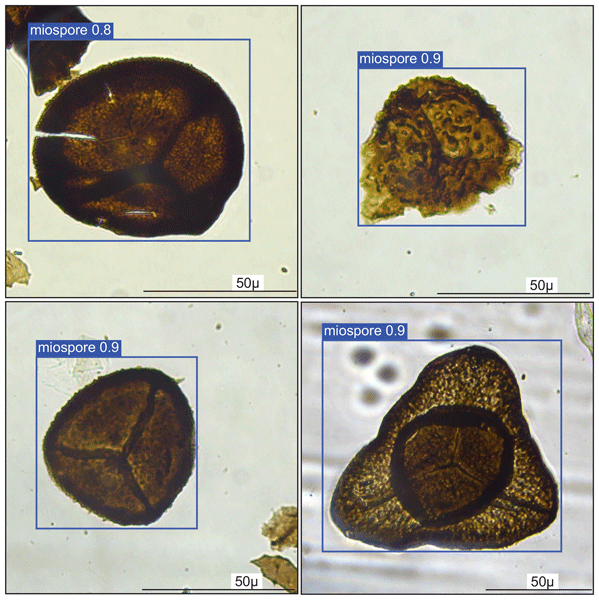
This study develops a semi-automated workflow using artificial intelligence to detect and classify Devonian miospores in microscopic slides. Focusing on three biostratigraphically important species used for dating rocks and correlating distant localities, the method achieved high accuracy, reduced observer bias, and accelerated analysis. This workflow offers a scalable tool for research and potential industrial applications in fossil-based stratigraphy.
Veronica Carlsson, Taniel Danelian, Pierre Boulet, Philippe Devienne, Aurelien Laforge, and Johan Renaudie
J. Micropalaeontol., 41, 165–182, https://doi.org/10.5194/jm-41-165-2022, https://doi.org/10.5194/jm-41-165-2022, 2022
Short summary
Short summary
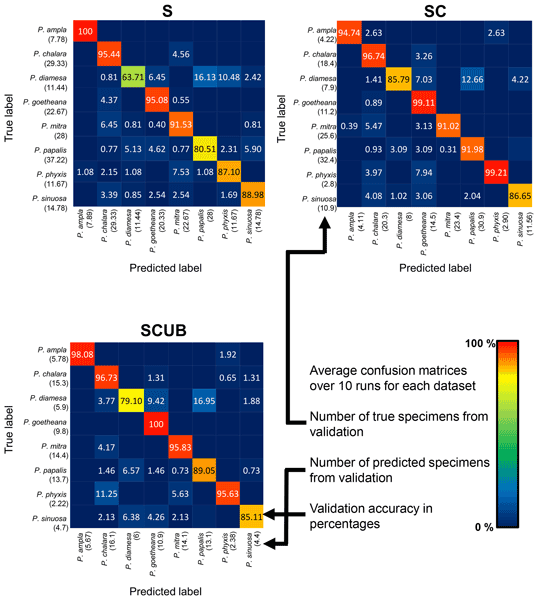
This study evaluates the use of automatic classification using AI on eight closely related radiolarian species of the genus Podocyrtis based on MobileNet CNN. Species belonging to Podocyrtis are useful for middle Eocene biostratigraphy. Numerous images of Podocyrtis species from the tropical Atlantic Ocean were used to train and validate the CNN. An overall accuracy of about 91 % was obtained. Additional Podocyrtis specimens from other ocean realms were used to test the predictive model.
Mathias Meunier and Taniel Danelian
J. Micropalaeontol., 41, 1–27, https://doi.org/10.5194/jm-41-1-2022, https://doi.org/10.5194/jm-41-1-2022, 2022
Short summary
Short summary
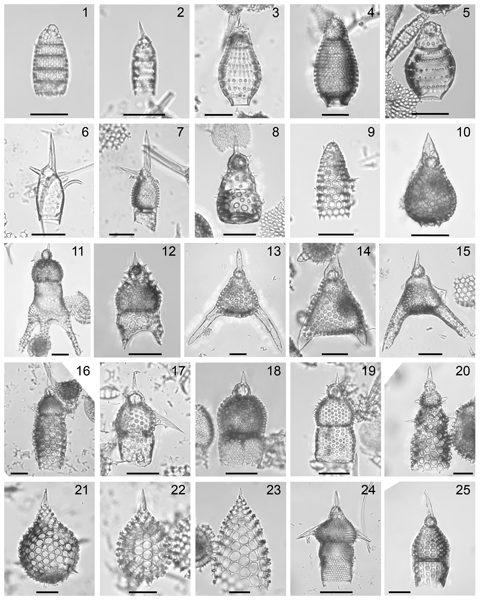
This study presents the biostratigraphic analysis of radiolaria (siliceous zooplankton) from a section of middle Eocene age located in the equatorial Atlantic. Our study allows the refinement of the age of 71 radiolarian bioevents. Based on a comparison with previously reported ages in the equatorial Pacific and northwestern Atlantic, we establish the synchronicity of several bioevents between the two oceans. Some of these synchronous bioevents were used to define seven new subzones.
Cited articles
Aguinaldo, A. M., Turbeville, J. M., Linford, L. S., Rivera, M. C., Garey, J. R., Raff, R. A., and Lake, J. A.: Evidence for a clade of nematodes, arthropods and other moulting animals, Nature, 387, 489–493, https://doi.org/10.1038/387489a0, 1997.
Ahn, S. Y. and Zhu, M. Y.: Lowermost Cambrian acritarchs from the Yanjiahe Formation, South China: Implication for defining the base of the Cambrian in the Yangtze Platform, Geol. Mag., 154, 1217–1231, https://doi.org/10.1017/S0016756816001369, 2017.
Aria, C.: The origin and early evolution of arthropods, Biol. Rev., 97, 1786–1809, https://doi.org/10.1111/brv.12864, 2022.
Bottjer, D. J., Hagadorn, J. W., and Dornbos, S. Q.: The Cambrian substrate revolution, GSA Today, 10, 1–7, 2000.
Brusca, R. C., Moore, W., and Shuster, S. M.: Invertebrates, in: 3rd Edn. Sinauer Associates Inc, Publishers, Sunderland, MA, 1104 pp., ISBN 9781605353753, 2016.
Budd, G. E.: The morphology of Opabinia regalis and the reconstruction of the arthropod stem-group, Lethaia, 29, 1–14, https://doi.org/10.1111/j.1502-3931.1996.tb01831.x, 1996.
Butterfield, N. J.: Exceptional fossil preservation and the Cambrian explosion, Integrat. Comparat. Biol., 43, 166–177, https://doi.org/10.1093/icb/43.1.166, 2003.
Butterfield, N. J. and Harvey, T. H. P.: Small carbonaceous fossils (SCFs): A new measure of early Paleozoic paleobiology, Geology, 40, 71–74, https://doi.org/10.1130/G32580.1, 2012.
Carlisle, E., Yin, Z. J., Pisani, D., and Donoghue, P. C.: Ediacaran origin and Ediacaran-Cambrian diversification of Metazoa, Sci. Adv., 10, eadp7161, https://doi.org/10.1126/sciadv.adp7161, 2024.
Chang, S., Zhang, L., Clausen, S., Bottjer, D. J., and Feng, Q. L.: The Ediacaran-Cambrian rise of siliceous sponges and development of modern oceanic ecosystems, Precamb. Res., 333, 105438, https://doi.org/10.1016/j.precamres.2019.105438, 2019.
Chen, P.: Discovery of lower Cambrian small shelly fossils from Jijiapo, Yichang, West Hubei and its significance, Profess. Pap. Stratigr. Palaeontol., 13, 49–64, 1984.
Chen, Q., Sun, M., Long, X. P., Zhao, G. C., Wang, J., Yu, Y., and Yuan, C.: Provenance study for the Paleozoic sedimentary rocks from the west Yangtze Block: constraint on possible link of South China to the Gondwana supercontinent reconstruction, Precamb. Res., 309, 271-289, https://doi.org/10.1016/j.precamres.2017.01.022, 2018a.
Chen, Z. and Liu, Y. R.: Advent of three-dimensional sediment exploration reveals Ediacaran-Cambrian ecosystem transition, Sci. Adv., 11, eadx9449, https://doi.org/10.1126/sciadv.adx9449, 2025.
Chen, Z., Chen, X., Zhou, C. M., Yuan, X. L., and Xiao, S. H.: Late Ediacaran trackways produced by bilaterian animals with paired appendages, Sci. Adv., 4, eaao6691, https://doi.org/10.1126/sciadv.aao6691, 2018b.
Chen, Z., Zhou, C. M., Yuan, X. L., and Xiao, S. H.: Death march of a segmented and trilobate bilaterian elucidates early animal evolution, Nature, 573, 412–415, https://doi.org/10.1038/s41586-019-1522-7, 2019.
Condon, D., Zhu, M. Y., Bowring, S., Wang, W., Yang, A. H., and Jin, Y. G.: U-Pb ages from the Neoproterozoic Doushantuo Formation, China, Science, 308, 95–98, https://doi.org/10.1126/science.1107765, 2005.
Crimes, T. P. and Anderson, M. M.: Trace fossils from Late Precambrian–Early Cambrian strata of Southeastern Newfoundland (Canada): Temporal and environmental implications, J. Paleontol., 59, 310–343, 1985.
Daley, A. C., Antcliffe, J. B., Drage, H. B., and Pates, S.: Early fossil record of Euarthropoda and the Cambrian Explosion, P. Natl. Acad. Sci. USA, 115, 5323–5331, https://doi.org/10.1073/pnas.1719962115, 2018.
Dong, X. P., Donoghue, P. C., Cheng, H., and Liu, J. B.: Fossil embryos from the Middle and Late Cambrian period of Hunan, South China, Nature, 427, 237–240, https://doi.org/10.1038/nature02215, 2004.
Dong, X. P., Bengtson, S., Gostling, N. J., Cunningham, J. A., Harvey, T. H., Kouchinsky, A., Val'Kov, A. K., Repetski, J. E., Stampanoni, M., Marone, F., and Donoghue, P. C.: The anatomy, taphonomy, taxonomy and systematic affinity of Markuelia: Early Cambrian to Early Ordovician scalidophorans, Palaeontology, 53, 1291–1314, https://doi.org/10.1111/j.1475-4983.2010.01006.x, 2010.
Edgecombe, G. D.: Arthropod origins: Integrating paleontological and molecular evidence, Annu. Rev. Ecol. Evol. Syst., 51, 1–25, https://doi.org/10.1146/annurev-ecolsys-011720-124437, 2020.
Edgecombe, G. D. and Legg, D. A.: Origins and early evolution of arthropods, Palaeontology, 57, 457–468, https://doi.org/10.1111/PALA.12105, 2014.
Erwin, D. H.: The developmental origins of animal bodyplans. In: Xiao, S. H., and Kaufman, A. J., Ed, Neoproterozoic Geobiology and Paleobiology, Springer Netherlands, Dordrecht, 159–197, https://doi.org/10.1007/1-4020-5202-2_6, 2006.
Erwin, D. H., Laflamme, M., Tweedt, S. M., Sperling, E. A., Pisani, D., and Peterson, K. J.: The Cambrian conundrum: early divergence and later ecological success in the early history of animals, Science, 334, 1901–1907, https://doi.org/10.1126/science.1206375, 2011.
Gao, P., Li, S. J., Lash, G. G., Yan, D. T., Zhou, Q., and Xiao, X. M.: Stratigraphic framework, redox history, and organic matter accumulation of an Early Cambrian intra platform basin on the Yangtze Platform, South China, Mar. Petrol. Geol., 130, 105095, https://doi.org/10.1016/j.marpetgeo.2021.105095, 2021.
Giribet, G. and Edgecombe, G. D.: Current understanding of Ecdysozoa and its internal phylogenetic relationships, Integrat. Comparat. Biol., 57, 455–466, https://doi.org/10.1093/icb/icx072, 2017.
Gougeon, R., Mángano, M. G., Buatois, L. A., Narbonne, G. M., Laing, B. A., and Paz, M.: Ichnology of the Ediacaran–Cambrian Chapel Island Formation of Newfoundland, Canada: unraveling bioturbation at the onset of the Cambrian Explosion, Fossils Strata, 72, 1–214, https://doi.org/10.18261/9788294167128-2025-01, 2025.
Guo, J. F., Li, Y., Han, J., Zhang, X. L., Zhang, Z. F., Ou, Q., and Shu, D. G.: Discovery of Genus Protoconites Chen et al., 1994 from Yanjiahe Formation, Terreneuvian of the Three Gorge area, South China, Prog. Nat. Sci., 19, 180–184, https://doi.org/10.3321/j.issn:1002-008X.2009.02.008, 2009.
Guo, J. F., Li, Y., and Li, G. X.: Small shelly fossils from the early Cambrian Yanjiahe Formation, Yichang, Hubei, China, Gondwana Res., 25, 999–1007, https://doi.org/10.1016/j.gr.2013.03.007, 2014.
Guo, J. F., Han, J., Iten, H. V., Wang, X., Qiang, Y. Q., Song, Z. C., Wang, W. Z., Zhang, Z. F., and Li, G. X.: A fourteen-faced hexangulaconulariid from the early Cambrian (Stage 2) Yanjiahe Formation, South China, J. Paleontol., 94, 45–55, https://doi.org/10.1017/jpa.2019.56, 2020.
Han, J., Morris, S. C., Ou, Q., Shu, D. G., and Huang, H.: Meiofaunal deuterostomes from the basal Cambrian of Shaanxi (China), Nature, 542, 228–231, https://doi.org/10.1038/nature21072, 2017.
Haug, J. T., Maas, A., Waloszek, D., Donoghue, P. C., and Bengtson, S.: A new species of `Markuelia' from the Middle Cambrian of Australia, Memoir. Assoc. Austral. Palaeontol., 37, 303–313, 2009.
Howard, R. J., Giacomelli, M., Lozano-Fernandez, J., Edgecombe, G. D., Fleming, J. F., Kristensen, R. M., Ma, X., Olesen, J., Sørensen, M. V., Thomsen, P. F., Wills, M. A., Donoghue, P. C. J., and Pisani, D.: The Ediacaran origin of Ecdysozoa: Integrating fossil and phylogenomic data, J. Geol. Soc., 179, jgs202-107, https://doi.org/10.1144/jgs2021-107, 2022.
Hughes, I. V., Evans, S. D., and Droser, M. L.: An Ediacaran bilaterian with an ecdysozoan affinity from South Australia, Curr. Biol., 34, 5782–5788, https://doi.org/10.1016/j.cub.2024.10.030, 2024.
Ishikawa, T., Ueno, Y., Komiya, T., Sawaki, Y., Han, J., Shu, D. G., Li, Y., Maruyama, S., and Yoshida, N.: Carbon isotope chemostratigraphy of a Precambrian/Cambrian boundary section in the Three Gorge area, South China: Prominent global-scale isotope excursions just before the Cambrian Explosion, Gondwana Res., 14, 193–208, https://doi.org/10.1016/j.gr.2007.10.008, 2008.
Kapli, P., Flouri, T., and Telford, M. J.: Systematic errors in phylogenetic trees, Curr. Biol., 31, R59–R64, https://doi.org/10.1016/j.cub.2020.11.043, 2021.
Kihm, J. H., Smith, F. W., Kim, S., Rho, H. S., Zhang, X., Liu, J., and Park, T. Y. S.: Cambrian lobopodians shed light on the origin of the tardigrade body plan, P. Natl. Acad. Sci. USA 120, e2211251120, https://doi.org/10.1073/pnas.2211251120, 2023.
Lan, Z. W., Li, X. H., Chu, X. L., Tang, G. Q., Yang, S. H., Yang, H. W., Liu, H., Jiang, T., and Wang, T.: SIMS U-Pb zircon ages and Ni-Mo-PGE geochemistry of the lower Cambrian Niutitang Formation in South China: Constraints on Ni-Mo-PGE mineralization and stratigraphic correlations, J. Asian Earth Sci., 137, 141–162, https://doi.org/10.1016/j.jseaes.2016.12.046, 2017.
Lee, M. S., Jago, J. B., García-Bellido, D. C., Edgecombe, G. D., Gehling, J. G., and Paterson, J. R.: Modern optics in exceptionally preserved eyes of Early Cambrian arthropods from Australia, Nature, 474, 631–634, https://doi.org/10.1038/nature10097, 2011.
Lerosey-Aubril, R. and Ortega-Hernández, J.: A new lobopodian from the middle Cambrian of Utah: did swimming body flaps convergently evolve in stem-group arthropods?, Pap. Palaeontol., 8, e1450, https://doi.org/10.1002/spp2.1450, 2022.
Linnemann, U., Ovtcharova, M., Schaltegger, U., Gärtner, A., Hautmann, M., Geyer, G., Vickers-Rich, P., Rich, T., Plessen, B., Hofmann, M., Zieger, J., Krause, R., Kriesfeld, L., and Smith, J.: New high-resolution age data from the Ediacaran-Cambrian boundary indicate rapid, ecologically driven onset of the Cambrian explosion, Terra Nova, 31, 49–58, https://doi.org/10.1111/ter.12368, 2019.
Liu, A. G.: Evolution: An Ediacaran ecdysozoan, Curr. Biol., 35, R26–R28, https://doi.org/10.1016/j.cub.2024.11.030, 2025.
Liu, M. J., Xian, X. F., Zhang, H. Q., Eriksson, M. E., Liu, Y. H., and and Shao, T. Q.: New ecdysozoan fossil embryos from the basal Cambrian of China, Palaeogeogr. Palaeocl. Palaeoecol., 659, 112635, https://doi.org/10.1016/j.palaeo.2024.112635, 2025.
Liu, Y. H., Li, Y., Shao, T. Q., Zhang, H. Q., Wang, Q. and Qiao, J. P.: Quadrapyrgites from the lower Cambrian of South China: Growth pattern, post-embryonic development, and affinity, Chinese Sci. Bull., 59, 4086–4095, https://doi.org/10.1007/s11434-014-0481-5, 2014.
Liu, Y. H., Qin, J, C., Wang, Q., Maas, A., Duan, B. C., Zhang, Y. N., Zhang, H., Shao, T. Q., and Zhang, H. Q.: New armoured scalidophorans (Ecdysozoa, Cycloneuralia) from the Cambrian Fortunian Zhangjiagou Lagerstätte, South China, Pap. Palaeontol., 5, 241–260, https://doi.org/10.1002/spp2.1239, 2018.
Liu, Y. H., Carlisle, E., Zhang, H. Q., Yang, B., Steiner, M., Shao, T. Q., Duan, B. C., Marone, F., Xiao, S. H., and Donoghue, P. C.: Saccorhytus is an early ecdysozoan and not the earliest deuterostome, Nature, 609, 541–546, https://doi.org/10.1038/s41586-022-05107-z, 2022.
Luzhnaya, E. A., Zhegallo, E. A., Zaitseva, L. V., and Ragozina, A. L.: Problematical Porifera from the Lower Cambrian of Western Mongolia, Paleontol. J., 57, 256–269, https://doi.org/10.31857/S0031031X2303011X, 2023.
Maas, A., Braun, A., Dong, X. P., Donoghue, P. C., Müller, K. J., Olempska, E., Repetski, J. E., Siveter, D. J., Stein, M., and Waloszek, D.: The `Orsten' – More than a Cambrian Konservat-Lagerstätte yielding exceptional preservation, Palaeoworld, 15, 266–282, https://doi.org/10.1016/j.palwor.2006.10.005, 2006.
Maas, A., Mayer, G., Kristensen, R. M., and Waloszek, D.: A Cambrian micro-lobopodian and the evolution of arthropod locomotion and reproduction, Chinese Sci. Bull., 52, 3385–3392, https://doi.org/10.1007/s11434-007-0515-3, 2007.
Mángano, M. G. and Buatois, L. A.: Decoupling of body-plan diversification and ecological structuring during the Ediacaran–Cambrian transition: Evolutionary and geobiological feedbacks, P. Roy. Soc. B, 281, 20140038, https://doi.org/10.1098/rspb.2014.0038, 2014.
Metcalfe, I.: Gondwana dispersion and Asian accretion: Tectonic and palaeogeographic evolution of eastern Tethys, J. Asian Earth Sci., 66, 1–33, https://doi.org/10.1016/j.jseaes.2012.12.020, 2013.
Mussini, G. and Butterfield, N. J.: Exotic cuticular specializations in a Cambrian scalidophoran, P. Roy. Soc. B, 292, 20242806, https://doi.org/10.1098/rspb.2024.2806, 2025.
Nielsen, C.: Animal Evolution: Interrelationships of the Living Phyla, in: 3rd Edn., Oxford University Press, Oxford, 1–389, https://doi.org/10.1093/acprof:oso/9780199606023.001.0001, 2012.
Okada, Y., Sawaki, Y., Komiya, T., Hirata, T., Takahata, N., Sano, Y., Maruyama, S., and Maruyama, S.: New chronological constraints for Cryogenian to Cambrian rocks in the Three Gorges, Weng'an and Chengjiang areas, South China, Gondwana Res., 25, 1027–1044, https://doi.org/10.1016/j.gr.2013.05.001, 2014.
Ortega-Hernández, J.: Making sense of `lower' and `upper' stem–group Euarthropoda, with comments on the strict use of the name Arthropoda von Siebold, 1848, Biol. Rev., 91, 255–273, https://doi.org/10.1111/brv.12168, 2016.
Paterson, J. R., García-Bellido, D. C., Lee, M. S., Brock, G. A., Jago, J. B., and Edgecombe, G. D.: Acute vision in the giant Cambrian predator Anomalocaris and the origin of compound eyes, Nature, 480, 237–240, https://doi.org/10.1038/nature10689, 2011.
Peng, S. C., Babcock, L. E., and Cooper, R. A.: The Cambrian Period, in: The Geologic Time Scale 2012, edited by: Gradstein, F. M., Ogg, J. G., Schmitz, M. D., and Ogg, G. M., Elsevier BV, Amsterdam, 437–488, ISBN 978-0-444-59425-9, 2012.
Pyle, L. J., Narbonne, G. M., Nowlan, G. S., Xiao, S., and James, N. P.: Early Cambrian metazoan eggs, embryos, and phosphatic microfossils from northwestern Canada, J. Paleontol., 80, 811–825, https://doi.org/10.1666/0022-3360(2006)80[811:ECMEEA]2.0.CO;2, 2006.
Qian, Y.: Hyolitha and some problematica from the Lower Cambrian Meishucunian Stage in central and southwestern China, Acta Palaeontol. Sin., 16, 255–275, 1977.
Qin, J. C., Liu, Y. H., Shao, T. Q., Liu, M. J., and Zhang, Y. N.: Growth pattern of Fortunian scalidophoran sclerites, Front. Earth Sci., 11, 1210062, https://doi.org/10.3389/feart.2023.1210062, 2023a.
Qin, J. C., Liu, Y. H., Shao, T. Q., Wang, Q., Zhang, Y. N., Zhou, X. Y., and Liu, M. J.: Three indeterminate forms of scalidophoran worms from the Cambrian Fortunian of South China, Acta Geol. Sin., 97, 1026–1037, https://doi.org/10.1111/1755-6724.15052, 2023b.
Raff, E. C., Schollaert, K. L., Nelson, D. E., Donoghue, P. C. J., Thomas, C. W., Turner, F. R., Stein, B. D., Dong, X. P., Bengtson, S., Huldtgren, T., Stampanoni, M., Yin, C. Y., and Raff, R. A.: Embryo fossilization is a biological process mediated by microbial biofilms, P. Natl. Acad. Sci. USA, 105, 19360–19365, https://doi.org/10.1073/pnas.0810106105, 2008.
Rota-Stabelli, O., Daley, A. C., and Pisani, D.: Molecular timetrees reveal a Cambrian colonization of land and a new scenario for ecdysozoan evolution, Curr. Biol., 23, 392–398, https://doi.org/10.1016/j.cub.2013.01.026, 2013.
Schiffbauer, J. D., Wallace, A. F., Broce, J., and Xiao, S. H.: Exceptional fossil conservation through phosphatization, Paleontol. Soc. Pap., 20, 59–82, https://doi.org/10.1017/S1089332600002801, 2014.
Seilacher, A.: Spuren und fazies im Unterkambrium, in: Beiträge zur Kenntnis des Kambriums in der Salt Range (Pakistan), edited by: Schindewolf, O. and Seilacher, A., Akademie der Wissenschaften under Literatur, Mainz, Abhandlungen der mathematisch-naturwissenschaftlichen Klasse, 10, 261–446, 1955.
Shao, T. Q., Qin, J. C., Shao, Y., Liu, Y. H., Waloszek, D., Maas, A., Duan, B. C., Wang, Q., Xu, Y., and Zhang, H. Q.: New macrobenthic cycloneuralians from the Fortunian (lowermost Cambrian) of South China, Precamb. Res., 349, 105413, https://doi.org/10.1016/j.precamres.2019.105413, 2020a.
Shao, T. Q., Wang, Q., Liu, Y. H., Qin, J. C., Zhang, Y. N., Liu, M. J., Shao, Y., Zhao, J. Y., and Zhang, H. Q.: A new scalidophoran animal from the Cambrian Fortunian Stage of South China and its implications for the origin and early evolution of Kinorhyncha, Precamb. Res., 349, 105616, https://doi.org/10.1016/j.precamres.2020.105616, 2020b.
Slater, B. J. and Bohlin, M. S.: Animal origins: The record from organic microfossils, Earth-Sci. Rev., 232, 104107, https://doi.org/10.1016/j.earscirev.2022.104107, 2022.
Slater, B. J., Harvey, T. H., Guilbaud, R., and Butterfield, N. J.: A cryptic record of Burgess Shale-type diversity from the early Cambrian of Baltica, Palaeontology, 60, 117–140, https://doi.org/10.1111/pala.12273, 2017.
Slater, B. J., Harvey, T. H. P., and Butterfield, N. J.: Small carbonaceous fossils (SCFs) from the Terreneuvian (lower Cambrian) of Baltica, Palaeontology, 61, 417–439, https://doi.org/10.1111/pala.12350, 2018.
Song, Z. C., Guo, J. F., Han, J., Van Iten, H., Peng, J. X., Qiang, Y. Q., Zhang, B. Y., Zhao, X. F., Li, G. X., and Wen, H. J.: Phylogenetic affinities and evolution of the Early Cambrian hexangulaconulariids, J. Syst. Palaeontol., 22, 2417668, https://doi.org/10.1080/14772019.2024.2417668, 2024.
Steiner, M., Li, G. X., Qian, Y., Zhu, M. Y., and Erdtmann, B.-D.: Neoproterozoic to Early Cambrian small shelly fossil assemblages and a revised biostratigraphic correlation of the Yangtze Platform (China), Palaeogeogr. Palaeocl. Palaeoecol., 254, 67–99,https://doi.org/10.1016/j.palaeo.2007.03.046, 2007.
Steiner, M., Yang, B., Hohl, S., Zhang, L., and Chang, S.: Cambrian small skeletal fossil and carbon isotope records of the southern Huangling Anticline, Hubei (China) and implications for chemostratigraphy of the Yangtze Platform, Palaeogeogr. Palaeocl. Palaeoecol., 554, 109817, https://doi.org/10.1016/j.palaeo.2020.109817, 2020.
Sun, W. C., Yin, Z. J., Cunningham, J. A., Liu, P. J., Zhu, M. Y., and Donoghue, P. C. J.: Nucleus preservation in early Ediacaran Weng'an embryo-like fossils, experimental taphonomy of nuclei and implications for reading the eukaryote fossil record, Interface Focus, 10, 20200015, https://doi.org/10.1098/rsfs.2020.0015, 2020.
Sun, W. C., Yin, Z. J., Liu, P. J., Donoghue, P. C. J., Li, J. H., and Zhu, M. Y.: Ultrastructure and in-situ chemical characterization of intracellular granules of embryo-like fossils from the early Ediacaran Weng'an Biota, PalZ, 95, 611–621, https://doi.org/10.1007/s12542-021-00597-0, 2021.
Vannier, J.: The early Cambrian Saccorhytus is a non-feeding larva of a scalidophoran worm, P. Roy. Soc. B, 291, 20241256, https://doi.org/10.1098/rspb.2024.1256, 2024.
Vannier, J., Steiner, M., Renvoisé, E., Hu, S. X., and Casanova, J. P.: Early Cambrian origin of modern food webs: Evidence from predator arrow worms, P. Roy. Soc. B, 274, 627–633, https://doi.org/10.1098/rspb.2006.3761, 2007.
Vannier, J., Calandra, I., Gaillard, C., and Żylińska, A.: Priapulid worms: Pioneer horizontal burrowers at the Precambrian-Cambrian boundary, Geology, 38, 711–714, https://doi.org/10.1130/G30829.1, 2010.
Wang, D., Ling, H. F., Li, D., and Chen, X.: Carbon isotope stratigraphy of Yanjiahe Formation across the Ediacaran–Cambrian boundary in the area of the Three Gorges, J. Stratigr., 36, 21–30, 2012.
Wang, D., Vannier, J., Schumann, I., Wang, X., Yang, X. G., Komiya, T., Uesugi, K., Sun, J., and Han, J.: Origin of ecdysis: fossil evidence from 535-million-year-old scalidophoran worms, P. Roy. Soc. B, 286, 20190791, https://doi.org/10.1098/rspb.2019.0791, 2019.
Wang, D., Vannier, J., Yang, X. G., Sun, J., Sun, Y. F., Hao, W. J., Tang, Q. Q., Liu, P., and Han, J.: Cuticular reticulation replicates the pattern of epidermal cells in lowermost Cambrian scalidophoran worms, P. Roy. Soc. B, 287, 20200470, https://doi.org/10.1098/rspb.2020.0470, 2020.
Wang, D., Vannier, J., Sun, J., Yu, C. Y., and Han, J.: A new Chengjiang worm sheds light on the radiation and disparity in early Priapulida, Biology, 12, 1242, https://doi.org/10.3390/biology12091242, 2023a.
Wang, D., Qiang, Y. Q., Guo, J. F., Vannier, J., Song, Z. C., Peng, J. X., Zhang, B. Y., Sun, J., Yu, Y. L., Zhang, Y. H., Zhang, T., Yang, X. G., and Han, J.: Early evolution of the ecdysozoan body plan, eLife, 13, RP94709, https://doi.org/10.7554/eLife.94709.3, 2024.
Wang, D., Han, J., Guo, J. F., and Qiang, Y. Q.: Origin and evolution of bodyplans of ecdysozoans during the Cambrian explosion, Chin. J. Nature, 47, 125–133, https://doi.org/10.3969/j.issn.0253-9608.2025.02.004, 2025a.
Wang, D., Vannier, J., Martín-Durán, J. M., Herranz, M., and Yu, C. Y.: Preservation and early evolution of scalidophoran ventral nerve cord, Sci. Adv., 11, eadr0896, https://doi.org/10.1126/sciadv.adr0896, 2025b.
Wang, J. and Li, Z. X.: History of Neoproterozoic rift basins in South China: implications for Rodinia break-up, Precamb. Res., 122, 141–158, https://doi.org/10.1016/S0301-9268(02)00209-7, 2003.
Wang, L. J., Lin, S. F., and Xiao, W. J.: Yangtze and Cathaysia blocks of South China: Their separate positions in Gondwana until early Paleozoic juxtaposition, Geology, 51, 723–727, https://doi.org/10.1130/G51362.1, 2023b.
Wang, X. F., Erdtmann, B. D., Chen, X. H., and Mao, X. D.: Integrated sequence-, bio-and chemostratigraphy of the terminal Proterozoic to Lowermost Cambrian “black rock series” from central South China, Episodes J. Int. Geosci., 21, 178–189, https://doi.org/10.18814/epiiugs/1998/v21i3/007, 1998.
Weber, B., Steiner, M., Evseev, S., and Yergaliev, G.: First report of a Meishucun-type early Cambrian (Stage 2) ichnofauna from the Malyi Karatau area (SE Kazakhstan), Palaeoichnological, palaeoecological and palaeogeographical implications, Palaeogeogr. Palaeocl. Palaeoecol., 392, 209–231, https://doi.org/10.1016/j.palaeo.2013.08.021, 2013.
Xian, X. F., Eriksson, M. E. and Zhang, H. Q.: Growth patterns of palaeoscolecid sclerites from the Furongian (upper Cambrian) Wangcun section, western Hunan, South China, Palaeoworld, 33, 284–298, https://doi.org/10.1016/j.palwor.2023.03.005, 2024a.
Xian, X. F., Eriksson, M. E., and Zhang, H. Q.: Reassessment of Archaeooides based on new material from the Fortunian (early Cambrian) of China infers algal affinity, Palaeogeogr. Palaeocl. Palaeoecol., 637, 112011, https://doi.org/10.1016/j.palaeo.2023.112011, 2024b.
Xian, X. F., Zhang, H. Q., Xiao, S. H., Waloszek, D., Maas, A., and Duan, B. C.: Polychaete annelids from the earliest Cambrian Period, P. Natl. Acad. Sci. USA, 123, e2538071123, https://doi.org/10.1073/pnas.2538071123, 2026.
Xiao, S. H., Zhou, C. M., Liu, P. J., Wang, D., and Yuan, X. L.: Phosphatized acanthomorphic acritarchs and related microfossils from the Ediacaran Doushantuo Formation at Weng'an (South China) and their implications for biostratigraphic correlation, J. Paleontol., 88, 1–67, https://doi.org/10.1666/12-157R, 2014.
Yang, X., Wang, D., Zhang, Z. L., Wang, X., Sun, J., Hao, W. J., Liu, Y. Q., Uesugi, K., Komiya, T., and Han, J.: Basal Cambrian soft-bodied segmented bilaterians preserved as microbial pseudomorphs, bioRxiv, 2024-07, https://doi.org/10.1101/2024.07.03.601876, 2024.
Yin, Z. J., Liu, P. J., Li, G., Tafforeau, P., and Zhu, M. Y.: Biological and taphonomic implications of Ediacaran fossil embryos undergoing cytokinesis, Gondwana Res., 25, 1019–1026, https://doi.org/10.1016/j.gr.2013.01.008, 2014.
Yin, Z. J., Cunningham, J. A., Vargas, K., Bengtson, S., Zhu, M. Y., and Donoghue, P. C. J.: Nuclei and nucleoli in embryo-like fossils from the Ediacaran Weng'an Biota, Precamb. Res., 301, 145–151, https://doi.org/10.1016/j.precamres.2017.08.009, 2017.
Yu, C.Y., Wang, D., Yong, Y. Y., Tang, Q. Q., Hao, W. J.., Sun, J., Yang, X. G., He, K. Y., Yue, N., and Han, J.: Ecdysis of Eopriapulites sphinx from the early Cambrian Kuanchuanpu biota, Acta Micropalaeontol. Sin., 39, 285–291, https://doi.org/10.16087/j.cnki.1000-0674.20221118.001, 2022.
Zhang, H. Q.: The evolutionary relationships of the earliest known cycloneuralians and a new record from the Cambrian Fortunian of South China, Palaeoworld, 31, 389–401, https://doi.org/10.1016/j.palwor.2021.09.003, 2022.
Zhang, H. Q., Xiao, S. H., Liu, Y. H., Yuan, X. L., Wan, B., Muscente, A. D., Shao, T. Q., Gong, H. and Cao, G. H.: Armored kinorhynch-like scalidophoran animals from the early Cambrian, Sci. Rep., 5, 16521, https://doi.org/10.1038/srep16521, 2015.
Zhang, H. Q., Maas, A., and Waloszek, D.: New material of scalidophoran worms in `Orsten'-type preservation from the Cambrian Fortunian Stage of South China, J. Paleontol., 92, 14–25, https://doi.org/10.1017/jpa.2017.39, 2018.
Zhang, L., Chang, S., Chen, C., Eriksson, M. E., Feng, Q. L., Steiner, M., Khan, M. Z., Vannier, J., Forel, M. B., and Clausen, S.: Diverse cuticular remains in Cambrian (Series 2) SSF assemblages from China and the pioneer metazoan colonization of offshore environments, Palaeogeogr. Palaeocl. Palaeoecol., 567, 110192, https://doi.org/10.1016/j.palaeo.2020.110192, 2021.
Zhang, L., Chang, S., Chen, C., Wang, X., Feng, Q. L., Steiner, M., Yang, B., Mason, R., She, Z. B., Yan, J. X., Vannier, J., Forel, M. B., Xiao, Q., and Clausen, S.: Cloudina aggregates from the uppermost Dengying Formation, Three Gorges area, South China, and stratigraphical implications, Precambrian Res., 370, 106552, https://doi.org/10.1016/j.precamres.2021.106552, 2022.
Zhang, L., Wu, Y., Zhai, F., Duan, C. Z., Fu, S. S., Chang, S., Ye, Y., Chen, C., Wang, X., Lang, X. G., Feng, Q. L., and Forel, M. B.: The earliest sponge spicule tufts from the Cambrian Lower Yanjiahe Formation, Three Gorges area, South China, Palaeoworld, 34, 200995, https://doi.org/10.1016/j.palwor.2025.200995, 2025a.
Zhang, L. J., Buatois, L. A., Mángano, M. G., Yang, Q., Zhang, S., Wei, F., Fan, R. Y., Zhao, Z., Wang, Z., Ma, X. Y., and Tang, F.: Trace fossils from the Meishucun section of South China: Revisiting ichnotaxonomy, behavioural diversification and ecosystem engineering from a key Ediacaran–Cambrian succession, Pap. Palaeontol., 11, e70009, https://doi.org/10.1002/spp2.70009, 2025b.
Zhang, X. G.: Moult stages and dimorphism of Early Cambrian bradoriids from Xichuan, Henan, China, Alcheringa, 11, 1–19, https://doi.org/10.1080/03115518708618976, 1987.
Zhang, X. G., Siveter, D. J., Waloszek, D., and Maas, A.: An epipodite-bearing crown-group crustacean from the Lower Cambrian, Nature, 449, 595–598, https://doi.org/10.1038/nature06138, 2007.
Zhang, X. G., Pratt, B. R., and Shen, C.: Embryonic development of a Middle Cambrian (500 myr old) scalidophoran worm, J. Paleontol., 85, 898–903, https://doi.org/10.1666/11-024.1, 2011.
Zhang, X. G., Smith, M. R., Yang, J., and Hou, J. B.: Onychophoran-like musculature in a phosphatized Cambrian lobopodian, Biol. Lett., 12, 20160492, https://doi.org/10.1098/rsbl.2016.0492, 2016.
Zhang, X. L. and Shu, D. G.: Current understanding on the Cambrian Explosion: Questions and answers, PalZ, 95, 641–660, https://doi.org/10.1007/s12542-021-00568-5, 2021.
Zhang, X. L., Shu, D. G., Han, J., Zhang, Z. F., Liu, J. N., and Fu, D. J.: Triggers for the Cambrian explosion: Hypotheses and problems, Gondwana Res., 25, 896–909, https://doi.org/10.1016/j.gr.2013.06.001, 2014.
Zhou, C. M., Brasier, M. D., and Xue, Y. S.: Three-dimensional phosphatic preservation of giant acritarchs from the terminal Proterozoic Doushantuo Formation in Guizhou and Hubei provinces, South China, Palaeontology, 44, 1157–1178, https://doi.org/10.1111/1475-4983.00219, 2001.
Zhu, M. Y.: Precambrian–Cambrian trace fossils from eastern Yunnan: Implications for Cambrian explosion, Bull. Natl. Museum Nat. Sci., 10, 275–312, 1997.
Zhu, M. Y., Zhang, J. M., Steiner, M., Yang, A. H., Li, G. X., and Erdtmann, B.-D.: Sinian-Cambrian stratigraphic framework for shallow-to deep-water environments of the Yangtze Platform: an integrated approach, Prog. Nat. Sci., 13, 951–960, https://doi.org/10.1080/10020070312331344710, 2003.
Zhu, M. Y., Zhang, J. M., and Yang, A. H.: Integrated Ediacaran (Sinian) chronostratigraphy of South China, Palaeogeogr. Palaeocl. Palaeoecol., 254, 7–61, https://doi.org/10.1016/j.palaeo.2007.03.025, 2007.
Zhuravlev, A. Y., Gámez Vintaned, J. A., and Liñán, E.: The Palaeoscolecida and the evolution of the Ecdysozoa, Palaeontogr. Canad., 31, 177–204, 2011.
Short summary
New 535-million-year-old fossils from China reveal early animal diversity. Preserved in fine detail, these fossils showcase Ecdysozoa – ancestors of insects and crabs. Twelve forms with spines, plates, and possible limbs were identified, showing rapid body plan evolution after life's first complexity boom. Analysis of fossilized skins reveal complex ecosystems emerging at this time. The findings provide clues about how Earth's most successful animal groups began their evolutionary journey.
New 535-million-year-old fossils from China reveal early animal diversity. Preserved in fine...


