Articles | Volume 44, issue 2
https://doi.org/10.5194/jm-44-693-2025
© Author(s) 2025. This work is distributed under
the Creative Commons Attribution 4.0 License.
https://doi.org/10.5194/jm-44-693-2025
© Author(s) 2025. This work is distributed under
the Creative Commons Attribution 4.0 License.
Deep learning accurately identifies fjord benthic foraminifera

Marko Plavetić
Department of Biological and Environmental Sciences, University of Gothenburg, Gothenburg, 413 90, Sweden
Allison Yi Hsiang
Department of Geological Sciences, Stockholm University, Stockholm, 11 4 18, Sweden
Department of Ecology, Environment and Plant Sciences, Stockholm University, Stockholm, 114 18, Sweden
Mats Josefson
Global Product Development, Pharmaceutical Technology and Development, Operations, AstraZeneca, Mölndal, 431 83, Sweden
Gustaf Hulthe
Global Product Development, Pharmaceutical Technology and Development, Operations, AstraZeneca, Mölndal, 431 83, Sweden
Irina Polovodova Asteman
CORRESPONDING AUTHOR
Department of Marine Sciences, University of Gothenburg, Gothenburg, 413 90, Sweden
Related authors
No articles found.
Mary McGann, Maria Holzmann, Vincent M. P. Bouchet, Sibelle Trevisan Disaró, Patrícia P. B. Eichler, David W. Haig, Stephen J. Himson, Hiroshi Kitazato, Jean-Charles Pavard, Irina Polovodova Asteman, André R. Rodrigues, Clément M. Tremblin, Masashi Tsuchiya, Mark Williams, Phoebe O'Brien, Josefin Asplund, Malou Axelsson, and Thomas D. Lorenson
J. Micropalaeontol., 44, 275–317, https://doi.org/10.5194/jm-44-275-2025, https://doi.org/10.5194/jm-44-275-2025, 2025
Short summary
Short summary
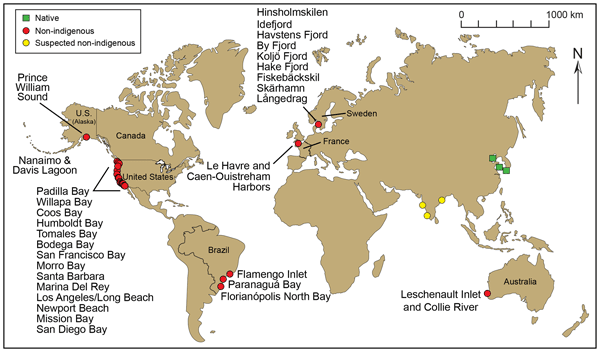
The foraminifer Trochammina hadai, native to Asia, has been found in the USA, Canada, Sweden, France, Brazil, and Australia coastal waters. The primary vectors of introduction include mariculture of oysters and the plant matter in which they were shipped, as well as the release of ballast water/sediment in receiving ports. Secondary introductions occur by mud attached to anchors of fishing and pleasure boats. Globally, the species has spread rapidly, impacting native species and local biodiversity.
Michael Lintner, Irina Polovodova Asteman, Wolfgang Wanek, Petra Heinz, Jan Goleń, and Jarosław Tyszka
J. Micropalaeontol., 44, 263–273, https://doi.org/10.5194/jm-44-263-2025, https://doi.org/10.5194/jm-44-263-2025, 2025
Short summary
Short summary
Foraminifera are microorganisms which, due to their abundance and diversity, are often used as proxies to describe climatic changes in marine environments. For this purpose, experiments containing antibiotics that are intended to reduce the activity of other microorganisms are carried out with foraminifera. In our study, we examined the influence of antibiotics on foraminifera and tested whether these chemicals are really harmless for foraminifera or not.
Irina Polovodova Asteman, Emilie Jaffré, Agata Olejnik, Maria Holzmann, Mary McGann, Kjell Nordberg, Jean-Charles Pavard, Delia Rösel, and Magali Schweizer
J. Micropalaeontol., 44, 119–143, https://doi.org/10.5194/jm-44-119-2025, https://doi.org/10.5194/jm-44-119-2025, 2025
Short summary
Short summary
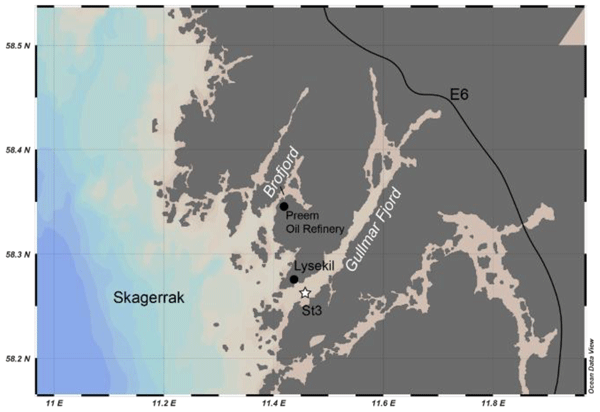
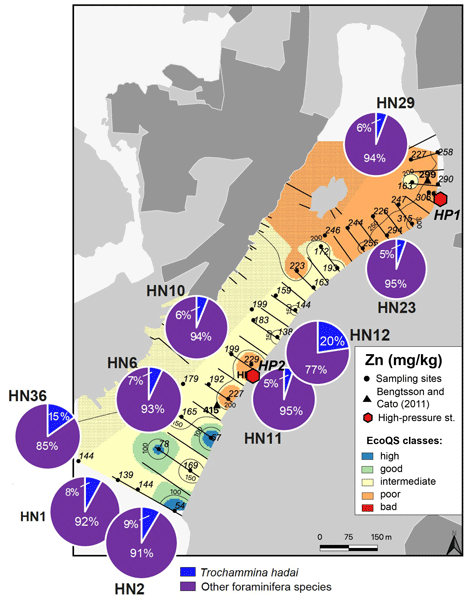
Small boat harbours are suggested to cause pollution and alien species introductions. Here we analysed surface sediments in Hinsholmskilen harbour (Sweden) for benthic foraminifera and potentially toxic elements. Molecular and morphological analyses of foraminifera show the presence of two alien species, Trochammina hadai and Ammonia confertitesta, whilst pollution is mostly low for Cd, Co, Ni, and Pb. In contrast, As, Zn, Cu, Hg, and Cr have high levels due to the use of these elements in boat paints.
Flor Vermassen, Clare Bird, Tirza M. Weitkamp, Kate F. Darling, Hanna Farnelid, Céline Heuzé, Allison Y. Hsiang, Salar Karam, Christian Stranne, Marcus Sundbom, and Helen K. Coxall
Biogeosciences, 22, 2261–2286, https://doi.org/10.5194/bg-22-2261-2025, https://doi.org/10.5194/bg-22-2261-2025, 2025
Short summary
Short summary
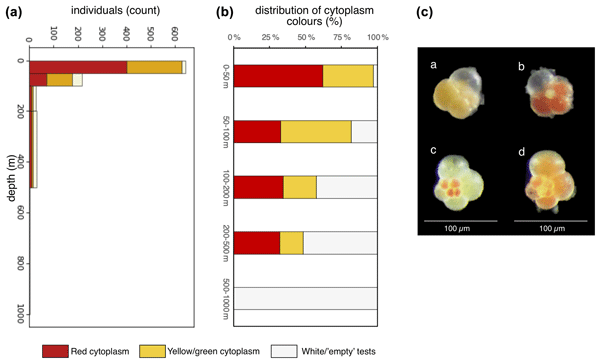
We provide the first systematic survey of planktonic foraminifera in the high Arctic Ocean. Our results describe the abundance and species composition under summer sea ice. They indicate that the polar specialist N. pachyderma is the only species present, with subpolar species absent. The data set will be a valuable reference for continued monitoring of the state of planktonic foraminifera communities as they respond to the ongoing sea-ice decline and the “Atlantification” of the Arctic Ocean.
Joachim Schönfeld, Nicolaas Glock, Irina Polovodova Asteman, Alexandra-Sophie Roy, Marié Warren, Julia Weissenbach, and Julia Wukovits
J. Micropalaeontol., 42, 171–192, https://doi.org/10.5194/jm-42-171-2023, https://doi.org/10.5194/jm-42-171-2023, 2023
Short summary
Short summary
Benthic organisms show aggregated distributions due to the spatial heterogeneity of niches or food. We analysed the distribution of Globobulimina turgida in the Gullmar Fjord, Sweden, with a data–model approach. The population densities did not show any underlying spatial structure but a random log-normal distribution. A temporal data series from the same site depicted two cohorts of samples with high or low densities, which represent hypoxic or well-ventilated conditions in the fjord.
Cited articles
Adebayo, M. B., Bolton, C. T., Marchant, R., Bassinot, F., Conrod, S., and de Garidel-Thoron, T.: Environmental controls of size distribution of modern planktonic foraminifera in the tropical Indian Ocean, Geochem Geophys Geosyst, 24, e2022GC010586, https://doi.org/10.1029/2022GC010586, 2023.
Alexe, B., Deselaers, T., and Ferrari, V.: Measuring the Objectness of Image Windows, IEEE T. Pattern Anal., 34, 2189–2202, https://doi.org/10.1109/TPAMI.2012.28, 2012.
Alve, E.: Benthic foraminifera in sediment cores reflecting heavy metal pollution in Sorfjord, western Norway, J. Foramin. Res., 21, 1–19, https://doi.org/10.2113/gsjfr.21.1.1, 1991.
Alve, E.: Benthic foraminiferal responses to estuarine pollution, J. Foramin. Res., 25, 190–203, https://doi.org/10.2113/gsjfr.25.3.190, 1995.
Alve, E.: A common opportunistic foraminiferal species as an indicator of rapidly changing conditions in a range of environments, Estuar. Coast. Shelf S., 57, 501–514, https://doi.org/10.1016/S0272-7714(02)00383-9, 2003.
Alve, E., Lepland, A., Magnusson, J., and Backer-Owe, K.: Monitoring strategies for re-establishment of ecological reference conditions: Possibilities and limitations, Mar. Pollut. Bull., 59, 297–310, https://doi.org/10.1016/j.marpolbul.2009.08.011, 2009.
Alve, E., Hess, S., Bouchet, V. M., Dolven, J. K., and Rygg, B.: Intercalibration of benthic foraminiferal and macrofaunal biotic indices: An example from the Norwegian Skagerrak coast (NE North Sea). Ecol. Indic., 96, 107–115, https://doi.org/10.1016/j.ecolind.2018.08.037, 2019.
Austen, G. E., Bindemann, M., Griffiths, R. A., and Roberts, D. L.: Species identification by experts and non-experts: comparing images from field guides, Sci. Rep., 6, 33634, https://doi.org/10.1038/srep33634, 2016.
Austen, G. E., Bindemann, M., Griffiths, R. A., and Roberts, D. L.: Species identification by conservation practitioners using online images: accuracy and agreement between experts, PeerJ, 6, e4157, https://doi.org/10.7717/peerj.4157, 2018.
Bernhard, J. M. and Alve, E.: Survival, ATP pool, and ultrastructural characterization of benthic foraminifera from Drammensfjord (Norway): response to anoxia, Mar. Micropaleontol., 28, 5–17, https://doi.org/10.1016/0377-8398(95)00036-4, 1996.
Bird, C., Schweizer, M., Roberts, A., Austin, W. E., Knudsen, K. L., Evans, K. M., and Darling, K. F.: The genetic diversity, morphology, biogeography, and taxonomic designations of Ammonia (Foraminifera) in the Northeast Atlantic, Mar. Micropaleontol., 155, 101726, https://doi.org/10.1016/j.marmicro.2019.02.001, 2020.
Boehnert, S., Birkelund, A. R., Schmiedl, G., Kuhnert, H., Kuhn, G., Hass, H. C., and Hebbeln, D.: Test deformation and chemistry of foraminifera as response to anthropogenic heavy metal input, Mar. Pollut. Bull., 155, 111112, https://doi.org/10.1016/j.marpolbul.2020.111112, 2020.
Bouchet, V. M., Alve, E., Rygg, B., and Telford, R. J.: Benthic foraminifera provide a promising tool for ecological quality assessment of marine waters, Ecol. Indic., 23, 66–75, https://doi.org/10.1016/j.ecolind.2012.03.011, 2012.
Brinkmann, I., Schweizer, M., Singer, D., Quinchard, S., Barras, C., Bernhard, J. M., and Filipsson, H. L.: Through the eDNA looking glass: Responses of fjord benthic foraminiferal communities to contrasting environmental conditions, J. Eukaryot. Microbiol., 70, e12975, https://doi.org/10.1111/jeu.12975, 2023.
Brunner, C. A., Yeager, K. M., Hatch, R., Simpson, S., Keim, J., Briggs, K. B., and Louchouarn, P.: Effects of oil from the 2010 Macondo well blowout on marsh foraminifera of Mississippi and Louisiana, USA, Environ. Sci. Technol., 47, 9115–9123, https://doi.org/10.1021/es401943y, 2013.
Castro, W., Oblitas, J., Santa-Cruz, R., and Avila-George, H.: Multilayer perceptron architecture optimization using parallel computing techniques, PLoS ONE, https://doi.org/10.1371/journal.pone.0189369, 2017.
Chen, W., Huang, H., Peng, S., Zhou, C., and Zhang, C.: YOLO-face: a real-time face detector, Visual. Comput., 37, 805–813, https://doi.org/10.1007/s00371-020-01831-7, 2021.
Choquel, C., Geslin, E., Metzger, E., Filipsson, H. L., Risgaard-Petersen, N., Launeau, P., Giraud, M., Jauffrais, T., Jesus, B., and Mouret, A.: Denitrification by benthic foraminifera and their contribution to N-loss from a fjord environment, Biogeosciences, 18, 327–341, https://doi.org/10.5194/bg-18-327-2021, 2021.
Choquel, C., Müter, D., Ni, S., Pirzamanbein, B., Charrieau, L. M., Hirose, K., Seto, Y., Schmiedl, G., and Filipsson, H. L.: 3D morphological variability in foraminifera unravel environmental changes in the Baltic Sea entrance over the last 200 years, Front. Earth Sci., 11, 1120170, https://doi.org/10.3389/feart.2023.1120170, 2023.
Darling, K. F., Schweizer, M., Knudsen, K. L., Evans, K. M., Bird, C., Roberts, A., and Austin, W. E.: The genetic diversity, phylogeography and morphology of Elphidiidae (Foraminifera) in the Northeast Atlantic, Mar. Micropaleontol., 129, 1–23, https://doi.org/10.1016/j.marmicro.2016.09.001, 2016.
Deldicq, N., Alve, E., Schweizer, M., Asteman, I. P., Hess, S., Darling, K., and Bouchet, V. M.: History of the introduction of a species resembling the benthic foraminifera Nonionella stella in the Oslofjord (Norway): morphological, molecular and paleo-ecological evidences, Aquat. Invasions, 14, 182–205, https://doi.org/10.3391/ai.2019.14.2.03, 2019.
Deng, J., Dong, W., Socher, R., Li, L.-J., Li, K., and Fei-Fei, L.: ImageNet: A large-scale hierarchical image database, 2009 IEEE Conference on Computer Vision and Pattern Recognition, Miami, FL, USA, 248–255, https://doi.org/10.1109/cvpr.2009.5206848, 2009.
Dolven, J. K., Alve, E., Rygg, B., and Magnusson, J.: Defining past ecological status and in situ reference conditions using benthic foraminifera: a case study from the Oslofjord, Norway, Ecol. Indic., 29, 219–233, https://doi.org/10.1016/j.ecolind.2012.12.031, 2013.
Dumoulin, V. and Visin, F.: A guide to convolution arithmetic for deep learning, arXiv [preprint], https://doi.org/10.48550/ARXIV.1603.07285, 2016.
Elder, L. E., Hsiang, A. Y., Nelson, K., Strotz, L. C., Kahanamoku, S. S., and Hull, P. M.: Sixty-one thousand recent planktonic foraminifera from the Atlantic Ocean, Sci. Data, 5, 180109, https://doi.org/10.1038/sdata.2018.109, 2018.
Endo, K., Hiraguri, T., Kimura, T., Shimizu, H., Shimada, T., Shibasaki, A., Suzuki, C., Fujinuma, R., and Takemura, Y.: Estimation of the amount of pear pollen based on flowering stage detection using deep learning, Sci. Rep., 14, 13163, https://doi.org/10.1038/s41598-024-63611-w, 2024.
Ernst, S. R., Morvan, J., Geslin, E., Le Bihan, A., and Jorissen, F. J.: Benthic foraminiferal response to experimentally induced Erika oil pollution, Mar. Micropaleontol., 61, 76–93, https://doi.org/10.1016/j.marmicro.2006.05.005, 2006.
Fenton, I. S., Baranowski, U., Boscolo-Galazzo, F., Cheales, H., Fox, L., King, D. J., Larkin, C., Latas, M., Liebrand, D., Miller, C. G., Nilsson-Kerr, K., Piga, E., Pugh, H., Remmelzwaal, S., Roseby, Z. A., Smith, Y. M., Stukins, S., Taylor, B., Woodhouse, A., Worne, S., Pearson, P. N., Poole, C. R., Wade, B. S., and Purvis, A.: Factors affecting consistency and accuracy in identifying modern macroperforate planktonic foraminifera, J. Micropalaeontol., 37, 431–443, https://doi.org/10.5194/jm-37-431-2018, 2018.
Ferreira-Chacua, I. and Koeshidayatullah, A. I.: ForamViT-GAN: Exploring new paradigms in deep learning for micropaleontological image analysis, IEEE Access, 11, 67298–67307, https://doi.org/10.1109/ACCESS.2023.3291620, 2023.
Filipsson, H. L. and Nordberg, K.: Climate variations, an overlooked factor influencing the recent marine environment. An example from Gullmar Fjord, Sweden, illustrated by benthic foraminifera and hydrographic data, Estuaries, 27, 867–881, https://doi.org/10.1007/BF02912048, 2004.
Frontalini, F. and Coccioni, R.: Benthic foraminifera for heavy metal pollution monitoring: a case study from the central Adriatic Sea coast of Italy, Estuar. Coast. Shelf S., 76, 404–417, https://doi.org/10.1016/j.ecss.2007.07.024, 2008.
Frontalini, F., Nardelli, M. P., Curzi, D., Martín-González, A., Sabbatini, A., Negri, A., and Bernhard, J. M.: Benthic foraminiferal ultrastructural alteration induced by heavy metals, Mar. Micropaleontol., 138, 83–89, https://doi.org/10.1016/j.marmicro.2017.10.009, 2018.
Frontalini, F., Cordier, T., Balassi, E., Du Châtelet, E. A., Cermakova, K., Apothéloz-Perret-Gentil, L., and Pawlowski, J.: Benthic foraminiferal metabarcoding and morphology-based assessment around three offshore gas platforms: Congruence and complementarity, Environ. Int., 144, 106049, https://doi.org/10.1016/j.envint.2020.106049, 2020.
Godbillot, C., Pesenti, B., Leblanc, K., Beaufort, L., Chevalier, C., Di Pane, J., de Madron, D., and de Garidel-Thoron, T.: Contrasting trends in phytoplankton diversity, size structure, and carbon burial efficiency in the Mediterranean Sea under shifting environmental conditions, J. Geophys. Res.-Oceans, 130, e2025JC022486, https://doi.org/10.1029/2025JC022486, 2025.
Govindankutty Menon, A., Davis, C. V., Nürnberg, D., Nomaki, H., Salonen, I., Schmiedl, G., and Glock, N.: A deep-learning automated image recognition method for measuring pore patterns in closely related bolivinids and calibration for quantitative nitrate paleo-reconstructions, Sci. Rep., 13, 19628, https://doi.org/10.1038/s41598-023-46605-y, 2023.
Hanson, N. N., Ounsley, J. P., Henry, J., Terzić, K., and Caneco, B.: Automatic detection of fish scale circuli using deep learning, Biology Methods and Protocols, 9, bpae056, https://doi.org/10.1093/biomethods/bpae056, 2024
He, K., Zhang, X., Ren, S., and Sun, J.: Deep residual learning for image recognition, arXiv [preprint], https://doi.org/10.48550/ARXIV.1512.03385, 2015.
He, K., Gkoxari, G., Dollár, P., and Girshick, R.: Mask R-CNN, arXiv [preprint], https://doi.org/10.48550/arXiv.1703.06870, 2017.
Hsiang, A. Y., Brombacher, A., Rillo, M. C., Mleneck-Vautravers, M. J., Conn, S., Lordsmith, S., Jentzen, A., Henehan, M. J., Metcalfe, B., Fenton, I. S., Wade, B. S., Fox, L., Meilland, J., Davis, C. V., Baranowski, U., Groeneveld, J., Edgar, K. M., Movellan, A., Aze, T., Dowsett, H. J., Miller, C. G., Rios, N., and Hull, P. M.: Endless Forams: > 34,000 modern planktonic foraminiferal images for taxonomic training and automated species recognition using convolutional neural networks, Paleoceanogr. Paleoclimatol., 34, 1157–1177, https://doi.org/10.1029/2019PA003612, 2019.
Jocher, G. and Qiu, J.: Ultralytics YOLO (Version 11.0.0) Github [code], https://github.com/ultralytics/ultralytics (last access: 12 October 2025), 2024.
Jofre, R., Tapia, J., Troncoso, J., Staforelli, J., Sanhueza, I., Jara, A., Muchuca, G., Rondanelli-Reyes, M., Lamas, I., Godoy, S. E., and Coelho, P.: YOLOv8-based on-the-fly classifier system for pollen analysis of Guindo Santo (Eucryphia glutinosa) honey and assessment of its monoflorality, J. Agr. Food Res., 19, 101665, https://doi.org/10.1016/j.jafr.2025.101665, 2025.
Johansen, T. H. and Sørensen, S. A.: Towards detection and classification of microscopic foraminifera using transfer learning, arXiv [preprint], https://doi.org/10.48550/ARXIV.2001.04782, 2020.
Karaderi, T., Burghardt, T., Hsiang, A. Y., Ramaer, J., and Schmidt, D. N.: Visual microfossil identification via deep metric learning, in: Pattern Recognition and Artificial Intelligence, edited by: El Yacoubi, M., Granger, E., Yuen, P. C., Pal, U., and Vincent, N., ICPRAI 2022, Lecture Notes in Computer Science, Springer, Cham, 13363, https://doi.org/10.1007/978-3-031-09037-0_4, 2022.
Karlsson, T. M., Arneborg, L., Broström, G., Almroth, B. C., Gipperth, L., and Hassellöv, M.: The unaccountability case of plastic pellet pollution, Mar Pollut Bull, 129, 52–60, https://doi.org/10.1016/j.marpolbul.2018.01.041, 2018
Khanam, R. and Hussain, M.: YOLOv11: An overview of the key architectural enhancements, arXiv [preprint], https://doi.org/10.48550/arXiv.2410.17725, 2024.
Krizhevsky, A., Sutskever, I., and Hinton, G. E.: ImageNet classification with deep convolutional neural networks, Adv. Neural Inf. Process. Syst., Curran Associates, Inc., 25, https://doi.org/10.1145/3065386, 2012.
Kubera, E., Kubik-Komar, A., Kurasiński, P., Piotrowska-Weryszko, K., and Skrzypiec, M.: Detection and recognition of pollen grains in multilabel microscopic images, Sensors, 22, 2690, https://doi.org/10.3390/s22072690, 2022.
LeCun, Y., Bengio, Y., and Hinton, G.: Deep learning, Nature, 521, 436–444, https://doi.org/10.1038/nature14539, 2015.
Lin, T.-Y., Maire, M., Belongie, S., Bourdev, L., Girshick, R., Hays, J., Perona, P., Ramanan, D., Zitnick, C. L., and Dollár, P.: Microsoft COCO: Common objects in context, arXiv [preprint], https://doi.org/10.48550/ARXIV.1405.0312, 2014.
Lintner, M., Lintner, B., Wanek, W., Keul, N., von der Kammer, F., Hofmann, T., and Heinz, P.: Effects of heavy elements (Pb, Cu, Zn) on algal food uptake by Elphidium excavatum (Foraminifera), Heliyon, https://doi.org/10.1016/j.heliyon.2021.e08427, 2021.
Mattsson, K., Ekstrand, E., Granberg, M., Hassellöv, M., and Magnusson, K.: Comparison of pre-treatment methods and heavy density liquids to optimize microplastic extraction from natural marine sediments, Sci. Rep., 12, 15459, https://doi.org/10.1038/s41598-022-19623-5, 2022.
Marchant, R., Tetard, M., Pratiwi, A., Adebayo, M., and de Garidel-Thoron, T.: Automated analysis of foraminifera fossil records by image classification using a convolutional neural network, J. Micropalaeontol., 39, 183–202, https://doi.org/10.5194/jm-39-183-2020, 2020.
McGann, M., Holzmann, M., Bouchet, V. M. P., Disaró, S. T., Eichler, P. P. B., Haig, D. W., Himson, S. J., Kitazato, H., Pavard, J.-C., Polovodova Asteman, I., Rodrigues, A. R., Tremblin, C. M., Tsuchiya, M., Williams, M., O'Brien, P., Asplund, J., Axelsson, M., and Lorenson, T. D.: Analysis of a human-mediated microbioinvasion: the global spread of the benthic foraminifer Trochammina hadai Uchio, 1962, J. Micropalaeontol., 44, 275–317, https://doi.org/10.5194/jm-44-275-2025, 2025.
Mimura, K., Nakamura, K., Yasukawa, K., Sibert, E. C., Ohta, J., Kitazawa, T., and Kato, Y.: Applicability of object detection to microfossil research: Implications from deep learning models to detect microfossil fish teeth and denticles using YOLO-v7, Earth Space Sci., 11, e2023EA003122, https://doi.org/10.1029/2023EA003122, 2024
Mitra, R., Marchitto, T. M., Ge, Q., Zhong, B., Kanakiya, B., Cook, M. S., Fehrenbacher, J. S., Ortiz, J. D., Tripati, A., and Lobaton, E.: Automated species-level identification of planktic foraminifera using convolutional neural networks, with comparison to human performance, Mar. Micropaleontol., 147, 16–24, https://doi.org/10.1016/j.marmicro.2019.01.005, 2019.
Morin, F., Panova, M. A. Z., Schweizer, M., Wiechmann, M., Eliassen, N., Sundberg, P., Cluzel-Burgalat, L., and Polovodova Asteman, I.: Hidden aliens: Application of digital PCR to track an exotic foraminifer across the Skagerrak (North Sea) correlates well with traditional morphospecies analysis, Environ. Microbiol., https://doi.org/10.1111/1462-2920.16458, 2023.
Morvan, J., Le Cadre, V., Jorissen, F., and Debenay, J. P.: Foraminifera as potential bio-indicators of the “Erika” oil spill in the Bay of Bourgneuf: field and experimental studies, Aquat. Living Resour., 17, 317–322, https://doi.org/10.1051/alr:2004034, 2004.
Murray, J. W.: Ecology and applications of benthic foraminifera. Cambridge University Press, Cambridge, UK, https://doi.org/10.1017/CBO9780511535529, 2006.
Nordberg, K., Gustafsson, M., and Krantz, A.-L.: Decreasing oxygen concentrations in the Gullmar Fjord, Sweden, as confirmed by benthic foraminifera, and the possible association with NAO, J. Mar. Syst., 23, 303–316, https://doi.org/10.1016/S0924-7963(99)00067-6, 2000.
Nordberg, K., Asteman, I. P., Gallagher, T. M., and Robijn, A.: Recent oxygen depletion and benthic faunal change in shallow areas of Sannäs Fjord, Swedish west coast, J. Sea Res., 127, 46–62, https://doi.org/10.1016/j.seares.2017.02.006, 2017.
O'Brien, P. A. J., Polovodova Asteman, I., and Bouchet, V. M. P.: Benthic foraminiferal indices and environmental quality assessment of transitional waters: A review of current challenges and future research perspectives, Water, https://doi.org/10.3390/w13141898, 2021.
O'Brien, P. A. J., Schweizer, M., Morin, F., Hylén, A., Robertson, E. K., Hall, P. O., Quinchard, S., and Polovodova Asteman, I.: Meiofaunal Diversity Across a Sharp Gradient of Fjord Oxygenation: Insights from Metabarcoding and Morphology Approaches in Foraminifera, Mar. Pollut. Bull., in press, 2025.
Padilla, R., Passos, W. L., Dias, T. L. B., Netto, S. L., and Da Silva, E. A. B.: A comparative analysis of object detection metrics with a companion open-source toolkit, Electronics (Switzerland), 10, 1–28, https://doi.org/10.3390/electronics10030279, 2021.
Plavetić, M., Hsiang, A., Josefson, M., Hulthe, G., and Polovodova Asteman, I.: Deep learning accurately identifies fjord benthic foraminifera, Zenodo [data set], https://doi.org/10.5281/zenodo.17608881, 2025.
Polovodova Asteman, I., and Nordberg, K.: Foraminiferal fauna from a deep basin in Gullmar Fjord: The influence of seasonal hypoxia and North Atlantic Oscillation, J. Sea Res., 79, 40–49, https://doi.org/10.1016/j.seares.2013.02.001, 2013.
Polovodova Asteman, I., Hanslik, D., and Nordberg, K.: An almost completed pollution-recovery cycle reflected by sediment geochemistry and benthic foraminiferal assemblages in a Swedish–Norwegian Skagerrak fjord, Mar. Pollut. Bull., 95, 126–140, https://doi.org/10.1016/j.marpolbul.2015.04.031, 2015.
Polovodova Asteman, I. and Schönfeld, J.: Recent invasion of the foraminifer Nonionella stella Cushman & Moyer, 1930 in northern European waters: evidence from the Skagerrak and its fjords, J. Micropalaeontol, 35, 20–25, https://doi.org/10.1144/jmpaleo2015-007, 2016.
Redmon, J., Divvala, S., Girshick, R., and Farhadi, A.: You only look once: Unified, real-time object detection, arXiv [preprint], https://doi.org/10.48550/ARXIV.1506.02640, 2015.
Richirt, J., Schweizer, M., Mouret, A., Quinchard, S., Saad, S. A., Bouchet, V. M. P., Wade, C. M., and Jorissen, F. J.: Biogeographic distribution of three phylotypes (T1, T2 and T6) of Ammonia (foraminifera, Rhizaria) around Great Britain: new insights from combined molecular and morphological recognition, J. Micropalaeontol., 40, 61–74, https://doi.org/10.5194/jm-40-61-2021, 2021.
Schönfeld, J., Alve, E., Geslin, E., Jorissen, F., Korsun, S., and Spezzaferri, S.: The FOBIMO (FOraminiferal BIo-MOnitoring) initiative – Towards a standardised protocol for soft-bottom benthic foraminiferal monitoring studies, Mar. Micropaleontol., 94, 1–13, https://doi.org/10.1016/j.marmicro.2012.06.001, 2012.
Schwing, P. T., Romero, I. C., Brooks, G. R., Hastings, D. W., Larson, R. A., and Hollander, D. J.: A decline in benthic foraminifera following the Deepwater Horizon event in the northeastern Gulf of Mexico, PLoS ONE, 10, e0120565, https://doi.org/10.1371/journal.pone.0120565, 2015.
Shakya, M., Patel, R., and Joshi, S.: A comprehensive analysis of deep learning and transfer learning techniques for skin cancer classification, Sci. Rep., 15, 4633, https://doi.org/10.1038/s41598-024-82241-w, 2025.
Tariq, M. F. and Javed, M. A.: Small object detection with YOLO: A performance analysis across model versions and hardware, arXiv [preprint], 2504.09900v1, https://doi.org/10.48550/arXiv.2504.09900, 2025.
Tøn, A., Ahmed, A., Imran, A. S., Ullah, M., and Azad, R. M. A.: Metadata augmented deep neural networks for wild animal classification, Ecol. Inform., 83, 102805, https://doi.org/10.1016/j.ecoinf.2024.102805, 2024.
Yu, Z., Huang, H., Chen, W., Su, Y., Liu, Y., and Wang, X.: Yolo-facev2: A scale and occlusion aware face detector, Pattern Recognit., 155, 110714, https://doi.org/10.1016/j.patcog.2024.110714, 2024.
Wang, C.-Y., Bochkovskiy, A., and Liao, H.-Y. M.: YOLOv7: Trainable bag-of-freebies sets new state-of-the-art for real-time object detectors, IEEE/CVF Conference on Computer Vision and Pattern Recognition (CVPR), Vancouver, BC, Canada, https://doi.org/10.1109/CVPR52729.2023.00721, 2023.
Watts, E. G., Hylén, A., Hall, P. O., Eriksson, M., Robertson, E. K., Kenney, W. F., and Bianchi, T. S.: Burial of organic carbon in Swedish fjord sediments: Highlighting the importance of sediment accumulation rate in relation to fjord redox conditions, J. Geophys. Res.-Biogeo., 129, e2023JG007978, https://doi.org/10.1029/2023JG007978, 2024.
Short summary
Foraminifera are promising bioindicators in coastal environments, yet their manual identification is slow and relies on taxonomic expertise. Deep learning and neural networks can quickly recognize morphological differences. Here, fjord foraminifera were imaged, labeled, and classified in the Roboflow application programming interface, resulting in 22 138 labelled individuals. These were used to train a deep learning model, which successfully distinguished among 29 species with up to 90.3 % precision.
Foraminifera are promising bioindicators in coastal environments, yet their manual...