
Articles | Volume 45, issue 1
https://doi.org/10.5194/jm-45-275-2026
© Author(s) 2026. This work is distributed under
the Creative Commons Attribution 4.0 License.
the Creative Commons Attribution 4.0 License.
https://doi.org/10.5194/jm-45-275-2026
© Author(s) 2026. This work is distributed under
the Creative Commons Attribution 4.0 License.
the Creative Commons Attribution 4.0 License.
Research article
| 
14 Apr 2026
Research article |
| 14 Apr 2026
| 14 Apr 2026
Dinoflagellate cysts as indicators of primary productivity along a Baltic Sea–North Sea–Atlantic transect

Department of Earth Sciences, Utrecht University, 3584 CB Utrecht, the Netherlands
Rick Hennekam
Department of Ocean Systems, NIOZ Royal Netherlands Institute for Sea Research, 1790 AB, Den Burg, the Netherlands
Marcel T. J. van der Meer
Department of Marine Microbiology and Biogeochemistry, NIOZ Royal Netherlands Institute for Sea Research, 1790 AB, Den Burg, the Netherlands
Timme H. Donders
Department of Physical Geography, Utrecht University, 3584 CB Utrecht, the Netherlands
Gert-Jan Reichart
Department of Earth Sciences, Utrecht University, 3584 CB Utrecht, the Netherlands
Department of Ocean Systems, NIOZ Royal Netherlands Institute for Sea Research, 1790 AB, Den Burg, the Netherlands
Francesca Sangiorgi
Department of Earth Sciences, Utrecht University, 3584 CB Utrecht, the Netherlands
Related authors
Cecile Sofie Hilgen, Gert-Jan Reichart, Wim Boer, Marcel T. J. van der Meer, Francesca Sangiorgi, and Rick Hennekam
EGUsphere, https://doi.org/10.5194/egusphere-2026-5785, https://doi.org/10.5194/egusphere-2026-5785, 2026
This preprint is open for discussion and under review for Climate of the Past (CP).
Short summary
Short summary
Marine algae growth in the surface ocean, so-called net primary productivity, is an important process to remove CO2 from Earth's atmosphere. Therefore, scientists are interested in ways to reconstruct this productivity in the past. We tested a relatively new method using organic bromine to reconstruct this productivity in a broad range of marine settings. We show that this method can be used to produce high-resolution estimates of marine productivity in the past.
Cecile Sofie Hilgen, Gert-Jan Reichart, Wim Boer, Marcel T. J. van der Meer, Francesca Sangiorgi, and Rick Hennekam
EGUsphere, https://doi.org/10.5194/egusphere-2026-5785, https://doi.org/10.5194/egusphere-2026-5785, 2026
This preprint is open for discussion and under review for Climate of the Past (CP).
Short summary
Short summary
Marine algae growth in the surface ocean, so-called net primary productivity, is an important process to remove CO2 from Earth's atmosphere. Therefore, scientists are interested in ways to reconstruct this productivity in the past. We tested a relatively new method using organic bromine to reconstruct this productivity in a broad range of marine settings. We show that this method can be used to produce high-resolution estimates of marine productivity in the past.
Virginia Sánchez Barranco, Nienke C. J. van de Loosdrecht, Furu Mienis, Jasper M. de Goeij, Rick Hennekam, Gert-Jan Reichart, Jan-Berend W. Stuut, and Lennart J. de Nooijer
Biogeosciences, 23, 5879–5899, https://doi.org/10.5194/bg-23-5879-2026, https://doi.org/10.5194/bg-23-5879-2026, 2026
Short summary
Short summary
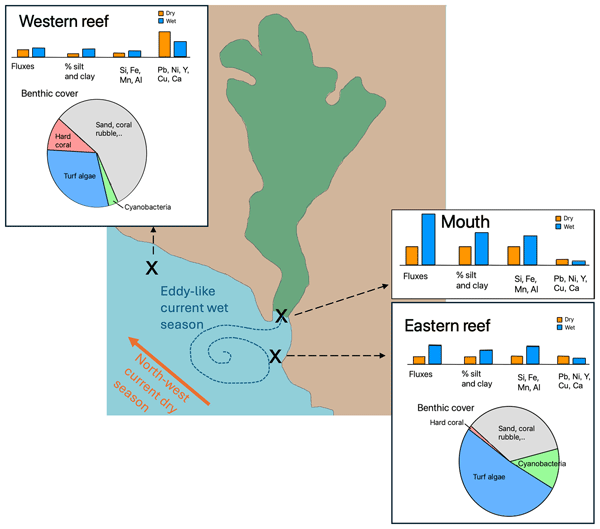
We studied how pollution from bays in Curaçao reaches nearby coral reefs and changes with seasons. By collecting suspended particulate matter at different locations during dry and wet seasons, we found that sheltered reefs receive more fine particles and pollutants, especially during rainy months, while exposed reefs are less affected. This shows that both location and seasonal rainfall determine reef vulnerability, highlighting the hidden impacts of human activity on these fragile ecosystems.
Natalie J. Burls, Nicky M. Wright, R. Paul Acosta, Catherine D. Bradshaw, Edward Gasson, Lennert B. Stap, Gilles Ramstein, Anna Ruth W. Halberstadt, Agatha M. De Boer, Funda Akgün, David J. Cantrill, Manuel Casas-Gallego, Nela Doláková, Boglarka Erdei, Alex Farnsworth, Sarah Feakins, Ran Feng, Tamara Fletcher, Frédéric Fluteau, J. A. Mattias Green, Anna S. von der Heydt, Matthew Huber, David K. Hutchinson, Dimiter Ivanov, Mine Sezgül Kayseri-Özer, Gregor Knorr, Marianna Kováčová, Caroline H. Lear, Allegra N. LeGrande, Shufeng Li, Xiaoqing Liu, Daniel J. Lunt, Katrin Meissner, Yunfa Miao, Trusha J. Naik, Javier B. Navarro, Joseph B. Novak, Diana Ochoa, Guy J.G. Paxman, Matthew J. Pound, James W. B. Rae, Tammo Reichgelt, Martin Renoult, Francesca Sangiorgi, Anta-Clarisse Sarr, Diane Segalla, Pierre Sepulchre, Amelia Shevenell, Sebastian Steinig, Eivind Straume, Caroline A. E. Strömberg, Clay Tabor, Torsten Utescher, Julia E. Weiffenbach, Elżbieta Worobiec, Yurui Zhang, Feng Zhu, Jiang Zhu, Alexandra Auderset, Florence Colleoni, Aisling Dolan, Rachel Havranek, Ann Holbourn, Nicholas Herold, Daeun Lee, James W. Marschalek, Bryce Mitsunaga, Sevi Modestou, Lina Perez-Angel, Mae Saslaw, Sinda Sosdian, Elena Stiles, Yong Sun, Ning Tan, Zhongshi Zhang, and Yan Zhao
EGUsphere, https://doi.org/10.5194/egusphere-2026-3595, https://doi.org/10.5194/egusphere-2026-3595, 2026
This preprint is open for discussion and under review for Geoscientific Model Development (GMD).
Short summary
Short summary
Simulating warm paleoclimates increases our understanding of the mechanisms that drive climatic change and tipping points. The Miocene Epoch, specifically the Miocene Climatic Optimum, has been identified as a particularly valuable past warm climate to simulate, meriting the design of a coordinated Miocene Model Intercomparison Project. Here we synthesize the latest available literature and present the experimental design for coordinated Miocene simulations and sensitivity studies.
Yannick F. Bats, Appy Sluijs, and Gert-Jan Reichart
EGUsphere, https://doi.org/10.5194/egusphere-2026-3713, https://doi.org/10.5194/egusphere-2026-3713, 2026
Short summary
Short summary
Fossil remains of algae can help us estimate ancient carbon dioxide levels, but current methods are often inaccurate. We built a numeric model of an algal cell to better understand how carbon is processed in these organisms. Our research reveals that light and calcification strongly influence the chemical signals preserved in algae. By including these factors, our model accurately matches results from lab studies, suggesting it can improve reconstructions of Earth’s climate and carbon cycle.
Yasmina Ourradi, Gert-Jan Reichart, Sonja van Leeuwen, and Matthew P. Humphreys
Biogeosciences, 23, 3323–3346, https://doi.org/10.5194/bg-23-3323-2026, https://doi.org/10.5194/bg-23-3323-2026, 2026
Short summary
Short summary
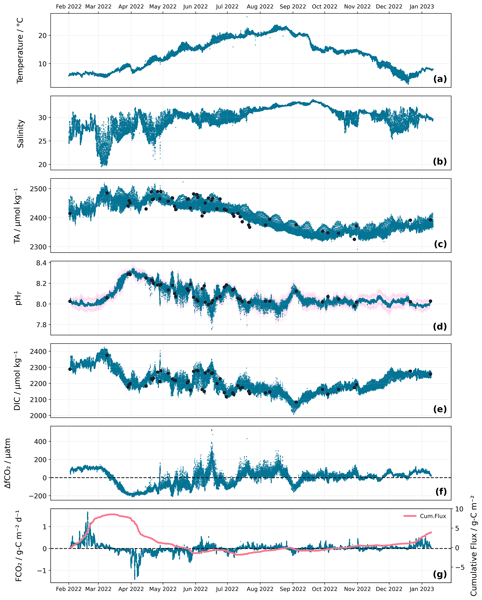
Coastal seas play a key role in the global carbon cycle, yet what drives their carbonate chemistry remains poorly understood. We measured pH at high frequency for a year at the Wadden Sea-North Sea interface. Biological activity drives pH changes, while freshwater inflow shapes total alkalinity. Both processes influence dissolved inorganic carbon. The Wadden Sea acts as a net carbon dioxide source to the atmosphere. High-frequency monitoring is essential under a changing climate.
Peter Kraal, Kristin A. Ungerhofer, Darci Rush, and Gert-Jan Reichart
Biogeosciences, 23, 3253–3277, https://doi.org/10.5194/bg-23-3253-2026, https://doi.org/10.5194/bg-23-3253-2026, 2026
Short summary
Short summary
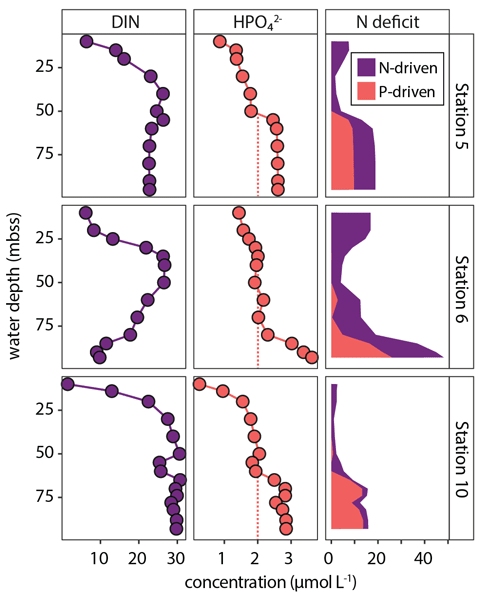
Element cycles in oxygen-depleted areas such as upwelling areas inform future deoxygenation scenarios. The Benguela upwelling system shows strong decoupling of nitrogen and phosphorus cycling due to seasonal shelf anoxia. Anaerobic processes result in pelagic nitrogen loss as N2. At the same time, sediments are rich in fish-derived and bacterial phosphorus, with high fluxes of excess phosphate, altering deep-water nitrogen:phosphorus ratios. Such alterations can affect ocean functioning.
Madleen Grohganz, Thomas M. Bury, Bregje van der Bolt, Gert-Jan Reichart, and Rick Hennekam
EGUsphere, https://doi.org/10.5194/egusphere-2026-2223, https://doi.org/10.5194/egusphere-2026-2223, 2026
Short summary
Short summary
We introduce a new deep learning tool for the quantitative detection of catastrophic tipping points in the Earth system and test its performance on existing Cenozoic proxy records. Using our deep learning method, we are able to corroborate the existence of previously detected critical transitions in the paleo records and successfully identify them as catastrophic tipping points. We provide a powerful new tool, easily adaptable for the detection of tipping points in a variety of Earth systems.
Evert de Froe, Christian Mohn, Karline Soetaert, Anna-Selma van der Kaaden, Gert-Jan Reichart, Laurence H. De Clippele, Sandra R. Maier, and Dick van Oevelen
Ocean Sci., 22, 843–870, https://doi.org/10.5194/os-22-843-2026, https://doi.org/10.5194/os-22-843-2026, 2026
Short summary
Short summary
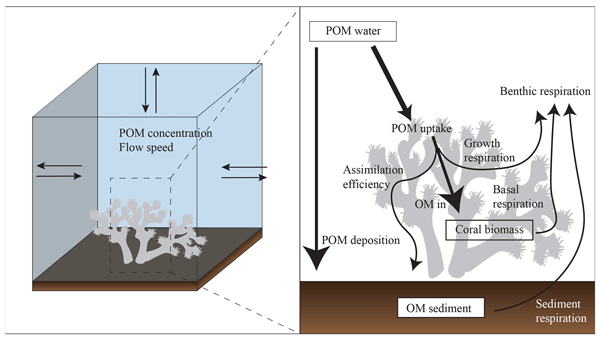
Cold-water corals are important reef-building animals in the deep sea and are distributed globally. Until now, scientists have been mapping and predicting where cold-water corals can be found using video transects and statistical models. This study provides the first process-based model in which corals are predicted based on ocean currents and food particle movement. The results show that resupply of food by tidal currents near the seafloor is crucial for predicting where corals can grow.
Guangnan Wu, Klaas G. J. Nierop, Bingjie Yang, Stefan Schouten, Gert-Jan Reichart, and Peter Kraal
Biogeosciences, 23, 995–1012, https://doi.org/10.5194/bg-23-995-2026, https://doi.org/10.5194/bg-23-995-2026, 2026
Short summary
Short summary
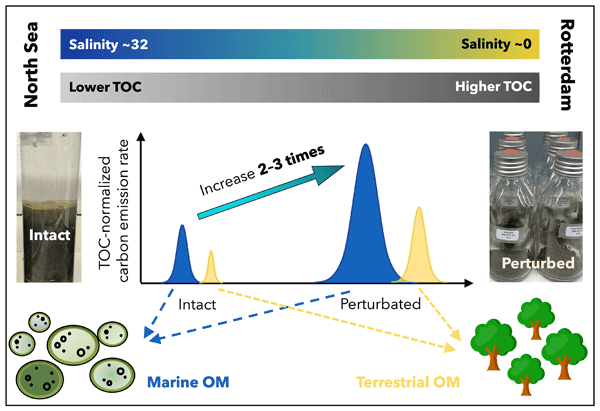
Estuaries store and process large amounts of carbon. In the Port of Rotterdam, we studied organic matter (OM) sources in sediments and showed how they influenced OM breakdown. We found that marine OM degraded faster than land-originated OM, and sediment perturbation could accelerate OM breakdown by introducing oxygen. Our findings highlight the impact of human disturbances on carbon storage in estuarine sediments, offering insights for the growing sediment reworking worldwide.
Louise Delaigue, Gert-Jan Reichart, Li Qiu, Eric P. Achterberg, Yasmina Ourradi, Chris Galley, André Mutzberg, and Matthew P. Humphreys
Biogeosciences, 22, 5103–5121, https://doi.org/10.5194/bg-22-5103-2025, https://doi.org/10.5194/bg-22-5103-2025, 2025
Short summary
Short summary
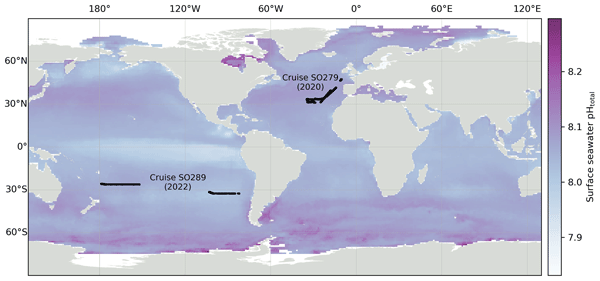
Our study analysed pH in ocean surface waters to understand how it fluctuates with changes in temperature, salinity, and biological activities. We found that temperature mainly controls daily pH variations, but biological processes also play a role, especially in affecting CO2 levels between the ocean and atmosphere. Our research shows how these factors together maintain the balance of ocean chemistry, which is crucial for predicting changes in marine environments.
Yannick F. Bats, Klaas G. J. Nierop, Alice Stuart-Lee, Joost Frieling, Linda van Roij, Gert-Jan Reichart, and Appy Sluijs
Biogeosciences, 22, 4689–4704, https://doi.org/10.5194/bg-22-4689-2025, https://doi.org/10.5194/bg-22-4689-2025, 2025
Short summary
Short summary
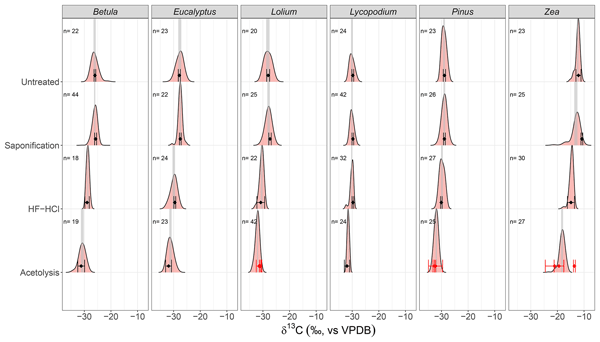
In this study, we analyzed the molecular and stable carbon isotopic composition (δ13C) of pollen and spores (sporomorphs) that underwent chemical treatments that simulate diagenesis during fossilization. We show that the successive removal of sugars and lipids results in the depletion of 13C in the residual sporomorph, leaving rich aromatic compounds. This residual aromatic-rich structure likely represents diagenetically resistant sporopollenin, implying that diagenesis results in the depletion of 13C in pollen.
Anna Cutmore, Nicole Bale, Rick Hennekam, Bingjie Yang, Darci Rush, Gert-Jan Reichart, Ellen C. Hopmans, and Stefan Schouten
Clim. Past, 21, 957–971, https://doi.org/10.5194/cp-21-957-2025, https://doi.org/10.5194/cp-21-957-2025, 2025
Short summary
Short summary
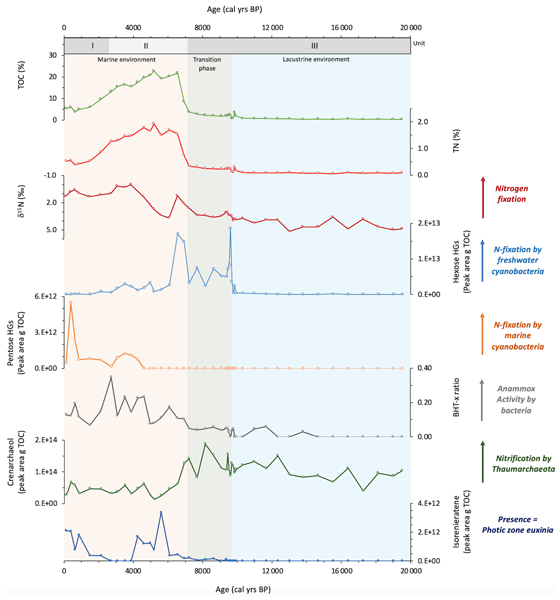
As human activities lower marine oxygen levels, understanding the impact on the marine nitrogen cycle is vital. The Black Sea, which became oxygen-deprived 9600 years ago, offers key insights. By studying organic compounds linked to nitrogen cycle processes, we found that, 7200 years ago, the Black Sea's nitrogen cycle significantly altered due to severe deoxygenation. This suggests that continued marine oxygen decline could similarly alter the marine nitrogen cycle, affecting vital ecosystems.
Szabina Karancz, Lennart J. de Nooijer, Bas van der Wagt, Marcel T. J. van der Meer, Sambuddha Misra, Rick Hennekam, Zeynep Erdem, Julie Lattaud, Negar Haghipour, Stefan Schouten, and Gert-Jan Reichart
Clim. Past, 21, 679–704, https://doi.org/10.5194/cp-21-679-2025, https://doi.org/10.5194/cp-21-679-2025, 2025
Short summary
Short summary
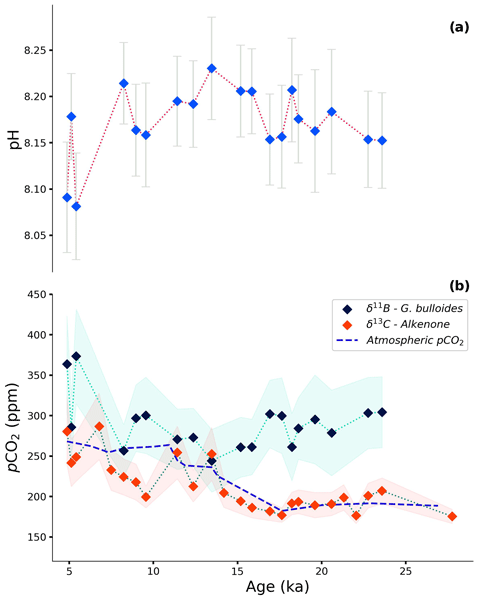
Changes in upwelling intensity of the Benguela upwelling region during the last glacial motivated us to investigate the local CO2 history during the last glacial-to-interglacial transition. Using various geochemical tracers on archives from both subsurface and surface waters reveals enhanced storage of carbon at depth during the Last Glacial Maximum. An efficient biological pump likely prevented outgassing of CO2 from intermediate depth to the atmosphere.
Babette A.A. Hoogakker, Catherine Davis, Yi Wang, Stephanie Kusch, Katrina Nilsson-Kerr, Dalton S. Hardisty, Allison Jacobel, Dharma Reyes Macaya, Nicolaas Glock, Sha Ni, Julio Sepúlveda, Abby Ren, Alexandra Auderset, Anya V. Hess, Katrin J. Meissner, Jorge Cardich, Robert Anderson, Christine Barras, Chandranath Basak, Harold J. Bradbury, Inda Brinkmann, Alexis Castillo, Madelyn Cook, Kassandra Costa, Constance Choquel, Paula Diz, Jonas Donnenfield, Felix J. Elling, Zeynep Erdem, Helena L. Filipsson, Sebastián Garrido, Julia Gottschalk, Anjaly Govindankutty Menon, Jeroen Groeneveld, Christian Hallmann, Ingrid Hendy, Rick Hennekam, Wanyi Lu, Jean Lynch-Stieglitz, Lélia Matos, Alfredo Martínez-García, Giulia Molina, Práxedes Muñoz, Simone Moretti, Jennifer Morford, Sophie Nuber, Svetlana Radionovskaya, Morgan Reed Raven, Christopher J. Somes, Anja S. Studer, Kazuyo Tachikawa, Raúl Tapia, Martin Tetard, Tyler Vollmer, Xingchen Wang, Shuzhuang Wu, Yan Zhang, Xin-Yuan Zheng, and Yuxin Zhou
Biogeosciences, 22, 863–957, https://doi.org/10.5194/bg-22-863-2025, https://doi.org/10.5194/bg-22-863-2025, 2025
Short summary
Short summary
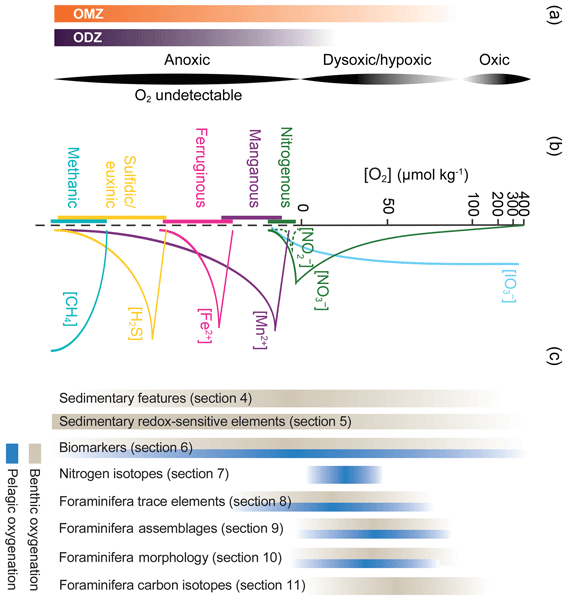
Paleo-oxygen proxies can extend current records, constrain pre-anthropogenic baselines, provide datasets necessary to test climate models under different boundary conditions, and ultimately understand how ocean oxygenation responds on longer timescales. Here we summarize current proxies used for the reconstruction of Cenozoic seawater oxygen levels. This includes an overview of the proxy's history, how it works, resources required, limitations, and future recommendations.
Frida S. Hoem, Karlijn van den Broek, Adrián López-Quirós, Suzanna H. A. van de Lagemaat, Steve M. Bohaty, Claus-Dieter Hillenbrand, Robert D. Larter, Tim E. van Peer, Henk Brinkhuis, Francesca Sangiorgi, and Peter K. Bijl
J. Micropalaeontol., 43, 497–517, https://doi.org/10.5194/jm-43-497-2024, https://doi.org/10.5194/jm-43-497-2024, 2024
Short summary
Short summary
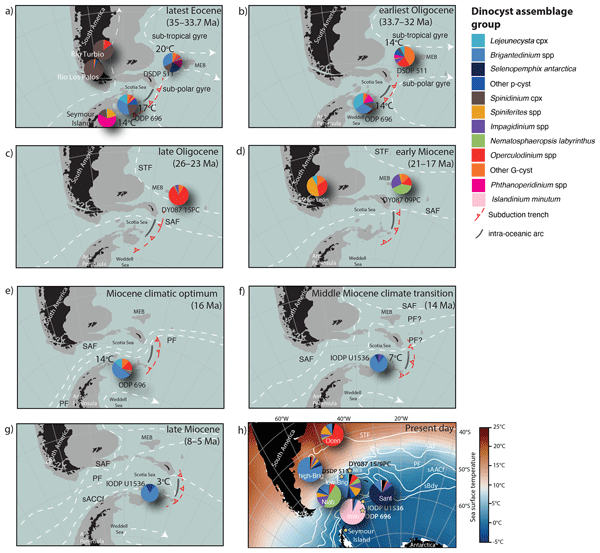
The timing and impact of onset of Antarctic Circumpolar Current (ACC) on climate and Antarctic ice are unclear. We reconstruct late Eocene to Miocene southern Atlantic surface ocean environment using microfossil remains of dinoflagellates (dinocysts). Our dinocyst records shows the breakdown of subpolar gyres in the late Oligocene and the transition into a modern-like oceanographic regime with ACC flow, established frontal systems, Antarctic proximal cooling, and sea ice by the late Miocene.
Devika Varma, Laura Villanueva, Nicole J. Bale, Pierre Offre, Gert-Jan Reichart, and Stefan Schouten
Biogeosciences, 21, 4875–4888, https://doi.org/10.5194/bg-21-4875-2024, https://doi.org/10.5194/bg-21-4875-2024, 2024
Short summary
Short summary
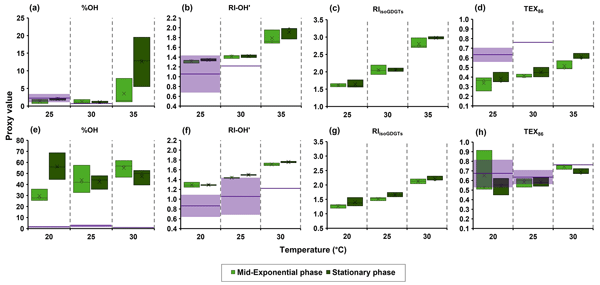
Archaeal hydroxylated tetraether lipids are increasingly used as temperature indicators in marine settings, but the factors influencing their distribution are still unclear. Analyzing membrane lipids of two thaumarchaeotal strains showed that the growth phase of the cultures does not affect the lipid distribution, but growth temperature profoundly affects the degree of cyclization of these lipids. Also, the abundance of these lipids is species-specific and is not influenced by temperature.
Charlotte Eich, Mathijs van Manen, J. Scott P. McCain, Loay J. Jabre, Willem H. van de Poll, Jinyoung Jung, Sven B. E. H. Pont, Hung-An Tian, Indah Ardiningsih, Gert-Jan Reichart, Erin M. Bertrand, Corina P. D. Brussaard, and Rob Middag
Biogeosciences, 21, 4637–4663, https://doi.org/10.5194/bg-21-4637-2024, https://doi.org/10.5194/bg-21-4637-2024, 2024
Short summary
Short summary
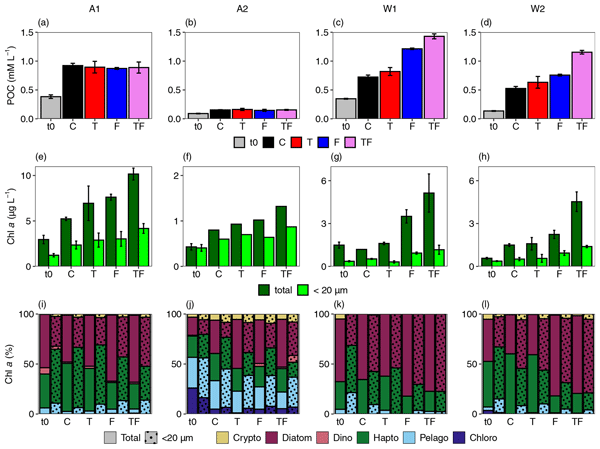
Phytoplankton growth in the Southern Ocean (SO) is often limited by low iron (Fe) concentrations. Sea surface warming impacts Fe availability and can affect phytoplankton growth. We used shipboard Fe clean incubations to test how changes in Fe and temperature affect SO phytoplankton. Their abundances usually increased with Fe addition and temperature increase, with Fe being the major factor. These findings imply potential shifts in ecosystem structure, impacting food webs and elemental cycling.
Yord W. Yedema, Timme Donders, Francien Peterse, and Francesca Sangiorgi
J. Micropalaeontol., 42, 257–276, https://doi.org/10.5194/jm-42-257-2023, https://doi.org/10.5194/jm-42-257-2023, 2023
Short summary
Short summary
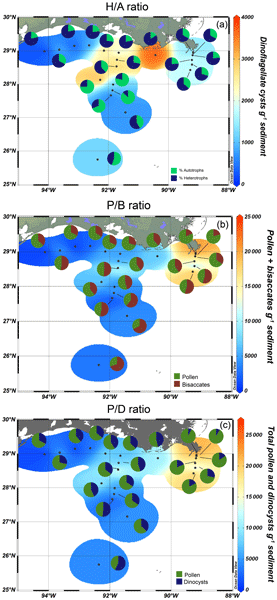
The pollen and dinoflagellate cyst content of 21 surface sediments from the northern Gulf of Mexico is used to test the applicability of three palynological ratios (heterotroph/autotroph, pollen/dinocyst, and pollen/bisaccate ratio) as proxies for marine productivity and distance to the coast/river. Redundancy analysis confirms the suitability of these three ratios, where the H/A ratio can be used as an indicator of primary production, and the P/B ratio best tracks the distance to the coast.
Joost Frieling, Linda van Roij, Iris Kleij, Gert-Jan Reichart, and Appy Sluijs
Biogeosciences, 20, 4651–4668, https://doi.org/10.5194/bg-20-4651-2023, https://doi.org/10.5194/bg-20-4651-2023, 2023
Short summary
Short summary
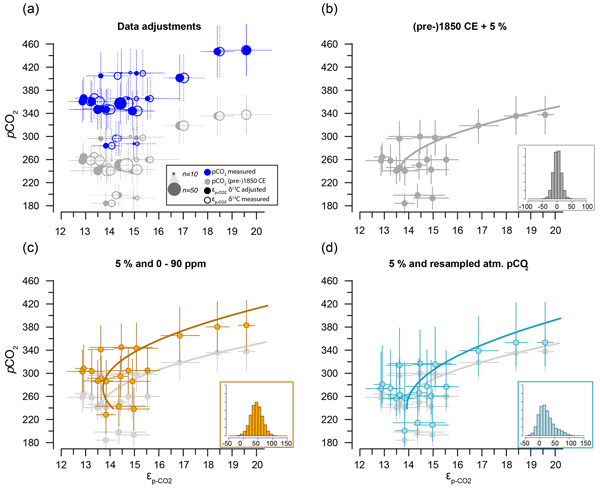
We present a first species-specific evaluation of marine core-top dinoflagellate cyst carbon isotope fractionation (εp) to assess natural pCO2 dependency on εp and explore its geological deep-time paleo-pCO2 proxy potential. We find that εp differs between genera and species and that in Operculodinium centrocarpum, εp is controlled by pCO2 and nutrients. Our results highlight the added value of δ13C analyses of individual micrometer-scale sedimentary organic carbon particles.
Alison J. Smith, Emi Ito, Natalie Burls, Leon Clarke, Timme Donders, Robert Hatfield, Stephen Kuehn, Andreas Koutsodendris, Tim Lowenstein, David McGee, Peter Molnar, Alexander Prokopenko, Katie Snell, Blas Valero Garcés, Josef Werne, Christian Zeeden, and the PlioWest Working Consortium
Sci. Dril., 32, 61–72, https://doi.org/10.5194/sd-32-61-2023, https://doi.org/10.5194/sd-32-61-2023, 2023
Short summary
Short summary
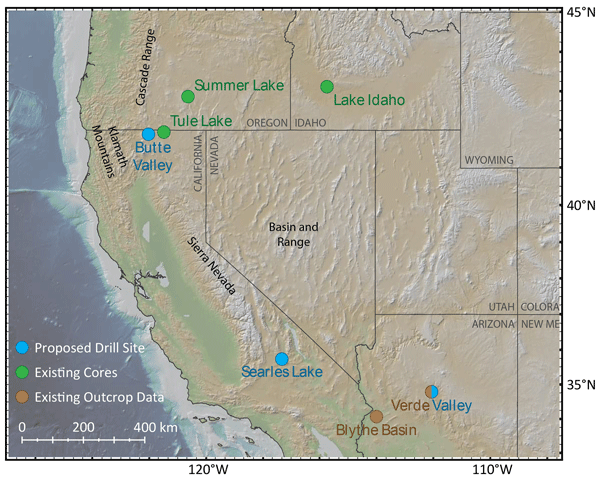
Western North American contains accessible and under-recognized paleolake records that hold the keys to understanding the drivers of wetter conditions in Pliocene Epoch subtropical drylands worldwide. In a 2021 ICDP workshop, we chose five paleolake basins to study that span 7° of latitude in a unique array able to capture a detailed record of hydroclimate during the Early Pliocene warm period and subsequent Pleistocene cooling. We propose new drill cores for three of these basins.
Frida S. Hoem, Adrián López-Quirós, Suzanna van de Lagemaat, Johan Etourneau, Marie-Alexandrine Sicre, Carlota Escutia, Henk Brinkhuis, Francien Peterse, Francesca Sangiorgi, and Peter K. Bijl
Clim. Past, 19, 1931–1949, https://doi.org/10.5194/cp-19-1931-2023, https://doi.org/10.5194/cp-19-1931-2023, 2023
Short summary
Short summary
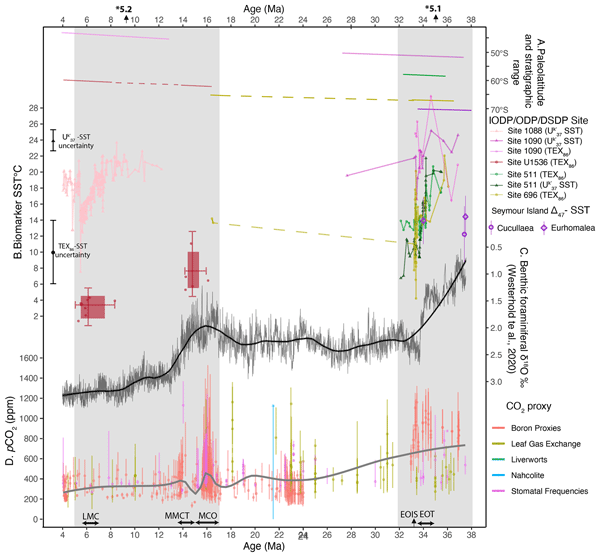
We present two new sea surface temperature (SST) records in comparison with available SST records to reconstruct South Atlantic paleoceanographic evolution. Our results show a low SST gradient in the Eocene–early Oligocene due to the persistent gyral circulation. A higher SST gradient in the Middle–Late Miocene infers a stronger circumpolar current. The southern South Atlantic was the coldest region in the Southern Ocean and likely the main deep-water formation location in the Middle Miocene.
Katrin Hättig, Devika Varma, Stefan Schouten, and Marcel T. J. van der Meer
Clim. Past, 19, 1919–1930, https://doi.org/10.5194/cp-19-1919-2023, https://doi.org/10.5194/cp-19-1919-2023, 2023
Short summary
Short summary
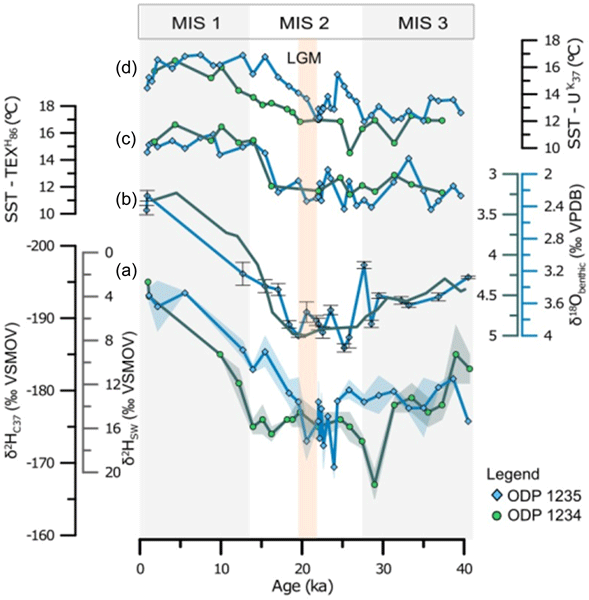
Water isotopes, both hydrogen and oxygen, correlate with the salinity of the sea. Here we reconstruct the surface seawater isotopic composition during the last deglaciation based on the measured hydrogen isotopic composition of alkenones, organic compounds derived from haptophyte algae, and compared it to oxygen isotopes of calcite shells produced in the bottom water. Our results suggest that surface seawater experienced more freshening during the last 20 000 years than the bottom seawater.
Laura Pacho, Lennart de Nooijer, and Gert-Jan Reichart
Biogeosciences, 20, 4043–4056, https://doi.org/10.5194/bg-20-4043-2023, https://doi.org/10.5194/bg-20-4043-2023, 2023
Short summary
Short summary
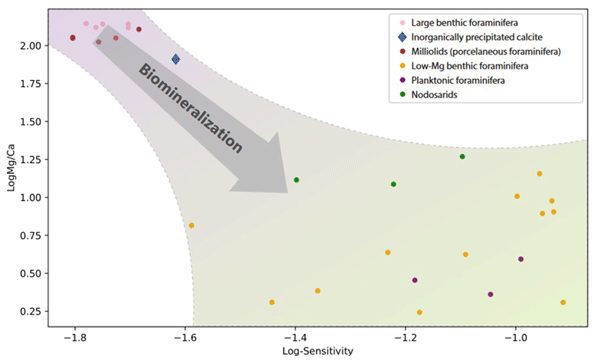
We analyzed Mg / Ca and other El / Ca (Na / Ca, B / Ca, Sr / Ca and Ba / Ca) in Nodosariata. Their calcite chemistry is markedly different to that of the other calcifying orders of foraminifera. We show a relation between the species average Mg / Ca and its sensitivity to changes in temperature. Differences were reflected in both the Mg incorporation and the sensitivities of Mg / Ca to temperature.
Niels J. de Winter, Daniel Killam, Lukas Fröhlich, Lennart de Nooijer, Wim Boer, Bernd R. Schöne, Julien Thébault, and Gert-Jan Reichart
Biogeosciences, 20, 3027–3052, https://doi.org/10.5194/bg-20-3027-2023, https://doi.org/10.5194/bg-20-3027-2023, 2023
Short summary
Short summary
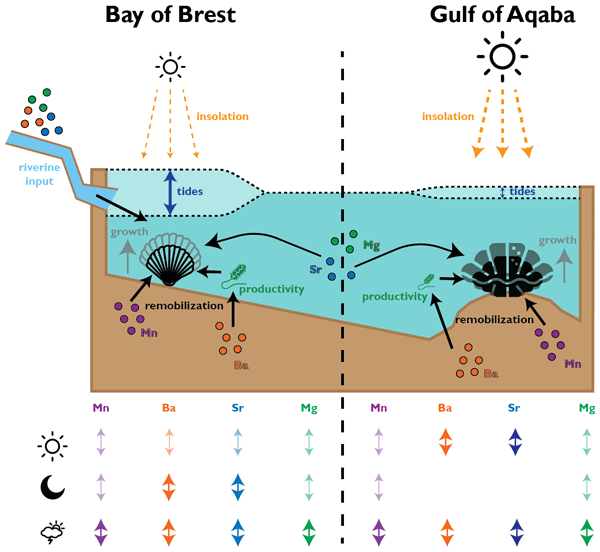
Mollusk shells are valuable recorders of climate and environmental changes of the past down to a daily resolution. To explore this potential, we measured changes in the composition of shells of two types of bivalves recorded at the hourly scale: the king scallop Pecten maximus and giant clams (Tridacna) that engaged in photosymbiosis. We find that photosymbiosis produces more day–night fluctuation in shell chemistry but that most of the variation is not periodic, perhaps recording weather.

Lena Mareike Thöle, Peter Dirk Nooteboom, Suning Hou, Rujian Wang, Senyan Nie, Elisabeth Michel, Isabel Sauermilch, Fabienne Marret, Francesca Sangiorgi, and Peter Kristian Bijl
J. Micropalaeontol., 42, 35–56, https://doi.org/10.5194/jm-42-35-2023, https://doi.org/10.5194/jm-42-35-2023, 2023
Short summary
Short summary
Dinoflagellate cysts can be used to infer past oceanographic conditions in the Southern Ocean. This requires knowledge of their present-day ecologic affinities. We add 66 Antarctic-proximal surface sediment samples to the Southern Ocean data and derive oceanographic conditions at those stations. Dinoflagellate cysts are clearly biogeographically separated along latitudinal gradients of temperature, sea ice, nutrients, and salinity, which allows us to reconstruct these parameters for the past.
Suning Hou, Foteini Lamprou, Frida S. Hoem, Mohammad Rizky Nanda Hadju, Francesca Sangiorgi, Francien Peterse, and Peter K. Bijl
Clim. Past, 19, 787–802, https://doi.org/10.5194/cp-19-787-2023, https://doi.org/10.5194/cp-19-787-2023, 2023
Short summary
Short summary
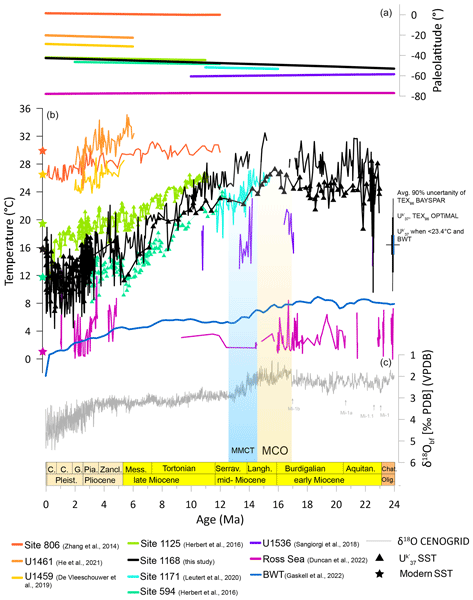
Neogene climate cooling is thought to be accompanied by increased Equator-to-pole temperature gradients, but mid-latitudes are poorly represented. We use biomarkers to reconstruct a 23 Myr continuous sea surface temperature record of the mid-latitude Southern Ocean. We note a profound mid-latitude cooling which narrowed the latitudinal temperature gradient with the northward expansion of subpolar conditions. We surmise that this reflects the strengthening of the ACC and the expansion of sea ice.
Yord W. Yedema, Francesca Sangiorgi, Appy Sluijs, Jaap S. Sinninghe Damsté, and Francien Peterse
Biogeosciences, 20, 663–686, https://doi.org/10.5194/bg-20-663-2023, https://doi.org/10.5194/bg-20-663-2023, 2023
Short summary
Short summary
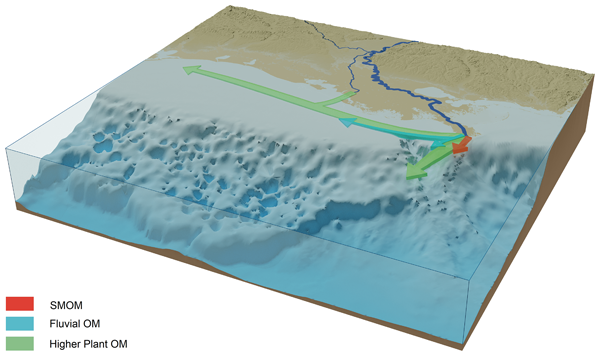
Terrestrial organic matter (TerrOM) is transported to the ocean by rivers, where its burial can potentially form a long-term carbon sink. This burial is dependent on the type and characteristics of the TerrOM. We used bulk sediment properties, biomarkers, and palynology to identify the dispersal patterns of plant-derived, soil–microbial, and marine OM in the northern Gulf of Mexico and show that plant-derived OM is transported further into the coastal zone than soil and marine-produced TerrOM.
Rick Hennekam, Katharine M. Grant, Eelco J. Rohling, Rik Tjallingii, David Heslop, Andrew P. Roberts, Lucas J. Lourens, and Gert-Jan Reichart
Clim. Past, 18, 2509–2521, https://doi.org/10.5194/cp-18-2509-2022, https://doi.org/10.5194/cp-18-2509-2022, 2022
Short summary
Short summary
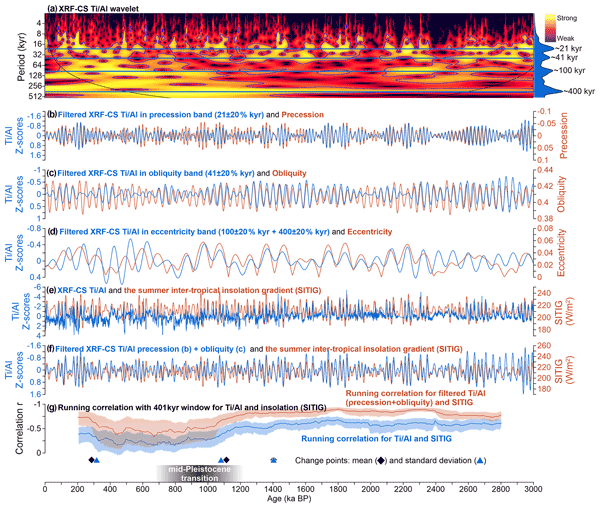
The ratio of titanium to aluminum (Ti/Al) is an established way to reconstruct North African climate in eastern Mediterranean Sea sediments. We demonstrate here how to obtain reliable Ti/Al data using an efficient scanning method that allows rapid acquisition of long climate records at low expense. Using this method, we reconstruct a 3-million-year North African climate record. African environmental variability was paced predominantly by low-latitude insolation from 3–1.2 million years ago.
Frédérique M. S. A. Kirkels, Hugo J. de Boer, Paulina Concha Hernández, Chris R. T. Martes, Marcel T. J. van der Meer, Sayak Basu, Muhammed O. Usman, and Francien Peterse
Biogeosciences, 19, 4107–4127, https://doi.org/10.5194/bg-19-4107-2022, https://doi.org/10.5194/bg-19-4107-2022, 2022
Short summary
Short summary
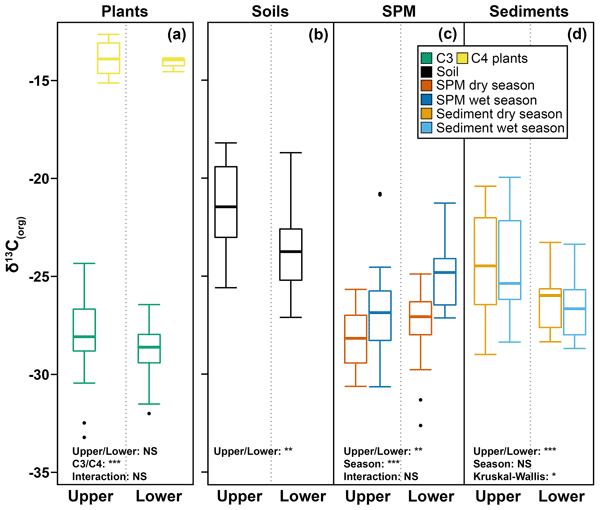
The distinct carbon isotopic values of C3 and C4 plants are widely used to reconstruct past hydroclimate, where more C3 plants reflect wetter and C4 plants drier conditions. Here we examine the impact of regional hydroclimatic conditions on plant isotopic values in the Godavari River basin, India. We find that it is crucial to identify regional plant isotopic values and consider drought stress, which introduces a bias in C3 / C4 plant estimates and associated hydroclimate reconstructions.
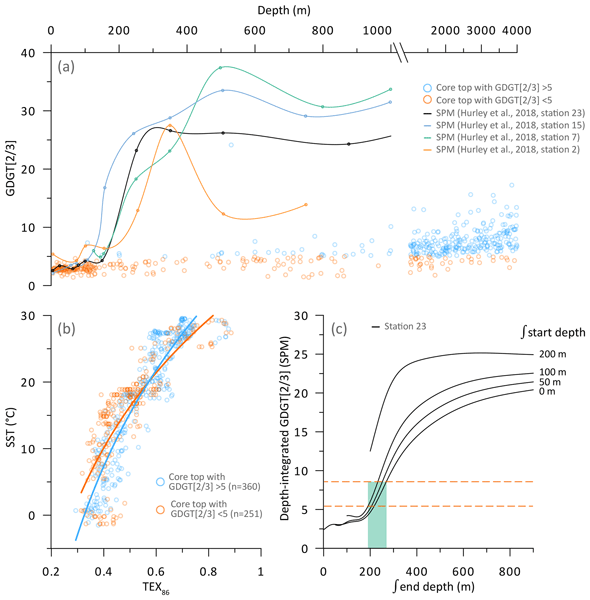
Carolien M. H. van der Weijst, Koen J. van der Laan, Francien Peterse, Gert-Jan Reichart, Francesca Sangiorgi, Stefan Schouten, Tjerk J. T. Veenstra, and Appy Sluijs
Clim. Past, 18, 1947–1962, https://doi.org/10.5194/cp-18-1947-2022, https://doi.org/10.5194/cp-18-1947-2022, 2022
Short summary
Short summary
The TEX86 proxy is often used by paleoceanographers to reconstruct past sea-surface temperatures. However, the origin of the TEX86 signal in marine sediments has been debated since the proxy was first proposed. In our paper, we show that TEX86 carries a mixed sea-surface and subsurface temperature signal and should be calibrated accordingly. Using our 15-million-year record, we subsequently show how a TEX86 subsurface temperature record can be used to inform us on past sea-surface temperatures.
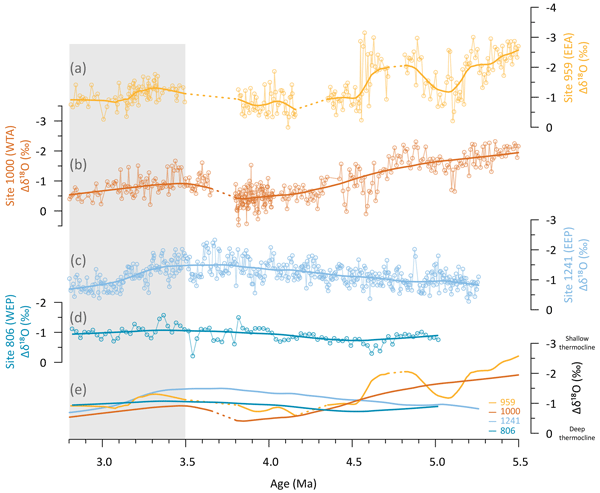
Carolien M. H. van der Weijst, Josse Winkelhorst, Wesley de Nooijer, Anna von der Heydt, Gert-Jan Reichart, Francesca Sangiorgi, and Appy Sluijs
Clim. Past, 18, 961–973, https://doi.org/10.5194/cp-18-961-2022, https://doi.org/10.5194/cp-18-961-2022, 2022
Short summary
Short summary
A hypothesized link between Pliocene (5.3–2.5 million years ago) global climate and tropical thermocline depth is currently only backed up by data from the Pacific Ocean. In our paper, we present temperature, salinity, and thermocline records from the tropical Atlantic Ocean. Surprisingly, the Pliocene thermocline evolution was remarkably different in the Atlantic and Pacific. We need to reevaluate the mechanisms that drive thermocline depth, and how these are tied to global climate change.

Gabriella M. Weiss, Julie Lattaud, Marcel T. J. van der Meer, and Timothy I. Eglinton
Clim. Past, 18, 233–248, https://doi.org/10.5194/cp-18-233-2022, https://doi.org/10.5194/cp-18-233-2022, 2022
Short summary
Short summary
Here we study the elemental signatures of plant wax compounds as well as molecules from algae and bacteria to understand how water sources changed over the last 11 000 years in the northeastern part of Europe surrounding the Baltic Sea. Our results show diversity in plant and aquatic microorganisms following the melting of the large ice sheet that covered northern Europe as the regional climate continued to warm. A shift in water source from ice melt to rain also occurred around the same time.
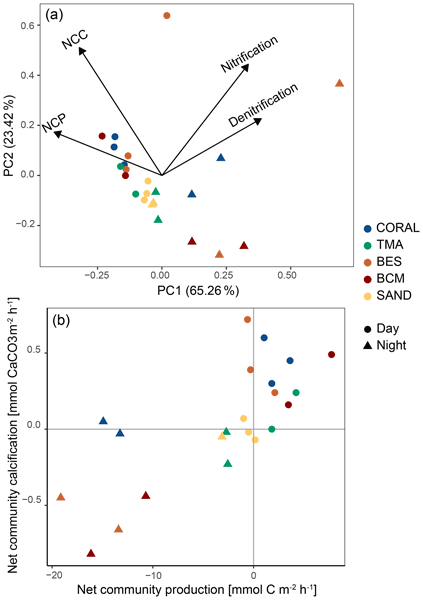
Alice E. Webb, Didier M. de Bakker, Karline Soetaert, Tamara da Costa, Steven M. A. C. van Heuven, Fleur C. van Duyl, Gert-Jan Reichart, and Lennart J. de Nooijer
Biogeosciences, 18, 6501–6516, https://doi.org/10.5194/bg-18-6501-2021, https://doi.org/10.5194/bg-18-6501-2021, 2021
Short summary
Short summary
The biogeochemical behaviour of shallow reef communities is quantified to better understand the impact of habitat degradation and species composition shifts on reef functioning. The reef communities investigated barely support reef functions that are usually ascribed to conventional coral reefs, and the overall biogeochemical behaviour is found to be similar regardless of substrate type. This suggests a decrease in functional diversity which may therefore limit services provided by this reef.
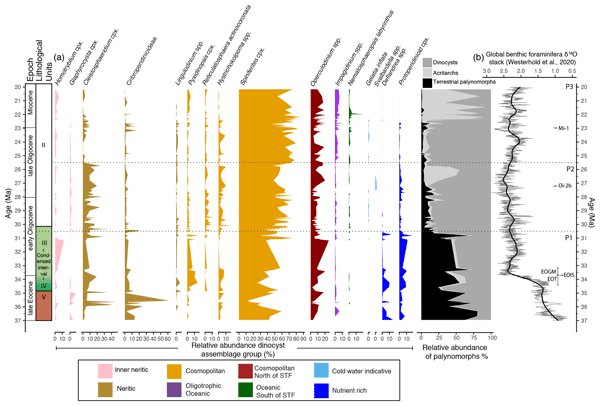
Frida S. Hoem, Isabel Sauermilch, Suning Hou, Henk Brinkhuis, Francesca Sangiorgi, and Peter K. Bijl
J. Micropalaeontol., 40, 175–193, https://doi.org/10.5194/jm-40-175-2021, https://doi.org/10.5194/jm-40-175-2021, 2021
Short summary
Short summary
We use marine microfossil (dinocyst) assemblage data as well as seismic and tectonic investigations to reconstruct the oceanographic history south of Australia 37–20 Ma as the Tasmanian Gateway widens and deepens. Our results show stable conditions with typically warmer dinocysts south of Australia, which contrasts with the colder dinocysts closer to Antarctica, indicating the establishment of modern oceanographic conditions with a strong Southern Ocean temperature gradient and frontal systems.
Cited articles
Bauer, J. E., Cai, W. J., Raymond, P. A., Bianchi, T. S., Hopkinson, C. S., and Regnier, P. A.: The changing carbon cycle of the coastal ocean, Nature, 504, 61–70, https://doi.org/10.1038/nature12857, 2013.
Behrenfeld, M. J. and Falkowski, P. G.: Photosynthetic rates derived from satellite-based chlorophyll concentration, Limnology and Oceanography, 42, 1–20, https://doi.org/10.4319/lo.1997.42.1.0001, 1997.
Benninghoff, W. S.: Calculation of pollen and spore density in sediments by addition of exotic pollen in known quantities, Pollen et Spores, 4, 332–333, 1962.
Bergman Sjöstrand, D., Hansson, M., and Kronsell, J.: Cruise report from R/V Svea week 10–11, 2025, Swedish Meteorological and Hydrological Institute, https://www.smhi.se/en/publications-from-smhi/publications/2025-06-24-cruise-report-from-r-v-svea-week-10-11-2025 (last access: 25 July 2025), 2025.
Bozec, Y., Thomas, H., Elkalay, K., and de Baar, H. J.: The continental shelf pump for CO2 in the North Sea – evidence from summer observation, Marine Chemistry, 93, 131–147, https://doi.org/10.1016/j.marchem.2004.07.006, 2005.
Bringué, M., Pospelova, V., and Pak, D.: Seasonal production of organic-walled dinoflagellate cysts in an upwelling system: a sediment trap study from the Santa Barbara Basin, California, Marine Micropaleontology, 100, 34–51, https://doi.org/10.1016/j.marmicro.2013.03.007, 2013.
Carpenter, R., Peterson, M. L., and Bennett, J. T.: 210Pb-derived sediment accumulation and mixing rates for the Washington continental slope, Marine Geology, 48, 135–164, https://doi.org/10.1016/0025-3227(82)90183-0, 1982.
Carstensen, J., Andersen, J. H., Gustafsson, B. G., and Conley, D. J.: Deoxygenation of the Baltic Sea during the last century, Proceedings of the National Academy of Sciences, 111, 5628–5633, https://doi.org/10.1073/pnas.1323156111, 2014.
Christensen, K. H., Sperrevik, A. K., and Broström, G.: On the variability in the onset of the Norwegian Coastal Current, Journal of Physical Oceanography, 48, 723–738, https://doi.org/10.1175/JPO-D-17-0117.1, 2018.
Cochran, J. K. and Masqué, P.: Short-lived U/Th series radionuclides in the ocean: tracers for scavenging rates, export fluxes and particle dynamics, Reviews in Mineralogy and geochemistry, 52, 461–492, https://doi.org/10.2113/0520461, 2003.
Dadey, K. A., Janecek, T., and Klaus, A.: Dry-bulk density: its use and determination, Proceedings of the Ocean Drilling Program, Scientific Results, 126, 37, https://doi.org/10.2973/odp.proc.sr.126.157.1992, 1992.
Dale, B.: Cyst formation, sedimentation, and preservation: factors affecting dinoflagellate assemblages in recent sediments from Trondheimsfjord, Norway, Review of Palaeobotany and Palynology, 22, 39–60, https://doi.org/10.1016/0034-6667(76)90010-5, 1976.
Dale, B.: Eutrophication signals in the sedimentary record of dinoflagellate cysts in coastal waters, Journal of Sea Research, 61, 103–113, https://doi.org/10.1016/j.seares.2008.06.007, 2009.
Dale, B., Thorsen, T. A., and Fjellsa, A.: Dinoflagellate cysts as indicators of cultural eutrophication in the Oslofjord, Norway, Estuarine, Coastal and Shelf Science, 48, 371–382, https://doi.org/10.1006/ecss.1999.0427, 1999.
de Vernal, A. and Marret, F.: Organic-walled dinoflagellate cysts: tracers of sea-surface conditions, in: Proxies in Late Cenozoic Paleoceanography, Developments in Marine Geology, vol. 1, edited by: Hillaire-Marcel, C. and de Vernal, A., Elsevier, Amsterdam, 371–408, https://doi.org/10.1016/S1572-5480(07)01014-7, 2007.
de Vernal, A., Radi, T., Zaragosi, S., Van Nieuwenhove, N., Rochon, A., Allan, E., De Schepper, S., Eynaud, F., Head, M. J., Limoges, A., Londeix, L., Marret, F., Matthiessen, J., Penaud, A., Pospelova, V., Price, A., and Richerol, T.: Distribution of common modern dinoflagellate cyst taxa in surface sediments of the Northern Hemisphere in relation to environmental parameters: the new n = 1968 database, Marine Micropaleontology, 159, 101796, https://doi.org/10.1016/j.marmicro.2019.101796, 2020.
Devillers, R. and de Vernal, A.: Distribution of dinoflagellate cysts in surface sediments of the northern North Atlantic in relation to nutrient content and productivity in surface waters, Marine Geology, 166, 103–124, https://doi.org/10.1016/S0025-3227(00)00007-4, 2000.
Ellegaard, M., Dale, B., Mertens, K. N., Pospelova, V., and Ribeiro, S.: Dinoflagellate cysts as proxies for Holocene environmental change in estuaries: diversity, abundance and morphology, Applications of Paleoenvironmental Techniques in Estuarine Studies, 295–312, https://doi.org/10.1007/978-94-024-0990-1_12, 2017.
E.U. Copernicus Marine Service: Global Ocean Physics Analysis and Forecast, Marine Data Store (MDS) [data set], https://doi.org/10.48670/moi-00016, last access: 28 May 2025.
Faegri, K., Kaland, P. E., and Krzywinski, K.: Textbook of pollen analysis, John Wiley and Sons Ltd., ISBN 0-471-92178-5, 1989.
Frigstad, H., Kaste, Ø., Deininger, A., Kvalsund, K., Christensen, G., Bellerby, R. G. J., Sørensen, K., Norli, M., and King, A. L.: Influence of riverine input on Norwegian coastal systems, Frontiers in Marine Science, 7, 332, https://doi.org/10.3389/fmars.2020.00332, 2020.
Furnes, G. K., Hackett, B., and Sætre, R.: Retroflection of Atlantic water in the Norwegian Trench, Deep Sea Research Part A. Oceanographic Research Papers, 33, 247–265, https://doi.org/10.1016/0198-0149(86)90121-4, 1986.
García-Moreiras, I., Amorim, A., Pospelova, V., Zonneveld, K., Anderson, D. M., Beedessee, G., Dale, A., Dale, B., David, O., de Vernal, A., Fatourou, E., Folie-Boivin, E., Helenes, J., García-Portela, M., Gu, F., Gu, H., Iratçabal, V., Janouškovec, J., Limoges, A., Marret, F., Meyvisch, P., Nkouefuth Nfongmo, Y., Pochic, V., Reguera, B., Sangiorgi, F., Roza, S. E. V., Van Nieuwenhove, N., Williams, R. W., Winifred, V., and Mertens, K. N.: Progress, challenges and future directions in marine organic-walled dinoflagellate cyst research: new insights from an international workshop, Mar. Micropaleontol., 201, 102502, htps://doi.org/10.1016/j.marmicro.2025.102502, 2025.
Goldberg, E. D.: Marine geochemistry 1. Chemical scavengers of the sea, The Journal of Geology, 62, 249–265, https://doi.org/10.1086/626161, 1954.
Gurdebeke, P. R., Mertens, K. N., Takano, Y., Yamaguchi, A., Bogus, K., Dunthorn, M., Matsuoka, K., Vrielink, H., and Louwye, S.: The affiliation of Hexasterias problematica and Halodinium verrucatum sp. nov. to ciliate cysts based on molecular phylogeny and cyst wall composition, European Journal of Protistology, 66, 115–135, https://doi.org/10.1016/j.ejop.2018.09.002, 2018.
Gurdebeke, P., Mertens, K. N., Lubomir, R., Meyvisch, P., Potvin, E., Yang, E. J., André, C., Pospelova, V., and Louwye, S.: Alphonse Meunier's enigmatic Radiosperma belongs to the ciliates, in: VLIZ Marine Science Day 2023, 90, 63–63, https://doi.org/10.48470/41, 2023.
Gray, D. D., Zonneveld, K. A., and Versteegh, G. J.: Species-specific sensitivity of dinoflagellate cysts to aerobic degradation: a five-year natural exposure experiment, Review of Palaeobotany and Palynology, 247, 175–187, https://doi.org/10.1016/j.revpalbo.2017.09.002, 2017.
Grøsfjeld, K. and Harland, R.: Distribution of modern dinoflagellate cysts from inshore areas along the coast of southern Norway, Journal of Quaternary Science: Published for the Quaternary Research Association, 16, 651–659, https://doi.org/10.1002/jqs.653, 2001.
Gu, H., Liu, T., and Mertens, K. N.: Cyst–theca relationship and phylogenetic positions of Protoperidinium (Peridiniales, Dinophyceae) species of the sections Conica and Tabulata , with description of Protoperidinium shanghaiense sp. nov., Phycologia, 54, 49–66, https://doi.org/10.2216/14-047.1, 2015.
Head, M. J. and Mantilla-Duran, F.: Atlanticodinium striaticonulum n. gen., n. sp., a widespread extant dinoflagellate cyst from the late Cenozoic, and its comparison with Atlanticodinium janduchenei (Head et al., 1989) n. comb., Marine Micropaleontology, 159, 101774, https://doi.org/10.1016/j.marmicro.2019.101774, 2020.
Hedges, J. I. and Keil, R. G.: Sedimentary organic matter preservation: an assessment and speculative synthesis, Marine Chemistry, 49, 81–115, https://doi.org/10.1016/0304-4203(95)00008-F, 1995.
Heusser, L.: Spores and pollen in the marine realm, Introduction to Marine Micropaleontology, 327–339, https://doi.org/10.1016/B978-044482672-5/50014-3, 1998.
Hickel, W., Mangelsdorf, P., and Berg, J.: The human impact in the German Bight: eutrophication during three decades (1962–1991), Helgoländer Meeresuntersuchungen, 47, 243–263, https://doi.org/10.1007/BF02367167, 1993.
Hilgen, C. S., Hennekam, R., van der Meer, M. T. J., Donders, T. H., Reichart, G. J., and Sangiorgi, F.: Palynomorph and dinocyst assemblages, water column and sediment properties, and dinocyst-based proxies along the Baltic Sea-North Sea-Atlantic transect, Zenodo [data set], https://doi.org/10.5281/zenodo.15837224, 2026.
Jacobson, D. M. and Anderson, D. M.: Thecate heterophic dinoflagellates: feeding behavior and mechanisms, Journal of Phycology, 22, 249–258, https://doi.org/10.1111/j.1529-8817.1986.tb00021.x, 1986.
Jeong, H. J., Du Yoo, Y., Park, J. Y., Song, J. Y., Kim, S. T., Lee, S. H., Kim, K. Y., and Yih, W. H.: Feeding by phototrophic red-tide dinoflagellates: five species newly revealed and six species previously known to be mixotrophic, Aquatic Microbial. Ecology, 40, 133–150, https://doi.org/10.3354/ame040133, 2005.
Jeong, H. J., Seong, K. A., Yoo, Y. D., Kim, T. H., Kang, N. S., Kim, S., Park, J. Y., Kim, J. S., Kim, G. H., and Song, J. Y.: Feeding and grazing impact by small marine heterotrophic dinoflagellates on heterotrophic bacteria, Journal of Eukaryotic Microbiology, 55, 271–288, https://doi.org/10.1111/j.1550-7408.2008.00336.x, 2008.
Kim, S. Y., Lim, D. I., and Cho, H. J.: Dinoflagellate cyst assemblages from the northern shelf sediments of the East China Sea: an indicator of marine productivity, Marine Micropaleontology, 96, 75–83, https://doi.org/10.1016/j.marmicro.2012.09.003, 2012.
Lambert, C., Penaud, A., Poirier, C., and Goubert, E.: Distribution of modern dinocysts in surface sediments of southern Brittany (NW France) in relation to environmental parameters: implications for paleoreconstructions, Review of Palaeobotany and Palynology, 297, 104578, https://doi.org/10.1016/j.revpalbo.2021.104578, 2022.
Legge, O., Johnson, M., Hicks, N., Jickells, T., Diesing, M., Aldridge, J., and Williamson, P.: Carbon on the northwest European shelf: contemporary budget and future influences, Frontiers in Marine Science, 7, 143, https://doi.org/10.3389/fmars.2020.00143, 2020.
Leppäranta, M. and Myrberg, K.: Topography and hydrography of the Baltic Sea, Physical oceanography of the Baltic Sea, Springer, Berlin, Heidelberg, https://doi.org/10.1007/978-3-540-79703-6_5, 2009.
Marret, F., Bradley, L., de Vernal, A., Hardy, W., Kim, S. Y., Mudie, P., Penaud, A., Pospelova, V., Price, A. M., Radi, T., and Rochon, A.: From bi-polar to regional distribution of modern dinoflagellate cysts: an overview of their biogeography, Marine Micropaleontology, 159, 101753, https://doi.org/10.1016/j.marmicro.2019.101753, 2020.
Mertens, K. N., Verhoeven, K., Verleye, T., Louwye, S., Amorim, A., Ribeiro, S., Deaf, A. S., Harding, I. C., De Schepper, S., González, C., Kodrans-Nsiah, M., De Vernal, A., Henry, M., Radi, T., Dybkjaer, K., Poulsen, N. E., Feist-Burkhardt, S., Chitolie, J., Heilmann-Clausen, C., Londeix, L., Torun, J.-L., Marret, F., Matthiessen, J., McCarthy, F. M. G., Prasad, V., Pospelova, V., Hughes, J. E. K., Riding, J. B., Rochon, A., Sangiorgi, F., Welters, N., Sinclair, N., Thun, C., Soliman, A., Van Nieuwenhove, N., Vink, A., and Young, M.: Determining the absolute abundance of dinoflagellate cysts in recent marine sediments: The Lycopodium marker-grain method put to the test, Review of Palaeobotany and Palynology, 157, 238–252, https://doi.org/10.1016/j.revpalbo.2009.05.004, 2009.
Mertens, K. N., Dale, B., Ellegaard, M., Jansson, I. M., Godhe, A., Kremp, A., and Louwye, S.: Process length variation in cysts of the dinoflagellate Protoceratium reticulatum, from surface sediments of the Baltic–Kattegat–Skagerrak estuarine system: a regional salinity proxy, Review of Palaeobotany and Palynology, 40, 242–255, https://doi.org/10.1111/j.1502-3885.2010.00191.x, 2011.
Meyers, P. A.: Preservation of elemental and isotopic source identification of sedimentary organic matter, Chemical Geology, 114, 289–302, https://doi.org/10.1016/0009-2541(94)90059-0, 1994.
Mork, M.: Circulation phenomena and frontal dynamics of the Norwegian Coastal Current, Philosophical Transactions of the Royal Society of London. Series A, Mathematical and Physical Sciences, 302, 635–647, https://doi.org/10.1098/rsta.1981.0188, 1981.
Mudie, P. J., Marret, F., Gurdebeke, P. R., Hartman, J. D., and Reid, P. C.: Marine dinocysts, acritarchs and less well-known NPP: tintinnids, ostracod and foraminiferal linings, copepod and worm remains, in: Applications of Non-Pollen Palynomorphs: from Palaeoenvironmental Reconstructions to Biostratigraphy, edited by: Marret, F., O'Keefe, J., Osterloff, P., Pound, M., and Shumilovskikh, L., Geological Society, London, Special Publications, 511, https://doi.org/10.1144/SP511-2020-55, 2021.
Nittrouer, C. A. and Wright, L. D.: Transport of particles across continental shelves, Reviews of Geophysics, 32, 85–113, https://doi.org/10.1029/93RG02603, 1994.
Oksanen, J., Simpson, G. L., Blanchet, F. G., Kindt, R., Legendre, P., Minchin, P. R., O'Hara, R. B., Solymos, P., Stevens, M. H. H., Szoecs, E., Wagner, H., Barbour, M., Bedward, M., Bolker, B., Borcard, D., Borman, T., Carvalho, G., Chirico, M., De Caceres, M., Durand, S., Evangelista, H. B. A., FitzJohn, R., Friendly, M., Furneaux, B., Hannigan, G., Hill, M. O., Lahti, L., Martino, C., McGlinn, D., Ouellette, M.-H., Cunha, E. R., Smith, T., Stier, A., Ter Braak, C. J. F., and Weedon, J.: Package “vegan”, Community Ecology Package, 2, 1–295, 2013.
Pearson, K.: VII. Note on regression and inheritance in the case of two parents, Proceedings of the Royal Society of London, 58, 240–242, https://doi.org/10.1098/rspl.1895.0041, 1895.
Penaud, A., Hardy, W., Lambert, C., Marret, F., Masure, E., Servais, T., Siano, R., Wary, M., and Mertens, K. N.: Dinoflagellate fossils: geological and biological applications, Revue de Micropaléontologie, 61, 235–254, https://doi.org/10.1016/j.revmic.2018.09.003, 2018.
Pospelova, V., de Vernal, A., and Pedersen, T. F.: Distribution of dinoflagellate cysts in surface sediments from the northeastern Pacific Ocean (43–25° N) in relation to sea-surface temperature, salinity, productivity and coastal upwelling, Marine Micropaleontology, 68, 21–48, https://doi.org/10.1016/j.marmicro.2008.01.008, 2008.
Price, A. M. and Pospelova, V.: High-resolution sediment trap study of organic-walled dinoflagellate cyst production and biogenic silica flux in Saanich Inlet (BC, Canada), Marine Micropaleontology, 80, 18–43, https://doi.org/10.1016/j.marmicro.2011.03.003, 2011.
Punt, W. and Clarke, G. C. S. (Eds.): The Northwest European Pollen Flora: Reprinted from Review of Palaeobotany and Palynology, Elsevier, Vol. 33, ISBN 0-444-41883-0, 2016.
Radi, T. and de Vernal, A.: Dinocysts as proxy of primary productivity in mid–high latitudes of the Northern Hemisphere, Marine Micropaleontology, 68, 84–114, https://doi.org/10.1016/j.marmicro.2008.01.012, 2008.
Radi, T., Pospelova, V., de Vernal, A., and Barrie, J. V.: Dinoflagellate cysts as indicators of water quality and productivity in British Columbia estuarine environments, Marine Micropaleontology, 62, 269–297, https://doi.org/10.1016/j.marmicro.2006.09.002, 2007.
Rahm, L., Conley, D., Sandén, P., Wulff, F., and Stålnacke, P.: Time series analysis of nutrient inputs to the Baltic Sea and changing DSi:DIN ratios, Mar. Ecol. Prog. Ser., 130, 221–228, https://doi.org/10.3354/meps130221, 1996.
Reagan, J. R., Boyer, T. P., García, H. E., Locarnini, R. A., Baranova, O. K., Bouchard, C., Cross, S. L., Mishonov, A. V., Paver, C. R., Seidov, D., Wang, Z., and Dukhovskoy, D.: World Ocean Atlas 2023, NOAA National Centers for Environmental Information [data set], 0270533, https://doi.org/10.25923/rb67-ns53, 2024.
Redfield, A. C.: On the proportions of organic derivations in sea water and their relation to the composition of plankton, in: James Johnstone Memorial Volume, edited by: Daniel, R. J., University Press of Liverpool, Liverpool, UK, 176–192, 1934.
Reichart, G. J. and Brinkhuis, H.: Late Quaternary Protoperidinium cysts as indicators of paleoproductivity in the northern Arabian Sea, Marine Micropaleontology, 49, 303–315, https://doi.org/10.1016/S0377-8398(03)00050-1, 2003.
Rochon, A., de Vernal, A., Turon, J. L., Matthiessen, J., and Head, M. J.: Distribution of recent dinoflagellate cysts in surface sediments from the North Atlantic Ocean and adjacent seas in relation to sea-surface parameters, American Association of Stratigraphic Palynologists Contribution Series, 35, 1–146, 1999.
Sangiorgi, F. and Donders, T. H.: Reconstructing 150 years of eutrophication in the north-western Adriatic Sea (Italy) using dinoflagellate cysts, pollen and spores, Estuarine, Coastal and Shelf Science, 60, 69–79, https://doi.org/10.1016/j.ecss.2003.12.001, 2004.
Schoepfer, S. D., Shen, J., Wei, H., Tyson, R. V., Ingall, E., and Algeo, T. J.: Total organic carbon, organic phosphorus, and biogenic barium fluxes as proxies for paleomarine productivity, Earth-Science Reviews, 149, 23–52, https://doi.org/10.1016/j.earscirev.2014.08.017, 2015.
Sildever, S., Andersen, T. J., Ribeiro, S., and Ellegaard, M.: Influence of surface salinity gradient on dinoflagellate cyst community structure, abundance and morphology in the Baltic Sea, Kattegat and Skagerrak, Estuarine, Coastal and Shelf Science, 155, 1–7, https://doi.org/10.1016/j.ecss.2015.01.003, 2015.
Simpson, G. L.: Analogue methods in palaeoecology: Using the analogue package, J. Stat. Softw., 22, https://doi.org/10.18637/jss.v022.i02, 2007.
Snoeijs-Leijonmalm, P., Schubert, H., and Radziejewska, T. (Eds.): Biological Oceanography of the Baltic Sea, Springer Science and Business Media, https://doi.org/10.1007/978-94-007-0668-2, 2017.
Stockmarr, J.: Tables with spores used in absolute pollen analysis, Pollen Spores, 13, 615–621, 1971.
Ter Braak, C. J.: Canonical correspondence analysis: a new eigenvector technique for multivariate direct gradient analysis, Ecology, 67, 1167–1179, https://doi.org/10.2307/1938672, 1986.
Thomas, H., Bozec, Y., Elkalay, K., and de Baar, H. J.: Enhanced open-ocean storage of CO2 from shelf-sea pumping, Science, 304, 1005–1008, https://doi.org/10.1126/science.1095491, 2004.
Thorsen, T. A. and Dale, B.: Climatically influenced distribution of Gymnodinium catenatum during the past 2000 years in coastal sediments of southern Norway, Palaeogeography, Palaeoclimatology, Palaeoecology, 143, 159–177, https://doi.org/10.1016/S0031-0182(98)00079-0, 1998.
Tyson, R. V. and Pearson, T. H.: Modern and ancient continental shelf anoxia: an overview, SP, 58, 1–24, https://doi.org/10.1144/GSL.SP.1991.058.01.01, 1991.
Versteegh, G. J. and Zonneveld, K. A.: Use of selective degradation to separate preservation from productivity, Geology, 30, 615–618, https://doi.org//10.1130/0091-7613(2002)030%3C0615:UOSDTS%3E2.0.CO;2TS38, 2002.
Wakelin, S. L., Holt, J. T., Blackford, J. C., Allen, J. I., Butenschön, M., and Artioli, Y.: Modeling the carbon fluxes of the northwest European continental shelf: validation and budgets, Journal of Geophysical Research: Oceans, 117, https://doi.org/10.1029/2011JC007402, 2012.
Wang, Z., Zhang, Y., Lei, M., Ji, S., Chen, J., Zheng, H., Tang, Y., and Hu, R.: Distribution of dinoflagellate cysts in surface sediments from the Qingdao Coast, Yellow Sea, China: the potential risk of harmful algal blooms, Frontiers in Marine Science, 9, 910327, https://doi.org/10.3389/fmars.2022.910327, 2022.
Williams, G., Fensome, R., and McRae, R.: The Lentin and Williams Index of Fossil Dinoflagellates, 2017 Edn., American Association of Stratigraphic Palynologists Foundation, Contribution Series, AASP Contributions Series Number 48, ISSN 0160-8843, 2017.
Willumsen, P. S., Filipsson, H. L., Reinholdsson, M., and Lenz, C.: Surface salinity and nutrient variations during the Littorina Stage in the Fårö Deep, Baltic Sea, Boreas, 42, 210–223, https://doi.org/10.1111/j.1502-3885.2012.00286.x, 2013.
Winther, N. G. and Johannessen, J. A.: North Sea circulation: Atlantic inflow and its destination, Journal of Geophysical Research: Oceans, 111, https://doi.org/10.1029/2005JC003310, 2006.
Wu, X., de Vernal, A., and Allan, E.: Migration of deep convection center in subpolar North Atlantic around 6 ka suggested by a dinocyst proxy of mixed layer depth, Paleoceanogr. Paleoclim., 40, https://doi.org/10.1029/2024PA004998, 2025.
Yedema, Y. W., Donders, T., Peterse, F., and Sangiorgi, F.: Dinoflagellate cyst and pollen assemblages as tracers for marine productivity and river input in the northern Gulf of Mexico, J. Micropalaeontol., 42, 257–276, https://doi.org/10.5194/jm-42-257-2023, 2023.
Zonneveld, K. A. and Pospelova, V.: A determination key for modern dinoflagellate cysts, Palynology, 39, 387–409, https://doi.org/10.1080/01916122.2014.990115, 2015.
Zonneveld, K. A., Bockelmann, F., and Holzwarth, U.: Selective preservation of organic-walled dinoflagellate cysts as a tool to quantify past net primary production and bottom-water oxygen concentrations, Marine Geology, 237, 109–126, https://doi.org/10.1016/j.margeo.2006.10.023, 2007.
Zonneveld, K. A., Versteegh, G., and Kodrans-Nsiah, M.: Preservation and organic chemistry of Late Cenozoic organic-walled dinoflagellate cysts: A review, Mar. Micropaleontol., 68, 179–197, https://doi.org/10.1016/j.marmicro.2008.01.015, 2008.
Zonneveld, K. A., Chen, L., Möbius, J., and Mahmoud, M. S.: Environmental significance of dinoflagellate cysts from the proximal part of the Po-river discharge plume (off southern Italy, Eastern Mediterranean), J. Sea Res., 62, 189–213, https://doi.org/10.1016/j.seares.2009.02.003, 2009.
Zonneveld, K. A. F., Marret, F., Versteegh, G. J. M., Bogus, K., Bonnet, S., Bouimetarhan, I., Crouch, E., de Vernal, A., Elshanawany, R., Edwards, L., Esper, O., Forke, S., Grøsfjeld, K., Henry, M., Holzwarth, U., Kielt, J.-F., Kim, S.Y., Ladouceur, S., Ledu, D., Chen, L., Limoges, A., Londeix, L., Lu, S.-H., Mahmoud, M. S., Marino, G., Matsouka, K., Matthiessen, J., Mildenhal, D. C., Mudie, P., Neil, H. L., Pospelova, V., Qi, Y., Radi, T., Richerol, T., Rochon, A., Sangiorgi, F., Solignac, S., Turon, J.-L., Verleye, T., Wang, Y., Wang, Z., and Young, M.: Atlas of modern dinoflagellate cyst distribution based on 2405 data points, Rev. Palaeobot. Palyno., 191, 1197, https://doi.org/10.1016/j.revpalbo.2012.08.003, 2013.
Zwiep, K., Hennekam R., Donders T., van Helmond N., de Lange G., and Sangiorgi F.: Marine productivity, water column dynamics and seafloor anoxia in relation to Nile discharge during sapropels S1 and S3, Quaternary Science Reviews, 200, 178–190, https://doi.org/10.1016/j.quascirev.2018.08.026, 2018.
Short summary
The Northwest European Shelf plays a key role in the global carbon cycle. To assess its past role, we want to reconstruct primary productivity using microfossils. By comparing surface sediment assemblages with sediment properties and modern environmental conditions, we found a good microfossil-based indicator for primary productivity. This indicator will be useful to reconstruct productivity in the past Northwest European Shelf.
The Northwest European Shelf plays a key role in the global carbon cycle. To assess its past...


