
Articles | Volume 45, issue 1
https://doi.org/10.5194/jm-45-195-2026
© Author(s) 2026. This work is distributed under
the Creative Commons Attribution 4.0 License.
the Creative Commons Attribution 4.0 License.
https://doi.org/10.5194/jm-45-195-2026
© Author(s) 2026. This work is distributed under
the Creative Commons Attribution 4.0 License.
the Creative Commons Attribution 4.0 License.
Research article
| 
24 Mar 2026
Research article |
| 24 Mar 2026
| 24 Mar 2026
Reassessment of the global distribution and diversity of modern planktonic foraminifera from the FORCIS database
Sonia Chaabane
CORRESPONDING AUTHOR

Aix-Marseille Université, CNRS, IRD, INRAE, CEREGE, Aix-en-Provence, France
Department of Climate Geochemistry, Max Planck Institute for Chemistry, Mainz, Germany
Fondation pour la recherche sur la biodiversité (FRB-CESAB), Montpellier, France
Ralf Schiebel
Department of Climate Geochemistry, Max Planck Institute for Chemistry, Mainz, Germany
Julie Meilland
Aix-Marseille Université, CNRS, IRD, INRAE, CEREGE, Aix-en-Provence, France
MARUM, Center for Marine Environmental Sciences, University of Bremen, Bremen, Germany
Geert-Jan A. Brummer
NIOZ, Royal Netherlands Institute for Sea Research, Department of Ocean Systems, Texel, the Netherlands
P. Graham Mortyn
Universitat Autònoma de Barcelona, ICTA and Dept. of Geography, Barcelona, Spain
Olivier Sulpis
Aix-Marseille Université, CNRS, IRD, INRAE, CEREGE, Aix-en-Provence, France
Thomas B. Chalk
Aix-Marseille Université, CNRS, IRD, INRAE, CEREGE, Aix-en-Provence, France
Xavier Giraud
Aix-Marseille Université, CNRS, IRD, INRAE, CEREGE, Aix-en-Provence, France
Helene Howa
LPG-BIAF, UMR-CNRS 6112, University of Angers, Angers, France
Azumi Kuroyanagi
Tohoku University Museum, Tohoku University, Tohoku, Japan
Gregory Beaugrand
Université Littoral Côte d'Opale, Univ. Lille, CNRS, UMR 8187, LOG, Laboratoire d'Océanologie et de Géosciences, Wimereux, France
Thibault de Garidel-Thoron
Aix-Marseille Université, CNRS, IRD, INRAE, CEREGE, Aix-en-Provence, France
Related authors
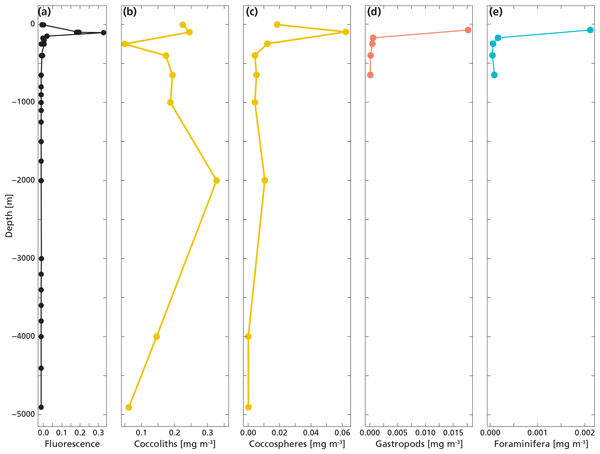
Anne L. Kruijt, Robin van Dijk, Olivier Sulpis, Luc Beaufort, Guillaume Lassus, Geert-Jan Brummer, A. Daniëlle van der Burg, Ben A. Cala, Yasmina Ourradi, Katja T. C. A. Peijnenburg, Matthew P. Humphreys, Sonia Chaabane, Appy Sluijs, and Jack J. Middelburg
Biogeosciences, 23, 531–563, https://doi.org/10.5194/bg-23-531-2026, https://doi.org/10.5194/bg-23-531-2026, 2026
Short summary
Short summary
We measured the three main types of plankton that produce calcium carbonate in the ocean, at the same time and location. While coccolithophores were the biggest contributors, we found that planktonic gastropods, not foraminifera, were the second largest contributor. This challenges the current view and improves our understanding of how these organisms influence oceans’ carbon cycling.
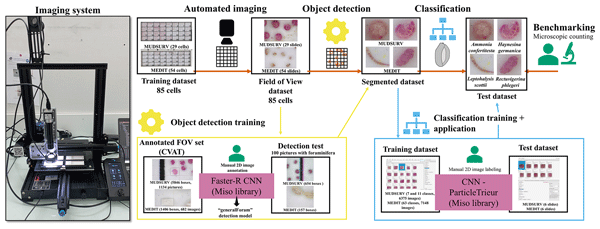
Tobias Walla, Christine Barras, Emmanuelle Geslin, Camille Godbillot, Louis Lanoy, Ross Marchant, Delphine Dissard, and Thibault de Garidel-Thoron
J. Micropalaeontol., 45, 623–652, https://doi.org/10.5194/jm-45-623-2026, https://doi.org/10.5194/jm-45-623-2026, 2026
Short summary
Short summary
We developed an automated method that uses artificial intelligence to identify marine microscopic organisms called foraminifera, which serve as bioindicators of ocean health. By combining a low-cost imaging system with computer vision, our approach can quickly and accurately recognize both living and dead specimens. This makes environmental monitoring faster, more consistent, and more accessible for studying how coastal ecosystems respond to pollution and climate change.
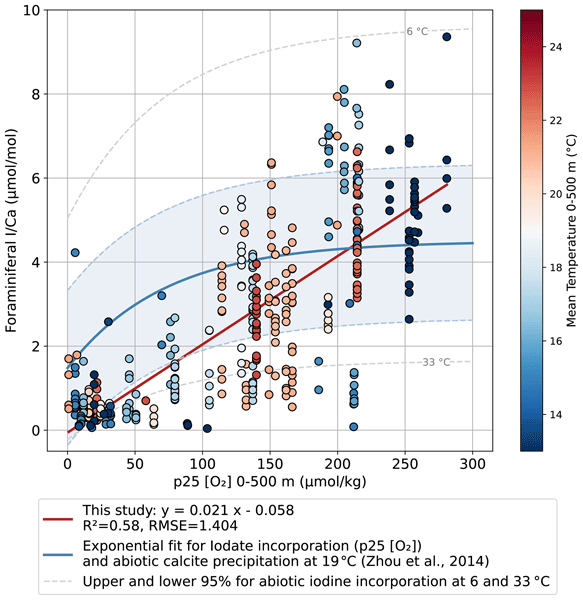
Vincent Guarinos, Kazuyo Tachikawa, Marta Garcia, Giuseppe Siani, Marie Revel, Hartmut Schulz, Francisco Sierro, and Thomas Chalk
Biogeosciences, 23, 5477–5495, https://doi.org/10.5194/bg-23-5477-2026, https://doi.org/10.5194/bg-23-5477-2026, 2026
Short summary
Short summary
Direct observations indicate a decline in ocean oxygen concentration. The complexity of surface oxygen variability is linked to physical and biochemical parameters. To investigate past oxygen variability, foraminiferal I/Ca proxy must be calibrated. Here, we determine the drivers of the proxy using a database of modern samples. From our results, oxygen is the principal driver of the I/Ca proxy. We highlight its complex behaviour, while reinforcing its use for palaeoceanographic reconstructions.
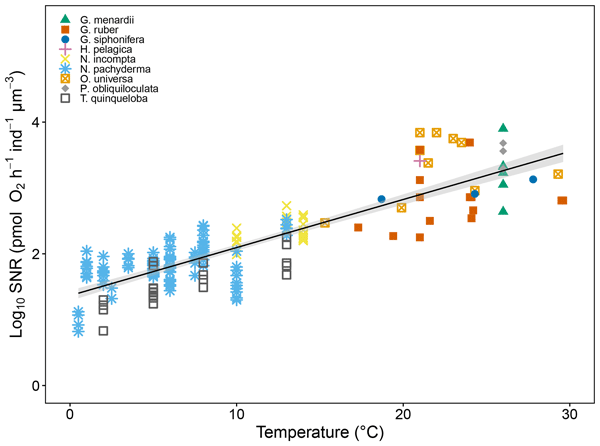
Diane V. Armitage, Nicolaas Glock, Thomas L. Weiss, Mohamed M. Ezat, Adele Westgård, Freya E. Sykes, Julie Meilland, Elwyn de la Vega, Alessio Fabbrini, Tali L. Babila, and Audrey Morley
Biogeosciences, 23, 3655–3673, https://doi.org/10.5194/bg-23-3655-2026, https://doi.org/10.5194/bg-23-3655-2026, 2026
Short summary
Short summary
Here we studied how tiny polar ocean plankton (foraminifera) breathe, using micro-sensors and 3D imaging to see if their respiration changes in responds to climate and environmental change. We found that the dominant polar species, Neogloboquadrina pachyderma, exhibits metabolic stability across large changes in temperature and ocean chemistry. This suggests its shell chemistry is not strongly affected by metabolism, supporting its use for reconstructing past polar ocean climates.
Adele Westgård, Mohamed M. Ezat, Freya E. Sykes, Julie Meilland, Thomas B. Chalk, J. Andy Milton, Melissa Chierici, and Gavin L. Foster
EGUsphere, https://doi.org/10.5194/egusphere-2026-2415, https://doi.org/10.5194/egusphere-2026-2415, 2026
Short summary
Short summary
We present a novel approach to reconstructing past temperatures in the polar oceans using Mg/Ca in planktic foraminifera which accounts for their geochemically distinct shell components. We extend the lab-based temperature calibration from 9 to 2 °C and show that also pH and [CO32-] influence Mg/Ca. These results may improve polar paleoclimate reconstructions. Additionally, our study shows that water conditions influence shell growth which has implications for ongoing climate change.
Yohan Lichterfeld, Guillaume Leduc, Kaustubh Thirumalai, Laurence Vidal, Thibault de Garidel-Thoron, Corinne Sonzogni, and Clara Bolton
EGUsphere, https://doi.org/10.5194/egusphere-2026-2343, https://doi.org/10.5194/egusphere-2026-2343, 2026
Short summary
Short summary
The Indian Ocean regulates global climate through heat and moisture exchanges. To understand past climate variability, we analyzed oxygen isotopes in individual fossil shells of tiny marine organisms. Combining numerical simulations, we show that shell chemistry reflects seasonal temperature changes driven by both the monsoon and the Indian Ocean Dipole. This opens new perspectives for reconstructing past climate extreme events.

Hinne F. van der Zant, Olivier Sulpis, Jack J. Middelburg, Matthew P. Humphreys, Raphaël Savelli, Dustin Carroll, Dimitris Menemenlis, Kay Sušelj, and Vincent Le Fouest
Geosci. Model Dev., 19, 1965–1989, https://doi.org/10.5194/gmd-19-1965-2026, https://doi.org/10.5194/gmd-19-1965-2026, 2026
Short summary
Short summary
We developed a model to simulate seafloor biogeochemical processes across a wide range of marine environments, from shallow coastal zones to deep-sea sediments. From this model, we derived a set of simple equations that predict how carbon, oxygen, and alkalinity are exchanged between sediments and overlying waters. These equations provide an efficient way to improve how ocean models represent seafloor interactions, which are often missing or overly simplified.
Noy Levy, Adi Torfstein, Ralf Schiebel, Natalie Chernihovsky, Klaus Peter Jochum, Ulrike Weis, Brigitte Stoll, and Gerald H. Haug
Biogeosciences, 23, 1065–1088, https://doi.org/10.5194/bg-23-1065-2026, https://doi.org/10.5194/bg-23-1065-2026, 2026
Short summary
Short summary
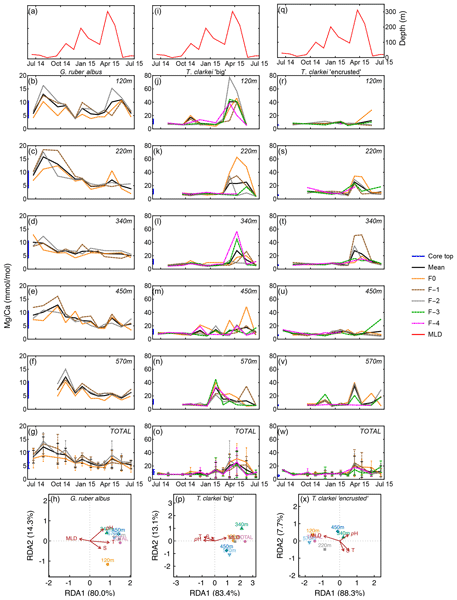
We investigated the shell chemistry of planktic organisms called foraminifera to understand how conditions in the Gulf of Aqaba (north of Red Sea), a relative warm and saline sea, are recorded. We analyzed shell parts, called chambers, and we found that shell chemistry varies significantly between both chambers and foraminifera species. These findings help better understand how deposited shells can be used to reconstruct past ocean temperatures and other conditions.
Sikandar Hayat, Meryem Mojtahid, Mary Elliot, Jorge Cardich, Emmanuelle Geslin, Thibault de Garidel-Thoron, Matthieu Carré, and Christine Barras
J. Micropalaeontol., 45, 95–116, https://doi.org/10.5194/jm-45-95-2026, https://doi.org/10.5194/jm-45-95-2026, 2026
Short summary
Short summary
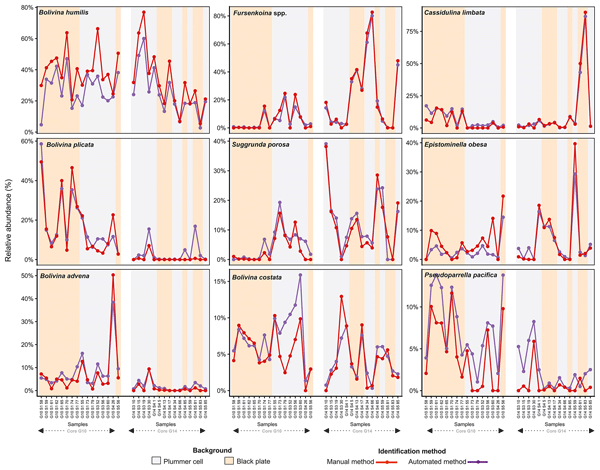
We studied how artificial intelligence can speed up the study of tiny ocean organisms called benthic foraminifera, whose shells help scientists understand past ocean changes. Normally, identifying and counting them under a microscope takes a lot of time and skill. Here, we compared automated image analysis and human counting for 31 samples. The automated method showed promising results for faster and reliable research.
Anne L. Kruijt, Robin van Dijk, Olivier Sulpis, Luc Beaufort, Guillaume Lassus, Geert-Jan Brummer, A. Daniëlle van der Burg, Ben A. Cala, Yasmina Ourradi, Katja T. C. A. Peijnenburg, Matthew P. Humphreys, Sonia Chaabane, Appy Sluijs, and Jack J. Middelburg
Biogeosciences, 23, 531–563, https://doi.org/10.5194/bg-23-531-2026, https://doi.org/10.5194/bg-23-531-2026, 2026
Short summary
Short summary
We measured the three main types of plankton that produce calcium carbonate in the ocean, at the same time and location. While coccolithophores were the biggest contributors, we found that planktonic gastropods, not foraminifera, were the second largest contributor. This challenges the current view and improves our understanding of how these organisms influence oceans’ carbon cycling.
Anna Sancho Vaquer, Erika Griesshaber, Julie Meilland, Xiaofei Yin, Michael Siccha, Michal Kucera, and Wolfgang W. Schmahl
EGUsphere, https://doi.org/10.5194/egusphere-2025-6224, https://doi.org/10.5194/egusphere-2025-6224, 2025
Preprint archived
Short summary
Short summary
Microscopic features in shells of marine organisms store crucial information about past environments, which can be altered after burial. This study uses a shell crystal structure measurement method to explore shell crystal change by comparing modern and fossil shells. A characteristic structural signal in the shells decreases as alteration increases. Even very small changes can be measured. This proves that this method can reliably identify such changes.
Anjaly Govindankutty Menon, Aaron L. Bieler, Hanna Firrincieli, Rachel Alcorn, Niko Lahajnar, Catherine V. Davis, Ralf Schiebel, Dirk Nürnberg, Gerhard Schmiedl, and Nicolaas Glock
Clim. Past, 21, 1853–1869, https://doi.org/10.5194/cp-21-1853-2025, https://doi.org/10.5194/cp-21-1853-2025, 2025
Short summary
Short summary
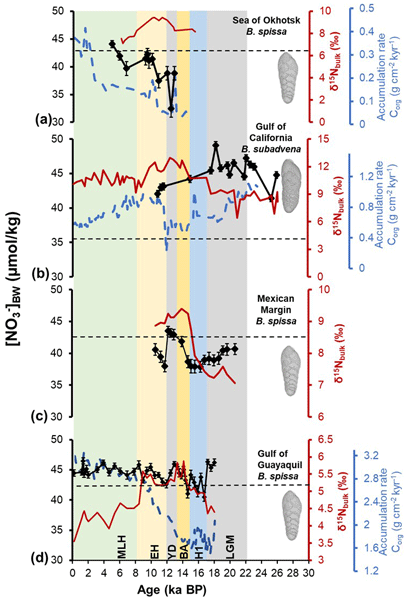
The pore density (number of pores per unit area) of unicellular eukaryotes is used to reconstruct past bottom-water nitrate at the Sea of Okhotsk, the Gulf of California, the Mexican Margin and the Gulf of Guayaquil. The reconstructed bottom-water nitrate at the Sea of Okhotsk, the Gulf of California and the Gulf of Guayaquil are influenced by the intermediate water masses, while the nitrate at the Mexican Margin is related to the deglacial NO3− variability in the Pacific Deep Water.
Ben A. Cala, Mariette Wolthers, Olivier Sulpis, Jonathan D. Sharp, and Matthew P. Humphreys
EGUsphere, https://doi.org/10.5194/egusphere-2025-5059, https://doi.org/10.5194/egusphere-2025-5059, 2025
Preprint archived
Short summary
Short summary
Magnesium calcites are minerals produced by some marine organisms. Understanding how these minerals dissolve helps us to predict how the ocean stores carbon. We developed a new method to calculate the solubility of these minerals in seawater, using existing laboratory data and taking into account the effects of temperature, salinity and pressure. Applying this method globally, we found that magnesium calcites dissolve deeper than previously thought.
Samantha Siedlecki, Stanley Nmor, Gennadi Lessin, Kelly Kearney, Subhadeep Rakshit, Colleen Petrik, Jessica Luo, Cristina Schultz, Dalton Sasaki, Kayla Gillen, Anh Pham, Christopher Somes, Damian Brady, Jeremy Testa, Christophe Rabouille, Isa Elegbede, and Olivier Sulpis
EGUsphere, https://doi.org/10.5194/egusphere-2025-1846, https://doi.org/10.5194/egusphere-2025-1846, 2025
Preprint archived
Short summary
Short summary
Benthic biogeochemical models are essential for simulating seafloor carbon cycling and climate feedbacks, yet vary widely in structure and assumptions. This paper introduces SedBGC_MIP, a community initiative to compare existing models, refine key processes, and assess uncertainty. We highlight discrepancies through case studies and introduce needs including observational benchmarks. Ultimately, we seek to improve climate and resource projections.
Lukas Jonkers, Tonke Strack, Montserrat Alonso-Garcia, Simon D'haenens, Robert Huber, Michal Kucera, Iván Hernández-Almeida, Chloe L. C. Jones, Brett Metcalfe, Rajeev Saraswat, Lóránd Silye, Sanjay K. Verma, Muhamad Naim Abd Malek, Gerald Auer, Cátia F. Barbosa, Maria A. Barcena, Karl-Heinz Baumann, Flavia Boscolo-Galazzo, Joeven Austine S. Calvelo, Lucilla Capotondi, Martina Caratelli, Jorge Cardich, Humberto Carvajal-Chitty, Markéta Chroustová, Helen K. Coxall, Renata M. de Mello, Anne de Vernal, Paula Diz, Kirsty M. Edgar, Helena L. Filipsson, Ángela Fraguas, Heather L. Furlong, Giacomo Galli, Natalia L. García Chapori, Robyn Granger, Jeroen Groeneveld, Adil Imam, Rebecca Jackson, David Lazarus, Julie Meilland, Marína Molčan Matejová, Raphael Morard, Caterina Morigi, Sven N. Nielsen, Diana Ochoa, Maria Rose Petrizzo, Andrés S. Rigual-Hernández, Marina C. Rillo, Matthew L. Staitis, Gamze Tanık, Raúl Tapia, Nishant Vats, Bridget S. Wade, and Anna E. Weinmann
J. Micropalaeontol., 44, 145–168, https://doi.org/10.5194/jm-44-145-2025, https://doi.org/10.5194/jm-44-145-2025, 2025
Short summary
Short summary
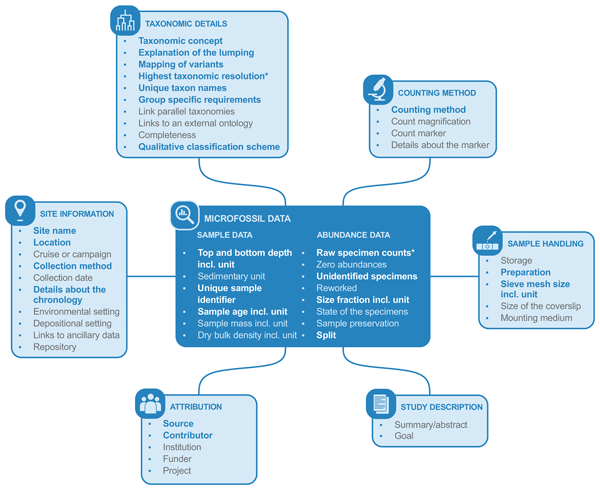
Our study provides guidelines improving the reuse of marine microfossil assemblage data, which are valuable for understanding past ecosystems and environmental change. Based on a survey of 113 researchers, we identified key data attributes required for effective reuse. Analysis of a selection of datasets available online reveals a gap between the attributes scientists consider essential and the data currently available, highlighting the need for clearer data documentation and sharing practices.
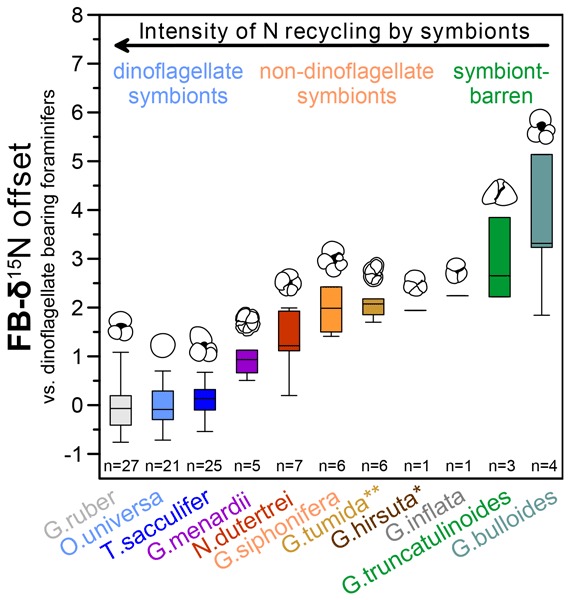
Alexandra Auderset, Sandi M. Smart, Yeongjun Ryu, Dario Marconi, Haojia Abby Ren, Lena Heins, Hubert Vonhof, Ralf Schiebel, Janne Repschläger, Daniel M. Sigman, Gerald H. Haug, and Alfredo Martínez-García
Biogeosciences, 22, 1887–1905, https://doi.org/10.5194/bg-22-1887-2025, https://doi.org/10.5194/bg-22-1887-2025, 2025
Short summary
Short summary
This study uses foraminifera-bound nitrogen isotopes (FB-δ15N) to investigate photosymbiosis in planktic foraminifera. The analysis of South Atlantic shells, compared to a global dataset, shows that FB-δ15N distinguishes species with certain algal symbionts (dinoflagellates), likely due to internal ammonium recycling. However, the studied site stands out with its larger-than-expected FB-δ15N offsets, highlighting influences on FB-δ15N signatures in regions with strong environmental gradients.
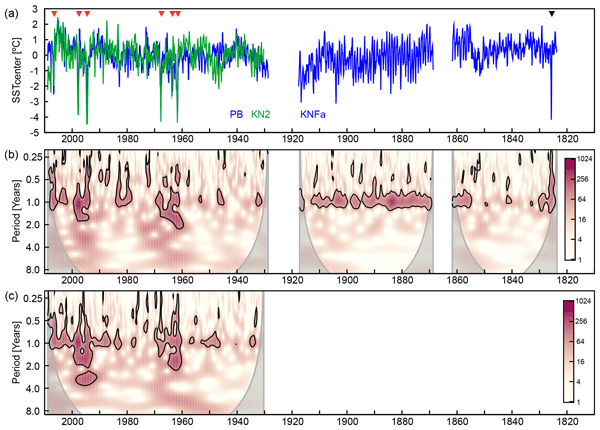
Miriam Pfeiffer, Hideko Takayanagi, Lars Reuning, Takaaki K. Watanabe, Saori Ito, Dieter Garbe-Schönberg, Tsuyoshi Watanabe, Chung-Che Wu, Chuan-Chou Shen, Jens Zinke, Geert-Jan A. Brummer, and Sri Yudawati Cahyarini
Clim. Past, 21, 211–237, https://doi.org/10.5194/cp-21-211-2025, https://doi.org/10.5194/cp-21-211-2025, 2025
Short summary
Short summary
A coral reconstruction of past climate shows changes in the seasonal cycle of sea surface temperature in the south-eastern tropical Indian Ocean. An enhanced seasonal cycle suggests that the tropical rainfall belt shifted northwards between 1856–1918. We explain this with greater warming in the north-eastern Indian Ocean relative to the south-east, which strengthens surface winds and coastal upwelling in the eastern Indian Ocean, leading to greater cooling south of the Equator.
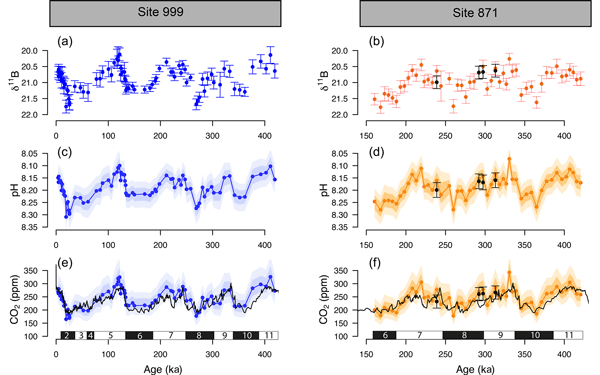
Elwyn de la Vega, Thomas B. Chalk, Mathis P. Hain, Megan R. Wilding, Daniel Casey, Robin Gledhill, Chongguang Luo, Paul A. Wilson, and Gavin L. Foster
Clim. Past, 19, 2493–2510, https://doi.org/10.5194/cp-19-2493-2023, https://doi.org/10.5194/cp-19-2493-2023, 2023
Short summary
Short summary
We evaluate how faithfully the boron isotope composition of foraminifera records atmospheric CO2 by comparing it to the high-fidelity CO2 record from the Antarctic ice cores. We evaluate potential factors and find that partial dissolution of foraminifera shells, assumptions of seawater chemistry, and the biology of foraminifera all have a negligible effect on reconstructed CO2. This gives confidence in the use of boron isotopes beyond the interval when ice core CO2 is available.
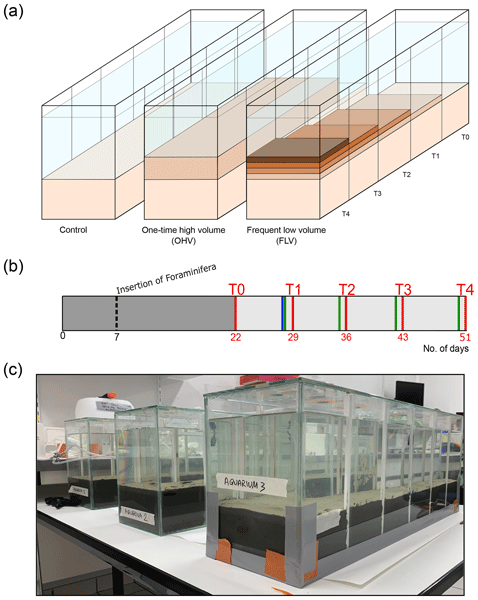
Corentin Guilhermic, Maria Pia Nardelli, Aurélia Mouret, Damien Le Moigne, and Hélène Howa
Biogeosciences, 20, 3329–3351, https://doi.org/10.5194/bg-20-3329-2023, https://doi.org/10.5194/bg-20-3329-2023, 2023
Short summary
Short summary
Coastal seas experience sediment discharges whose intensity and frequency can strongly be affected by human activities and climate change. We analysed the response of benthic species in an experimental set-up. After the burial under a single thick layer of sediment or multiple thin layers at different times, the analysed species migrate rapidly towards the surface. A stronger effect of a single thick deposit on standing stocks and biodiversity is visible compared to frequent low-sediment inputs.
Michal Kučera and Geert-Jan A. Brummer
J. Micropalaeontol., 42, 33–34, https://doi.org/10.5194/jm-42-33-2023, https://doi.org/10.5194/jm-42-33-2023, 2023
Xavier Giraud, Mélanie Baroni, and Rita Traversi
EGUsphere, https://doi.org/10.5194/egusphere-2022-1455, https://doi.org/10.5194/egusphere-2022-1455, 2023
Preprint archived
Short summary
Short summary
The snowpack in High Antarctic Plateau is an interface medium between the atmosphere and the firn, where past climate conditions are recorded. Originating mainly from oceanic sources, chlorine is deposited along with snow. We propose a mechanism implying the diffusion of HCl at the scale of snow grains, longing a few decades for its release to the Antarctic atmosphere. Based on this scenario, the fate of the anthropogenic 36Cl originating from the nuclear tests can be forcasted.
Franziska Tell, Lukas Jonkers, Julie Meilland, and Michal Kucera
Biogeosciences, 19, 4903–4927, https://doi.org/10.5194/bg-19-4903-2022, https://doi.org/10.5194/bg-19-4903-2022, 2022
Short summary
Short summary
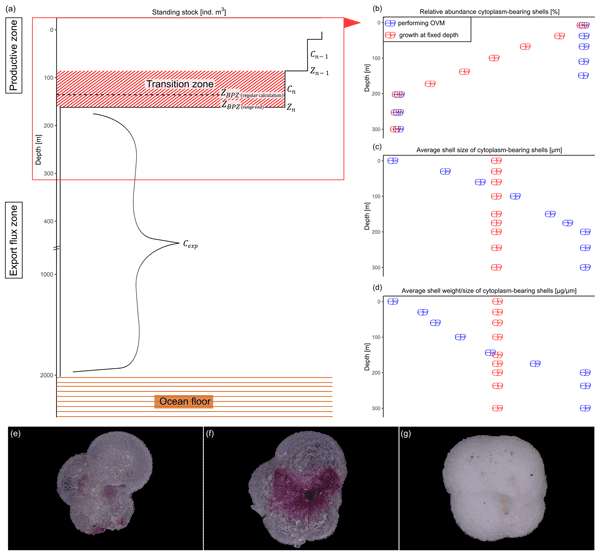
This study analyses the production of calcite shells formed by one of the main Arctic pelagic calcifiers, the foraminifera N. pachyderma. Using vertically resolved profiles of shell concentration, size and weight, we show that calcification occurs throughout the upper 300 m with an average production flux below the calcification zone of 8 mg CaCO3 m−2 d−1 representing 23 % of the total pelagic biogenic carbonate production. The production flux is attenuated in the twilight zone by dissolution.
Geert-Jan A. Brummer and Michal Kučera
J. Micropalaeontol., 41, 29–74, https://doi.org/10.5194/jm-41-29-2022, https://doi.org/10.5194/jm-41-29-2022, 2022
Short summary
Short summary
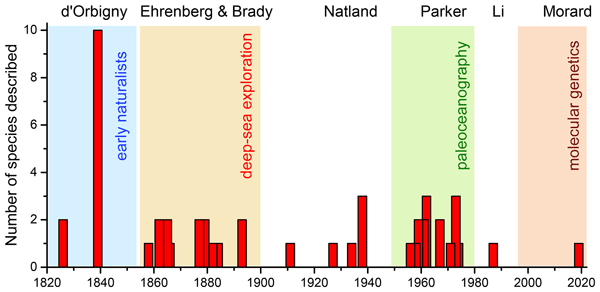
To aid researchers working with living planktonic foraminifera, we provide a comprehensive review of names that we consider appropriate for extant species. We discuss the reasons for the decisions we made and provide a list of species and genus-level names as well as other names that have been used in the past but are considered inappropriate for living taxa, stating the reasons.
Olivier Sulpis, Matthew P. Humphreys, Monica M. Wilhelmus, Dustin Carroll, William M. Berelson, Dimitris Menemenlis, Jack J. Middelburg, and Jess F. Adkins
Geosci. Model Dev., 15, 2105–2131, https://doi.org/10.5194/gmd-15-2105-2022, https://doi.org/10.5194/gmd-15-2105-2022, 2022
Short summary
Short summary
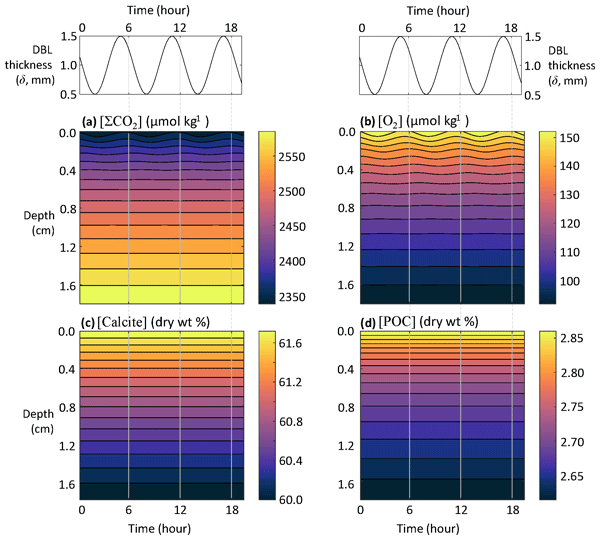
A quarter of the surface of the Earth is covered by marine sediments rich in calcium carbonates, and their dissolution acts as a giant antacid tablet protecting the ocean against human-made acidification caused by massive CO2 emissions. Here, we present a new model of sediment chemistry that incorporates the latest experimental findings on calcium carbonate dissolution kinetics. This model can be used to predict how marine sediments evolve through time in response to environmental perturbations.
Lukas Jonkers, Geert-Jan A. Brummer, Julie Meilland, Jeroen Groeneveld, and Michal Kucera
Clim. Past, 18, 89–101, https://doi.org/10.5194/cp-18-89-2022, https://doi.org/10.5194/cp-18-89-2022, 2022
Short summary
Short summary
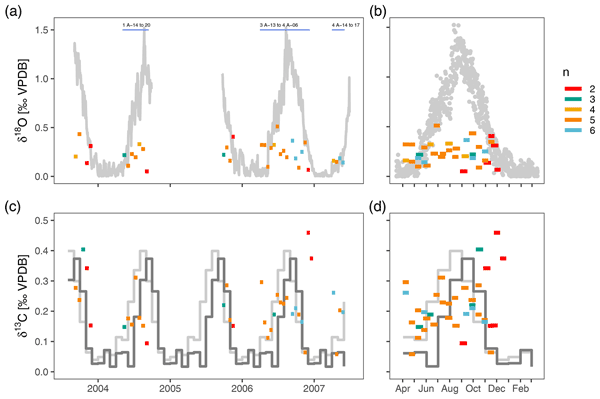
The variability in the geochemistry among individual foraminifera is used to reconstruct seasonal to interannual climate variability. This method requires that each foraminifera shell accurately records environmental conditions, which we test here using a sediment trap time series. Even in the absence of environmental variability, planktonic foraminifera display variability in their stable isotope ratios that needs to be considered in the interpretation of individual foraminifera data.
Julie Meilland, Michael Siccha, Maike Kaffenberger, Jelle Bijma, and Michal Kucera
Biogeosciences, 18, 5789–5809, https://doi.org/10.5194/bg-18-5789-2021, https://doi.org/10.5194/bg-18-5789-2021, 2021
Short summary
Short summary
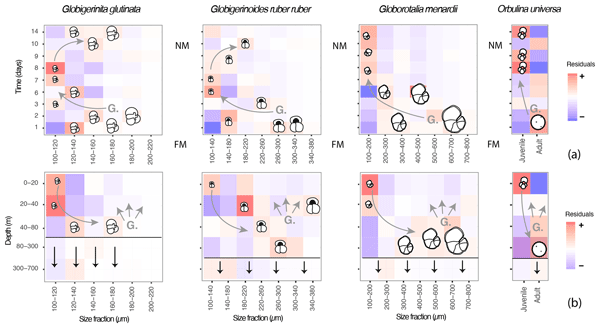
Planktonic foraminifera population dynamics has long been assumed to be controlled by synchronous reproduction and ontogenetic vertical migration (OVM). Due to contradictory observations, this concept became controversial. We here test it in the Atlantic ocean for four species of foraminifera representing the main clades. Our observations support the existence of synchronised reproduction and OVM but show that more than half of the population does not follow the canonical trajectory.
Cited articles
Ainsworth, T. D., Heron, S. F., Ortiz, J. C., Mumby, P. J., Grech, A., Ogawa, D., Eakin, C. M., and Leggat, W.: Climate change disables coral bleaching protection on the Great Barrier Reef, Science, 352, 338–342, https://doi.org/10.1126/science.aac7125, 2016.
André, A., Weiner, A., Quillévéré, F., Aurahs, R., Morard, R., Douady, C. J., de Garidel-Thoron, T., Escarguel, G., de Vargas, C., and Kucera, M.: The cryptic and the apparent reversed: lack of genetic differentiation within the morphologically diverse plexus of the planktonic foraminifer Globigerinoides sacculifer, Paleobiology, 39, 21–39, https://doi.org/10.1666/0094-8373-39.1.21, 2013.
André, A., Quillévéré, F., Morard, R., Ujiié, Y., Escarguel, G., de Vargas, C., de Garidel-Thoron, T., and Douady, C. J.: SSU rDNA Divergence in Planktonic Foraminifera: Molecular Taxonomy and Biogeographic Implications, PloS One, 9, e104641, https://doi.org/10.1371/journal.pone.0104641, 2014.
Auderset, A., Moretti, S., Taphorn, B., Ebner, P.-R., Kast, E., Wang, X. T., Schiebel, R., Sigman, D. M., Haug, G. H., and Martínez-García, A.: Enhanced ocean oxygenation during Cenozoic warm periods, Nature, 609, https://doi.org/10.1038/s41586-022-05017-0, 2022.
Auderset, A., Smart, S. M., Ryu, Y., Marconi, D., Ren, H. A., Heins, L., Vonhof, H., Schiebel, R., Repschläger, J., Sigman, D. M., Haug, G. H., and Martínez-García, A.: Effects of photosymbiosis and related processes on planktic foraminifera-bound nitrogen isotopes in South Atlantic sediments, Biogeosciences, 22, 1887–1905, https://doi.org/10.5194/bg-22-1887-2025, 2025.
Barnard, R., Batten, S. D., Beaugrand, G., Buckland, C., Conway, D. V. P., Edwards, M., Finlayson, J., Gregory, L. W., Halliday, N. C., John, A. W. G., Johns, D. G., Johnson, A. D., Jonas, T. D., Lindley, J. A., Nyman, J., Pritchard, P., Reid, P. C., Richardson, A. J., Saxby, R. E., Sidey, J., Smith, M. A., Stevens, D. P., Taylor, C. M., Tranter, P. R. G., Walne, A. W., Wootton, M., Wotton, C. O. M., and Wright, J. C.: Continuous plankton records: Plankton Atlas of the North Atlantic Ocean (1958–1999). II. Biogeographical charts, Mar. Ecol. Prog. Ser. Suppl., 11–75, https://www.jstor.org/stable/24868977 (last access: 19 March 2026), 2004.
Bé, A. W. H.: An ecological, zoogeographic and taxonomic review of Recent planktonic foraminifera, in: Oceanic Micropaleontology, Vol. 1, edited by: Ramsey, A. T. S., Academic Press, London, 100 pp., ISBN 0125773013, 1977.
Bé, A. W. H.: Biology of planktonic foraminifera, Ser. Geol. Notes Short Course, 6, 51–89, 1982.
Bé, A. W. H. and Hamlin, W. H.: Ecology of Recent planktonic foraminifera, Part 3 – Distribution in the North Atlantic during the summer of 1962, Micropaleontology 13, 87–1967, 1967.
Bé, A. W. H. and Tolderlund, D. S.: Distribution and ecology of living planktonic foraminifera in surface waters of the Atlantic and Indian Oceans, The Micropaleontology of the Oceans, Cambridge University Press, ISBN 0521076420, 1971.
Beaugrand, G., Brander, K. M., Lindley, J. A., Souissi, S., and Reid, P. C.: Fish stocks connected to calanoid copepods, Nature, 426, 661–664, 2003.
Beaugrand, G., Edwards, M., Raybaud, V., Goberville, E., and Kirby, R. R.: Future vulnerability of marine biodiversity compared with contemporary and past changes, Nat. Clim. Change, 5, 695–701, https://doi.org/10.1038/nclimate2650, 2015.
Benedetti, F., Vogt, M., Elizondo, U. H., Righetti, D., Zimmermann, N. E., and Gruber, N.: Major restructuring of marine plankton assemblages under global warming, Nat. Commun., 12, 1–15. https://doi.org/10.1038/s41467-021-25385-x, 2021.
Benjamini, Y. and Hochberg, Y.: Controlling the false discovery rate: A practical and powerful approach to multiple testing, J. Roy. Stat. Soc. B, 57, 289–300, https://doi.org/10.1111/j.2517-6161.1995.tb02031.x, 1995.
Berger, W. H.: Ecologic patterns of living planktonic Foraminifera, Deep-Sea Res. Oceanogr. Abstr., 16, 1–24, https://doi.org/10.1016/0011-7471(69)90047-3, 1969.
Bradshaw, J. S.: Ecology of living planktonic foraminifera in the North and Equatorial Pacific Ocean, University of California, Los Angeles, 1957.
Bradshaw, J. S.: Ecology of living planktonic Foraminifera in the North and Equatorial Pacific Ocean, Contrib. Cushman Found Foramin. Res., 10, 25–64, 1959.
Brummer, G.-J. A. and Kroon, D.: Comparative ontogeny and species definition of planktonic foraminifers: a case study of Dentigloborotalia anfracta n.gen. Planktonic Foraminifers as tracers, Ocean. Hist., Free University Press, Amsterdam, 51–57, 1988.
Brummer, G.-J. A. and Kučera, M.: Taxonomic review of living planktonic foraminifera, J. Micropalaeontol., 41, 29–74, https://doi.org/10.5194/jm-41-29-2022, 2022.
Burke, J. E., Elder, L. E., Maas, A. E., Gaskell, D. E., Clark, E. G., Hsiang, A. Y., Foster, G. L., and Hull, P. M.: Physiological and morphological scaling enables gigantism in pelagic protists, Limnol. Oceanogr., https://doi.org/10.1002/lno.12770, 2025.
Chaabane, S., de Garidel-Thoron, T., Giraud, X., Schiebel, R., Beaugrand, G., Brummer, G.-J., Casajus, N., Greco, M., Grigoratou, M., Howa, H., Jonkers, L., Kucera, M., Kuroyanagi, A., Meilland, J., Monteiro, F., Mortyn, G., Almogi-Labin, A., Asahi, H., Avnaim-Katav, S., Bassinot, F., Davis, C. V, Field, D. B., Hernández-Almeida, I., Herut, B., Hosie, G., Howard, W., Jentzen, A., Johns, D.G., Keigwin, L., Kitchener, J., Kohfeld, K. E., Lessa, D. V. O., Manno, C., Marchant, M., Ofstad, S., Ortiz, J. D., Post, A., Rigual-Hernandez, A., Rillo, M. C., Robinson, K., Sagawa, T., Sierro, F., Takahashi, K. T., Torfstein, A., Venancio, I., Yamasaki, M., and Ziveri, P.: The FORCIS database: A global census of planktonic Foraminifera from ocean waters, Sci. Data, 10, 354, https://doi.org/10.1038/s41597-023-02264-2, 2023.
Chaabane, S., de Garidel-Thoron, T., Meilland, J., Sulpis, O., Chalk, T. B., Brummer, G.-J. A., Mortyn, P. G., Giraud, X., Howa, H., Casajus, N., Kuroyanagi, A., Beaugrand, G., and Schiebel, R.: Migrating is not enough for modern planktonic foraminifera in a changing ocean, Nature, 636, 390–396, https://doi.org/10.1038/s41586-024-08191-5, 2024a.
Chaabane, S., de Garidel-Thoron, T., Giraud, X., Meilland, J., Brummer, G.-J. A., Jonkers, L., Mortyn, P. G., Greco, M., Casajus, N., Kucera, M., Sulpis, O., Kuroyanagi, A., Howa, H., Beaugrand, G., and Schiebel, R.: Size normalizing planktonic Foraminifera abundance in the water column, Limnol. Oceanogr.-Meth., 1–19, https://doi.org/10.1002/lom3.10637, 2024b.
Chaabane, S., de Garidel, T., Giraud, X., Schiebel, R., Beaugrand, G., Brummer, G.-J., Casajus, N., Greco, M., Grigoratou, M., Howa, H., Jonkers, L., Kucera, M., Kuroyanagi, A., Meilland, J., Monteiro, F., Mortyn, G., Almogi-Labin, A., Asahi, H., Avnaim-Katav, S., Bassinot, F., Davis, C. V., Field, D. B., Hernandez-Almeida, I., Herut, B., Hosie, G., Howard, W., Jentzen, A., Johns, D. G., Keigwin, L., Kitchener, J., Kohfeld, K. E., Lessa, D. V. O., Manno, C., Marchant, M., Ofstad, S., Ortiz, J. D., Post, A., Rigual-Hernandez, A., Rillo, M. C., Robinson, K., Sagawa, T., Sierro, F., Takahashi, K. T., Torfstein, A., Venancio, I., Yamasaki, M., and Ziveri, P.: The FORCIS database: A global census of planktonic Foraminifera from ocean waters, Zenodo [data set], https://doi.org/10.5281/zenodo.12724286, 2024c.
Chaabane, S., de Garidel-Thoron, T., Giraud, X., Meilland, J., Brummer, G.-J. A., Jonkers, L., Mortyn, P. G., Greco, M., Casajus, N., Kucera, M. Olivier S., Kuroyanagi, A., Howa, H., Beaugrand, G., and Schiebel, R.: Size normalizing planktonic Foraminifera abundance in the water column, Zenodo [data set], https://doi.org/10.5281/zenodo.10750545, 2024d.
Chaabane, S., Schiebel, R., Meilland, J., Mortyn, P. G., Sulpis, O., Chalk, T., Giraud, X., Howa, H., Kuroyanagi, A., Beaugrand, G., and de Garidel-Thoron, T.: Reassessment of the global distribution and diversity of modern planktonic Foraminifera (FORCIS) – Analysis code, Zenodo [code], https://doi.org/10.5281/zenodo.17780226, 2025.
Cheng, L., Foster, G., Hausfather, Z., Trenberth, K. E., and Abraham, J.: Improved Quantification of the Rate of Ocean Warming, J. Climate, 35, 4827–4840, https://doi.org/10.1175/JCLI-D-21-0895.1, 2022.
Chernihovsky, N., Almogi-Labin, A., Kienast, S., and Torfstein, A.: The daily resolved temperature dependence and structure of planktonic foraminifera blooms, Sci. Rep.-UK, 10, 1–12, 2020.
Cheung, W. and Pauly, D.: Impacts and effects of ocean warming on marine fishes, in: Explaining Ocean Warming: Causes, Scale, Effects and Consequences, edited by: Laffoley, D. and Baxter, J. M., IUCN, Gland, Switzerland, https://doi.org/10.2305/iucn.ch.2016.08.en, 2016.
Cheung, W. W. L., Watson, R., and Pauly, D.: Signature of ocean warming in global fisheries catch, Nature, 497, 365–368, https://doi.org/10.1038/nature12156, 2013.
Cifelli, R.: Planktonic foraminifera from the Mediterranean and adjacent Atlantic waters (Cruise 49 of the Atlantis II, 1969), J. Foramin. Res., 4, 171–183, https://doi.org/10.2113/gsjfr.4.4.171, 1974.
Conan, S. M.-H. and Brummer, G. J. A.: Fluxes of planktic foraminifera in response to monsoonal upwelling on the Somalia Basin margin, Deep-Sea Res. Pt. II, 47, 2207–2227, https://doi.org/10.1016/S0967-0645(00)00022-9, 2000.
Darling, K. F. and Wade, C. M.: The genetic diversity of planktic foraminifera and the global distribution of ribosomal RNA genotypes, Mar. Micropaleontol., 67, 216–238, https://doi.org/10.1016/j.marmicro.2008.01.009, 2008.
Darling, K. F., Wade, C. M., Siccha, M., and Trommer, G.: Genetic diversity and ecology of the planktonic foraminifers Globigerina bulloides, Turborotalita quinqueloba and Neogloboquadrina pachyderma off the Oman margin during the late SW Monsoon, Mar. Micropaleontol., https://doi.org/10.1016/j.marmicro.2017.10.006, 2017.
Darling, K. F., Wade, C. M., Stewart, I. A., Kroon, D., Dingle, R., and Brown, A. J. L.: Molecular evidence for genetic mixing of Arctic and Antarctic subpolar populations of planktonic foraminifers, Nature, 405, 43–47, https://doi.org/10.1038/35011002, 2000.
Davis, C. V., Livsey, C. M., Palmer, H. M., Hull, P. M., Thomas, E., Hill, T. M., and Benitez-Nelson, C. R.: Extensive morphological variability in asexually produced planktic foraminifera, Sci. Adv., 6, eabb8930, https://doi.org/10.1126/sciadv.abb8930, 2020.
de Moel, H., Ganssen, G. M., Peeters, F. J. C., Jung, S. J. A., Kroon, D., Brummer, G. J. A., and Zeebe, R. E.: Planktic foraminiferal shell thinning in the Arabian Sea due to anthropogenic ocean acidification?, Biogeosciences, 6, 1917–1925, https://doi.org/10.5194/bg-6-1917-2009, 2009.
Doney, S. C., Fabry, V. J., Feely, R. A., and Kleypas, J. A.: Ocean Acidification: The other CO2 problem, Annu. Rev. Mar. Sci., 1, 169–192, https://doi.org/10.1146/annurev.marine.010908.163834, 2009.
Elith, J., Graham, C. H., Anderson, R. P., Dudík, M., Ferrier, S., Guisan, A., Hijmans, R. J., Huettmann, F., Leathwick, J. R., Lehmann, A., Li, J., Lohmann, L. G., Loiselle, B. A., Manion, G., Moritz, C., Nakamura, M., Nakazawa, Y., Overton, J. M., Peterson, A. T., Phillips, S. J., Richardson, K., Scacheu-Pereira, R., Schapire, R. E., Soberón, J., Williams, S., Wisz, M. S., and Zimmermann, N. E.: Novel methods improve prediction of species' distributions from occurrence data, Ecography, 29, 129–151, https://doi.org/10.1111/j.2006.0906-7590.04596.x, 2006
Fairbanks, R. G., Wiebe, P. H., and Bé, A. W. H.: Vertical distribution and isotopic composition of living planktonic foraminifera in the western North Atlantic, Science, 207, 61–63, https://doi.org/10.1126/science.207.4426.61, 1980.
Fenton, I. S., Aze, T., Farnsworth, A., Valdes, P., and Saupe, E. E.: Origination of the modern-style diversity gradient 15 million years ago, Nature, 614, 708–712, https://doi.org/10.1038/s41586-023-05712-6, 2023.
Field, D. B.: Variability in vertical distributions of planktonic foraminifera in the California current: Relationships to vertical ocean structure, Paleoceanography, 19, https://doi.org/10.1029/2003PA000970, 2004.
Fox, L., Stukins, S., Hill, T., and Miller, C. G.: Quantifying the Effect of Anthropogenic Climate Change on Calcifying Plankton, Sci. Rep., 10, 1–9, https://doi.org/10.1038/s41598-020-58501-w, 2020.
Games, P. A. and Howell, J. F.: Pairwise multiple comparison procedures with unequal n’s and/or variances: A Monte Carlo study, J. Educ. Stat., 1, 113–125, https://doi.org/10.3102/10769986001002113, 1976.
García Molinos, J., Halpern, B. S., Schoeman, D. S., Brown, C. J., Kiessling, W., Moore, P. J., Pandolfi, J. M., Poloczanska, E. S., Richardson, A. J., and Burrows, M. T.: Climate velocity and the future global redistribution of marine biodiversity, Nat. Clim. Change, 6, 83–88, https://doi.org/10.1038/nclimate2769, 2016.
Gastrich, M. D.: Ultrastructure of a new intracellular symbiotic alga found within planktonic foraminifera, J. Phycol., 23, 623–632, https://doi.org/10.1111/j.1529-8817.1987.tb04215.x, 1987.
Good, S. A., Martin, M. J., and Rayner, N. A.: EN4: quality controlled ocean temperature and salinity profiles and monthly objective analyses with uncertainty estimates, J. Geophys. Res.-Oceans, 118, 6704–6716, https://doi.org/10.1002/2013JC009067, 2013.
Gotelli, N. J. and Ellison, A. M.: A Primer of Ecological Statistics, Sinauer Associates, Sunderland, Massachusetts, ISBN 9780878932696, 2004.
Hemleben, C., Spindler, M., and Anderson, O.: Modern planktonic Foraminifera, Springer-Verlag, Berlin, 363 pp., ISBN 3-540-96815-6, 1989.
Henson, S. A., Cael, B. B., Allen, S. R., and Dutkiewicz, S.: Future phytoplankton diversity in a changing climate, Nat. Commun., 12, 1–8, https://doi.org/10.1038/s41467-021-25699-w, 2021.
Ingvaldsen, R. B., Assmann, K. M., Primicerio, R., Fossheim, M., Polyakov, I. V., and Dolgov, A. V.: Physical manifestations and ecological implications of Arctic Atlantification, Nat. Rev. Earth Environ., 2, 874–889, https://doi.org/10.1038/s43017-021-00228-x, 2021.
Ivanova, E. M., Conan, S. M.-H., Peeters, F. J. C., and Troelstra, S. R.: Living Neogloboquadrina pachyderma sin and its distribution in the sediments from Oman and Somalia upwelling areas, Mar. Micropaleontol., 36, 91–107, https://doi.org/10.1016/S0377-8398(98)00027-9, 1999.
Jiang, L. Q., Carter, B. R., Feely, R. A., Lauvset, S. K., and Olsen, A.: Surface ocean pH and buffer capacity: past, present and future, Sci. Rep., 9, 1–11, https://doi.org/10.1038/s41598-019-55039-4, 2019.
Johnson, R. A. and Wichern, D. W.: Applied Multivariate Statistical Analysis, 6th edn., Pearson Prentice Hall, Upper Saddle River, NJ, ISBN 9780131877153, 2007.
Jonkers, L., Brummer, G.-J. A., Peeters, F. J. C., van Aken, H. M., and de Jong, M. F.: Seasonal stratification, shell flux, and oxygen isotope dynamics of left-coiling N. pachyderma and T. quinqueloba in the western subpolar North Atlantic, Paleoceanography, 25, PA2204, https://doi.org/10.1029/2009PA001849, 2010.
Jonkers, L., Hillebrand, H., and Kucera, M.: Global change drives modern plankton communities away from the pre-industrial state, Nature, 570, 372–375, https://doi.org/10.1038/s41586-019-1230-3, 2019.
Kassambara, A.: rstatix: Pipe-Friendly Framework for Basic Statistical Tests (R package version 0.7.2), Comprehensive R Archive Network (CRAN), https://doi.org/10.32614/CRAN.package.rstatix, 2023.
Kemle-von Mücke, S., and Oberhänsli, H.: The distribution of living planktic Foraminifera in relation to Southeast Atlantic oceanography, in: Use of Proxies in Paleoceanography: Examples from the South Atlantic, edited by: Fischer, G. and Wefer, G., Springer Berlin Heidelberg, Berlin, Heidelberg, 91–115, https://doi.org/10.1007/978-3-642-58646-0_3, 1999.
Kroon, D. and Ganssen, G.: Northern Indian Ocean upwelling cells and the stable isotope composition of living planktic foraminifers, in: Planktonic Foraminifers as Tracers of Ocean-Climate History, edited by: Brummer, G. J. A. and Kroon, D., Free University Press, Amsterdam, 299–319, ISBN 9062567444, 1988.
Kucera, M.: Chapter Six Planktonic Foraminifera as Tracers of Past Oceanic Environments, Dev. Mar. Geol., 1, 213–262, https://doi.org/10.1016/S1572-5480(07)01011-1, 2007.
Kuroyanagi, A., Kawahata, H., Nishi, H., and Honda, M. C.: Seasonal changes in planktonic Foraminifera in the northwestern North Pacific Ocean: sediment trap experiments from subarctic and subtropical gyres, Deep-Sea Res. Pt. II, 49, 5627–5645, 2002.
Lessa, D., Morard, R., Jonkers, L., Venancio, I. M., Reuter, R., Baumeister, A., Albuquerque, A. L., and Kucera, M.: Distribution of planktonic foraminifera in the subtropical South Atlantic: depth hierarchy of controlling factors, Biogeosciences, 17, 4313–4342, https://doi.org/10.5194/bg-17-4313-2020, 2020.
Lončarić, N., Peeters, F. J. C., Kroon, D., and Brummer, G. J. A.: Oxygen isotope ecology of recent planktic foraminifera at the central Walvis Ridge (SE Atlantic), Paleoceanography, 21, 1–18, https://doi.org/10.1029/2005PA001207, 2006.
Longhurst, A. R.: Ecological Geography of the Sea, Elsevier Academic Press, Amsterdam, ISBN 978-0-12-455521-1, https://doi.org/10.1016/B978-0-12-455521-1.X5000-1, 2007.
Magurran, A. and Henderson, P.: Explaining the excess of rare species in natural species abundance distributions, Nature, 422, 714–716, https://doi.org/10.1038/nature01547, 2003.
Mallo, M., Ziveri, P., Mortyn, P. G., Schiebel, R., and Grelaud, M.: Low planktic foraminiferal diversity and abundance observed in a spring 2013 west–east Mediterranean Sea plankton tow transect, Biogeosciences, 14, 2245–2266, https://doi.org/10.5194/bg-14-2245-2017, 2017.
McGill, B. J., Etienne, R. S., Gray, J. S., Alonso, D., Anderson, M. J., Benecha, H. K., Dornelas, M., Enquist, B. J., Green, J. L., He, F., Hurlbert, A. H., Magurran, A. E., Marquet, P. A., Maurer, B. A., Ostling, A., Soykan, C. U., Ugland, K. I., and White, E. P.: Species abundance distributions: moving beyond single prediction theories to integration within an ecological framework, Ecol. Lett., 10, 995–1015, https://doi.org/10.1111%2Fj.1461-0248.2007.01094.x, 2007.
Meilland, J., Schiebel, R., Lo Monaco, C., Sanchez, S., and Howa, H.: Abundances and test weights of living planktic foraminifers across the Southwest Indian Ocean: Implications for carbon fluxes, Deep-Sea Res. Pt. I, 131, 27–40, https://doi.org/10.1016/j.dsr.2017.11.004, 2018.
Meilland, J., Howa, H., Hulot, V., Demangel, I., Salaün, J., and Garlan, T.: Population dynamics of modern planktonic foraminifera in the western Barents Sea, Biogeosciences, 17, 1437–1450, https://doi.org/10.5194/bg-17-1437-2020, 2020.
Meilland, J., Siccha, M., Kaffenberger, M., Bijma, J., and Kucera, M.: Population dynamics and reproduction strategies of planktonic foraminifera in the open ocean, Biogeosciences, 18, 5789–5809, https://doi.org/10.5194/bg-18-5789-2021, 2021.
Meilland, J., Ezat, M. M., Westgård, A., Manno, C., Morard, R., Siccha, M., and Kucera, M.: Rare but persistent asexual reproduction explains the success of planktonic foraminifera in polar oceans, J. Plankton Res., 45, 15–32, https://doi.org/10.1093/plankt/fbac069, 2023.
Morard, R., Quillévéré, F., and Escarguel, G.: Ecological modeling of the temperature dependence of cryptic species of planktonic Foraminifera in the Southern Hemisphere, Palaeogeogr. Palaeocl., https://doi.org/10.1016/j.palaeo.2013.05.011, 2013.
Morard, R., Darling, K. F., Weiner, A. K. M., Hassenrück, C., Vanni, C., Cordier, T., Henry, N., Greco, M., Vollmar, N. M., Milivojevic, T., Rahman, S. N., Siccha, M., Meilland, J., Jonkers, L., Quillévéré, F., Escarguel, G., Douady, C. J., de Garidel-Thoron, T., de Vargas, C., and Kucera, M.: The global genetic diversity of planktonic foraminifera reveals the structure of cryptic speciation in plankton, Biol. Rev., 99, 1218–1241, https://doi.org/10.1111/brv.13065, 2024.
Moretti, S., Auderset, A., Deutsch, C., Schmitz, R., Gerber, L., Thomas, E., Luciani, V., Petrizzo, M. R., Schiebel, R., Tripati, A., Sexton, P., Norris, R., D'Onofrio, R., Zachos, J., Sigman, D. M., Haug, G. H., and Martínez-García, A.: Oxygen rise in the tropical upper ocean during the Paleocene-Eocene Thermal Maximum, Science, 383, 727–731, https://doi.org/10.1126/science.adh4893, 2024.
Morey, A. E., Mix, A. C., and Pisias, N. G.: Planktonic foraminiferal assemblages preserved in surface sediments correspond to multiple environment variables, Quaternary Sci. Rev., 24, 925–950, https://doi.org/10.1016/j.quascirev.2003.09.011, 2005.
Moriarty, R. and O'Brien, T. D.: Distribution of mesozooplankton biomass in the global ocean, Earth Syst. Sci. Data, 5, 45–55, https://doi.org/10.5194/essd-5-45-2013, 2013.
Moy, A. D., Howard, W. R., Bray, S. G., and Trull, T. W.: Reduced calcification in modern Southern Ocean planktonic foraminifera, Nat. Geosci., 2, 276–280, https://doi.org/10.1038/ngeo460, 2009.
Oksanen, J., Simpson, G. L., Blanchet, F. G., Kindt, R., Legendre, P., Minchin, P. R., O'Hara, R. B., Solymos, P., Stevens, M. H. H., Szoecs, E., Wagner, H., Barbour, M., Bedward, M., Bolker, B., Borcard, D., Carvalho, G., Chirico, M., De Caceres, M., Durand, S., Evangelista, H. B. A., FitzJohn, R., Friendly, M., Furneaux, B., Hannigan, G., Hill, M. O., Lahti, L., McGlinn, D., Ouellette, M.-H., Cunha, E. R., Smith, T., Stier, A., ter Braak, C. J. F., and Weedon, J.: vegan: Community Ecology Package, R package version 2.6-2, https://doi.org/10.32614/CRAN.package.vegan, 2022.
Orr, J. C., Fabry, V. J., Aumont, O., Bopp, L., Doney, S. C., Feely, R. A., Gnanadesikan, A., Gruber, N., Ishida, A., Joos, F., Key, R. M., Lindsay, K., Maier-Reimer, E., Matear, R., Monfray, P., Mouchet, A., Najjar, R. G., Plattner, G. K., Rodgers, K. B., Sabine, C. L., Sarmiento, J. L., Schlitzer, R., Slater, R. D., Totterdell, I. J., Weirig, M. F., Yamanaka, Y., and Yool, A.: Anthropogenic ocean acidification over the twenty-first century and its impact on calcifying organisms, Nature, 437, 681–686, https://doi.org/10.1038/nature04095, 2005.
Ottens, J. J.: April and August Northeast Atlantic surface water masses reflected in planktic foraminifera, Neth. J. Sea Res., 28, 261–283, https://doi.org/10.1016/0077-7579(92)90031-9, 1992.
Pallacks, S., Ziveri, P., Schiebel, R., Vonhof, H., Rae, J. W. B., Littley, E., Garcia-Orellana, J., Langer, G., Grelaud, M., and Martrat, B.: Anthropogenic acidificaKon of surface waters drives decreased biogenic calcificaKon in the Mediterranean Sea, Commun. Earth Environ., 4, 301, https://doi.org/10.1038/s43247-023-00947-7, 2023.
Parker, F. L. and Berger, W. H.: Faunal and solution patterns of planktonic Foraminifera in surface sediments of the South Pacific, Deep-Sea Res. Oceanogr. Abstr., 18, 73–107, https://doi.org/10.1016/0011-7471(71)90017-9, 1971.
Pecl, G. T., Araújo, M. B., Bell, J. D., Blanchard, J., Bonebrake, T. C., Chen, I. C., Clark, T. D., Colwell, R. K., Danielsen, F., Evengård, B., Falconi, L., Ferrier, S., Frusher, S., Garcia, R. A., Griffis, R. B., Hobday, A. J., Janion-Scheepers, C., Jarzyna, M. A., Jennings, S., Lenoir, J., Linnetved, H. I., Martin, V. Y., McCormack, P. C., McDonald, J., Mitchell, N. J., Mustonen, T., Pandolfi, J. M., Pettorelli, N., Popova, E., Robinson, S. A., Scheffers, B. R., Shaw, J. D., Sorte, C. J. B., Strugnell, J. M., Sunday, J. M., Tuanmu, M. N., Vergés, A., Villanueva, C., Wernberg, T., Wapstra, E., and Williams, S. E.: Biodiversity redistribution under climate change: Impacts on ecosystems and human well-being, Science, 355, https://doi.org/10.1126/science.aai9214, 2017.
Peeters, F. J. C., Ivanova, E., Conan, S., Brummer, G.-J. A., Ganssen, G., Troelstra, S., and van Hinte, J.: A size analysis of planktic foraminifera from the Arabian Sea, Mar. Micropaleontol., 36, 31–63, https://doi.org/10.1016/S0377-8398(98)00026-7, 1999.
Poloczanska, E. S., Brown, C. J., Sydeman, W. J., Kiessling, W., Schoeman, D. S., Moore, P. J., Brander, K., Bruno, J. F., Buckley, L. B., Burrows, M. T., Duarte, C. M., Halpern, B. S., Holding, J., Kappel, C. V., O'Connor, M. I., Pandolfi, J. M., Parmesan, C., Schwing, F., Thompson, S. A., and Richardson, A. J.: Global imprint of climate change on marine life, Nat. Clim. Chang., 3, 919–925, https://doi.org/10.1038/nclimate1958, 2013.
Polyakov, I. V., Alkire, M. B., Bluhm, B. A., Brown, K. A., Carmack, E. C., Chierici, M., Danielson, S. L., Ellingsen, I., Ershova, E. A., Gårdfeldt, K., Ingvaldsen, R. B., Pnyushkov, A. V., Slagstad, D., and Wassmann, P.: Borealization of the Arctic Ocean in response to anomalous advection from Sub-Arctic seas, Front. Mar. Sci., 7, https://doi.org/10.3389/fmars.2020.00491, 2020.
Polyakov, I. V., Pnyushkov, A. V., Alkire, M. B., Ashik, I. M., Baumann, T. M., Carmack, E. C., Goszczko, I., Guthrie, J., Ivanov, V. V., Kanzow, T., Krishfield, R., Kwok, R., Sundfjord, A., Morison, J., Rember, R., and Yulin, A.: Greater role for Atlantic inflows on sea-ice loss in the Eurasian Basin of the Arctic Ocean, Science, 356, 285–291, https://doi.org/10.1126/science.aai8204, 2017.
Rebotim, A., Voelker, A. H. L., Jonkers, L., Waniek, J. J., Meggers, H., Schiebel, R., Fraile, I., Schulz, M., and Kucera, M.: Factors controlling the depth habitat of planktonic foraminifera in the subtropical eastern North Atlantic, Biogeosciences, 14, 827–859, https://doi.org/10.5194/bg-14-827-2017, 2017.
Rillo, M. C., Woolley, S., and Hillebrand, H.: Drivers of global pre-industrial patterns of species turnover in planktonic foraminifera, Ecography, 1–11, https://doi.org/10.1111/ecog.05892, 2022.
Roy, T., Lombard, F., Bopp, L., and Gehlen, M.: Projected impacts of climate change and ocean acidification on the global biogeography of planktonic Foraminifera, Biogeosciences, 12, 2873–2889, https://doi.org/10.5194/bg-12-2873-2015, 2015.
Ruddiman, W., Tolderlund, D. S., and Bé, A.: Foraminiferal evidence of a modern warming of the North Atlantic Ocean, Deep-Sea Res. Oceanogr. Abstr., 17, 141–155, https://doi.org/10.1016/0011-7471(70)90093-8, 1970.
Schiebel, R. and Hemleben, C.: Interannual variability of plankKc foraminiferal populaKons and test flux in the eastern North AtlanKc Ocean (JGOFS), Deep-Sea Res. Pt. II, 47, 1809–1852, https://doi.org/10.1016/S0967-0645(00)00008-4, 2000
Schiebel, R. and Hemleben, C.: Modern planktic foraminifera, Paläontol. Z., 79, 135–148, https://doi.org/10.1007/bf03021758, 2005.
Schiebel, R. and Hemleben, C.: Planktic foraminifers in the modern ocean, Springer, Berlin, https://doi.org/10.1007/978-3-662-50297-6, 2017.
Schiebel, R. and Hemleben, C.: Interannual variability of planktic foraminiferal populations and test flux in the eastern North Atlantic Ocean (JGOFS), Deep-Sea Res. Pt. II, 47, 1809–1852, https://doi.org/10.1016/S0967-0645(00)00008-4, 2000
Schiebel, R., Hiller, B., and Hemleben, C.: Impacts of storms on Recent planktic foraminiferal test production and CaCO3 flux in the North Atlantic at 47° N, 20° W (JGOFS), Mar. Micropaleontol., 26, 115–129, https://doi.org/10.1016/0377-8398(95)00035-6, 1995.
Schiebel, R., Waniek, J., Bork, M., and Hemleben, C.: Planktic foraminiferal production stimulated by chlorophyll redistribution and entrainment of nutrients, Deep-Sea Res. Pt. I, 48, 721–740, https://doi.org/10.1016/S0967-0637(00)00065-0, 2001.
Schiebel, R., Waniek, J., Zeltner, A., and Alves, M.: Impact of the Azores Front on the distribution of planktic foraminifers, shelled gastropods, and coccolithophorids, Deep-Sea Res. Pt. II, 49, 4035–4050, https://doi.org/10.1016/S0967-0645(02)00141-8, 2002.
Schiebel, R., Zeltner, A., Treppke, U. F., Waniek, J. J., Bollmann, J., Rixen, T., and Hemleben, C.: Distribution of diatoms, coccolithophores and planktic foraminifers along a trophic gradient during SW monsoon in the Arabian Sea, Mar. Micropaleontol., 51, 345–371, https://doi.org/10.1016/j.marmicro.2004.02.001, 2004.
Schmidt, D. N., Renaud, S., Bollmann, J., Schiebel, R., and Thierstein, H. R.: Size distribution of Holocene planktic foraminifer assemblages: Biogeography, ecology and adaptation, Mar. Micropaleontol., 50, 319–338, https://doi.org/10.1016/S0377-8398(03)00098-7, 2004.
Schmuker, B. and Schiebel, R.: Planktic foraminifers and hydrography of the eastern and northern Caribbean Sea, Mar. Micropaleontol., 46, 387–403, https://doi.org/10.1016/S0377-8398(02)00082-8, 2002.
Schott, F. A. and McCreary, J. P.: The monsoon circulation of the Indian Ocean, Prog. Oceanogr., 51, 1–123, https://doi.org/10.1016/S0079-6611(01)00083-0, 2001.
Seears, H. A., Darling, K. F., and Wade, C. M.: Ecological partitioning and diversity in tropical planktonic foraminifera, BMC Evol. Biol., 12, 54, https://doi.org/10.1186/1471-2148-12-54, 2012.
Shannon, C. E.: A mathematical theory of communication, Bell Syst. Tech. J., 27, 379–423, 1948.
Siccha, M., Trommer, G., Schulz, H., Hemleben, C., and Kucera, M.: Factors controlling the distribution of planktonic Foraminifera in the Red Sea and implications for the development of transfer functions, Mar. Micropaleontol., 72, 146–156, https://doi.org/10.1016/j.marmicro.2009.04.002, 2009.
Spalding, M. D., Fox, H. E., Allen, G. R., Davidson, N., Ferdaña, Z. A., Finlayson, M., Halpern, B. S., Jorge, M. A., Lombana, A., Lourie, S. A., Martin, K. D., McManus, E., Molnar, J., Recchia, C. A., and Robertson, J.: Marine ecoregions of the world: A bioregionalization of coastal and shelf areas, Bioscience, 57, 573–583, https://doi.org/10.1641/B570707, 2007.
Spero, H. J.: Symbiosis in the planktonic foraminifer, Orbulina universa, and the isolation of its symbiotic dinoflagellate, Gymnodinium béii sp. nov., J. Phycol., 23, 307–317, https://doi.org/10.1111/j.1529-8817.1987.tb04139.x, 1987.
Spero, H. J. and Lea, D. W.: Intraspecific stable isotope variability in the planktic foraminifera Globigerinoides sacculifer: Results from laboratory experiments, Mar. Micropaleontol., 22, 221–234, https://doi.org/10.1016/0377-8398(93)90045-Y, 1993.
Strack, A., Jonkers, L., Rillo, M. C., Hillebrand, H., and Kucera, M.: Plankton response to global warming is characterized by non-uniform shifts in assemblage composition since the last ice age, Nat. Ecol. Evol., 6, 1871–1880, https://doi.org/10.1038/s41559-022-01888-8, 2022.
Sulpis, O., Jeansson, E., Dinauer, A., Lauvset, S. K., and Middelburg, J. J.: Calcium carbonate dissolution patterns in the ocean, Nat. Geosci., 14, 423–428, https://doi.org/10.1038/s41561-021-00743-y, 2021.
Swain, A., Woodhouse, A., Fagan, W. F., Fraass, A. J., and Lowery, C. M.: Biogeographic response of marine plankton to Cenozoic environmental changes, Nature, 629, 616–623, https://doi.org/10.1038/s41586-024-07337-9, 2024.
Tell, F., Jonkers, L., Meilland, J., and Kucera, M.: Upper-ocean flux of biogenic calcite produced by the Arctic planktonic foraminifera Neogloboquadrina pachyderma, Biogeosciences, 19, 4903–4927, https://doi.org/10.5194/bg-19-4903-2022, 2022.
Thiede, J.: Distribution of foraminifera in surface waters of a coastal upwelling area, Nature, 253, 712–714, https://doi.org/10.1038/253712a0, 1975.
Ufkes, E., Jansen, J. H. F., and Brummer, G. J. A.: Living planktonic foraminifera in the eastern South Atlantic during spring: Indicators of water masses, upwelling and the Congo (Zaire) river plume, Mar. Micropaleontol., 33, 27–53, https://doi.org/10.1016/S0377-8398(97)00032-7, 1998.
Vincent, E. and Berger, W. H.: Planktonic foraminifera and their use in paleoceanography, in: The Sea, Vol. 7, edited by: Emiliani, C., Wiley-Interscience, New York, 1025–1119, ISBN 9780471028703, 1981.
Watkins, J. M., Mix, A. C., Wilson, J., Ufkes, E., Jansen, J. H. F., and Brummer, G. J. A.: Living planktonic foraminifera in the eastern South Atlantic during spring: Indicators of water masses, upwelling and the Congo (Zaire) river plume, Mar. Micropaleontol., 33, 27–53, https://doi.org/10.1016/S0377-8398(97)00036-4, 1998.
Welch, B. L.: On the comparison of several mean values: An alternative approach, Biometrika, 38, 330–336, https://doi.org/10.1093/biomet/38.3-4.330, 1951.
Wernberg, T., Bennett, S., Babcock, R. C., de Bettignies, T., Cure, K., Depczynski, M., Dufois, F., Fromont, J., Fulton, C. J., Hovey, R. K., Harvey, E. S., Holmes, T. H., Kendrick, G. A., Radford, B., Santana-Garcon, J., Saunders, B. J., Smale, D. A., Thomsen, M. S., Tuckett, C. A., and Tuya, F.: Climate-driven regime shift of a temperate marine ecosystem, Science, 353, 169–172, https://doi.org/10.1126/science.aad8745, 2016.
Wickham, H.: ggplot2: Elegant Graphics for Data Analysis, Springer, New York, ISBN 978-3-319-24277-4, 2016.
Wickham, H. and Henry, L.: purrr: Functional Programming Tools, R package version 1.0.2, CRAN, https://doi.org/10.32614/CRAN.package.purrr, 2023.
Wickham, H., Averick, M., Bryan, J., Chang, W., McGowan, L. D., François, R., Grolemund, G., Hayes, A., Henry, L., Hester, J., Kuhn, M., Pedersen, T. L., Miller, E., Bache, S. M., Müller, K., Ooms, J., Robinson, D., Seidel, D. P., Spinu, V., Takahashi, K., Vaughan, D., Wilke, C., Woo, K., and Yutani, H.: Welcome to the tidyverse, J. Open Source Softw., 4, 1686, https://doi.org/10.21105/joss.01686, 2019.
Wickham, H., François, R., Henry, L., Müller, K., and Vaughan, D.: dplyr: A Grammar of Data Manipulation, R package version 1.1.2, https://doi.org/10.32614/CRAN.package.dplyr, 2023.
Woodhouse, A., Swain, A., Fagan, W. F., Fraass, A. J., and Lowery, C. M.: Late Cenozoic cooling restructured global marine plankton communities, Nature, 614, 713–718, https://doi.org/10.1038/s41586-023-05694-5, 2023.
Worm, B., Barbier, E. B., Beaumont, N., Duffy, J. E., Folke, C., Halpern, B. S., Jackson, J. B. C., Lotze, H. K., Micheli, F., Palumbi, S. R., Sala, E., Selkoe, K. A., Stachowicz, J. J., and Watson, R.: Impacts of biodiversity loss on ocean ecosystem services, Science, 314, 787–790, https://doi.org/10.1126/science.1132294, 2006.
Yamasaki, M., Tokumoto, R., Sasaki, A., Shimada, C., and Schiebel, R.: Western to Central Equatorial Pacific Planktic Foraminiferal Fluxes: Implication for the Relationship Between Their Assemblage and Warm Pool Migration from 1999 to 2002, J. Foramin. Res., 52, 140–159, https://doi.org/10.2113/gsjfr.52.3.140, 2022.
Yasuhara, M., Wei, C. L., Kucera, M., Costello, M. J., Tittensor, D. P., Kiessling, W., Bonebrake, T. C., Tabor, C. R., Feng, R., Baselga, A., Kretschmer, K., Kusumoto, B., and Kubota, Y.: Past and future decline of tropical pelagic biodiversity, P. Natl. Acad. Sci. USA, 117, 12891–12896, https://doi.org/10.1073/pnas.1916923117, 2020.
Short summary
Using the FORCIS database, we mapped the distribution of planktonic goraminifera that record past ocean conditions. Our study reveals that these species mostly inhabit the upper ocean and thrive in waters ranging from −2 °C to over 31 °C. Their range is shifting, with species once limited to warm regions now appearing in cooler areas and smaller species increasing in number. This work refines our view of their biogeography and how climate change is reshaping ocean life.
Using the FORCIS database, we mapped the distribution of planktonic goraminifera that record...


